67 Photos of Barcelona Then and Now
By Dorian · Updated October 17, 2026
Barcelona changes fast, but it rarely forgets. Put an old photo next to a new one and you start spotting the survivors: a mosaic dragon on the same staircase, markets under new roofs, a fountain that has watched more than six centuries go by.
Some places vanished. Others reinvented themselves.
1) Park Güell: the dragon fountain
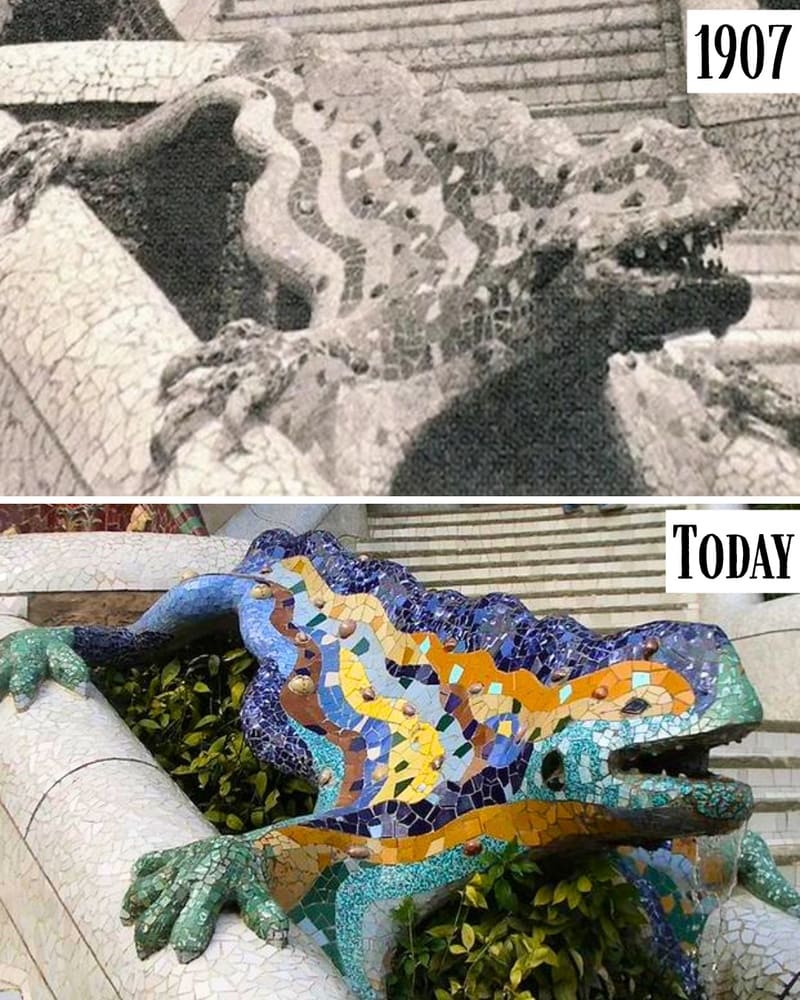
This colorful salamander is called El Drac (the Dragon). It is almost 8 feet (2.4 m) long and covered in broken-tile mosaic, a technique known as trencadís.
It is not just decoration. The dragon’s mouth is the overflow for the water cistern hidden under the columned hall above.
2) Park Güell: the main staircase
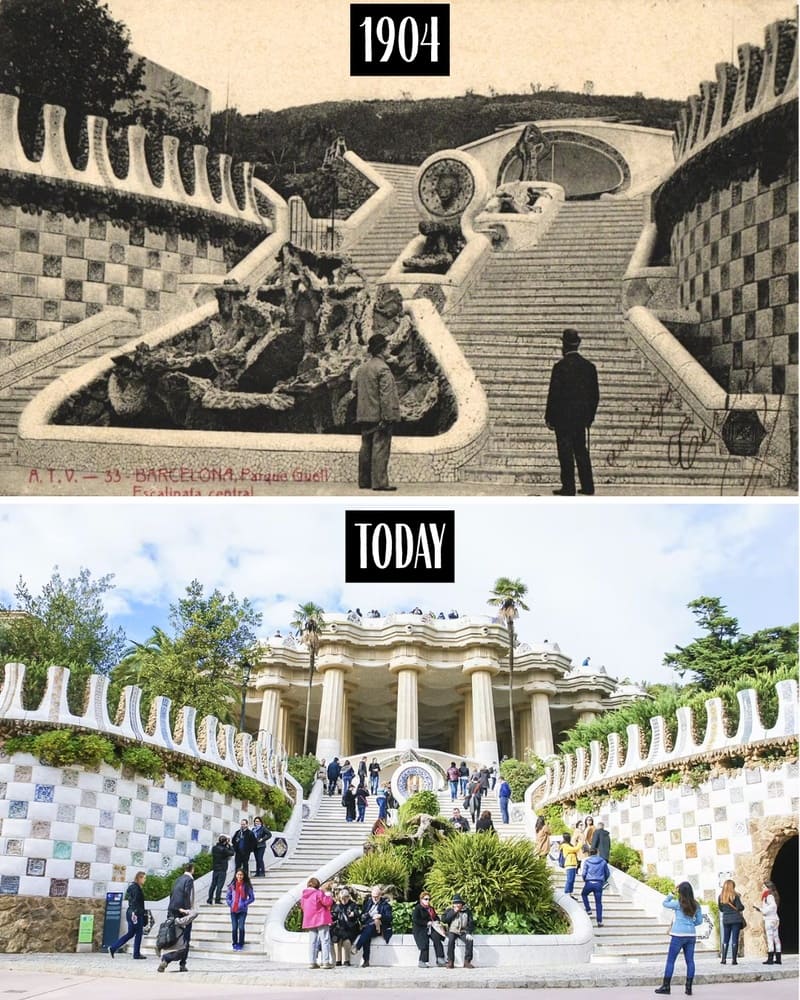
The double staircase and the two entrance pavilions were finished by 1903, only three years after work began.
Eusebi Güell planned a garden suburb for wealthy families. The buyers never came, and only two houses had been built when work stopped in 1914.
3) Park Güell: the entrance pavilions
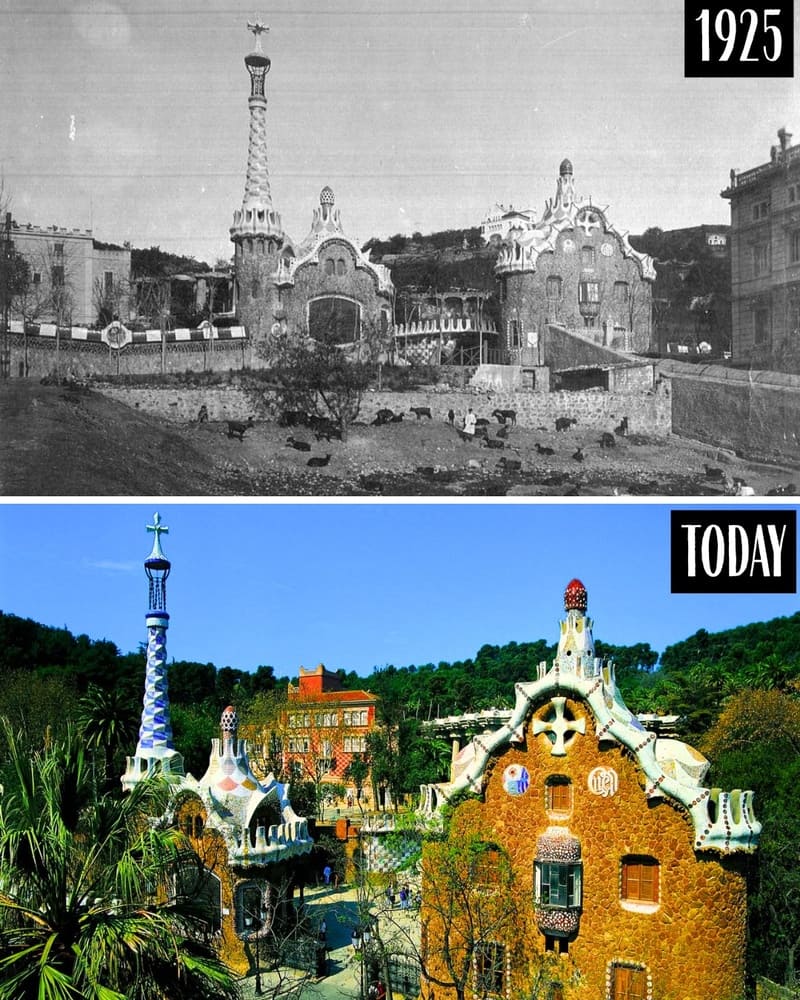
The two pavilions at the gate were among the first things built here. Today one of them holds a small exhibit from the Barcelona City History Museum.
Gaudí himself lived in the park from 1906 until 1925. Then he moved into a small room next to his workshop at the Sagrada Família and never came back.
4) Park Güell: the Hypostyle Room
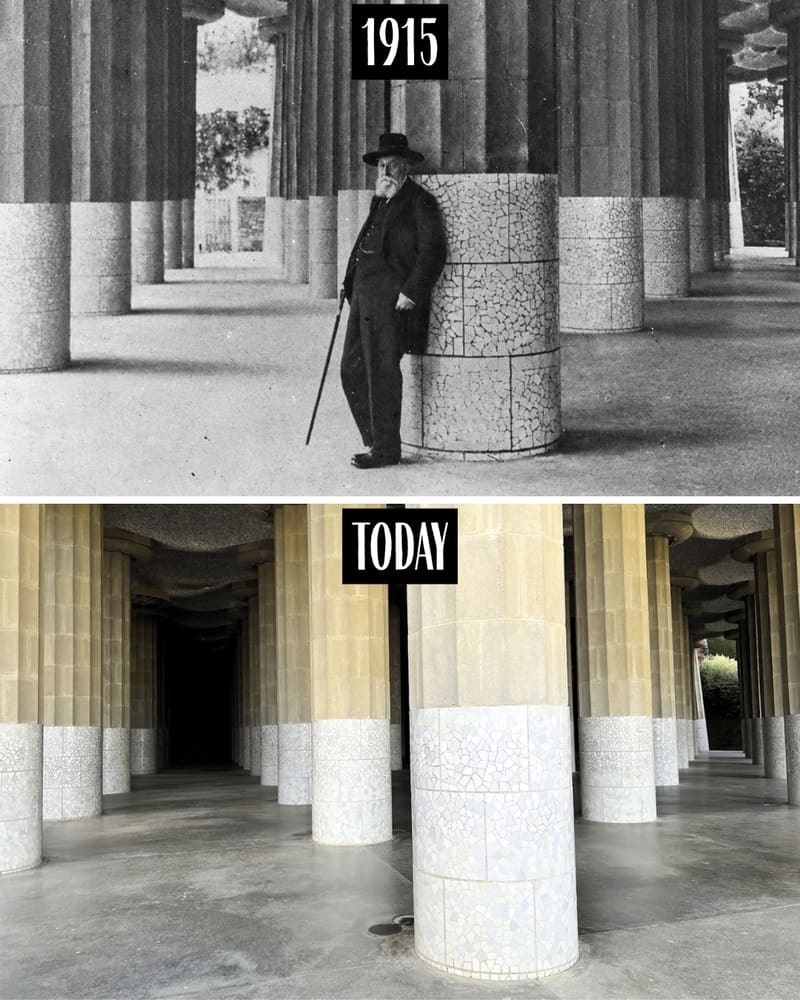
This hall has 86 columns inspired by the Doric order. The outer ones slope on purpose, which went against the rules of classical architecture.
It was planned as a covered market for the housing estate. Since the houses never came, neither did the shoppers.
5) Park Güell: the Nature Square
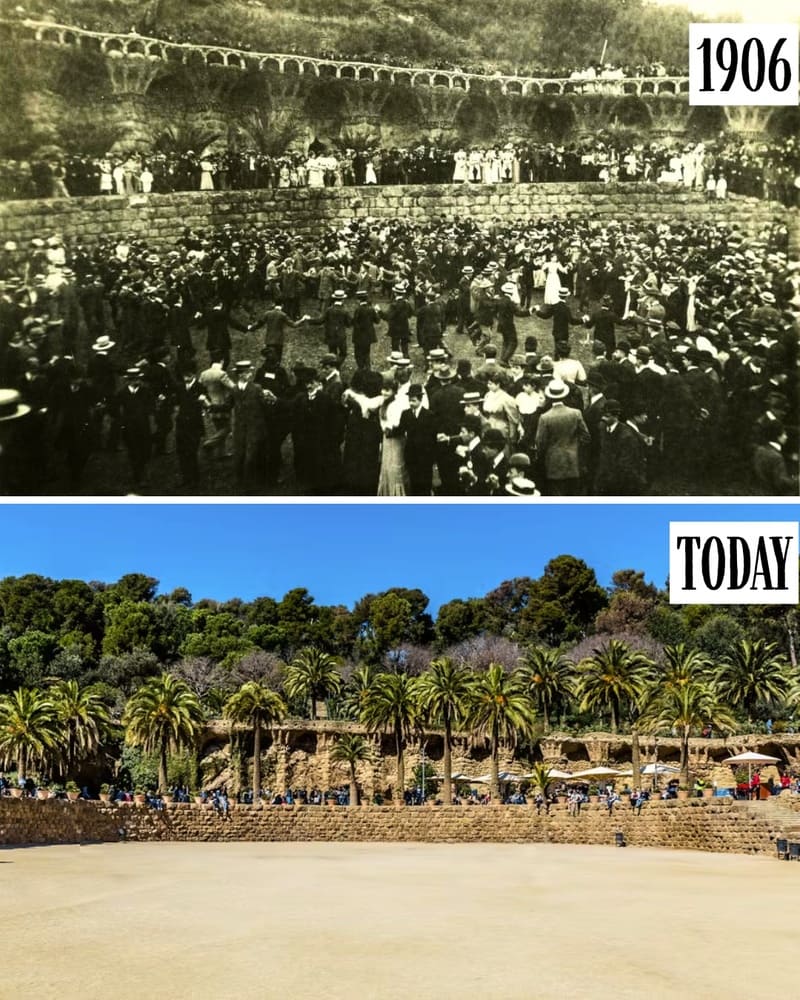
Gaudí first called this terrace the Greek Theatre. At about 282 by 141 feet (86 by 43 m), it was meant for open-air shows.
No play was ever staged here. The only performances were the occasional sardana, a traditional Catalan circle dance.
6) Park Güell: the serpentine bench
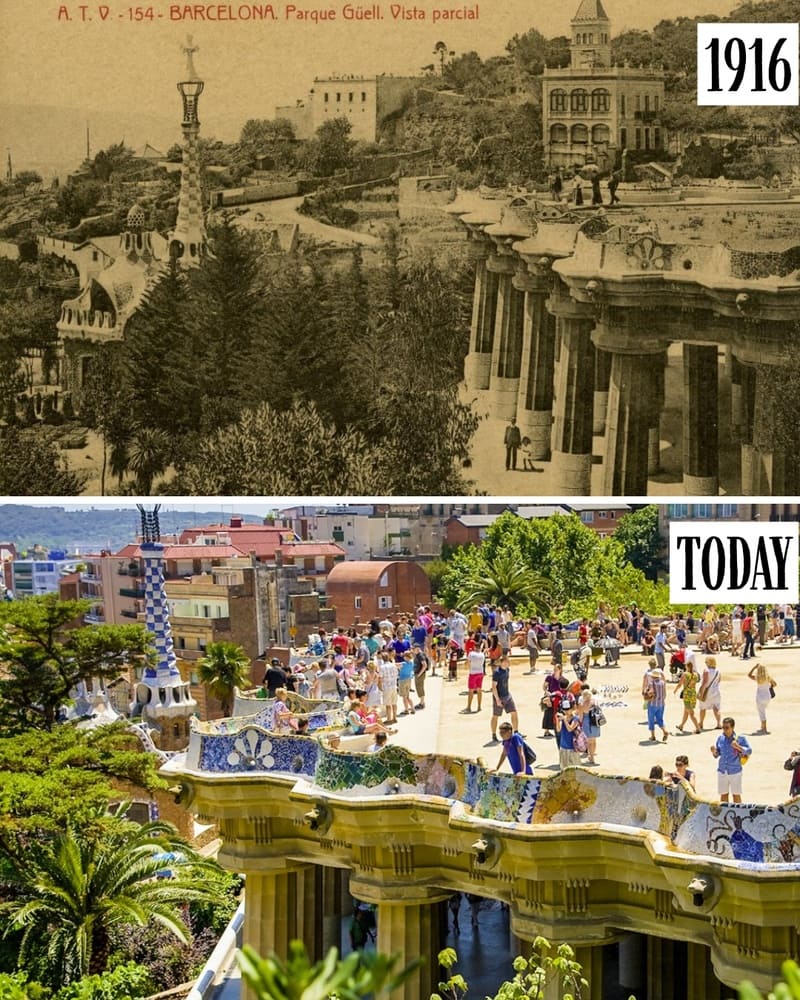
The bench that wraps around the terrace is about 361 feet (110 m) long. Josep Maria Jujol, one of Gaudí’s collaborators, handled the mosaic.
It also works as a drain. Rainwater runs through hidden channels to a cistern under the columned hall.
7) Park Güell: from private dream to public park
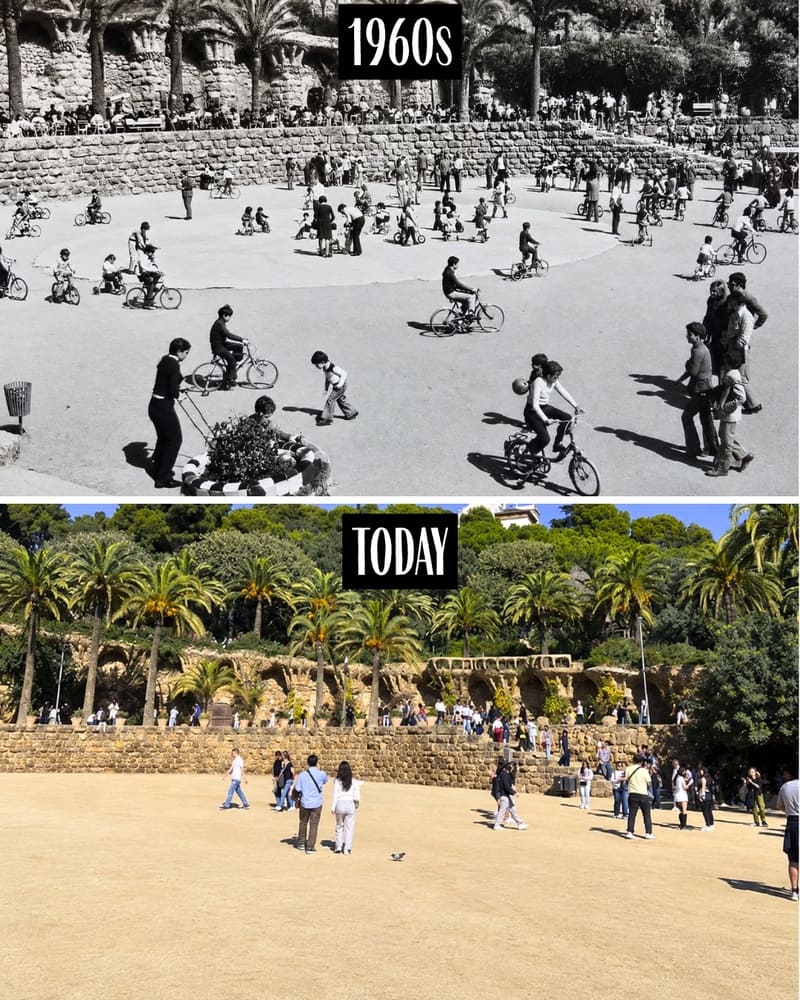
Eusebi Güell died in 1918. The city bought the estate in 1922 and opened it to the public in 1926.
Today about 4.5 million people visit each year. The central Monumental Zone has its own tickets and schedule, so check the official website before you go.
8) Sagrada Família: the crypt
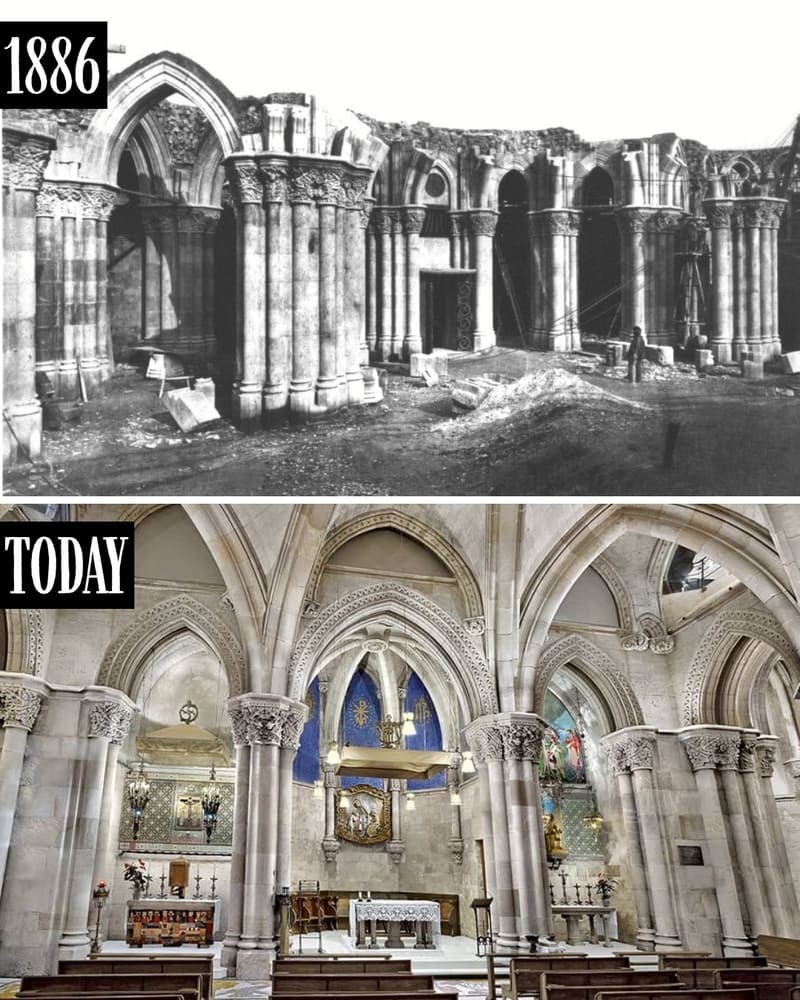
The crypt is the oldest part of the Sagrada Família. Work started in 1882 under architect Francisco de Paula del Villar, and Gaudí took over in 1883.
He finished the first chapel, dedicated to Saint Joseph, in 1885. Gaudí is buried in this crypt.
9) Sagrada Família: the view from Sant Pau
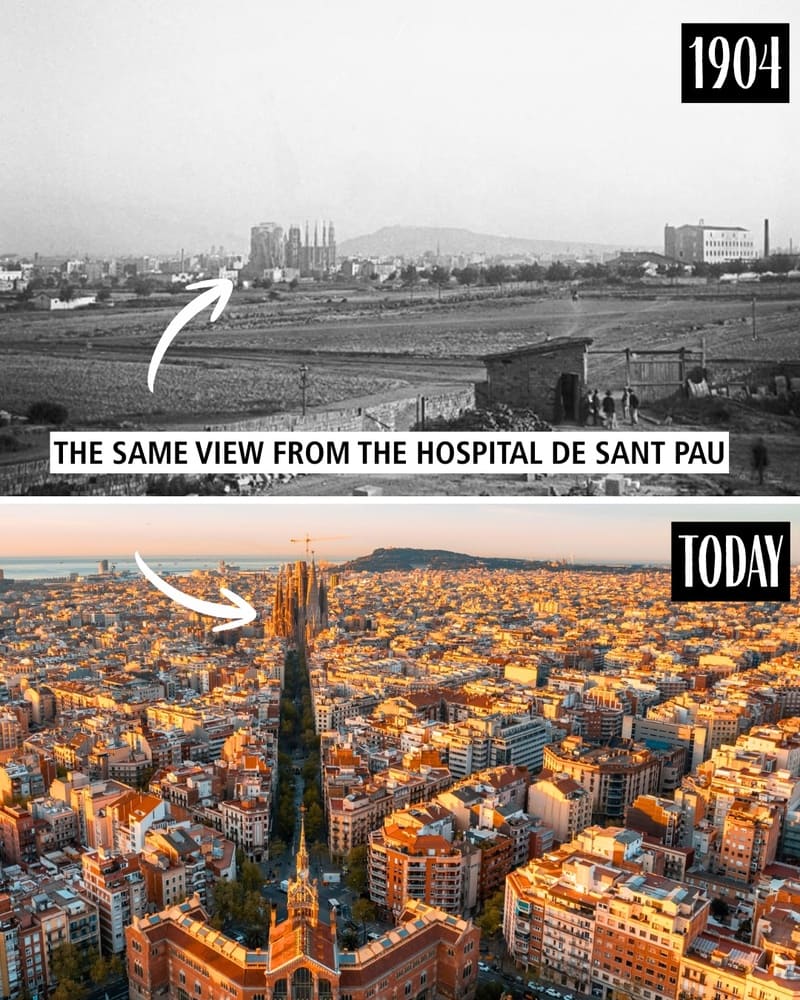
This view looks from the Hospital de Sant Pau toward the Sagrada Família. The hospital only began construction in 1902, so both were building sites.
Today a pedestrian avenue, Avinguda de Gaudí, connects them. It is a short walk.
10) Sagrada Família: Gaudí goes all in
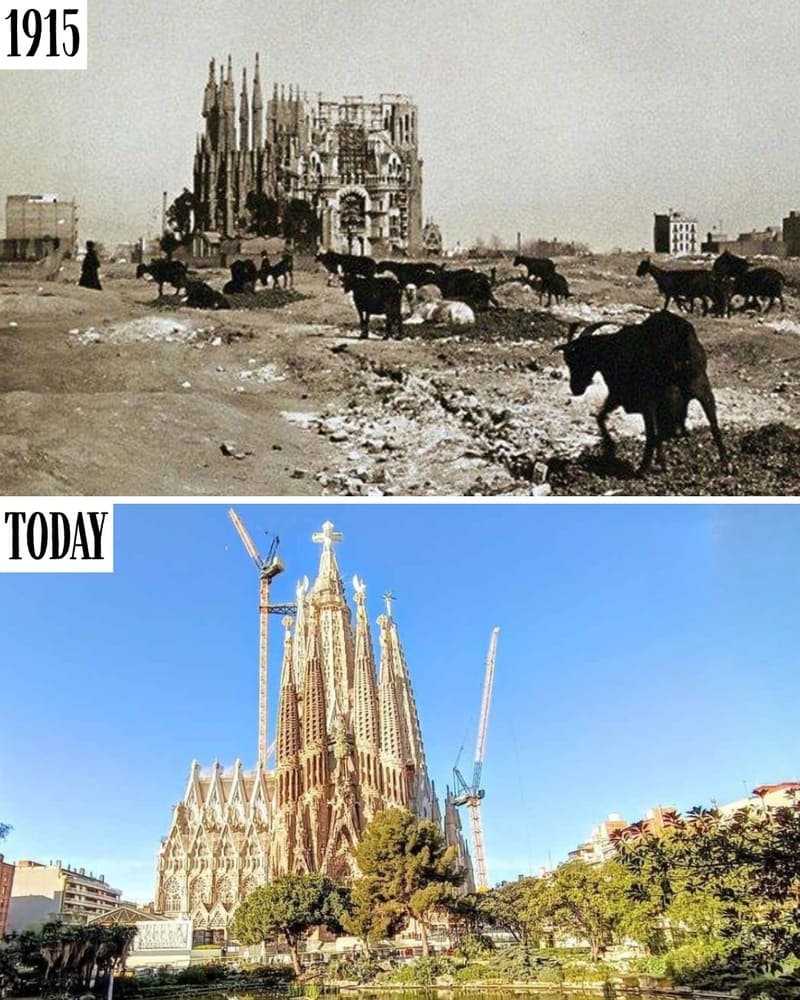
Until 1914, Gaudí took on other jobs alongside the Sagrada Família. After that, he worked on the church only, until he died in 1926.
He knew he would never see it finished. He reportedly said that his client, meaning God, was in no hurry.
11) Sagrada Família: the Nativity façade towers
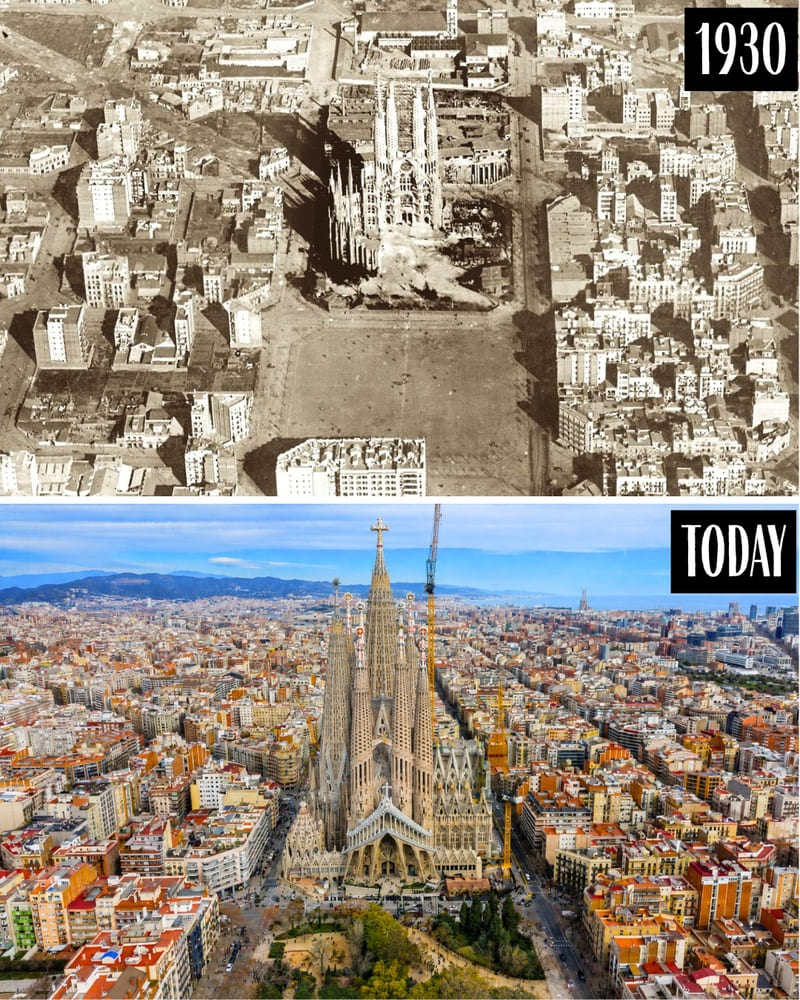
When Gaudí died in 1926, only the crypt, the apse, the Nativity façade and one bell tower were done. His disciple Domènec Sugranyes took over.
The other three bell towers of the Nativity façade were completed in 1930.
12) Sagrada Família: two popes, one date
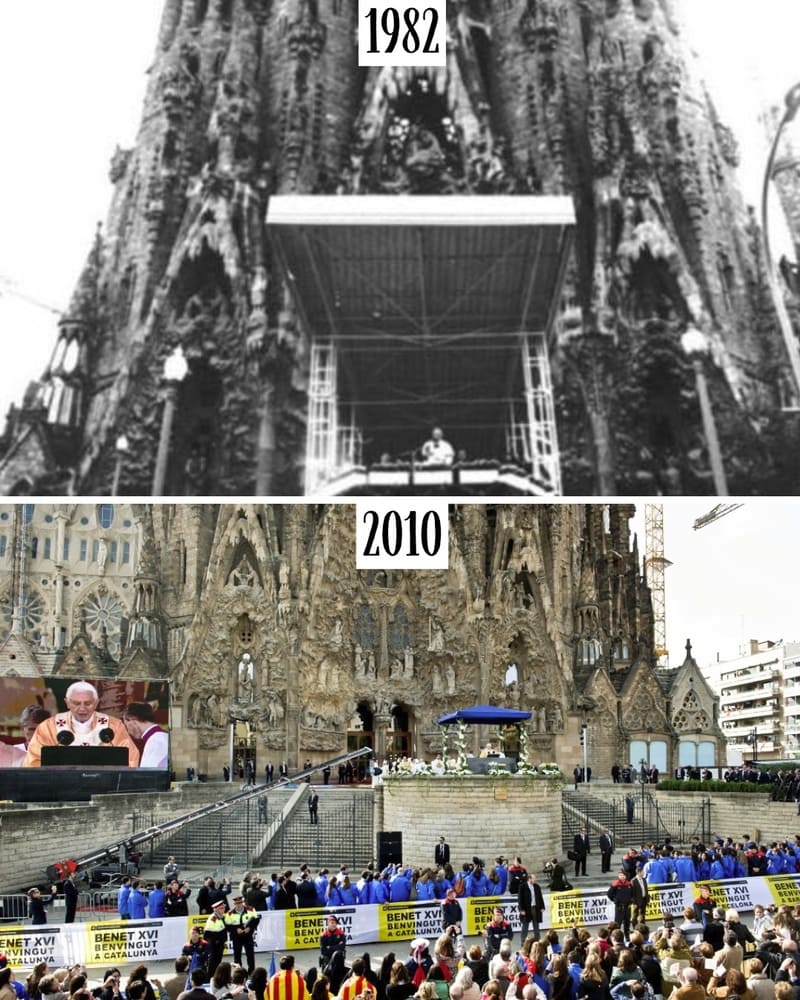
Pope John Paul II visited the Sagrada Família on 7 November 1982, during the basilica’s 100th anniversary year. He was the first pope to visit Barcelona.
Pope Benedict XVI returned on 7 November 2010. He consecrated the church for worship and declared it a minor basilica. Same date, 28 years apart.
13) Sagrada Família: the nave
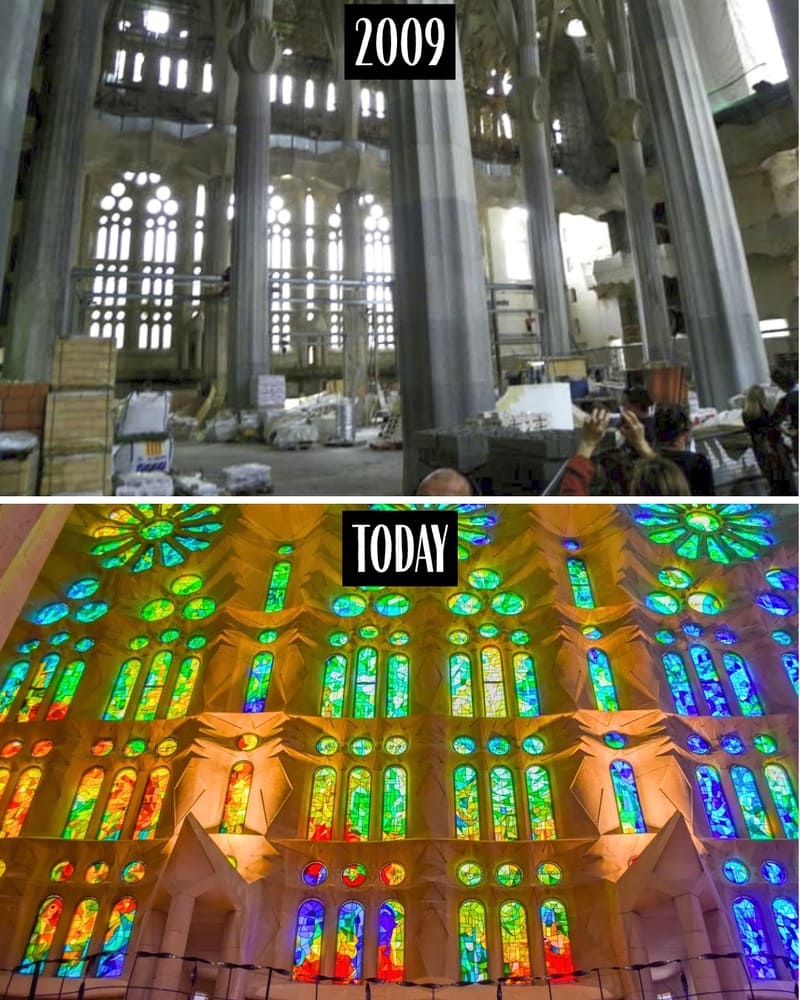
In 2009 the central nave was still waiting for its roof. It was finally covered in 2010.
Since then the Tower of Jesus has been completed. At 566 feet (172.5 m), it makes the Sagrada Família the tallest church in the world.
14) Casa Milà: La Pedrera in 1910
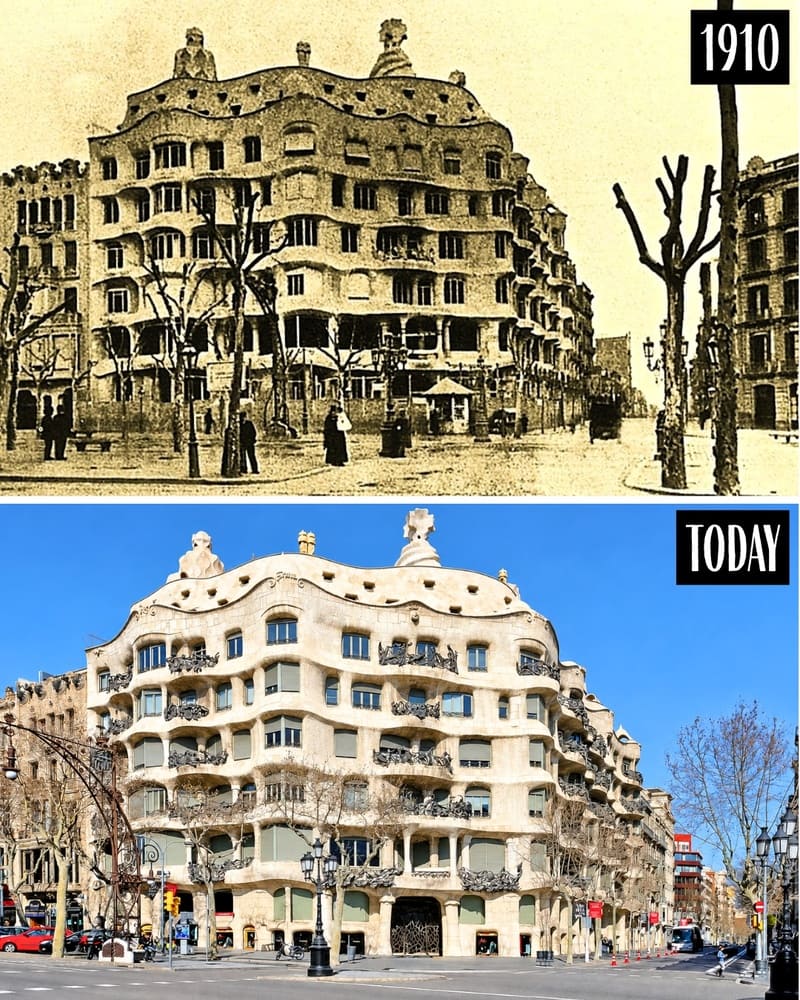
Casa Milà was built between 1906 and 1912 and was the last private home Gaudí designed. Locals nicknamed it La Pedrera (the Quarry) because of its rough, rocky look.
Its stone façade holds itself up, so the walls inside carry no weight. That gave Gaudí freedom to shape the apartments.
15) Casa Milà: the long road back
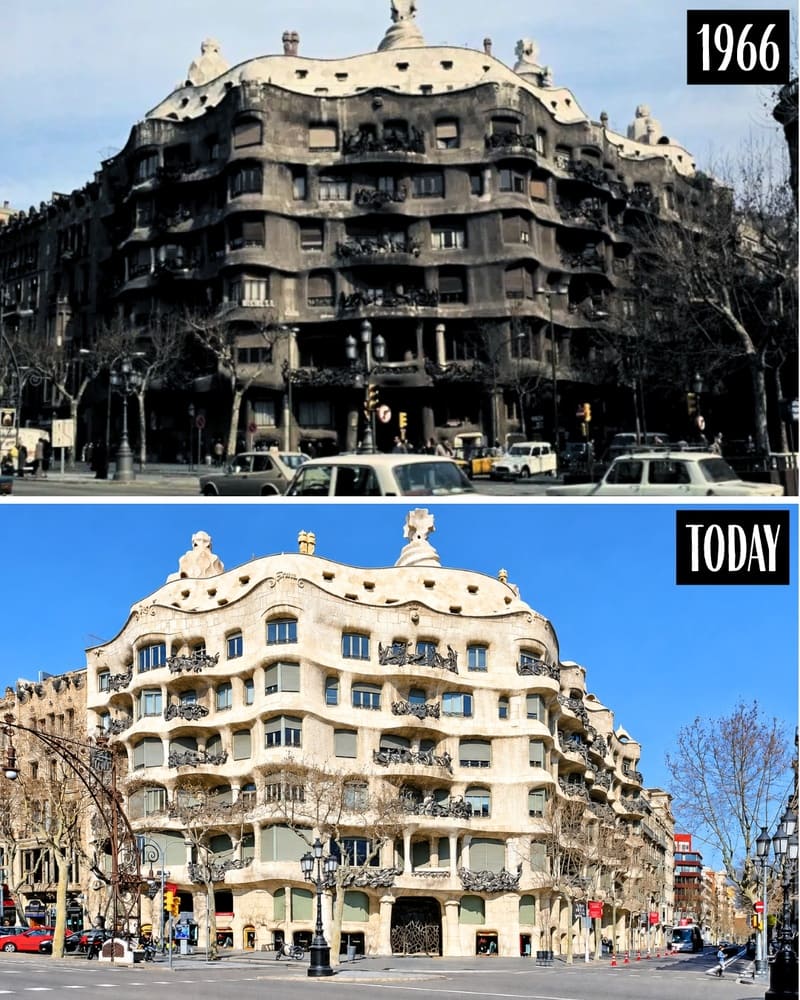
By the early 1980s, the building was in poor shape. Caixa Catalunya bought it on 24 December 1986 and began restoring it in 1987.
UNESCO had already listed it as a World Heritage Site in 1984.
16) Palau Güell: the rooftop
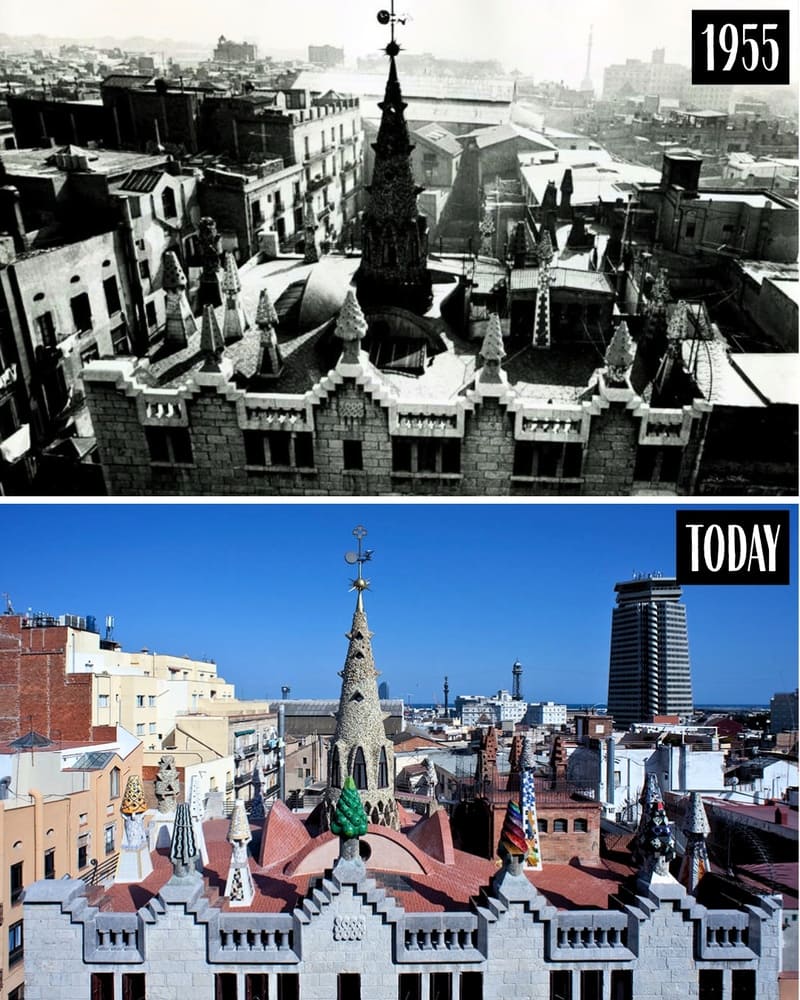
Gaudí built this palace for Eusebi Güell between 1886 and 1890. The rooftop has a tall central spire surrounded by 20 chimneys.
The broken-tile coverings here were a preview of the trencadís he would use later at Park Güell, Casa Batlló and Casa Milà.
17) Palau Güell: the façade
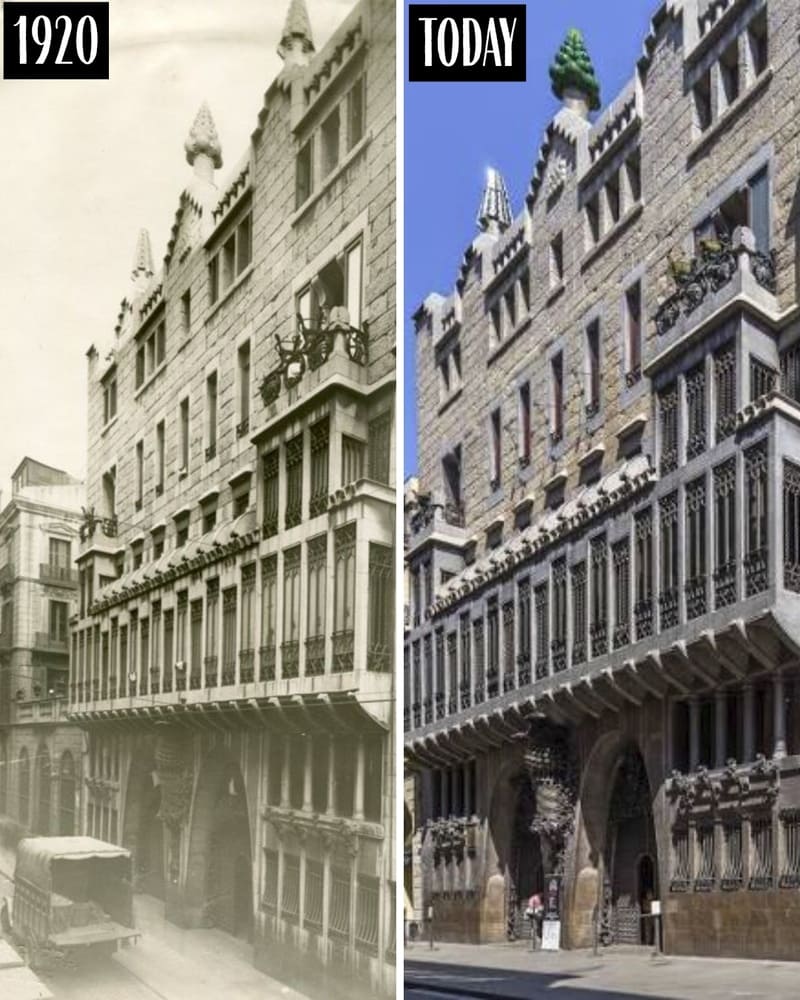
The Güell family lived here until 1910, then moved to Park Güell.
The main façade is limestone from quarries the Güell family owned. Underground, the stables have mushroom-shaped pillars.
18) Colònia Güell: Gaudí’s unfinished crypt
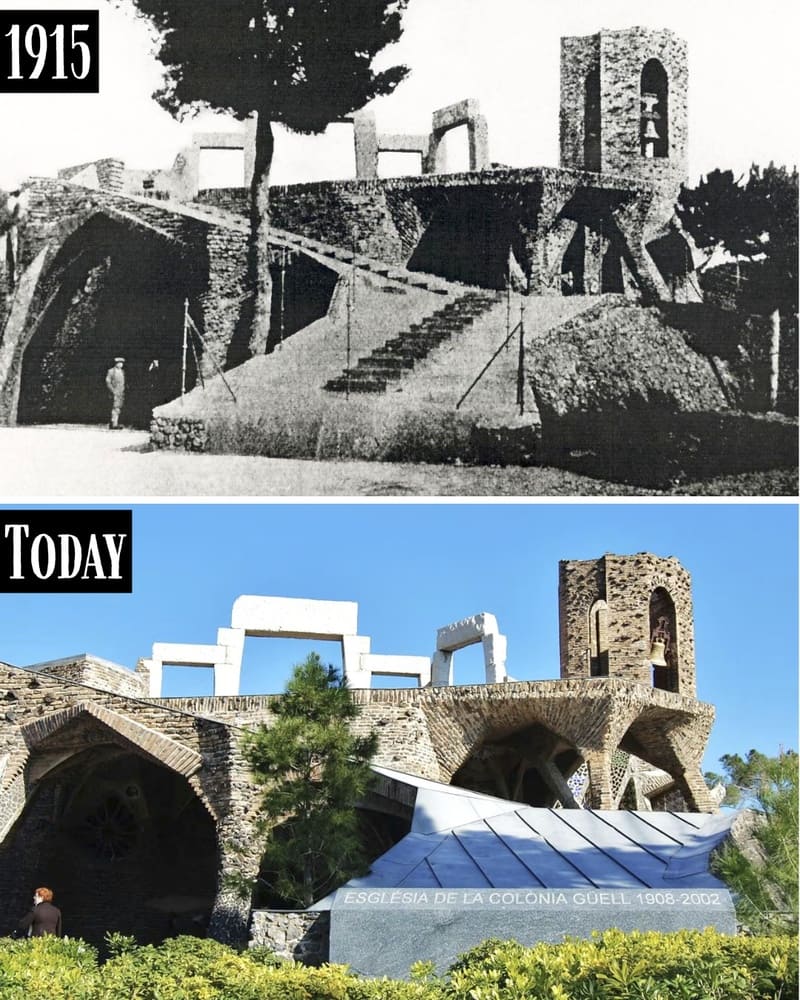
Güell asked Gaudí for a church for the workers of his textile colony, about 12 miles (20 km) from Barcelona. Construction only began in 1908 and stopped in 1914 when the financing ended.
The bishop blessed the finished lower church in November 1915. It is a UNESCO World Heritage Site, and Gaudí tested ideas here that he later used at the Sagrada Família.
19) Casa Lleó Morera
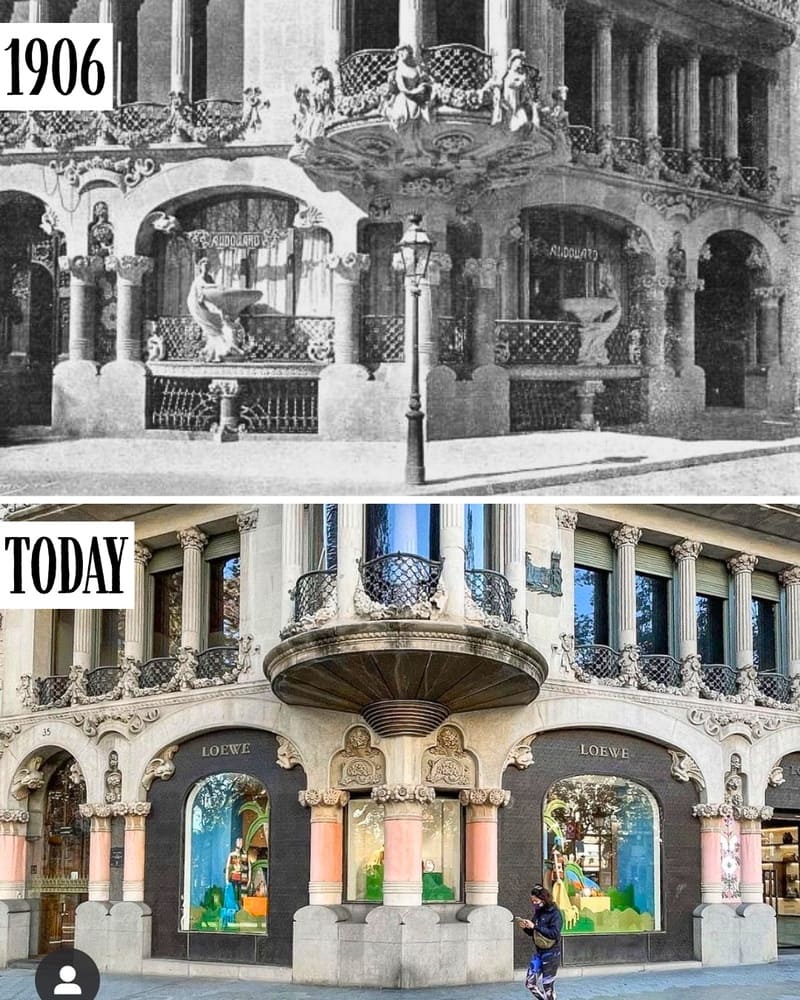
Lluís Domènech i Montaner remodeled this house in 1905. On the first-floor balconies, four women hold symbols of photography, electricity, the phonograph and the telephone.
It stands in the Mansana de la Discòrdia (Block of Discord), next to Gaudí’s Casa Batlló. The name comes from the clashing styles of the buildings.
20) Palau de la Música Catalana
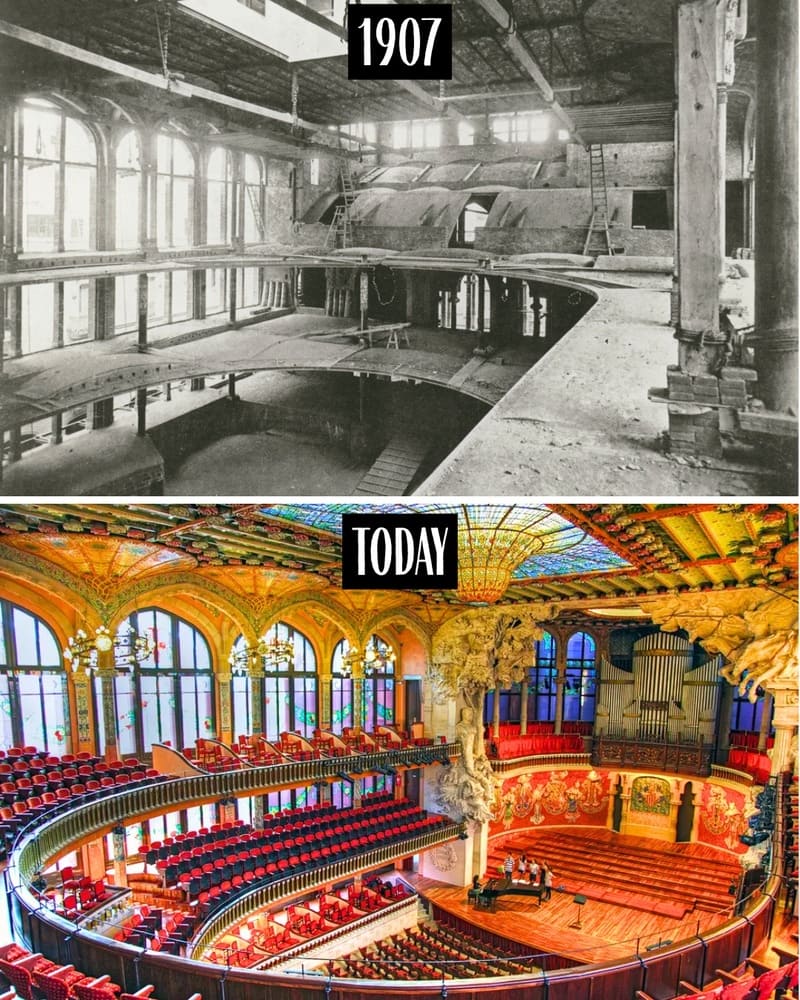
The Palau de la Música Catalana opened on 9 February 1908. Domènech i Montaner built it for the Orfeó Català, a choral society.
Its stained-glass skylight was designed by Antoni Rigalt. The hall is the only Modernista (Catalan Art Nouveau) concert hall on UNESCO’s World Heritage list.
21) Hospital de Sant Pau: the start
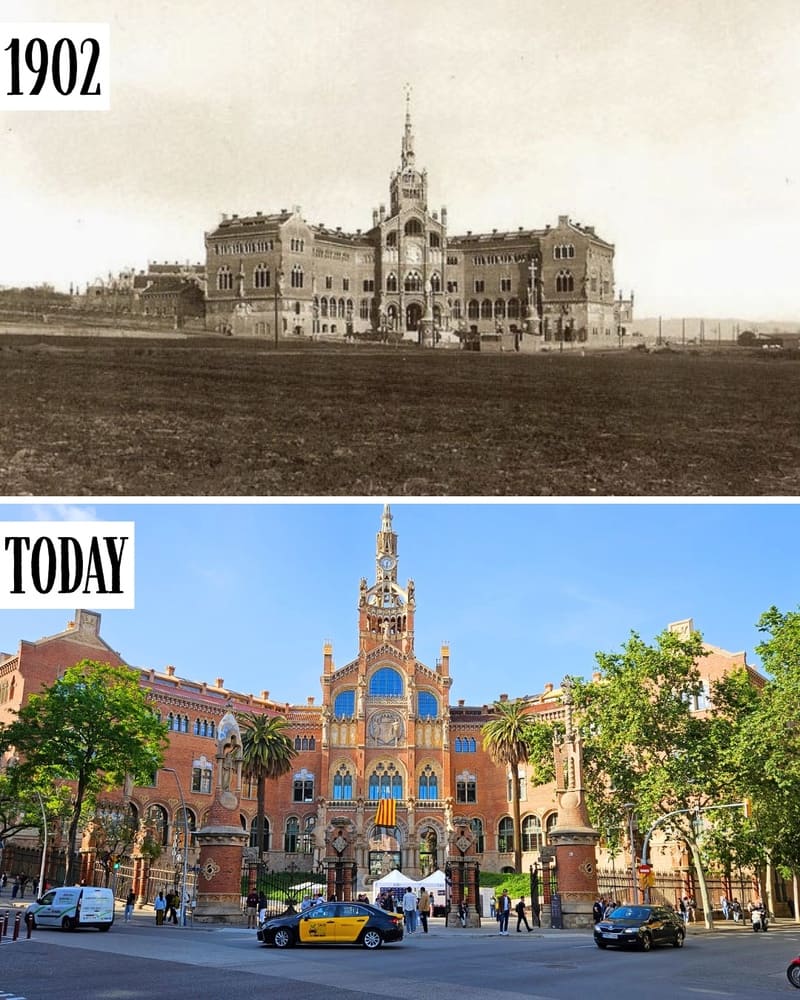
Work started here in 1902, about two miles (3 km) from the old medieval hospital. The money came from the will of Pau Gil, a Catalan banker who died in 1896.
That is why the complex is called Hospital de la Santa Creu i Sant Pau. The architect was Lluís Domènech i Montaner, who also designed the Palau de la Música.
22) Hospital de Sant Pau: the administration building
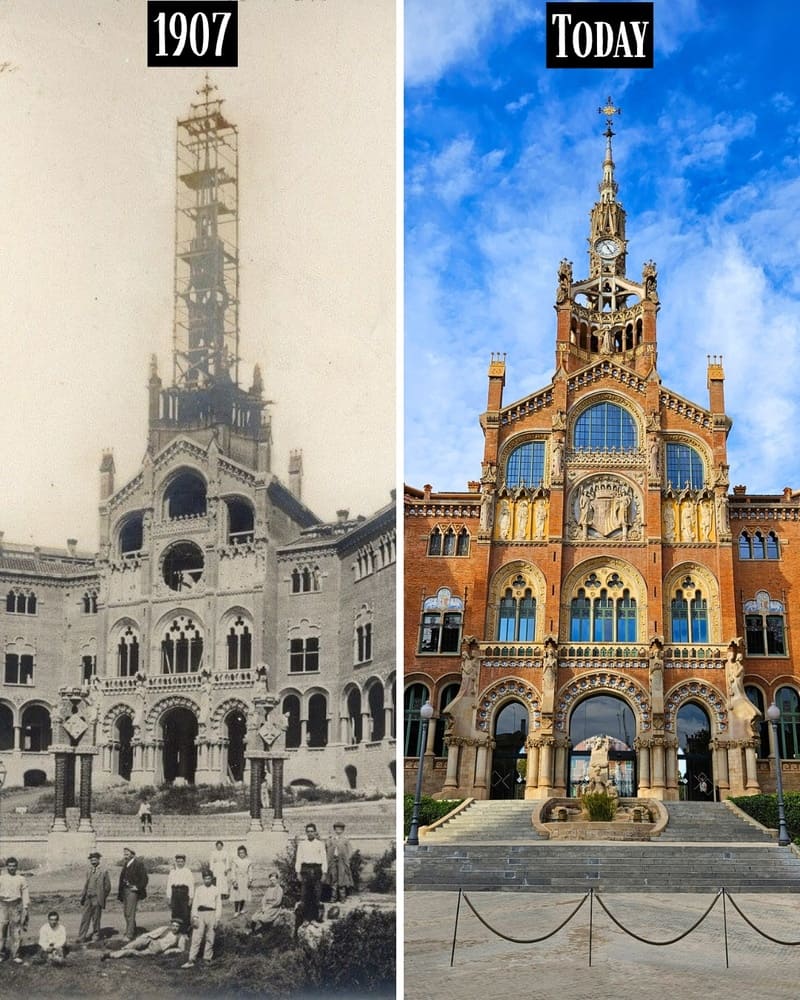
This is the administration building, here with scaffolding in 1907. It now holds the historical archive of the hospital, one of the most important hospital archives in the world.
Domènech i Montaner died in 1923, before the complex was finished.
23) Hospital de Sant Pau: the pavilions
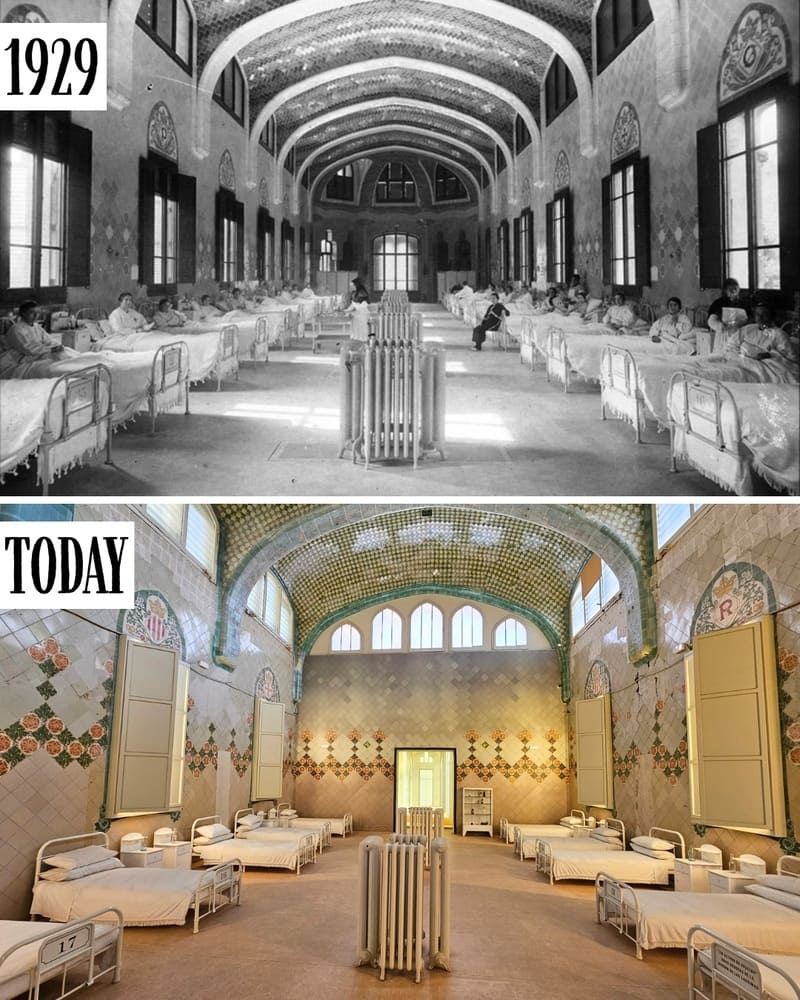
Domènech planned 48 buildings and 27 were built. They are pavilions, each used for a different medical specialty, linked by underground tunnels.
King Alfonso XIII inaugurated the hospital on 16 January 1930. It worked as a hospital until 2009 and reopened to visitors in 2014.
24) Els Quatre Gats
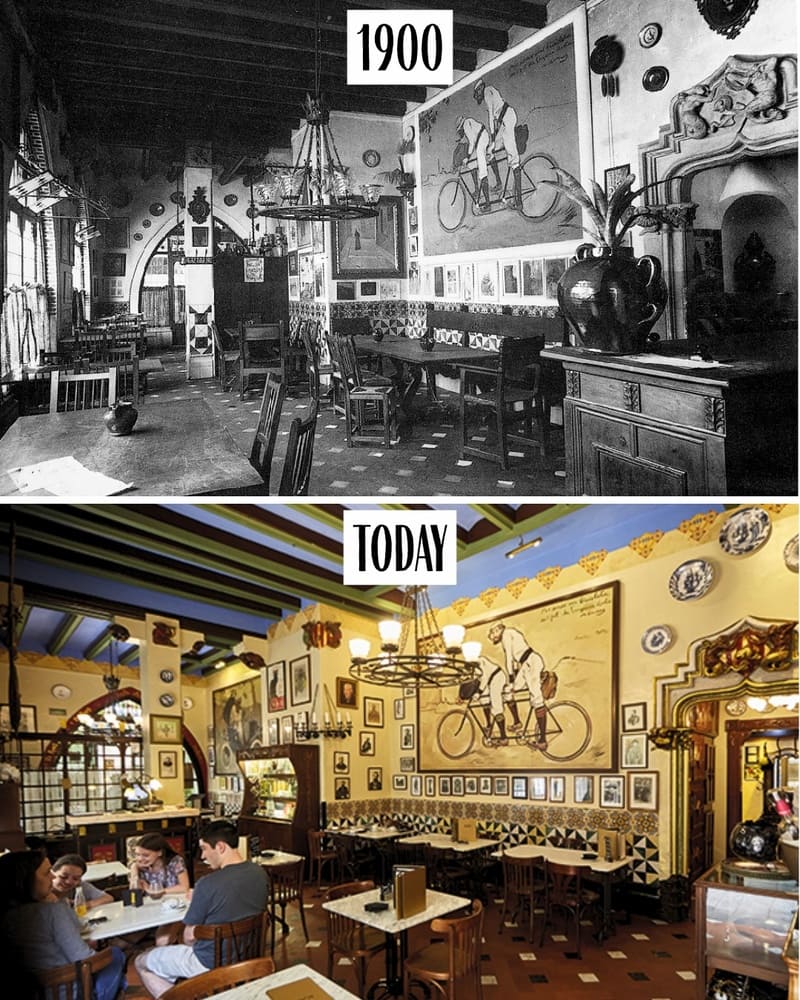
Els Quatre Gats (The Four Cats) opened on 12 June 1897 in Casa Martí, a building by Josep Puig i Cadafalch. Its owner, Pere Romeu, copied the idea from the Chat Noir cabaret in Paris.
A teenage Pablo Picasso held a solo exhibition here. The café closed in 1903, but today it is a restaurant again.
25) La Boqueria: before the roof
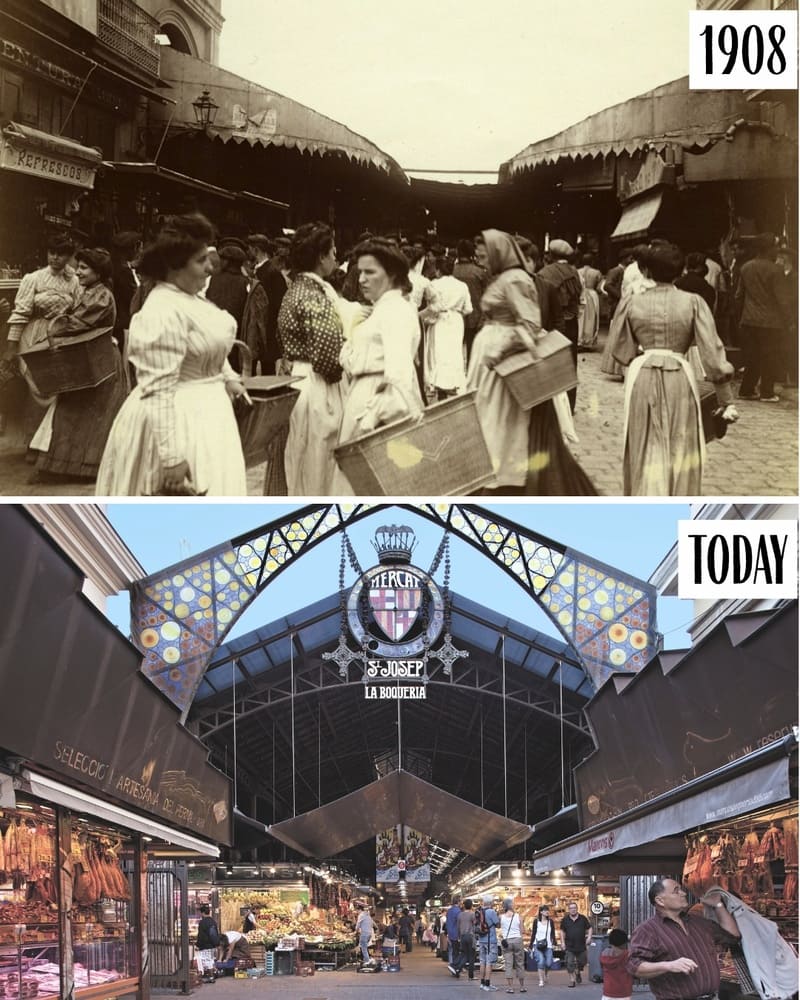
The first stone of the market was laid on 19 March 1840, Saint Joseph’s Day. An ounce of gold and other coins were buried under it as a symbol of the wealth the market would bring.
When this photo was taken, the famous iron roof did not exist yet. It was built in 1914.
26) La Boqueria: the roof and the entrance
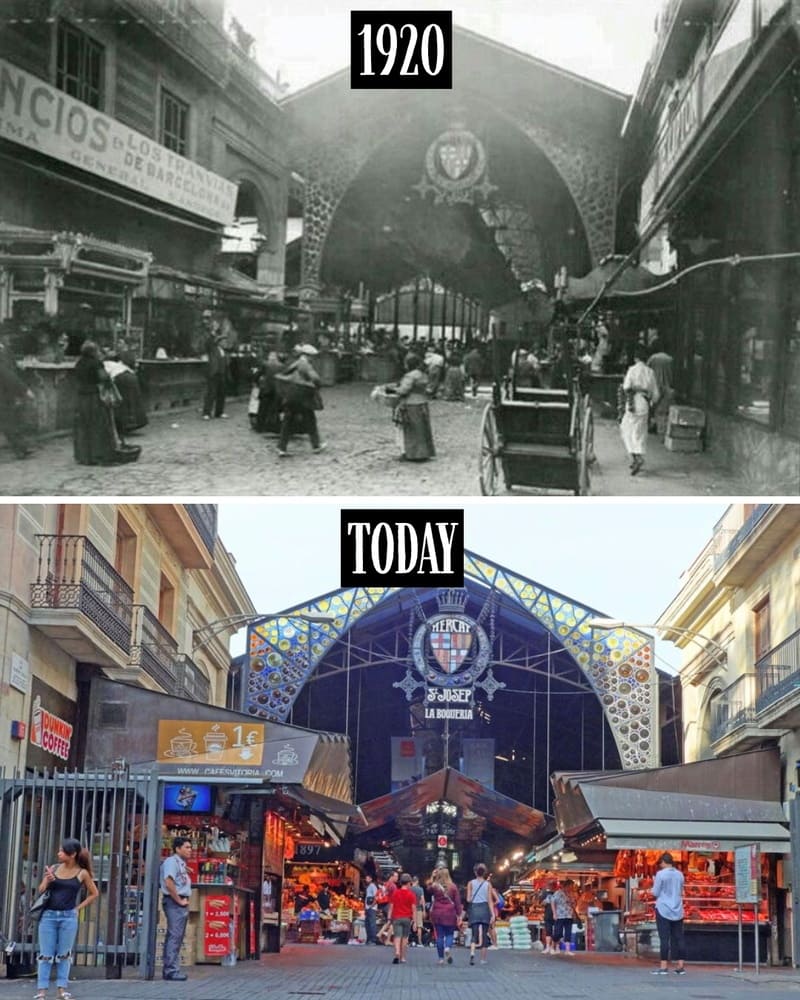
The first mention of a market here goes back to 1217, when meat stalls stood outside a city gate.
The Modernista entrance arches on La Rambla, designed by Antoni de Falguera, went up in 1913. The iron roof followed in 1914.
27) Mercat del Born: the building
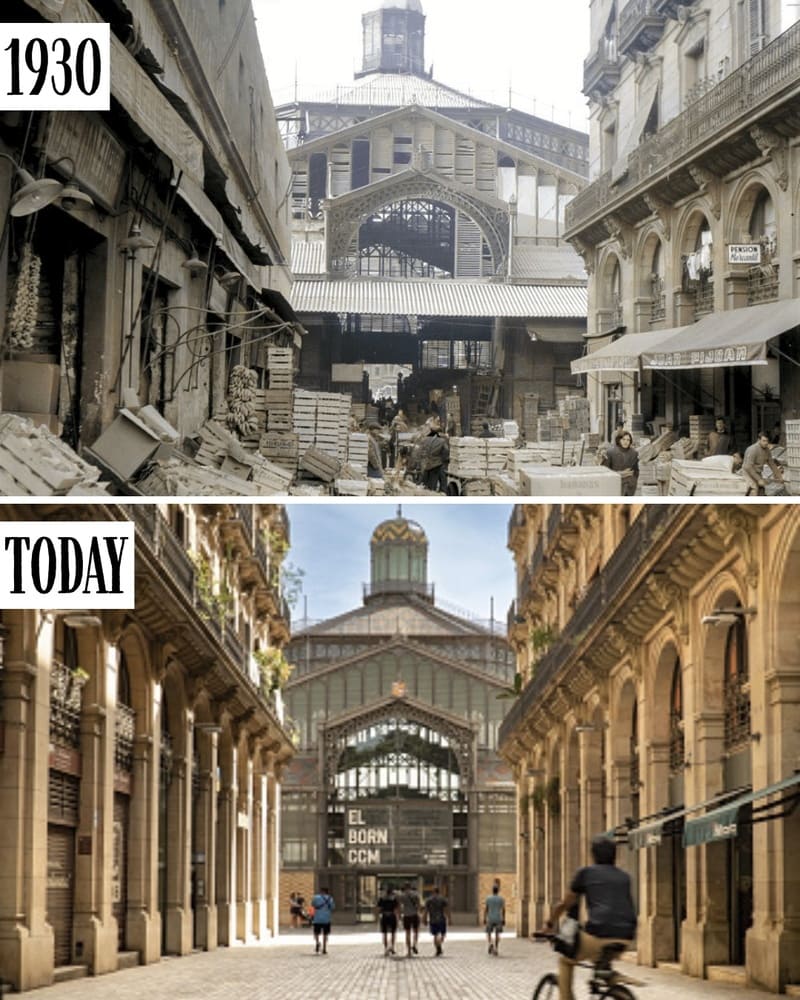
The Born market opened in 1876 and was one of the first buildings in Barcelona with an exposed iron frame. Its design drew on Les Halles, the big market hall in Paris.
It closed in 1971, the same year Paris began tearing down the old pavilions of Les Halles.
28) Mercat del Born: the wholesale years
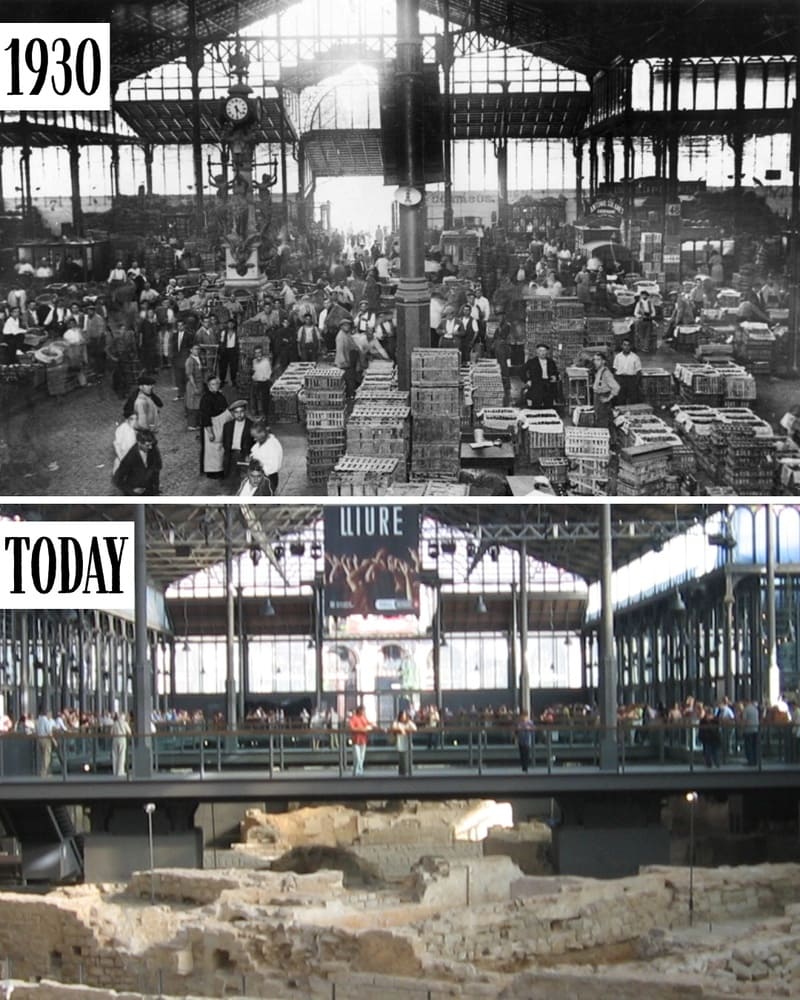
From 1921, the Born served as Barcelona’s central wholesale market for fruit and vegetables.
The wholesale trade moved out in 1971. After that, the building had no permanent use for more than 40 years.
29) Mercat del Born: the ruins below
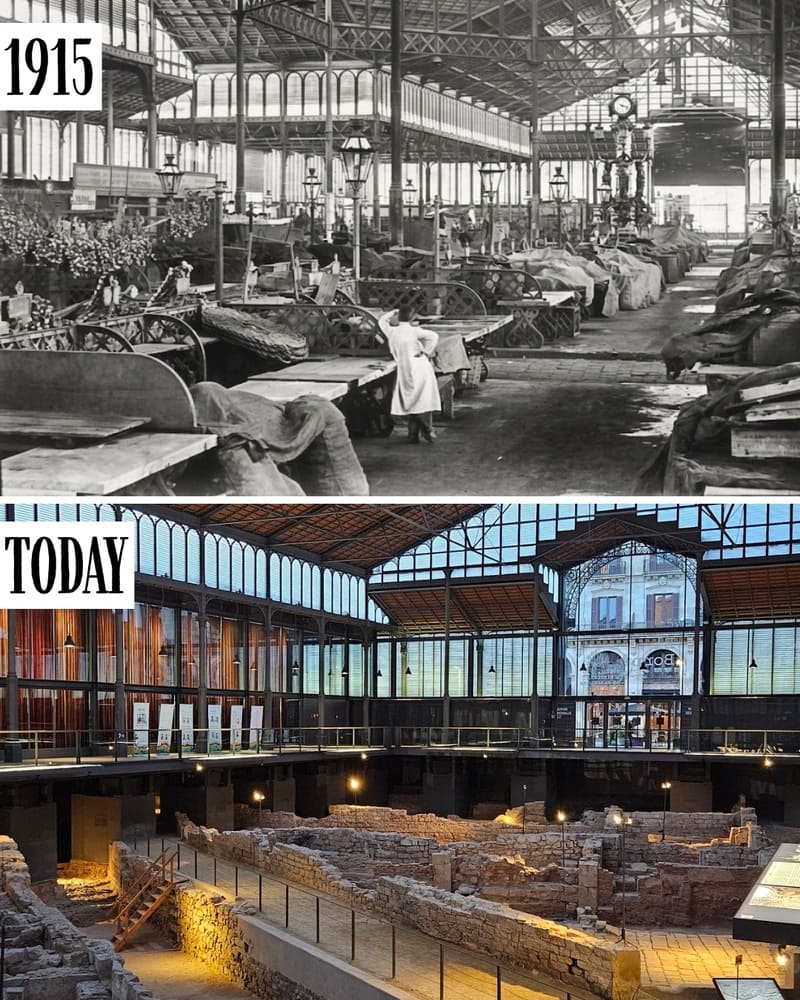
In the early 2000s, workers preparing to turn the market into a library found streets and houses from the 1700s under the floor. They belong to the old La Ribera neighborhood.
Philip V’s troops cleared the area after the siege of 1714 to build a military fortress. The site opened as El Born Centre de Cultura i Memòria on 11 September 2013.
30) Mercat de Sant Antoni
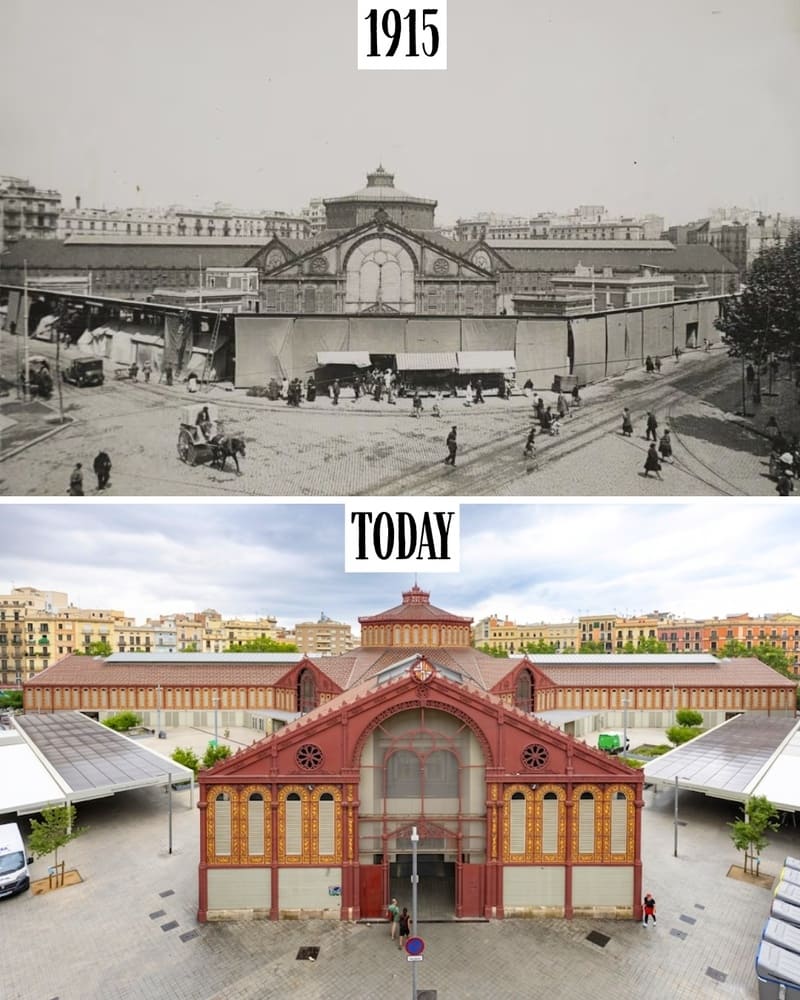
Sant Antoni market opened in 1882, with an iron frame and four wings branching from a central dome. It closed for renovation in 2009 and reopened in May 2018.
Builders found a stretch of Roman road, a 1st-century mausoleum and part of a 17th-century wall. On Sundays, a book and collectibles market spreads around it.
31) Mercat de Santa Caterina: the first covered market
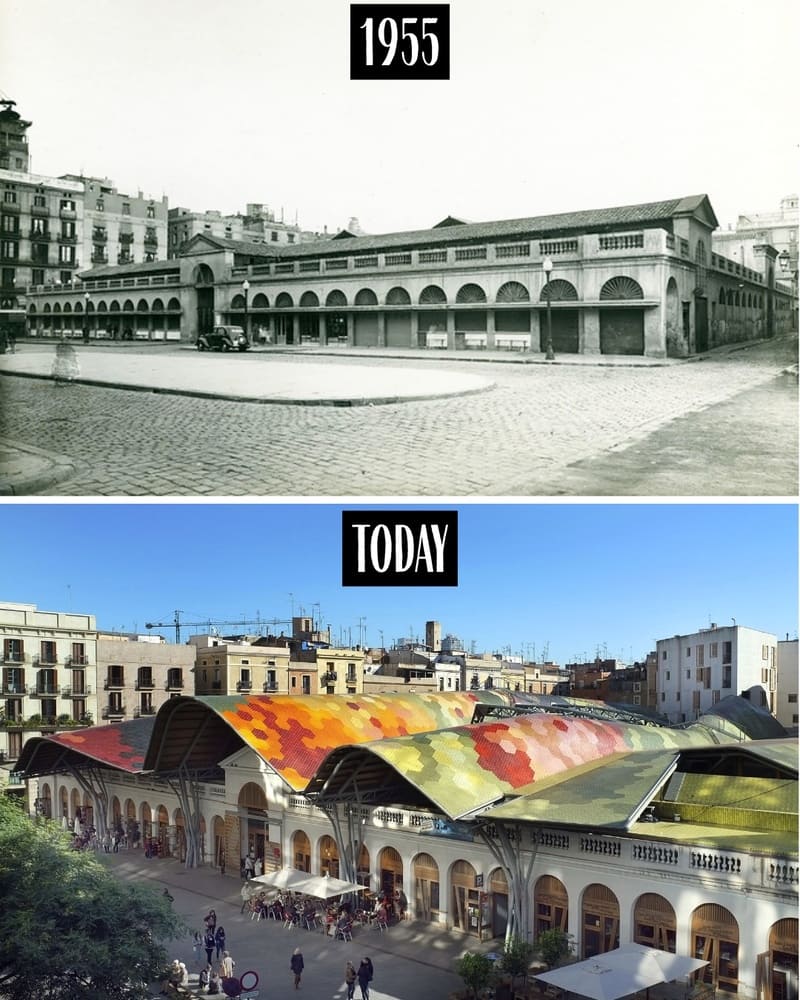
This market stands on the site of a Dominican convent that was burned in 1835. The market opened in 1848 as Barcelona’s first covered market.
Some remains of the old convent are still on display inside.
32) Mercat de Santa Caterina: the colorful roof
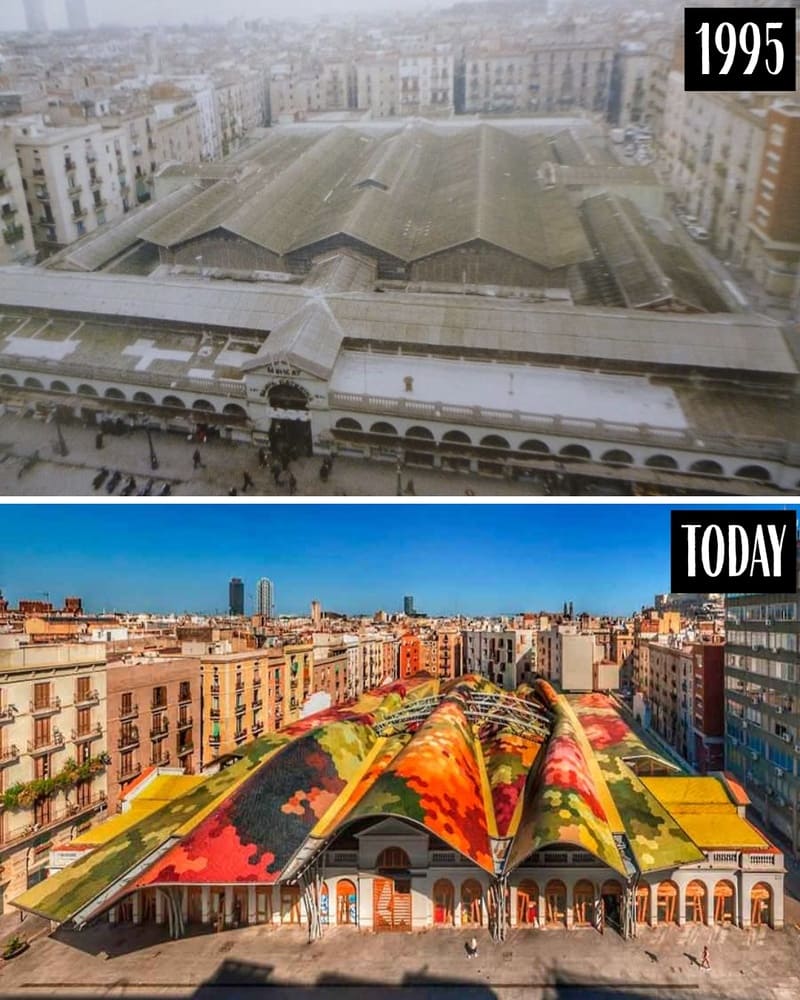
Architects Enric Miralles and Benedetta Tagliabue won the renovation competition in 1997. The market reopened in 2005, after a delay caused by the discovery of the convent remains.
The wavy roof is made of 325,000 ceramic pieces in 67 colors, and it was designed to be seen from above. Its colors echo the fruit and vegetables on sale below.
33) Barcelona Cathedral: before the façade
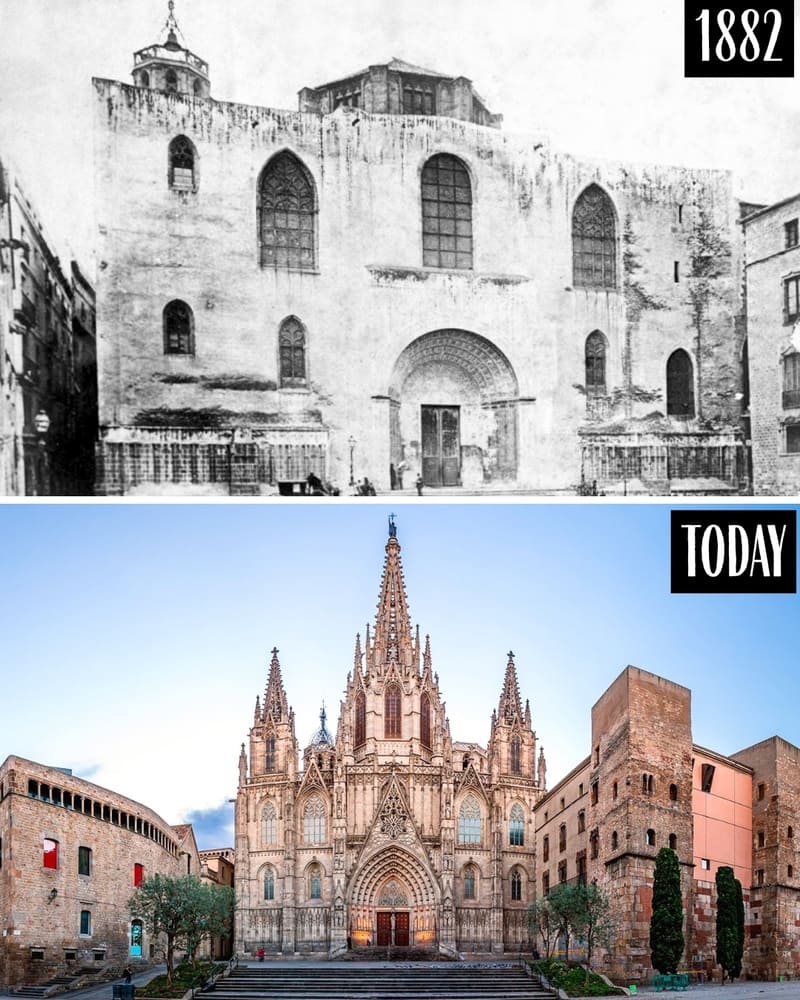
Work on the Gothic cathedral began in 1298. For centuries its front was a plain wall from 1417, because the grand façade had never been built.
The neo-Gothic façade you see today was built between 1887 and 1890. The banker Manuel Girona paid for it, and Josep Oriol Mestres designed it.
34) Barcelona Cathedral: the missing tower
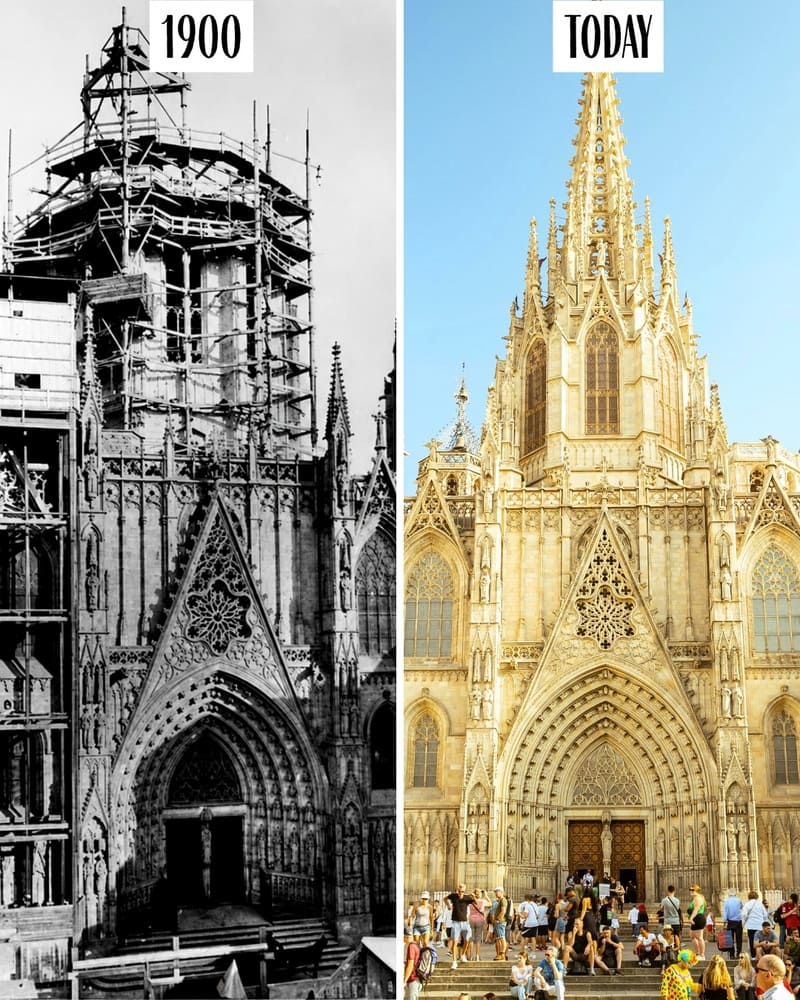
In 1900 the central tower was still unfinished. Manuel Girona’s children completed it in 1913.
August Font i Carreras designed the 230 foot (70 m) tower. In 1900, the same year as this photo, his bullring Las Arenas opened.
35) Plaça Nova and the cathedral
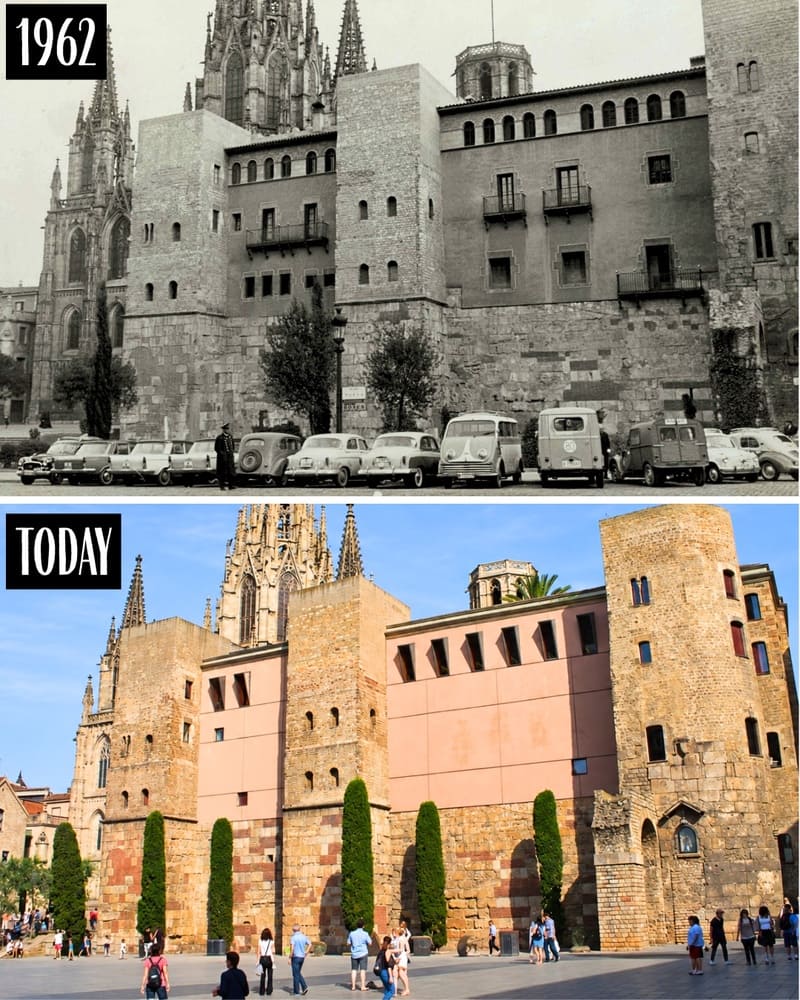
Plaça Nova began as a hay market in 1358. The gate with two towers that leads into the Gothic Quarter is Roman.
Across the square, the Col·legi d’Arquitectes (Architects’ Association) got its Picasso friezes in 1962, the same year as this photo.
36) The Roman towers of Barcino
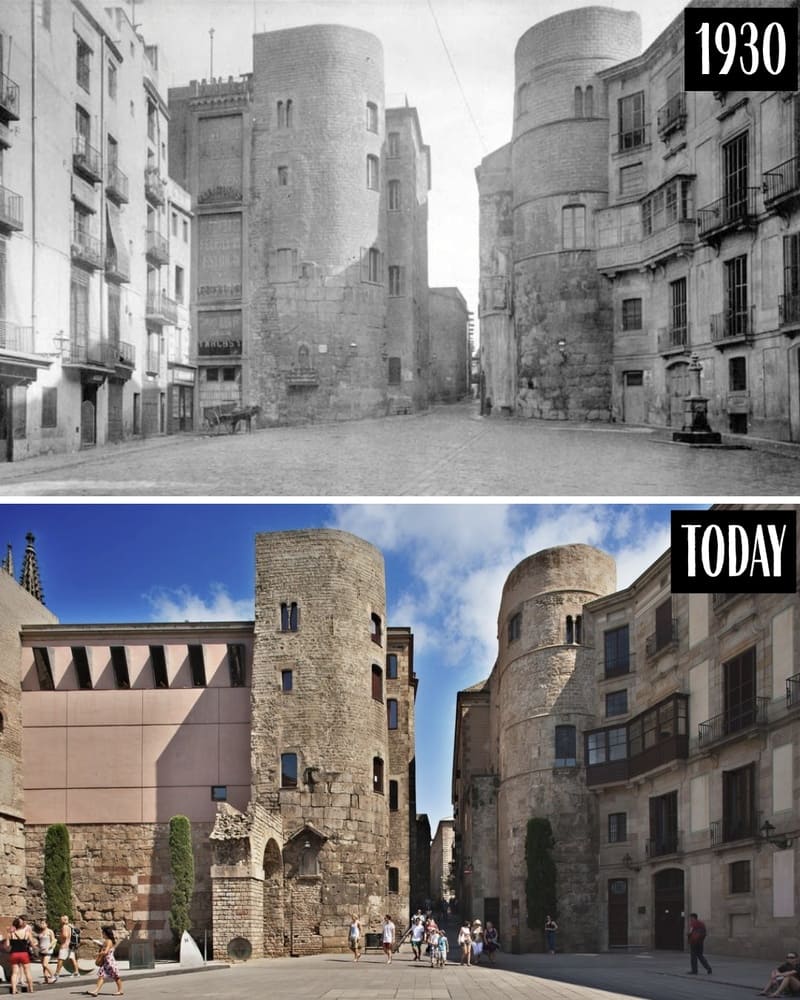
Barcelona began as Barcino, a Roman colony founded in the 1st century BC. Its walls were just under a mile (1.5 km) around.
The later version of the wall had 81 towers, each about 60 feet (18 m) tall. A few of them survive in the Gothic Quarter.
37) Plaça del Rei
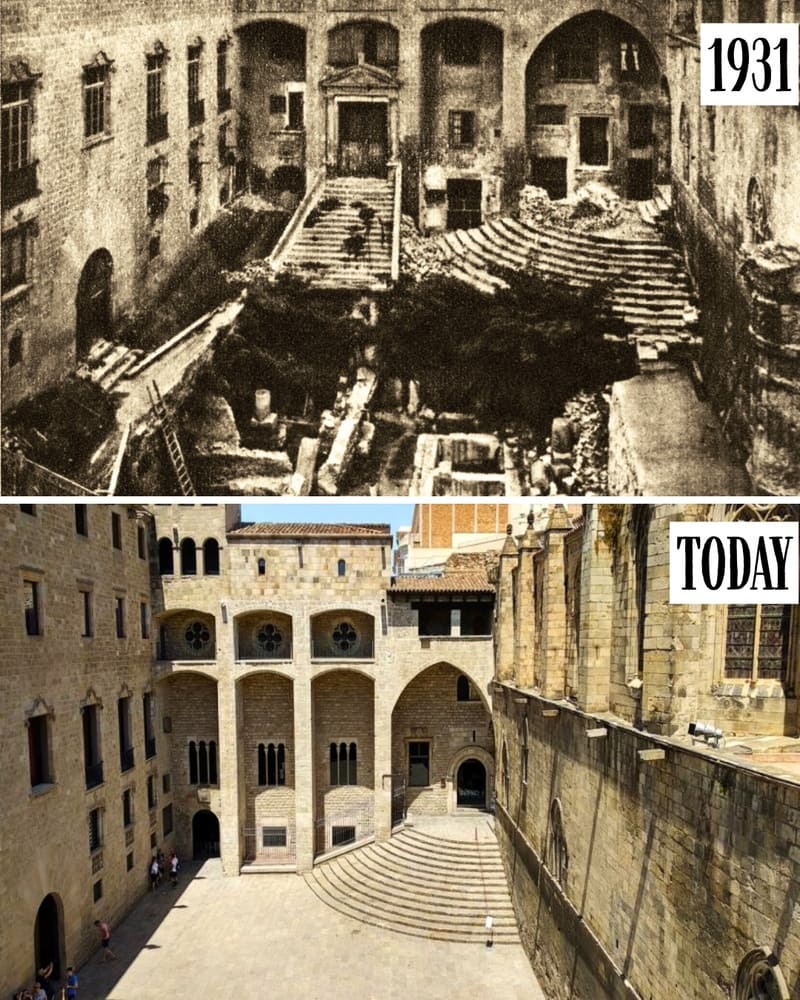
In 1931, workers moved the Gothic mansion Casa Padellàs, stone by stone, from Carrer dels Mercaders to Plaça del Rei. The reason was the opening of the new Via Laietana.
Digging the new foundations uncovered the Roman city of Barcino underneath. Excavations continued until 1960, and the site became a museum in 1943.
38) Font de Sant Just (Sant Just Fountain)
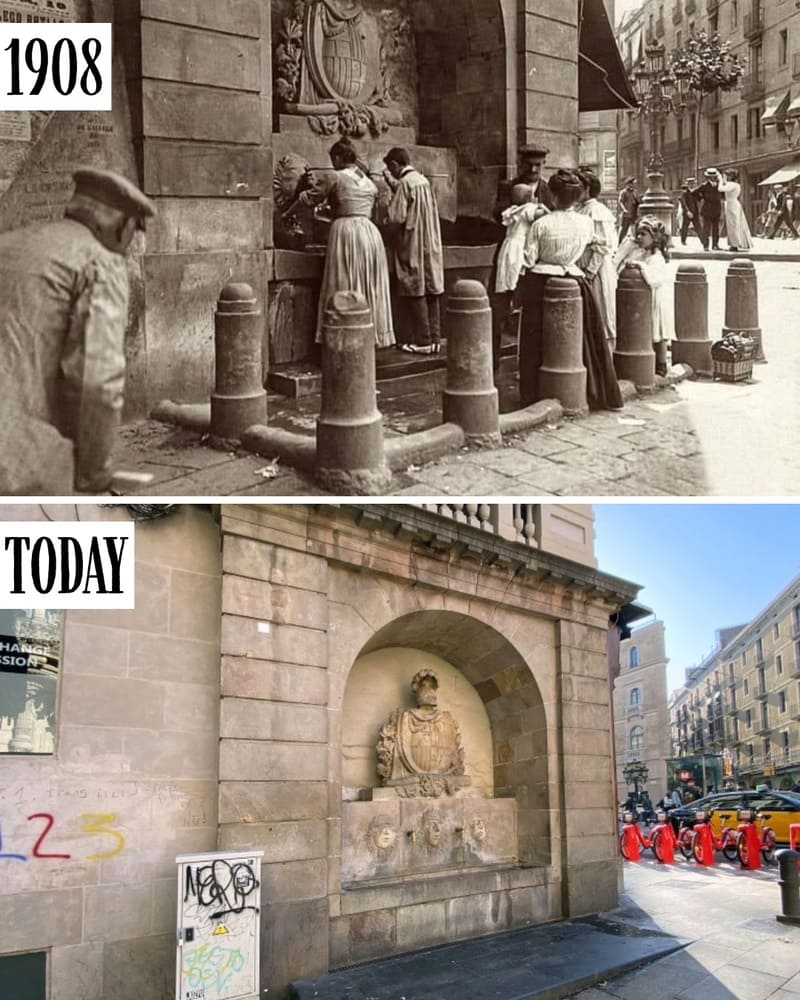
This fountain was carved from Montjuïc stone in 1367. Legend says a merchant and city councillor named Joan Fiveller found the spring while hunting.
It was rebuilt in 1831 and restored again in 2003. The church on the same square may stand on the site of Barcelona’s oldest church.
39) Plaça de Sant Felip Neri
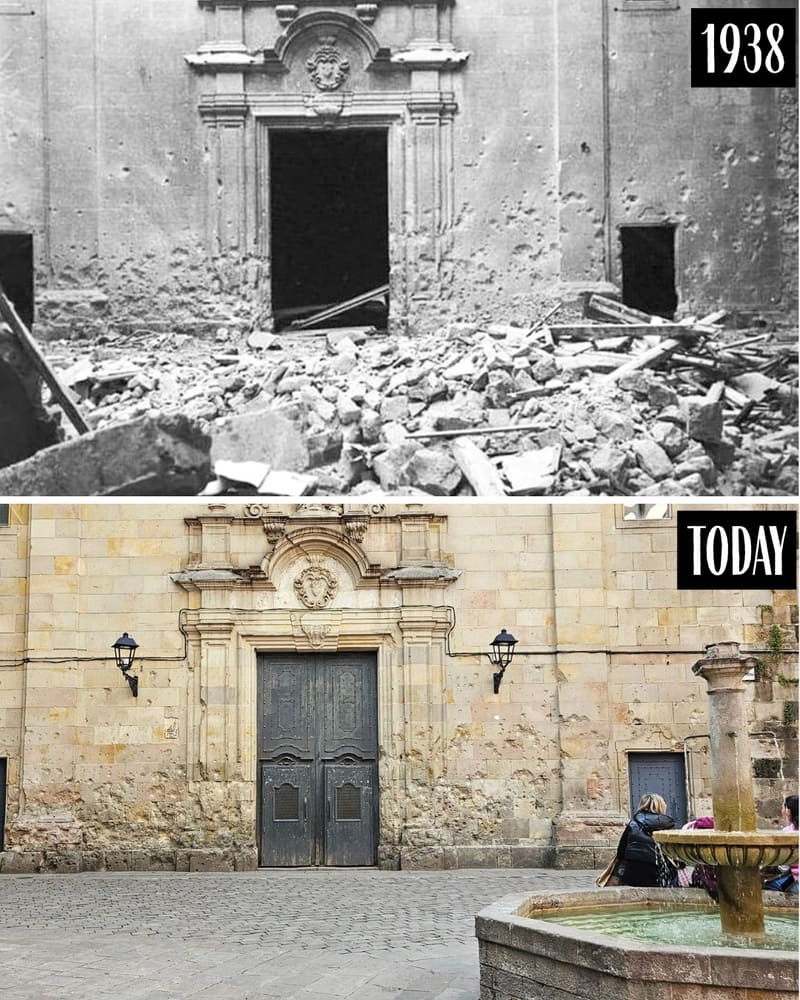
On 30 January 1938, Italian aircraft bombed Barcelona during the Spanish Civil War, and this square was hit. The church was being used as a shelter, and 42 people died, many of them children.
The church façade still shows the shrapnel marks. The city rebuilt the square in the 1950s and added explanatory signs in 2018.
40) Casa Vidal Quadras
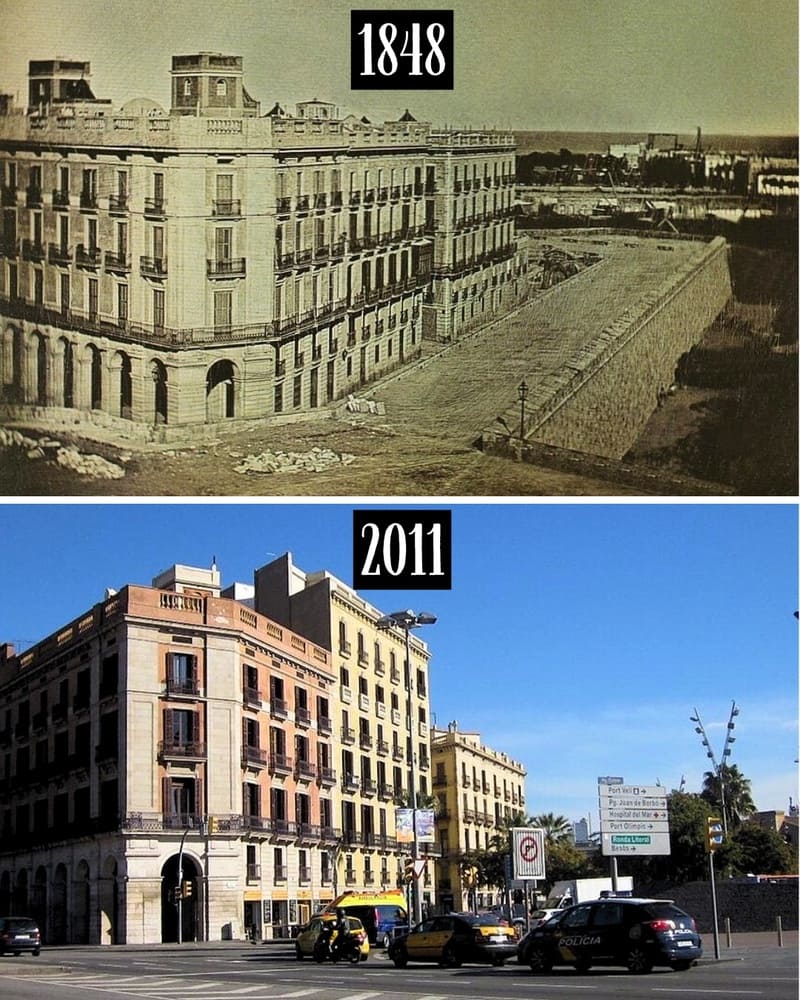
The first photograph in Spain was taken in 1839 on this same square, the Pla de Palau.
The Vidal Quadras brothers made their fortune in Cuba and built this house in the style of its neighbor, Casa Xifré. Picasso’s family lived in Casa Xifré from 1895.
41) Plaça Reial
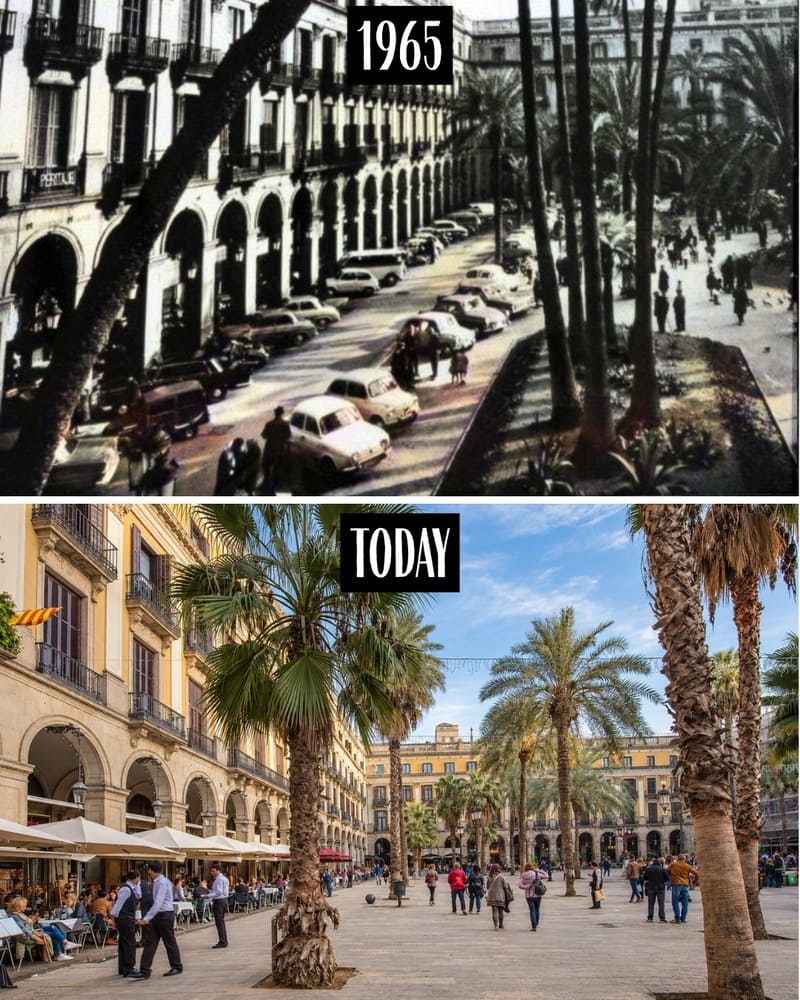
The square was built on the site of a Capuchin convent. Architect Francesc Daniel Molina laid it out between 1848 and 1859.
The palm trees were planted in 1883. The lampposts were designed in 1879 by a young Antoni Gaudí, in one of his first public works.
42) La Rambla flower stalls
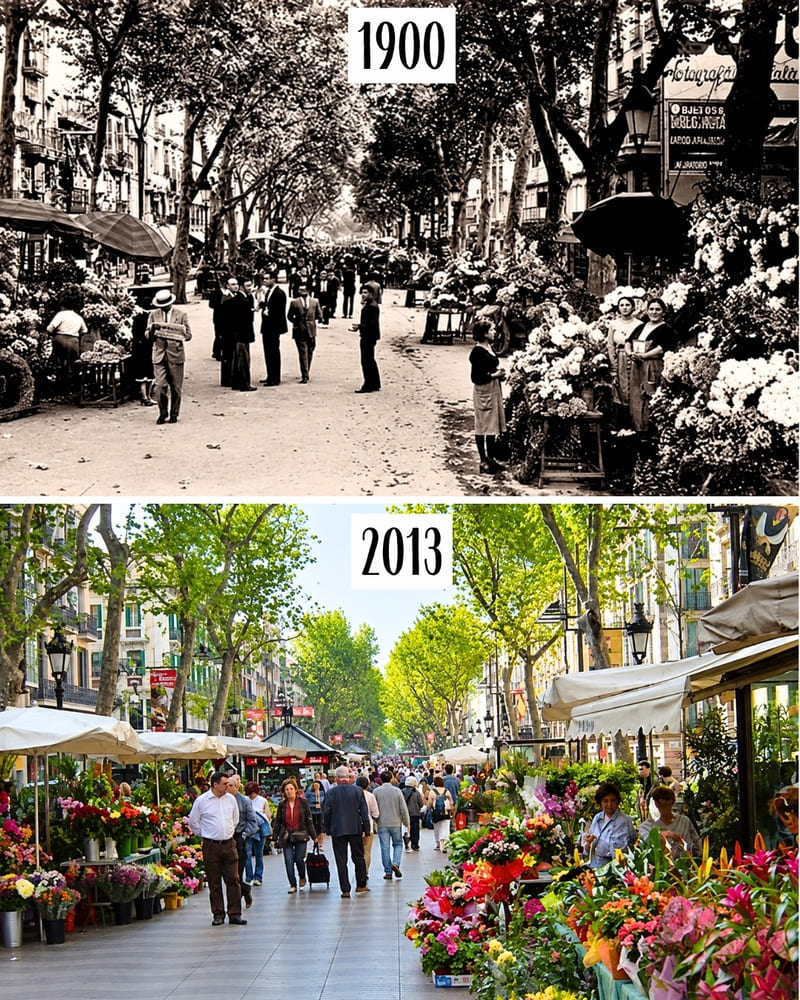
Flower sellers worked on La Rambla as far back as the 13th century. The first permanent stalls date to 1853.
Only eight stalls remain today. The name Rambla comes from the Arabic word ramla (sand), because the street began as an old stream.
43) Drassanes Reials (Royal Shipyards)
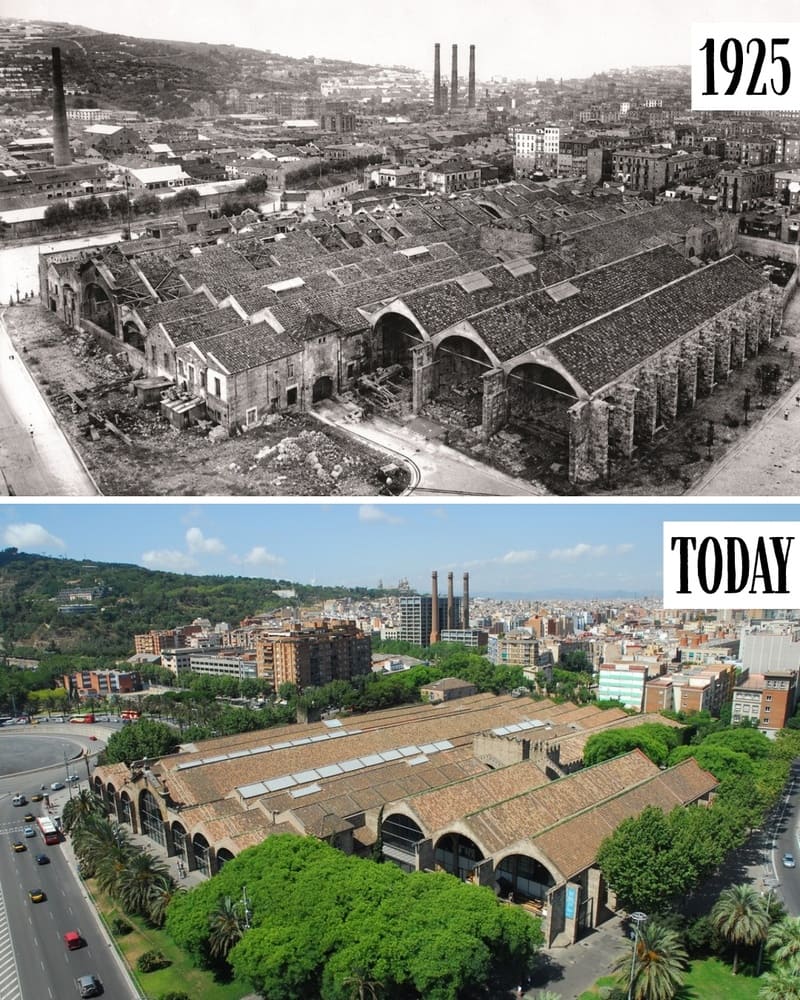
The Drassanes Reials were started in the late 13th century to build war galleys for the Crown of Aragon.
In 1571 the royal galley of John of Austria, flagship at the Battle of Lepanto, was built here. A full-size replica now sits inside the Maritime Museum.
44) Columbus Monument: what he points at
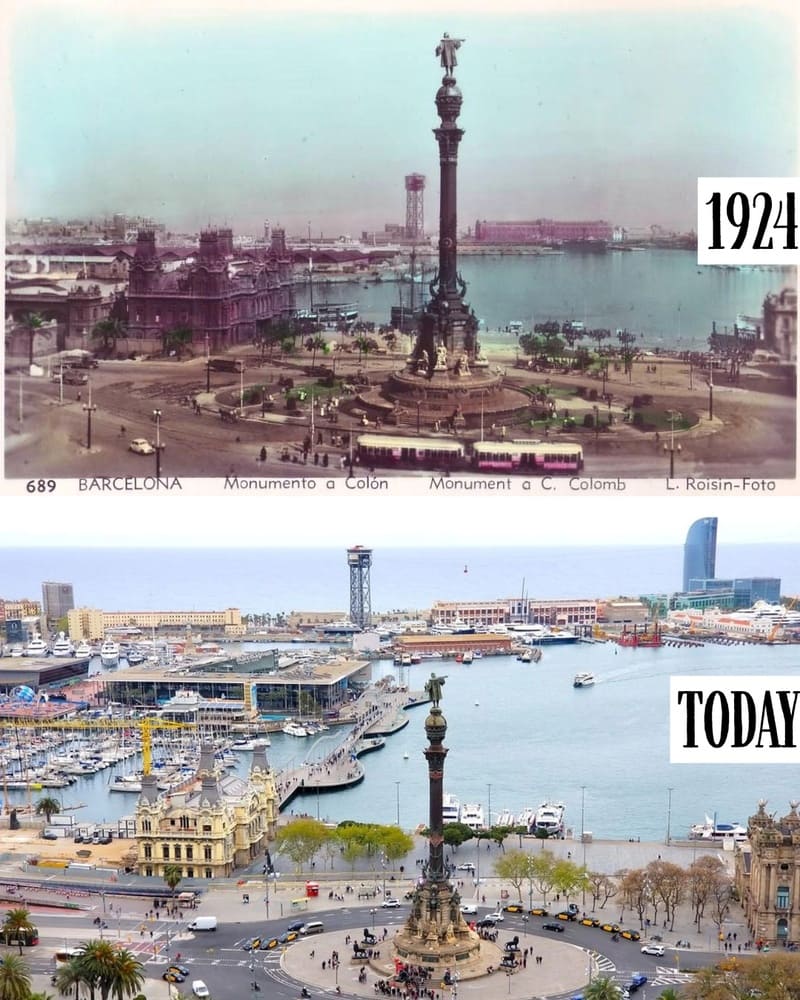
The Columbus Monument was inaugurated in 1888 for the Universal Exposition. With the statue, it is about 197 feet (60 m) tall.
Columbus looks like he is pointing at America. He actually points out over the Mediterranean, toward the east.
45) Columbus Monument: under scaffolding
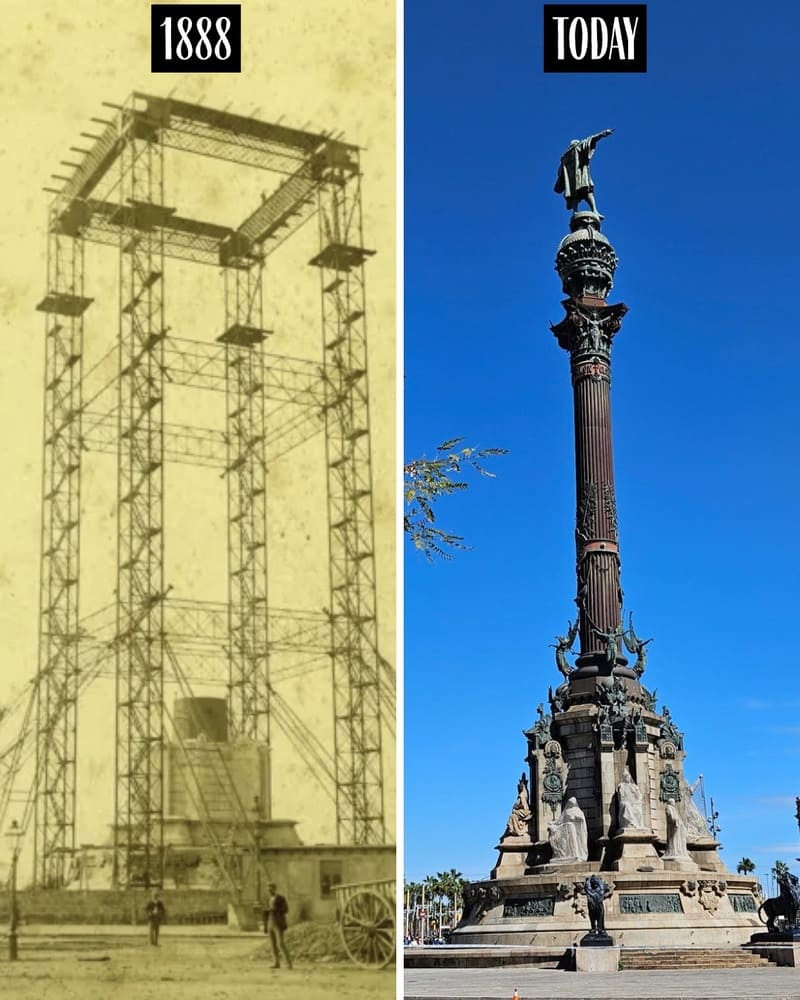
Construction began in 1882 and ran into money problems. The monument was finished in 1888, just in time for the Universal Exposition.
Inside the column is Barcelona’s first elevator. It was hydraulic, and the ride to the top took four minutes.
46) Port Vell: a new promenade over the water
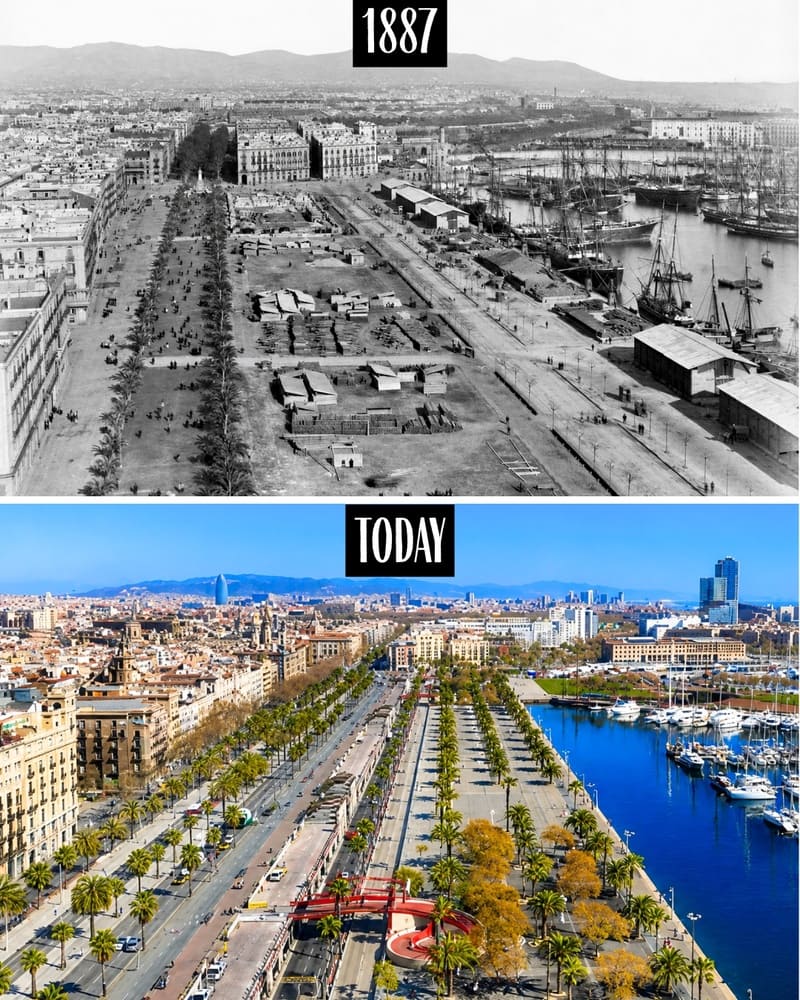
Before the 1992 Olympics, the Port Vell (Old Port) was a run-down area of empty warehouses, rail yards and dumps.
Today a wooden walkway about 1,247 feet (380 m) long, the Rambla de Mar, links La Rambla to Maremàgnum and the Aquarium. Both opened in 1995.
47) Port Vell: the old customs house
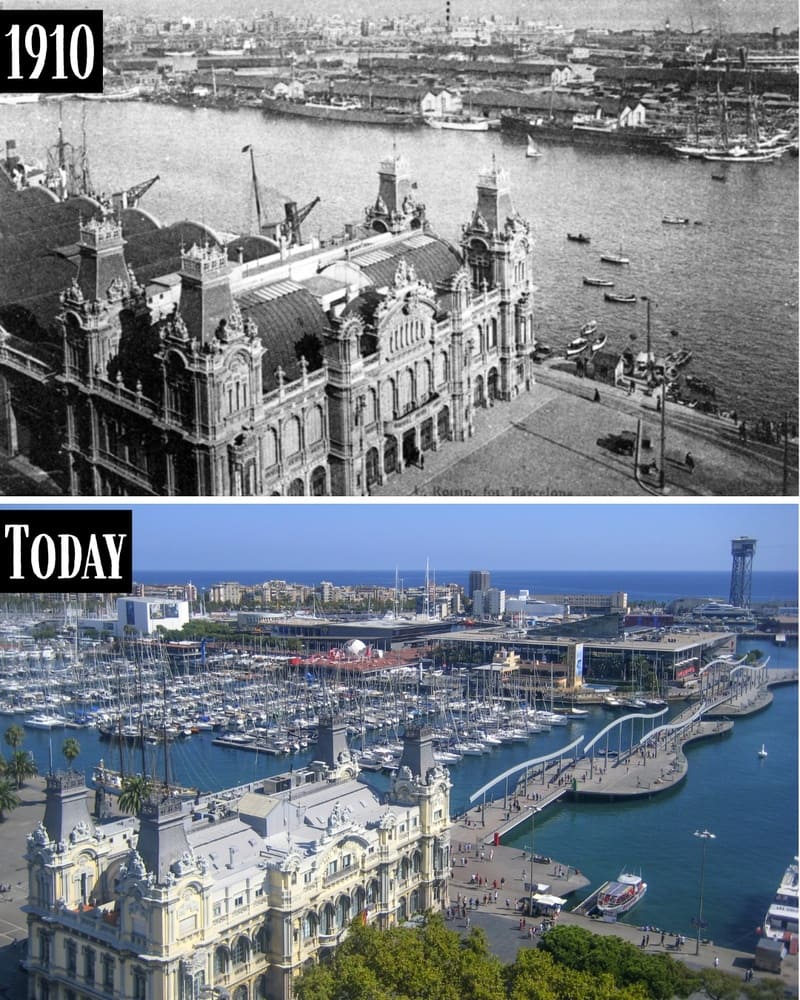
In the 1990s the coastal road along the port was moved underground, and the quays became a promenade.
Nearby you can still see the Aduana, the old customs building from 1902. A long pier next to it holds the World Trade Center.
48) Montjuïc Castle
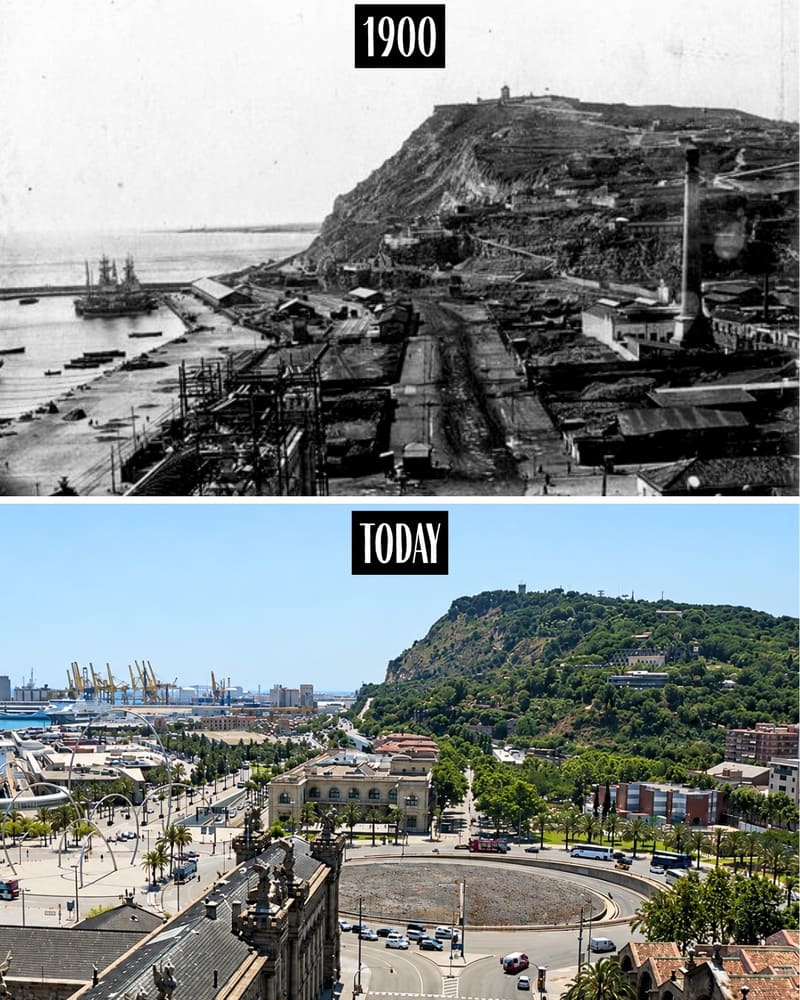
The first fort on Montjuïc went up in 1640. Soldiers and civilians built it in only 30 days, at the start of the Reapers’ War, a Catalan revolt against the king.
The castle you see today dates mostly from the 1750s. Barcelona City Council took ownership in 2007, and it now serves cultural purposes.
49) Barcelona’s beaches: the big rebuild
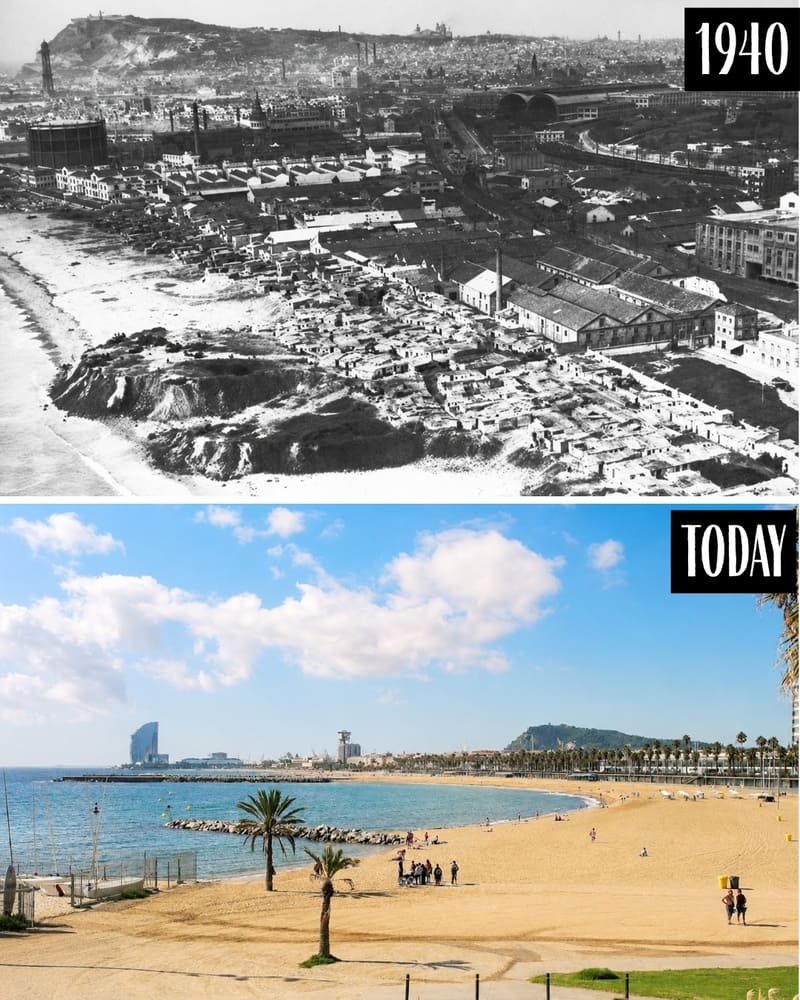
Barcelona’s beaches were remodeled for the 1992 Olympics. Before that, industry, warehouses and rail tracks cut the city off from the sea.
The rail line was buried, the industrial land was cleared, and new sand was brought in.
50) Sant Sebastià beach and the W Barcelona hotel
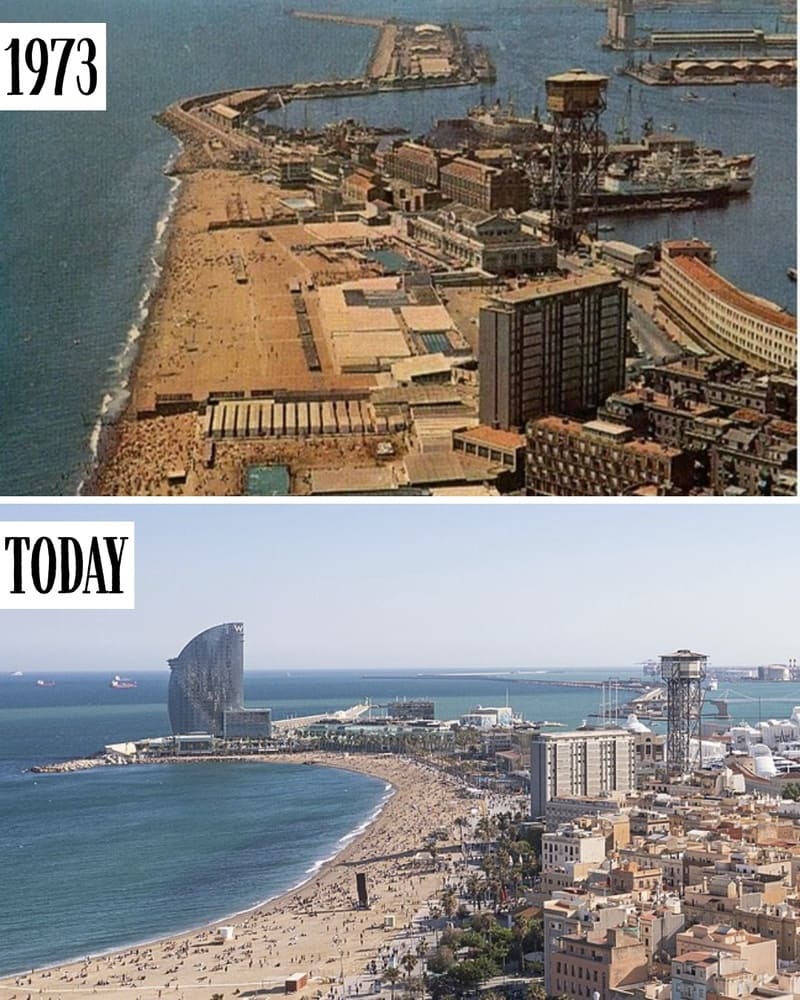
The sail-shaped W Barcelona (also called Hotel Vela, Sail Hotel) opened in 2009 at the far end of this beach. Ricardo Bofill designed it.
It changed Barcelona’s skyline, and not everyone was happy about it.
51) Hotel Arts and Torre Mapfre
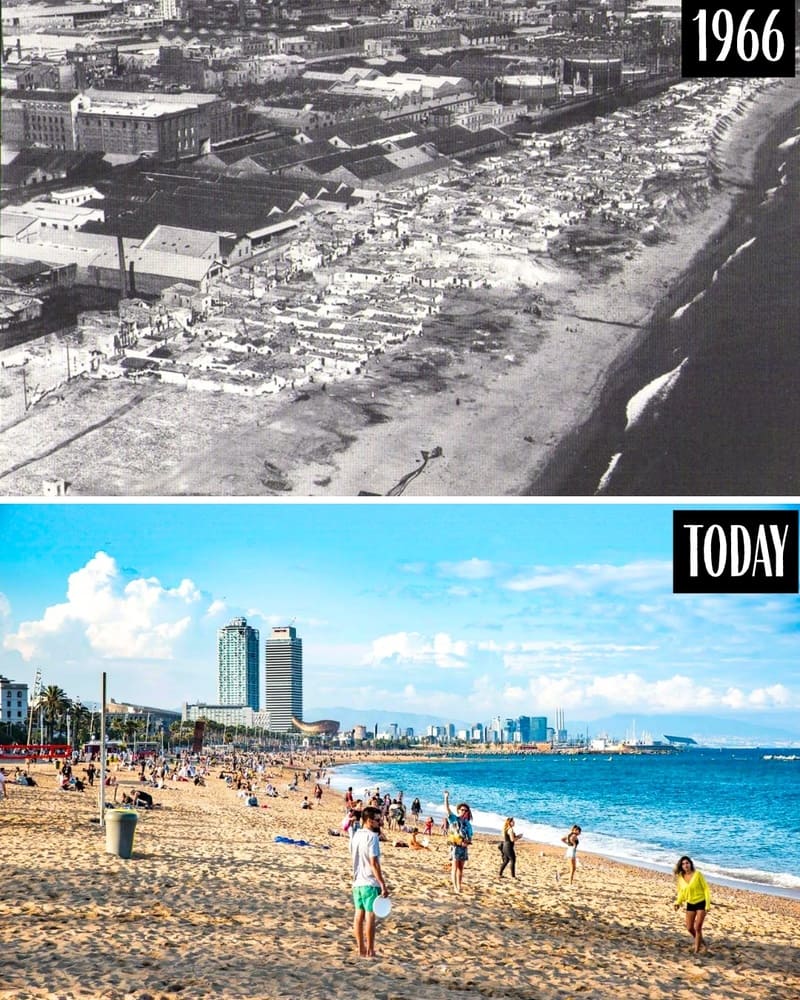
The twin towers of Hotel Arts and Torre Mapfre opened in 1992 for the Olympics. They are still the tallest buildings in Barcelona.
They mark the Olympic Port. The Olympic Village was built over an industrial district and an old shantytown, and the beaches next to it were rebuilt.
52) Plaça de Catalunya
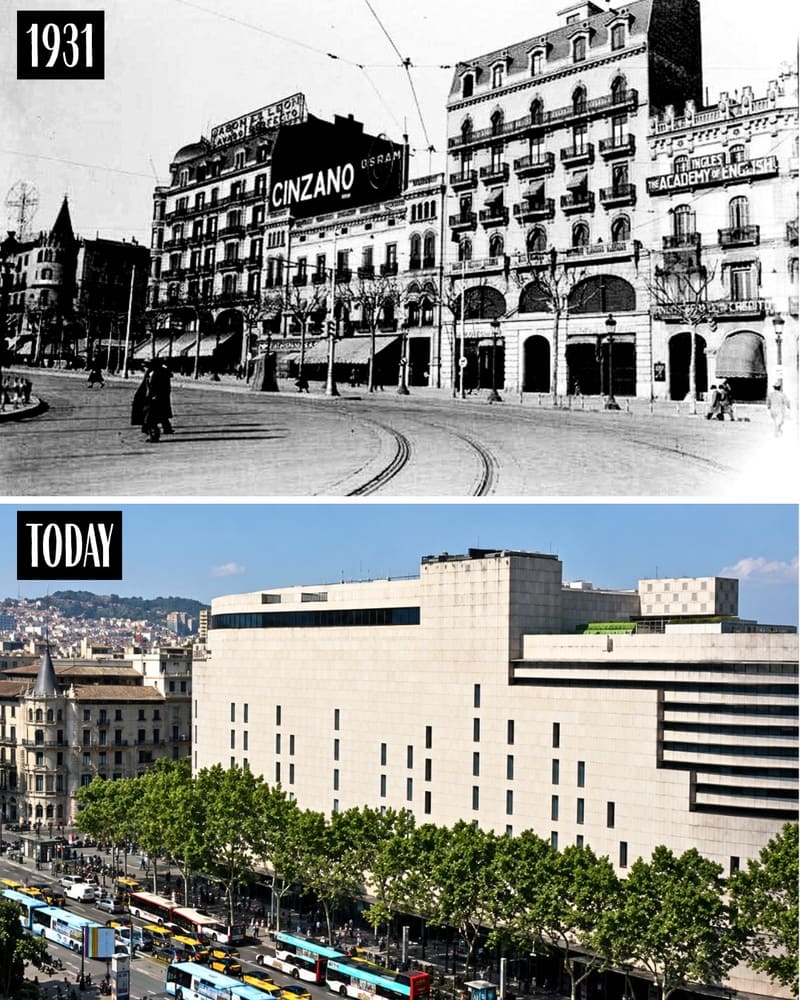
Plaça de Catalunya was not part of the original Eixample plan. The city council asked for it in 1862, and the first stage of construction started in 1902.
Before the Civil War, its cafés, restaurants and theaters were centers of literary and political gatherings. El Corte Inglés opened on the square in 1962.
53) El Corte Inglés
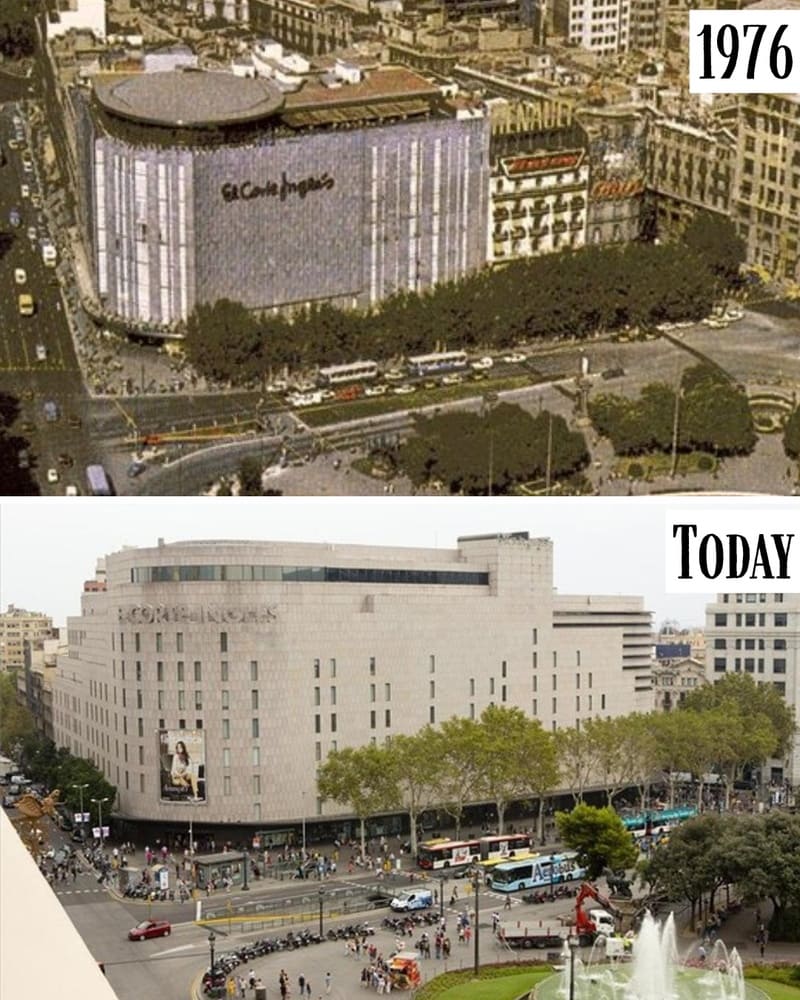
El Corte Inglés opened on Plaça de Catalunya in 1962. The original store filled only the middle of the block.
In the early 1990s the store was extended and given a new stone skin. The city asked two architecture firms to unify the design so the building looks like one.
54) Passeig de Gràcia
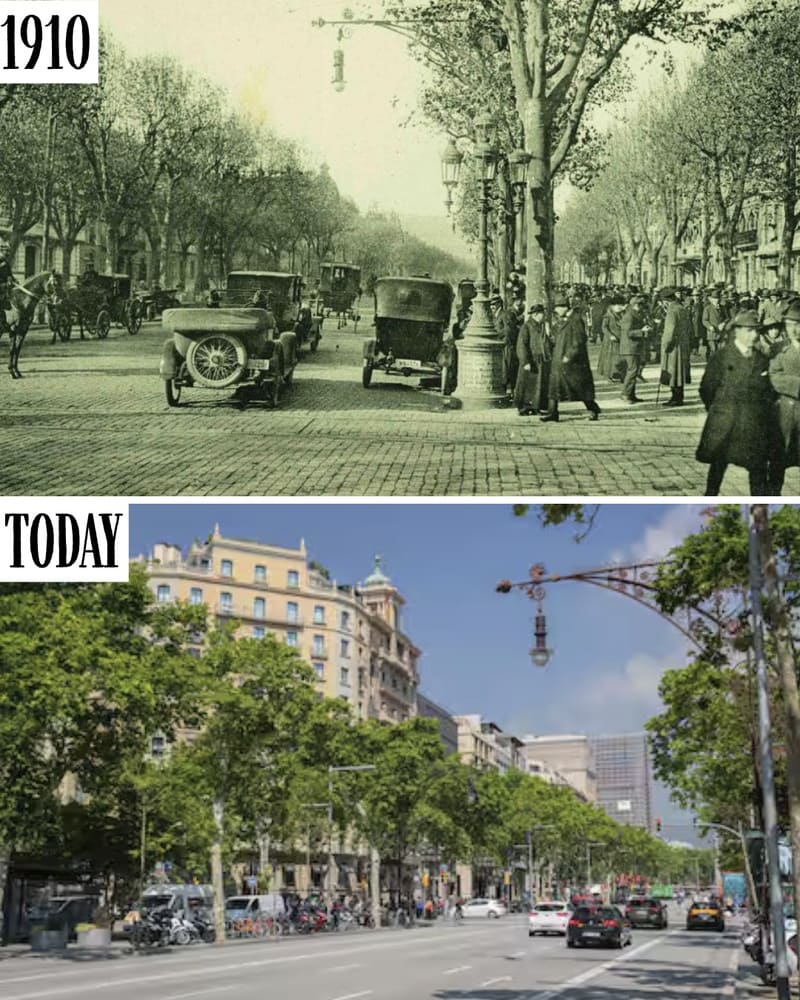
Passeig de Gràcia opened as a tree-lined boulevard in 1827, linking Barcelona with the village of Gràcia. In the 1840s its pleasure gardens even had fairground rides.
The first horse-drawn tram line arrived in 1872. Wealthy families then built Modernista houses along it, from Casa Lleó Morera to Gaudí’s Casa Batlló.
55) Arc de Triomf: the 1888 gate
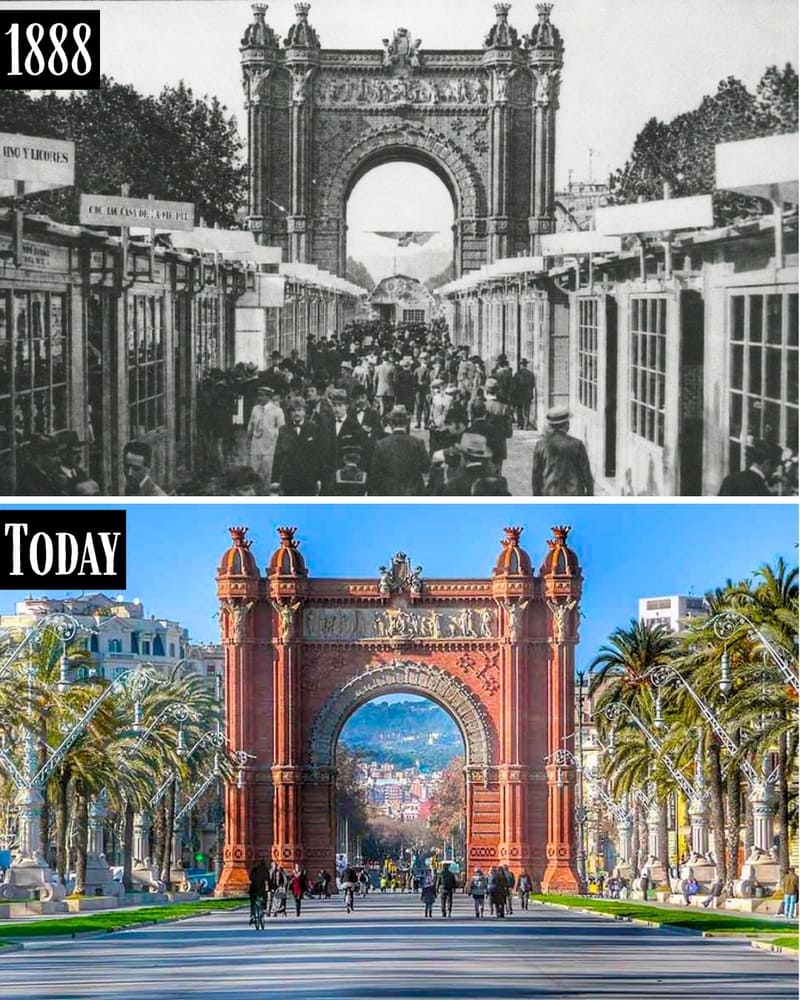
The Arc de Triomf was the entrance gate to the 1888 Universal Exposition. Josep Vilaseca built it in red brick in a neo-Mudéjar style, inspired by Moorish architecture.
It was still in scaffolding when the fair opened. And unlike most triumphal arches, it celebrates progress and industry, not a battle.
56) Arc de Triomf: the promenade
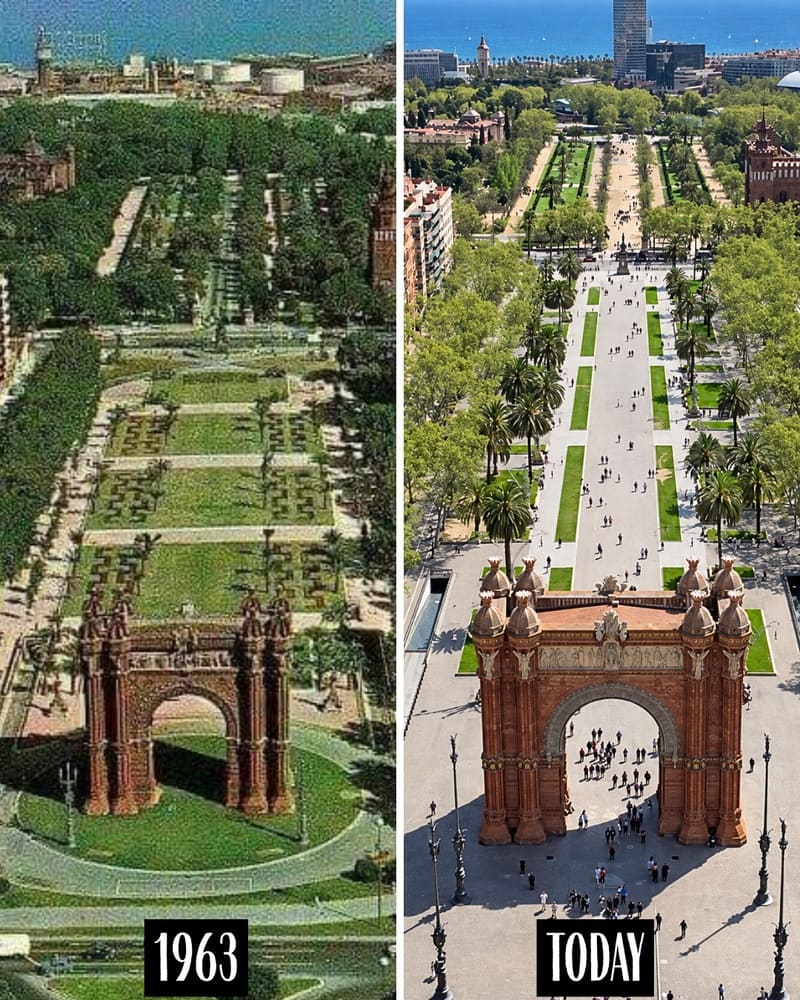
The arch is about 98 feet (30 m) tall. At the top, shields of the 49 Spanish provinces surround the coat of arms of Barcelona.
It stands at the head of Passeig de Lluís Companys, a wide promenade that leads to Parc de la Ciutadella, where the fair took place.
57) Tibidabo: the first hermitage
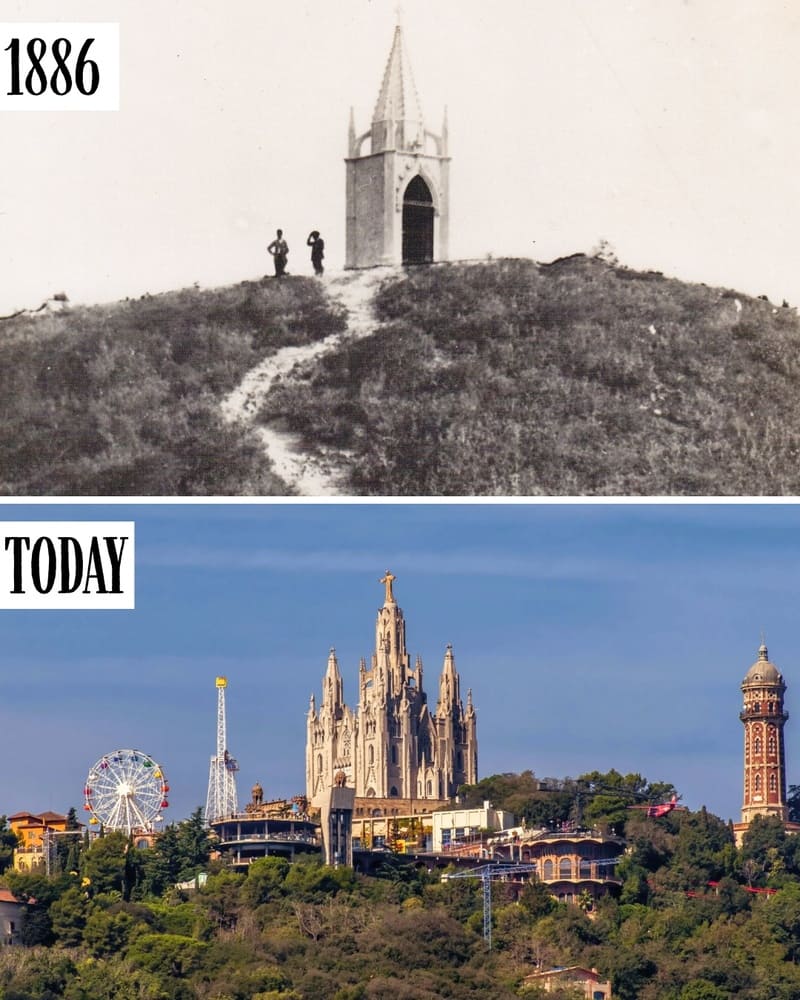
The small neo-Gothic hermitage on the summit was inaugurated in 1886. It is still there, built into the church that came later.
The name Tibidabo comes from the Latin phrase tibi dabo, “I will give you.”
58) Tibidabo: the Temple of the Sacred Heart
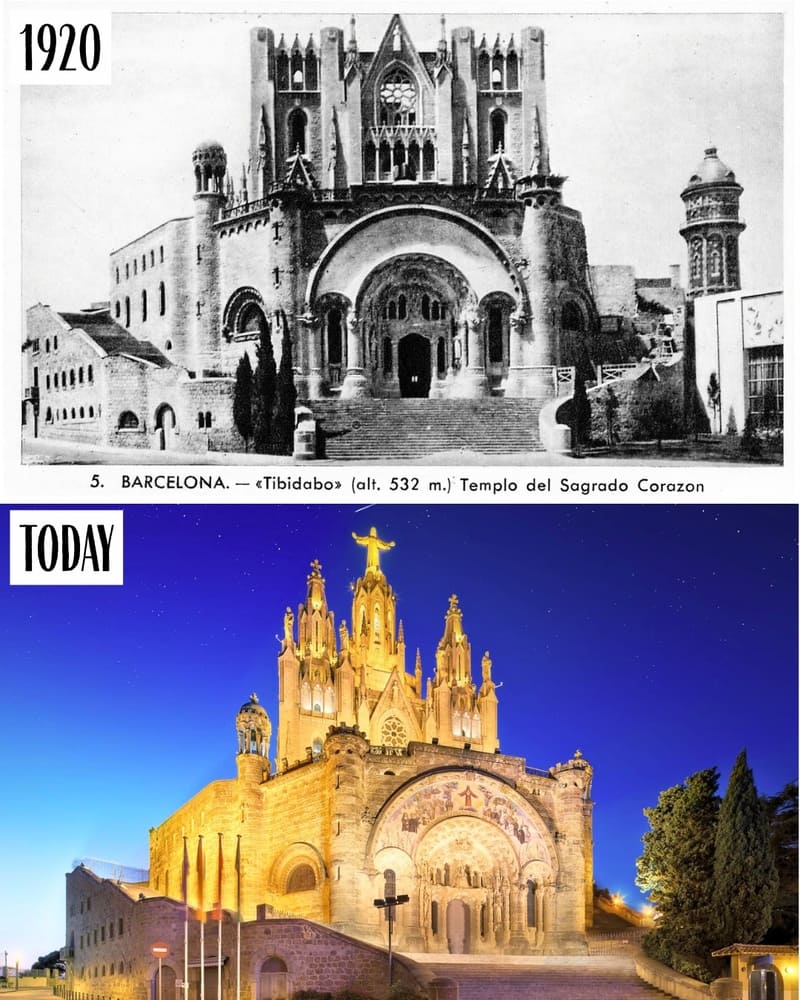
The Temple of the Sacred Heart took from 1902 to 1961 to build. Enric Sagnier started it, and his son Josep Maria finished it.
The idea came from rumors that a Protestant church or a hotel-casino might be built on the summit. Pope John XXIII made it a minor basilica on 29 October 1961.
59) Tibidabo: the amusement park
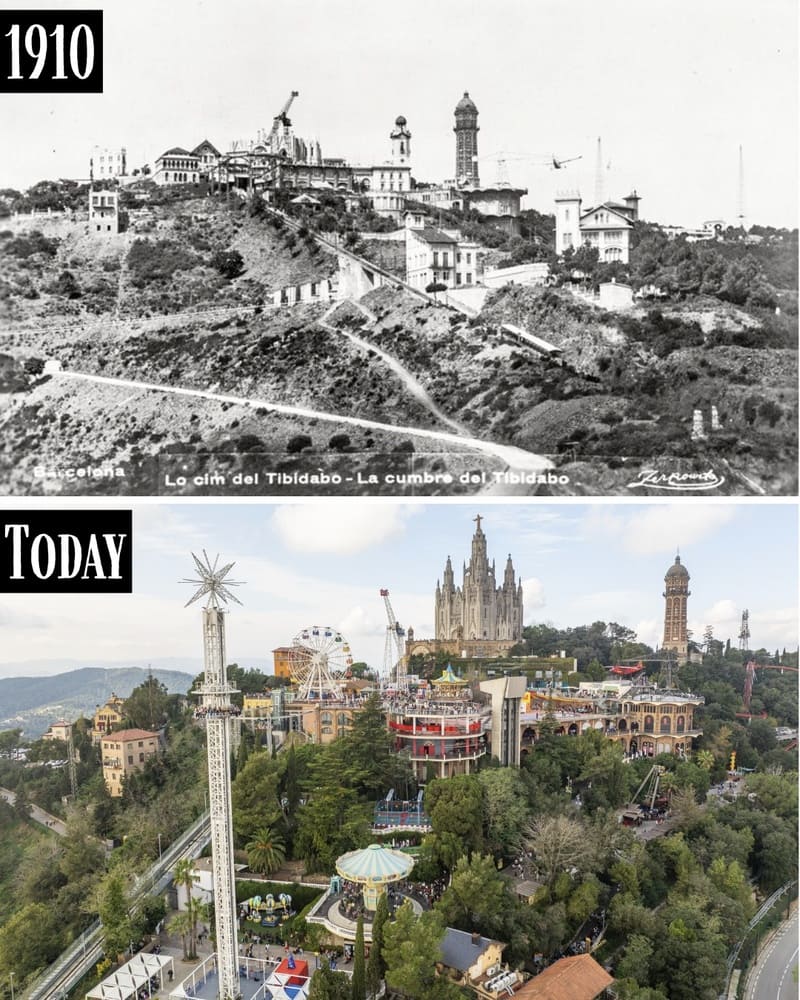
Tibidabo’s amusement park, funicular and Tramvia Blau (Blue Tram) all opened in 1901. When this photo was taken, they were less than ten years old.
Today the blue tram takes you halfway up, and the funicular does the rest.
60) Montserrat Monastery
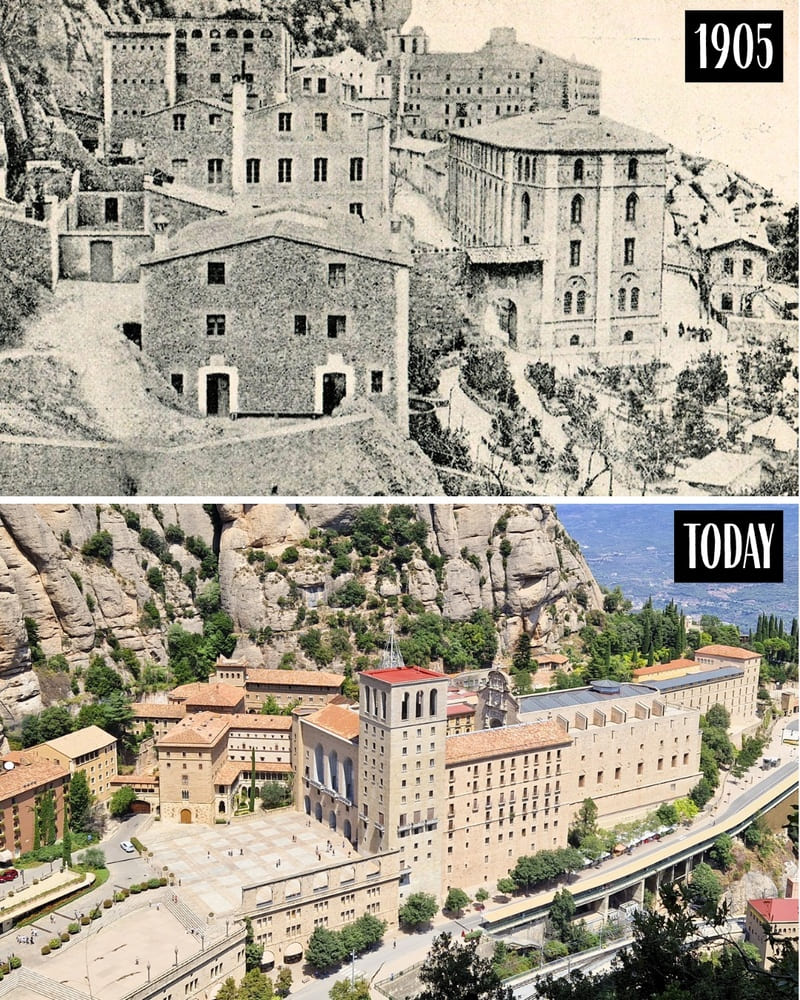
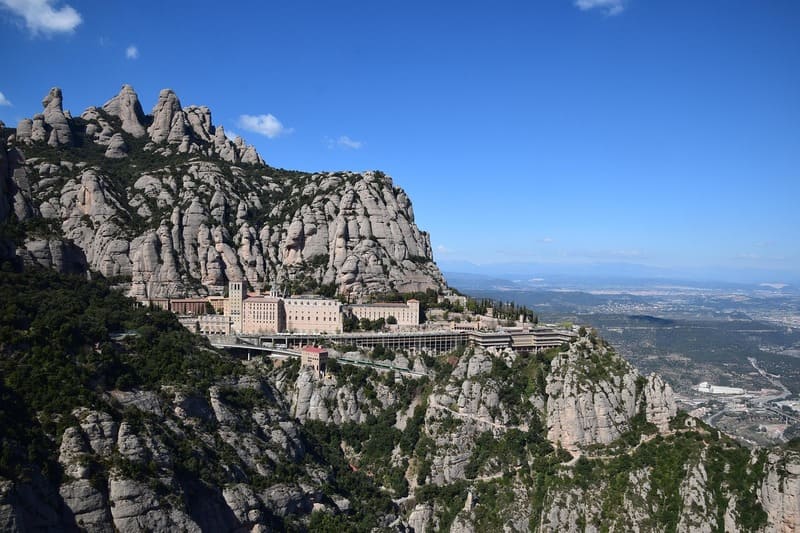
A Benedictine monastery was founded here in 1025. French troops destroyed it in 1811 and 1812.
It was rebuilt from the mid-1800s, with Modernista architects such as Puig i Cadafalch helping to expand it. Montserrat is about 30 miles (48 km) from Barcelona.
61) La Moreneta, the Black Madonna
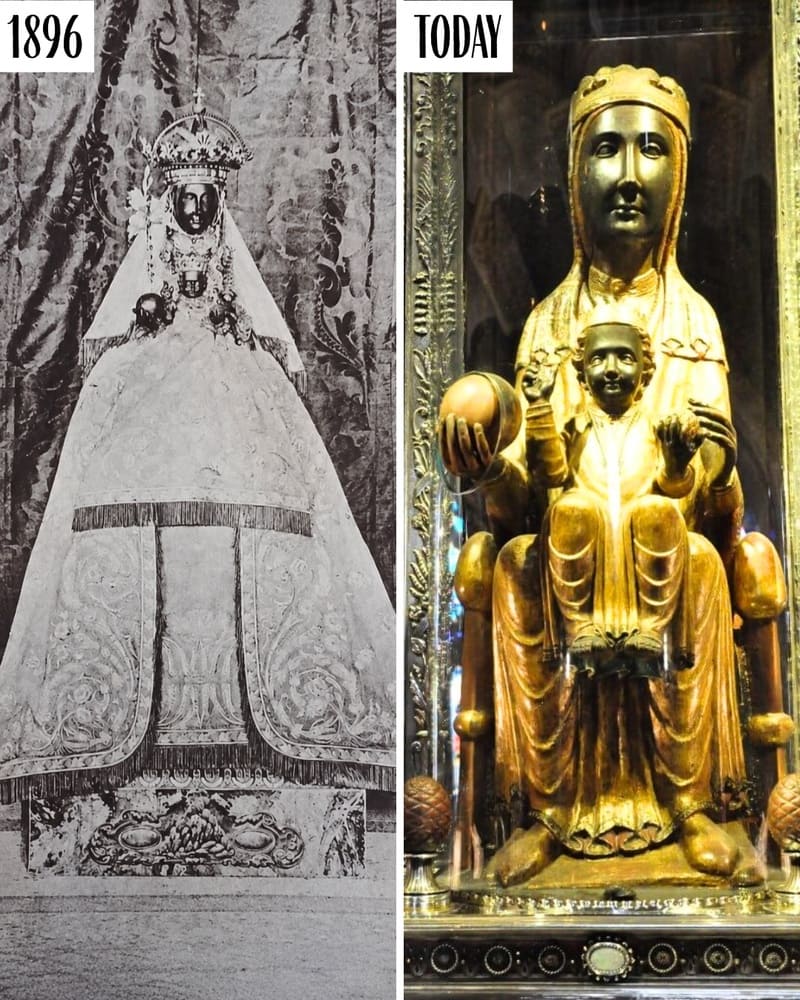
La Moreneta (the Little Dark One) is a Romanesque wooden statue from the 12th century. She holds a globe in her right hand.
Pope Leo XIII named her patroness of Catalonia in 1881. Studies suggest the statue was originally lighter and darkened over the centuries.
62) Montserrat: two popes
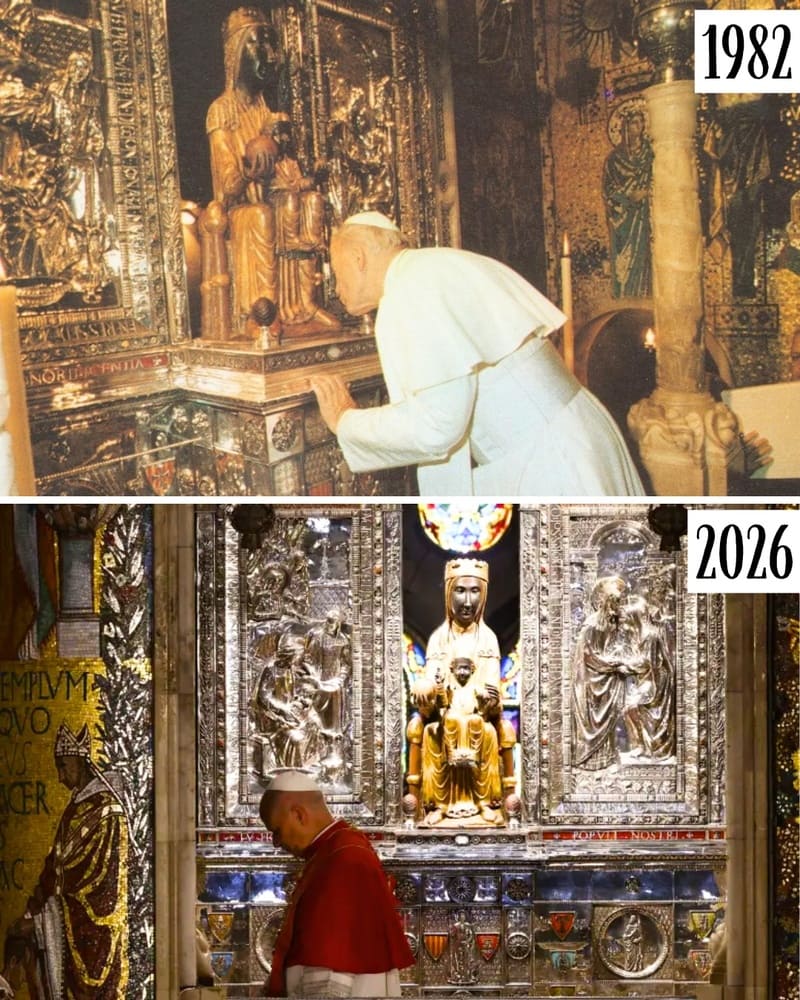
Pope John Paul II visited Montserrat on 7 November 1982, on his first trip to Spain. Pope Leo XIV came on 10 June 2026. It was only the second papal visit in modern times.
Leo XIV told the crowd in Catalan that he had been a parish priest in Peru, at a parish named for Our Lady of Montserrat.
63) Plaça d’Espanya and the Venetian Towers
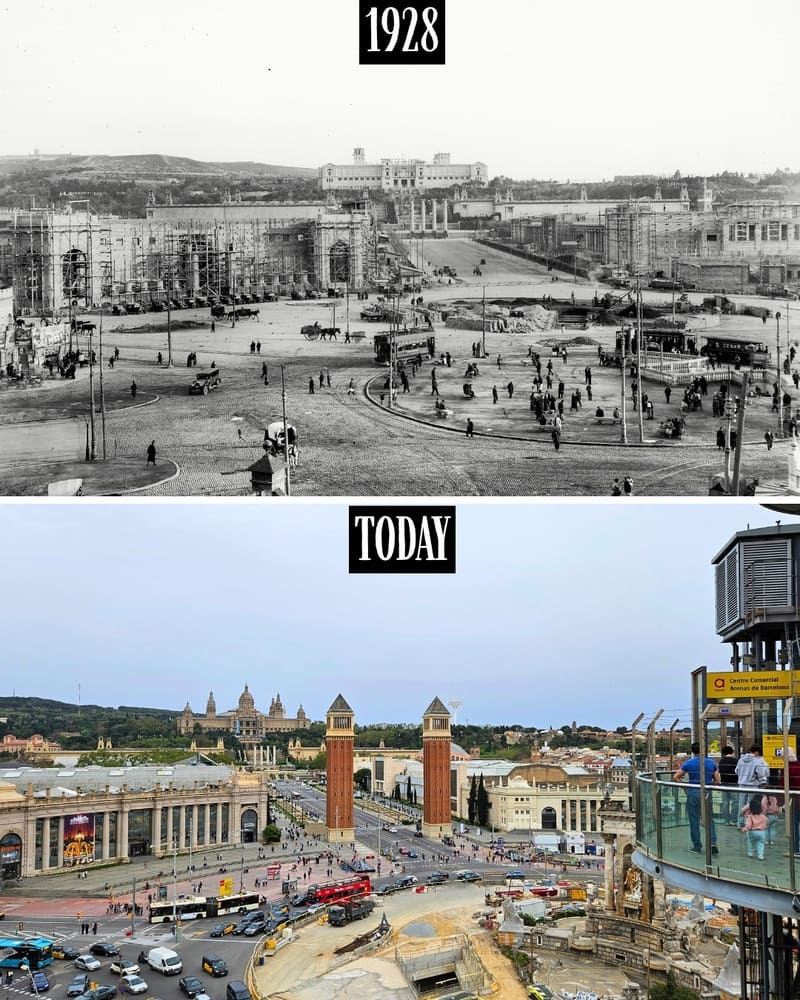
The Venetian Towers were built for the 1929 International Exposition. They are 154 feet (47 m) tall and copy the bell tower of St. Mark’s in Venice.
For centuries this site was used for public hangings, until the gallows moved to the Ciutadella in 1715.
64) Las Arenas: the bullring
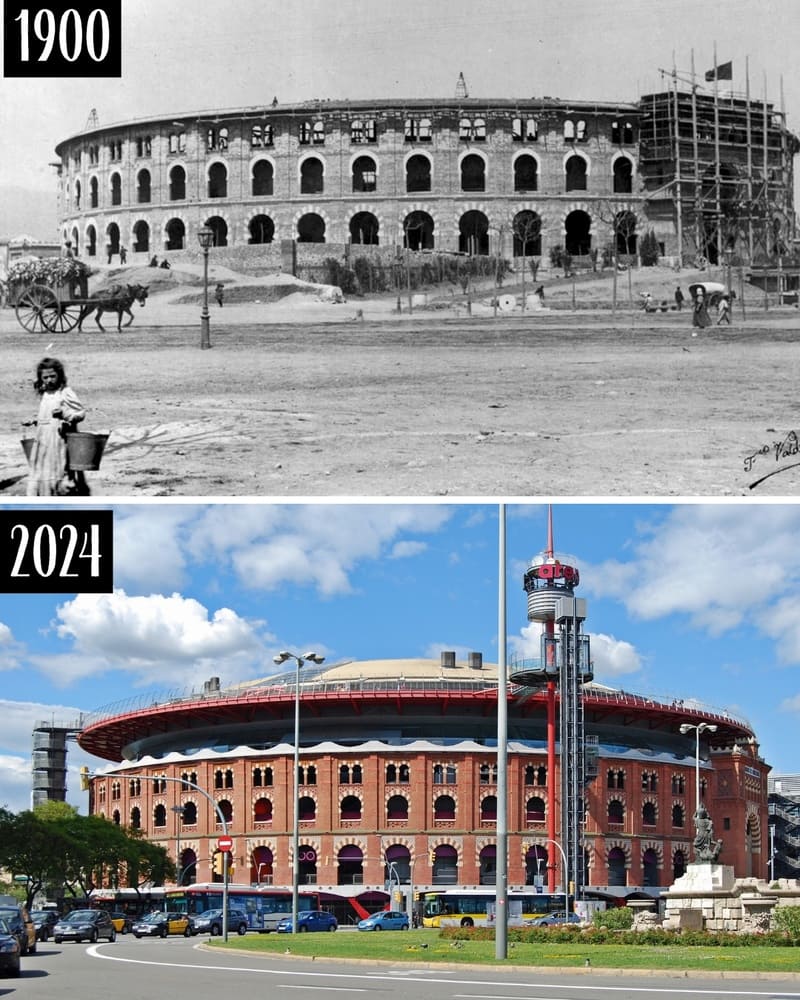
Las Arenas opened as a bullring on 29 June 1900. August Font i Carreras designed it in neo-Mudéjar style, with a horseshoe-shaped entrance.
It could seat about 16,000 people. The last bullfight was held in 1977.
65) Las Arenas: the makeover
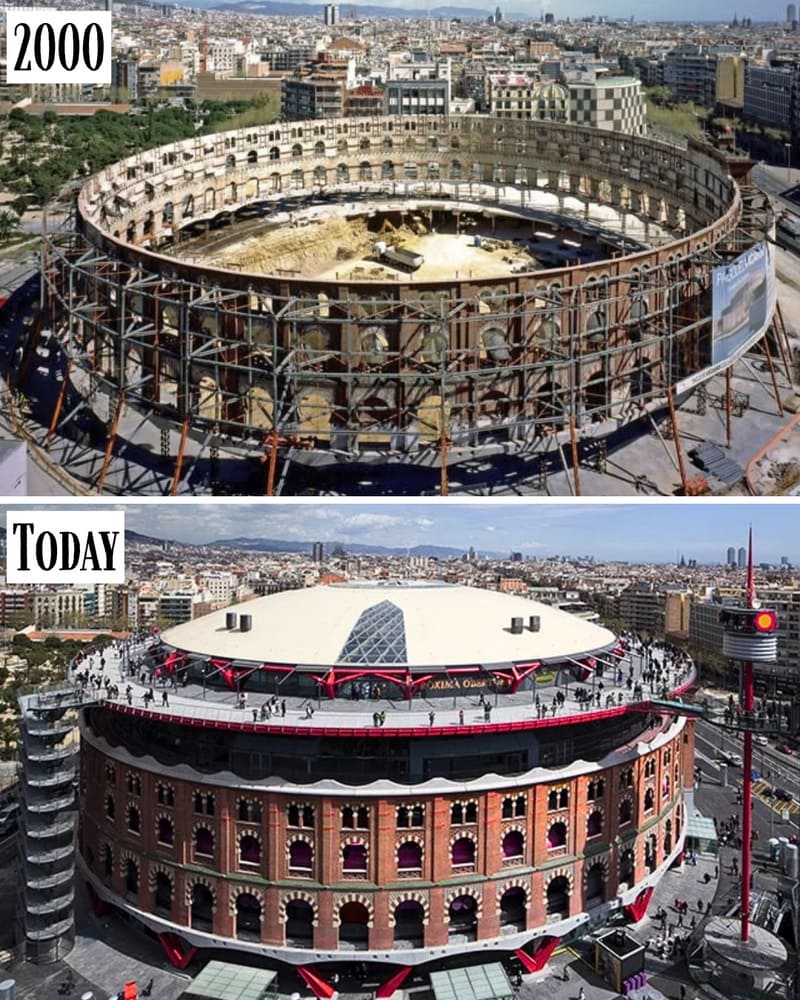
Richard Rogers, the architect of the Pompidou Centre in Paris, led the conversion. His team kept the 1900 façade and rebuilt the inside.
The mall opened in March 2011. It has a dome about 89 feet (27 m) high and a rooftop terrace open to the public.
66) Poble Espanyol
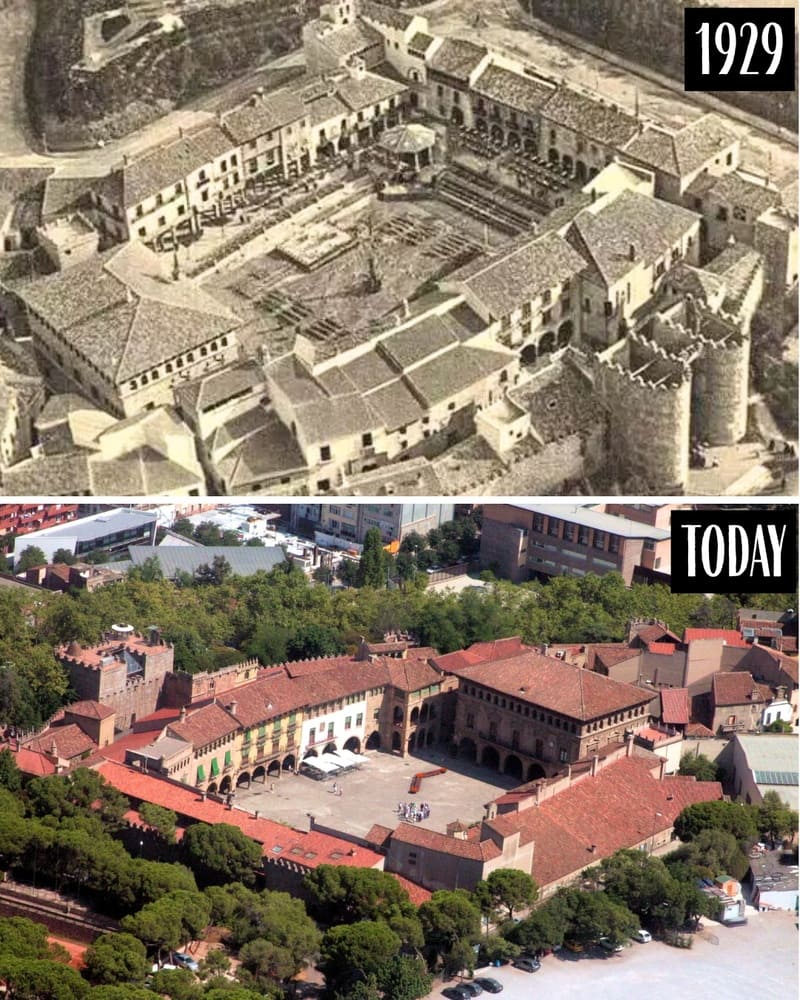
The Poble Espanyol (Spanish Village) was built for the 1929 International Exposition. It has more than 110 buildings copied from towns across Spain.
It was meant to close after the fair, but visitors liked it too much. The main gate copies the San Vicente gate in the walls of Ávila.
67) Camp Nou
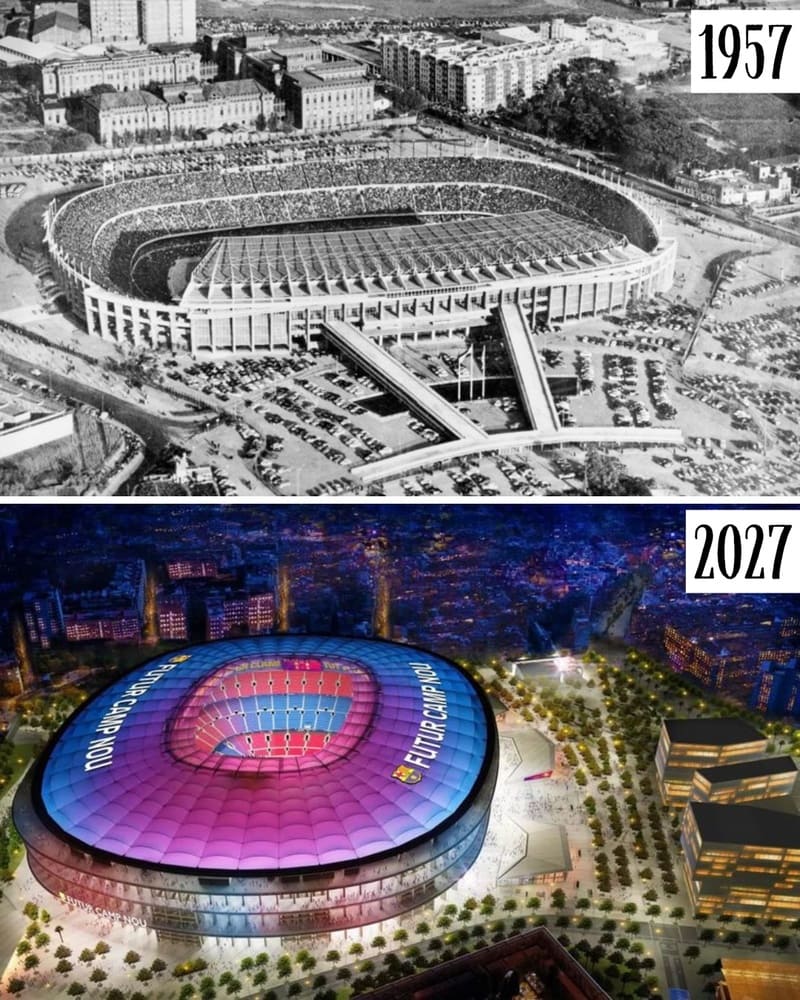
Camp Nou opened on 24 September 1957 and held about 93,000 people. In 1982, Pope John Paul II celebrated Mass here during his visit to Catalonia.
The Espai Barça renovation started in 2023. The finished stadium is planned to hold more than 105,000 people, with completion expected in 2027.
Where to go next
If the Gaudí photos hooked you, start with my guide to visiting Park Güell the smart way. It picks up where the dragon, the staircase and the serpentine bench leave off.
And if the markets made you hungry, read the Barcelona markets worth your time next. It starts at the Born, Sant Antoni and Santa Caterina and goes from there.