12 Facts That Make Antoni Gaudí Unforgettable
By Dorian · Updated October 25, 2026
Most people know Gaudí for his buildings.
Far fewer know what his life looked like.
He fasted close to death, was mistaken for a beggar after an accident, and is now on the road to sainthood.
These are the stories behind the architect.
1) His own teacher wasn’t sure if he was a genius or a madman
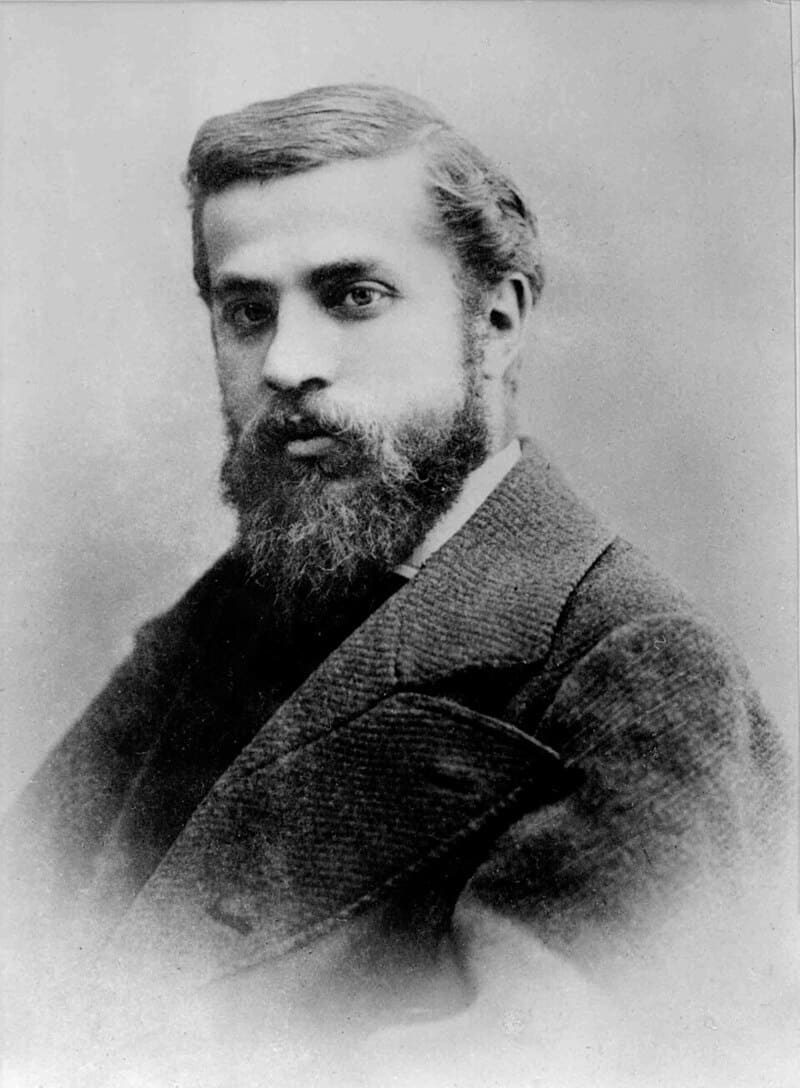
Gaudí graduated as an architect in 1878.
His grades were only mediocre.
But he stood out in drawing and design projects.
According to the story, the school’s director, Elies Rogent, handed him the diploma and wondered aloud whether he had just certified a madman or a genius.
His verdict was that only time would tell.
Time did.
2) He nearly starved himself during Lent
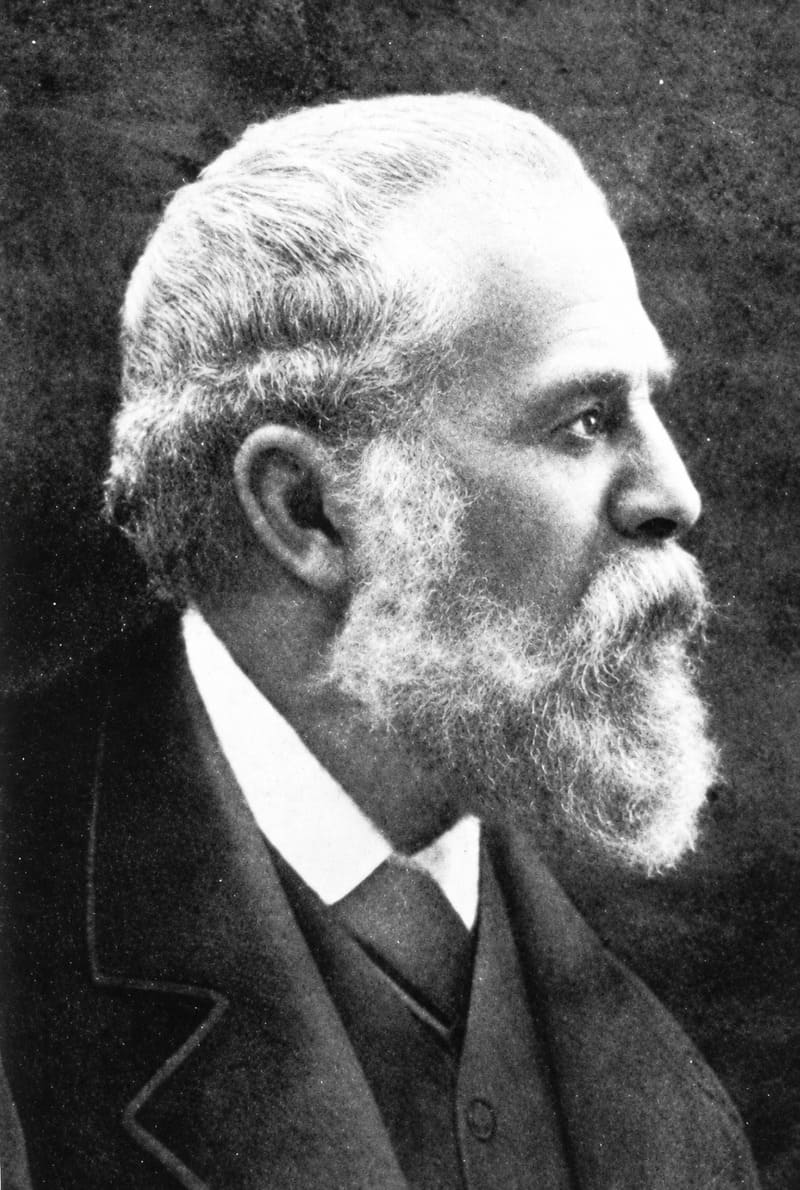
In 1894, Gaudí took his Lenten fast to the extreme.
He was already a vegetarian by then.
Because he was already well known, Barcelona’s newspapers followed the fast day by day.
He grew so weak that his father, his friends and even a doctor friend could not talk him out of it.
A bishop’s intervention reportedly saved his life.
He recovered, but some people close to his cause see 1894 as the year his faith and his work became one.
From then on, the Sagrada Família became more and more central to his life.
3) A tram hit him and nobody recognized him
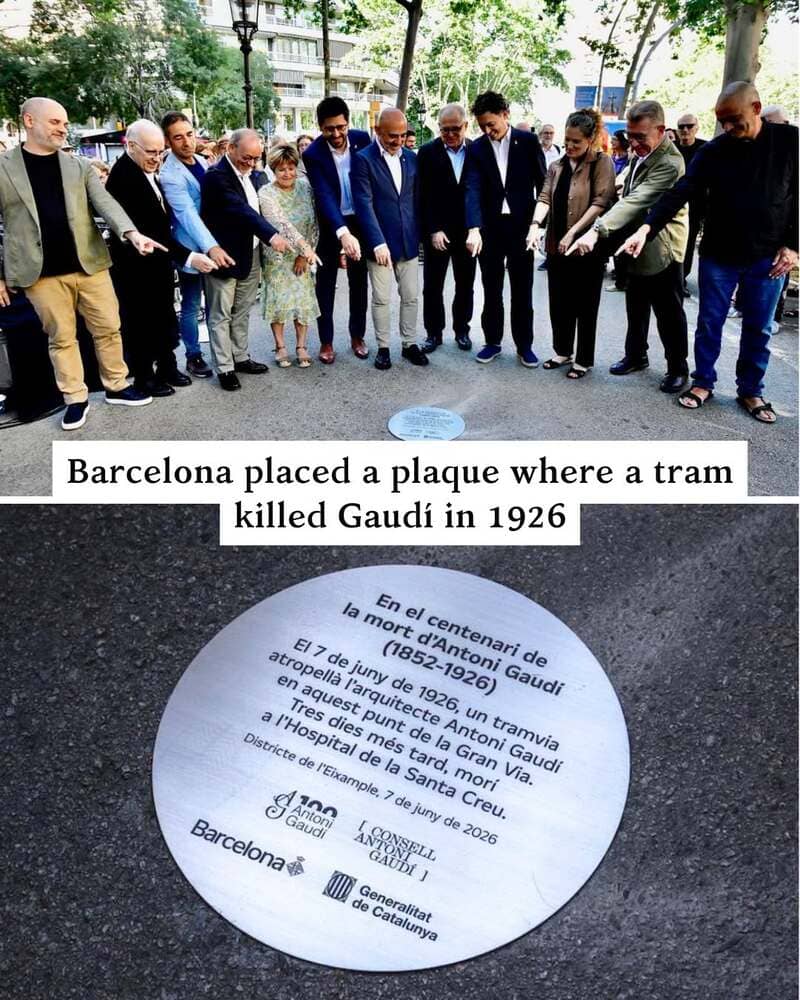
On June 7, 1926, Gaudí was crossing Gran Via de les Corts Catalanes when a tram struck him.
He was 73.
His clothes were worn and he had no ID on him.
Passersby took him for a beggar.
Several taxis refused to take him to a hospital.
He ended up at the Hospital de la Santa Creu, a hospital for the poor, where he received only basic care.
The chaplain of the Sagrada Família recognized him the next day.
It was too late. He died on June 10.
Today his basilica welcomes close to 5 million visitors a year.
4) La Pedrera began as an insult
Casa Milà was finished in 1910.
Barcelona did not know what to make of it.
Locals mocked its wavy stone façade and called it “La Pedrera,” which means the quarry.
Satirical magazines joined in, with cartoons running between 1909 and 1925.
The first recorded use of the nickname appeared in a children’s magazine in 1925.
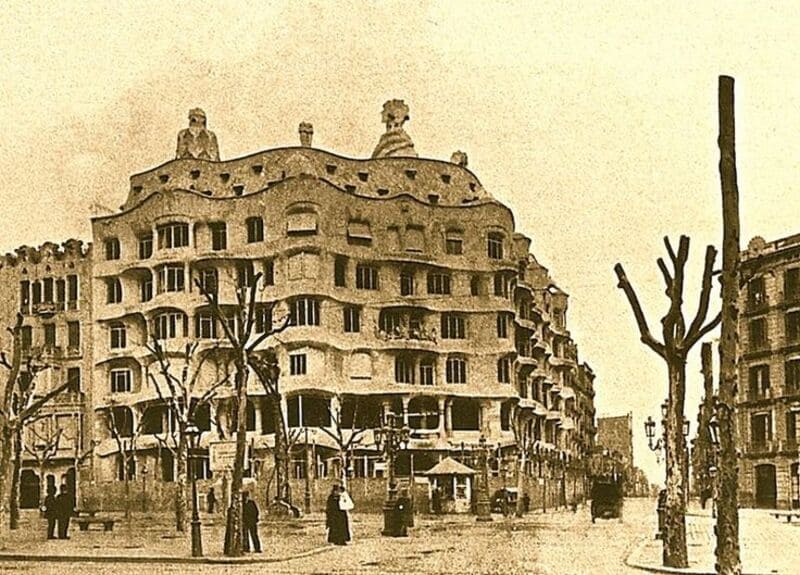
It was meant as a joke.
Today the name is how everyone knows the building, and it is a UNESCO World Heritage Site.
The rooftop has 30 chimneys shaped like stone warriors.
5) Casa Batlló looks like a skeleton
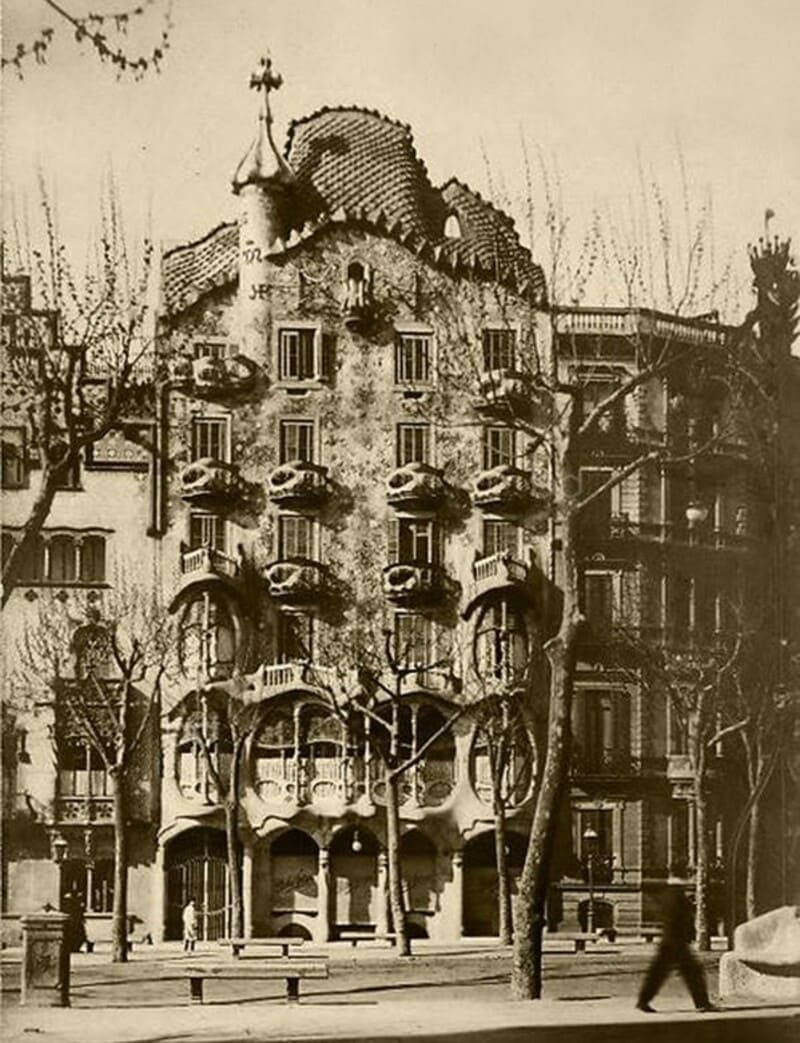
Locals call it Casa dels Ossos, the House of Bones.
The columns on the façade look like bones.
The balconies look like skulls.
The arched roof looks like the back of a dragon, with ceramic tiles for scales.
A popular theory says the whole building tells the legend of Saint George, the patron saint of Catalonia, slaying the dragon.
In that reading, the small tower topped with a cross is the saint’s lance stuck in the dragon’s back.
The bones and skulls would be the dragon’s victims.
6) He designed buildings with strings and weights
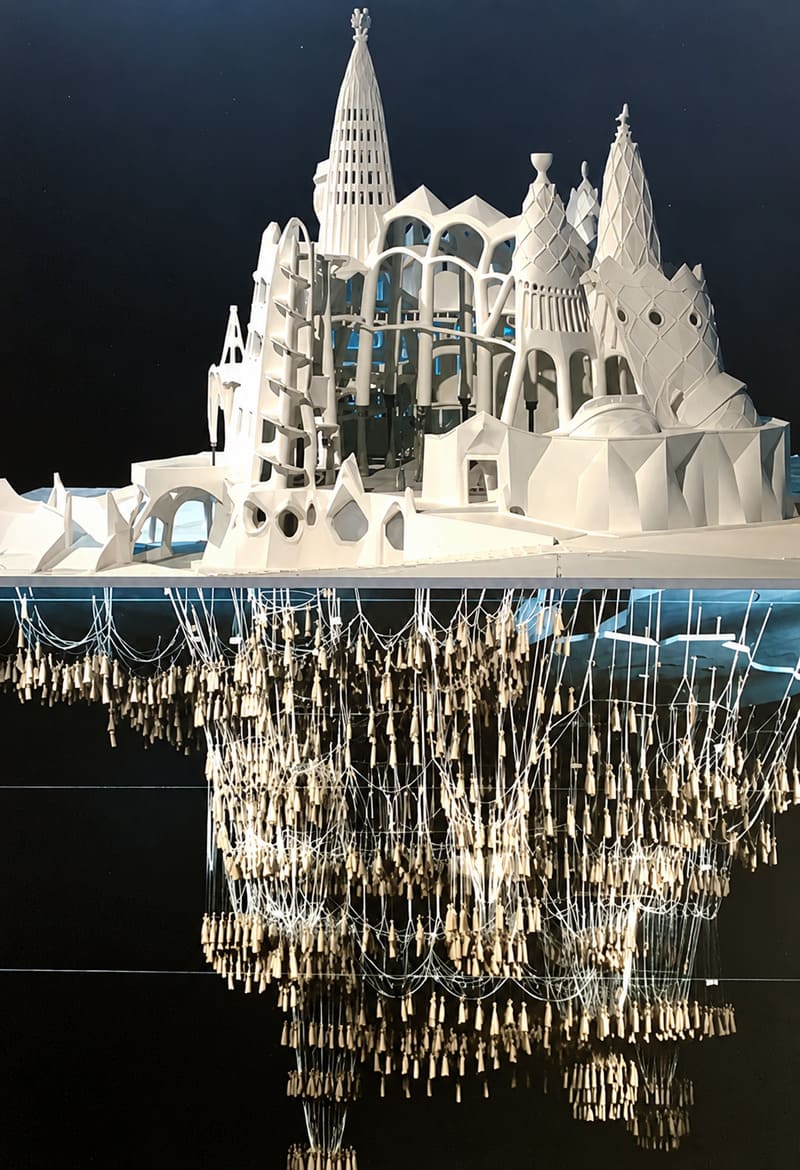
Gaudí rarely drew detailed plans.
He preferred 3D scale models.
For the church of Colònia Güell, he went further.
He hung strings from a board and attached small weighted sacks to them.
Gravity pulled each string into a natural curve.
A mirror placed underneath showed the model upside down.
Those hanging curves became arches and vaults that carry weight efficiently.
Change the length of one string and the whole model rebalanced itself.
Today’s architects compare it to parametric design software.
Experts say he did not use hanging models on the Sagrada Família itself, but they shaped how he thought about it.
7) The one woman he loved turned him down
Her name was Josepa Moreu, known as Pepeta.
Gaudí met her in Mataró, while he was working on a workers’ cooperative.
He kept visiting her family for about four years.
Then he told her how he felt.
She was already engaged to someone else.
He never saw the family again, and he never married.
Pepeta married her fiancé and had four children.
8) He ended up living on his own construction site
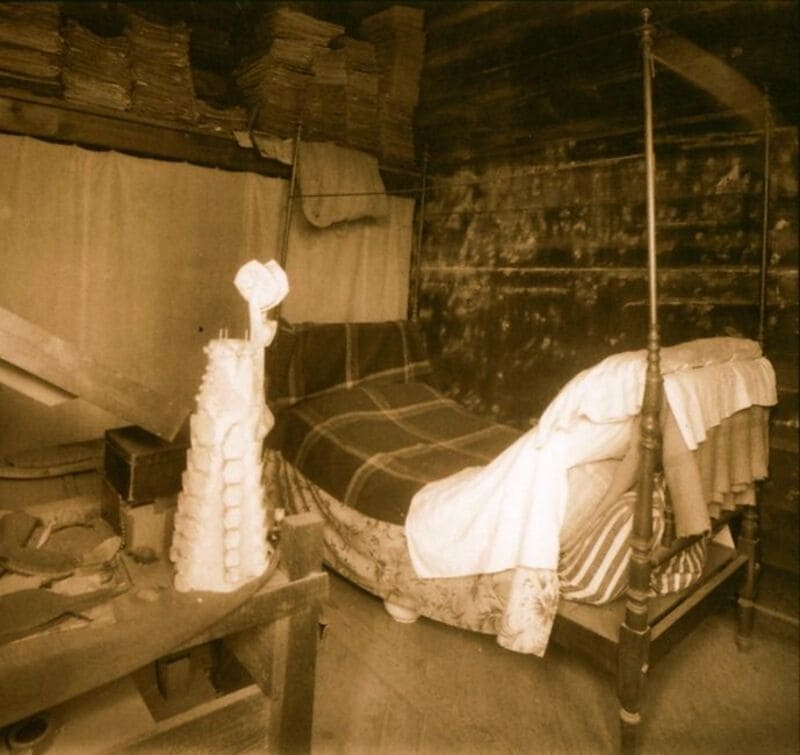
Over the years, Gaudí dropped almost all his other projects.
By the end, only the Sagrada Família mattered to him.
He worked there, slept there, and by the time of his death he lived in the workshop on the site.
He was buried in the crypt on June 12, 1926.
His tomb is still there.
9) He joked that his client was in no hurry
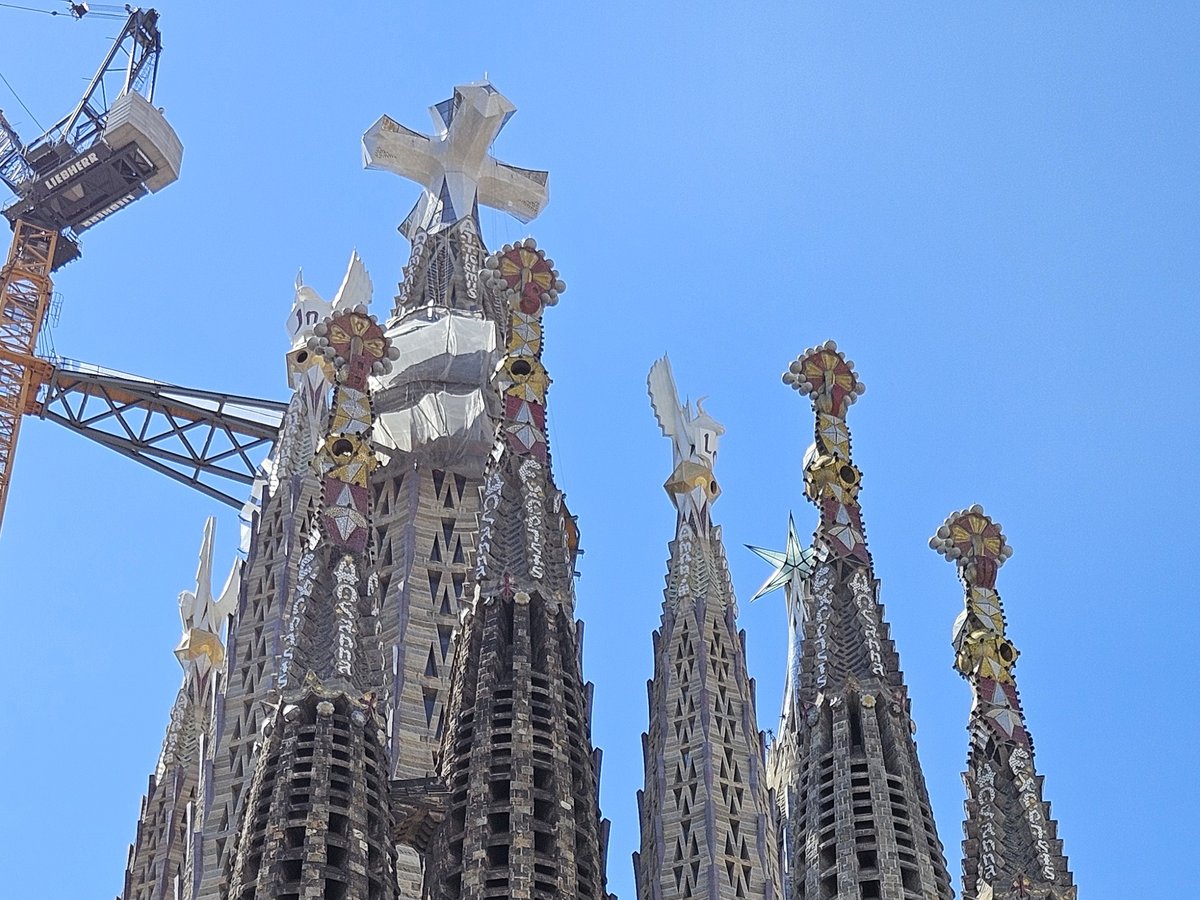
When people asked why the Sagrada Família was taking so long, Gaudí is said to have given one answer.
His client was not in a hurry.
The client was God.
Gaudí knew he would never see the building finished.
Work began in 1882, and the basilica only reached its full height in 2026.
Part of the reason is money.
From the start, it was paid for with donations.
Today it is still financed through donations and ticket sales.
10) His workshop was set on fire
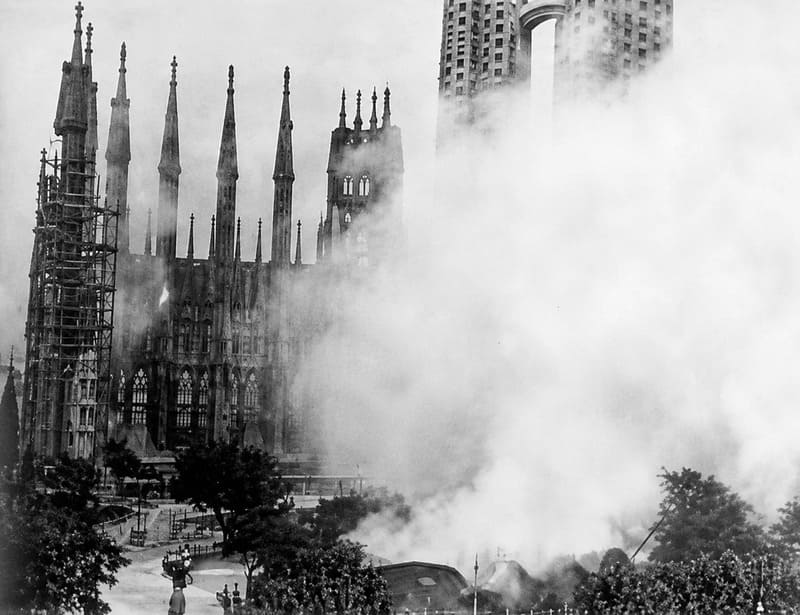
In July 1936, during the Spanish Civil War, a group of anarchists broke into the Sagrada Família’s crypt and workshop.
They set fire to Gaudí’s workshop.
His plans, drawings and plaster models were destroyed.
Those models mattered more than usual, because he used them instead of detailed blueprints.
After the war, architects rebuilt what they could from broken fragments and old photographs.
Decades later, computers helped decode the geometry behind his designs.
That is why part of the building you see today is a careful reconstruction of what Gaudí probably intended.
11) Seven of his works are UNESCO World Heritage Sites
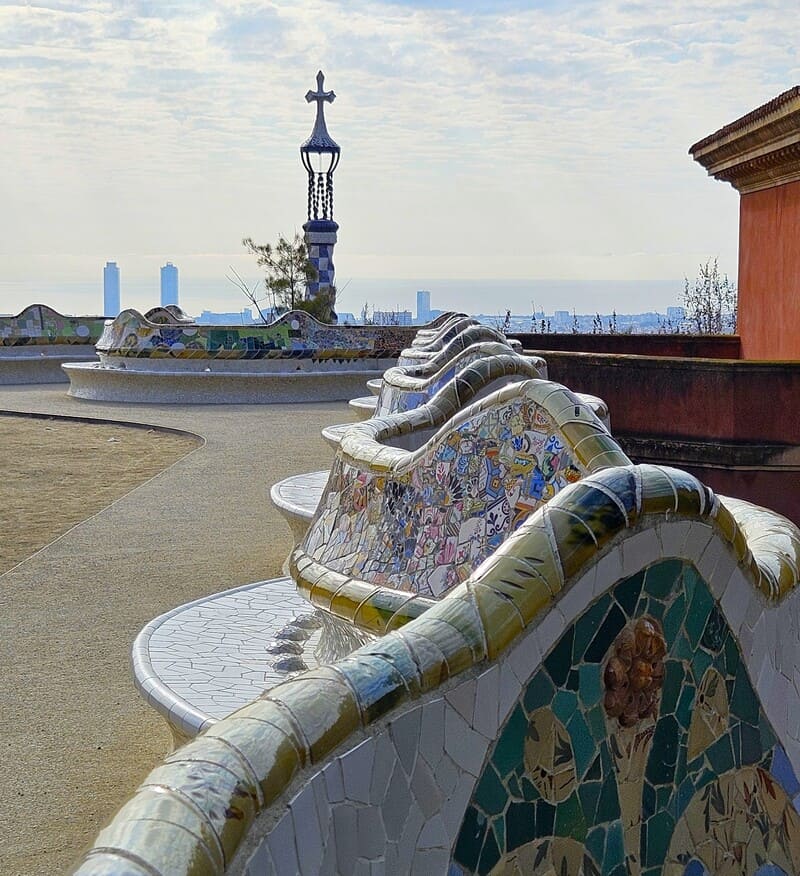
UNESCO lists seven properties designed by Gaudí.
The first three were added in 1984: Park Güell, Palau Güell and Casa Milà.
Four more joined in 2005: Casa Vicens, Casa Batlló, the crypt of Colònia Güell, and part of the Sagrada Família.
Only the Nativity façade and the crypt of the Sagrada Família are on the list, not the whole basilica.
All seven are in or near Barcelona.
12) He is on the path to sainthood
On April 14, 2025, Pope Francis declared Gaudí “venerable.”
That title means the Catholic Church recognizes his heroic virtue.
It is the first step toward sainthood.
The next step, beatification, requires a miracle attributed to him.
On June 10, 2026, exactly 100 years after his death, Pope Leo XIV was at the Sagrada Família to bless its new central tower.
The architect once mistaken for a beggar now has a pope visiting his church.
Where to go next
If that visit left you wondering how much of the basilica Gaudí actually designed, start here: is the Sagrada Família you saw really what Gaudí imagined?
It covers what he finished before the tram, what the 1936 fire erased, and why the Passion façade looks like the work of another architect.
And if you would rather see it than read about it, I laid out the basilica in photos, from the crypt Gaudí took over in 1883 to the tower blessed this year: 140+ years of the Sagrada Família in photos.
Seeing it decade by decade makes the 144 years feel real.