21 Things to Do in Barceloneta Beyond the Beach
By Dorian · Updated October 28, 2026
Barceloneta looks like a beach and nothing else.
It is also a planned fishermen’s quarter, a working harbor, a rooftop scene and a set of taverns more than a century old.
I’d start with the sand, then spend the rest of the day proving that first impression wrong.
1) The Aeri del Port cable car
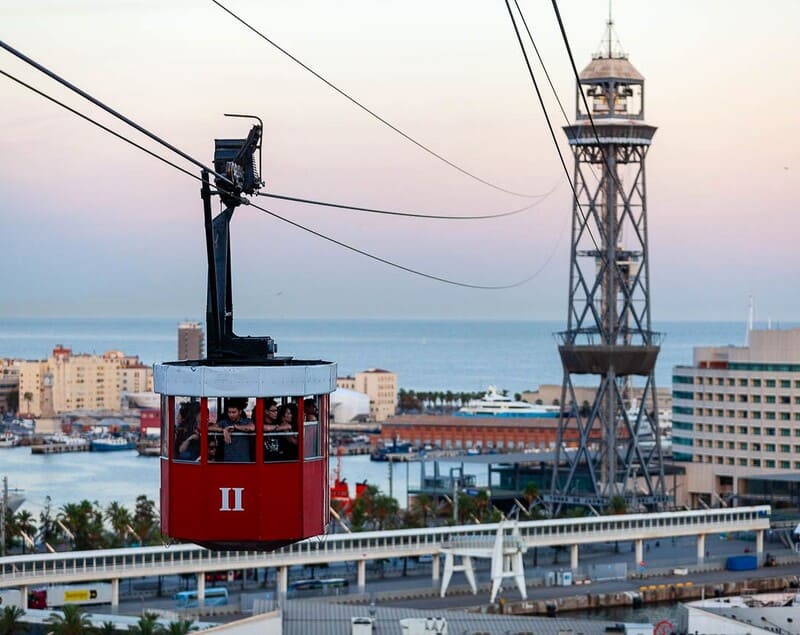
Red cabins cross the harbor from Barceloneta to Montjuïc.
The line covers about 0.8 miles (1.3 km).
It was planned for the 1929 International Exposition but opened two years later.
You board at the Torre de Sant Sebastià, and an elevator takes you up from street level.
The middle tower, Torre Jaume I, rises 351 feet (107 m).
The ride takes under ten minutes.
It is not part of the public transport system, so check the official site for current prices and hours.
2) The Passeig Marítim boardwalk
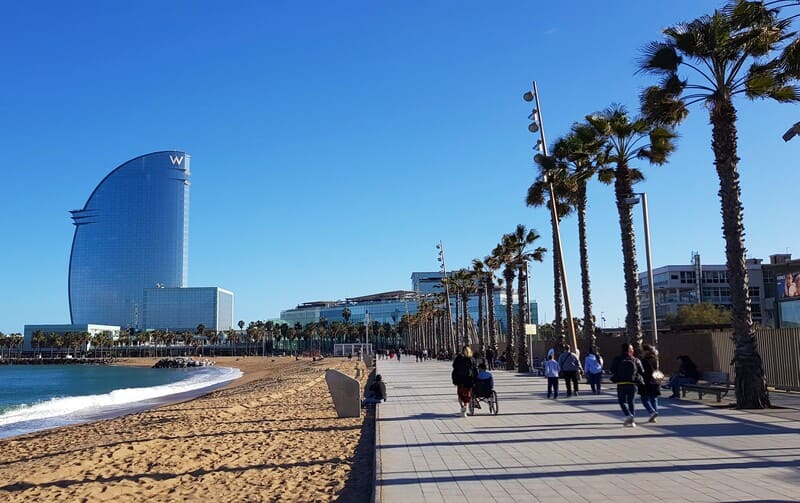
This is the promenade that runs along the beaches.
It is the easiest place to see what the 1992 Olympic makeover did to the seafront.
You will see walkers, cyclists, skaters and skateboarders sharing it.
Two of the city’s best-known Olympic artworks sit along it.
One is a tower of rusty cubes. The other is a giant fish.
You will meet both further down this list.
3) La Cova Fumada, home of the bomba
There is no sign on the door.
The bar opened in 1944, and the name means “the smoky cave”.
It is credited as the birthplace of the bomba.
That is a fried ball of potato filled with meat and served with a spicy sauce.
María Pla is the name usually attached to the invention.
Today you’ll find bombas in bars all over Barcelona.
The menu is written on a chalkboard, and the seafood comes from the market nearby.
The bar does not take reservations, so expect a wait.
It is on Carrer del Baluard.
4) The Torre del Rellotge
This tower was a lighthouse before it was a clock.
It was built in 1772 at the end of the harbor’s western arm.
The city calls it one of the first lighthouses in the Mediterranean.
In the early 1900s the lantern was replaced by a clock with four faces.
It also has a place in science.
The astronomer Pierre Méchain used Barcelona’s tower as a reference point while measuring the meridian, between 1792 and 1798.
That work led to the metric system.
The fishermen’s wharf around the tower has been changing, so check what is open before you go.
5) Palau de Mar and the Museu d’Història de Catalunya
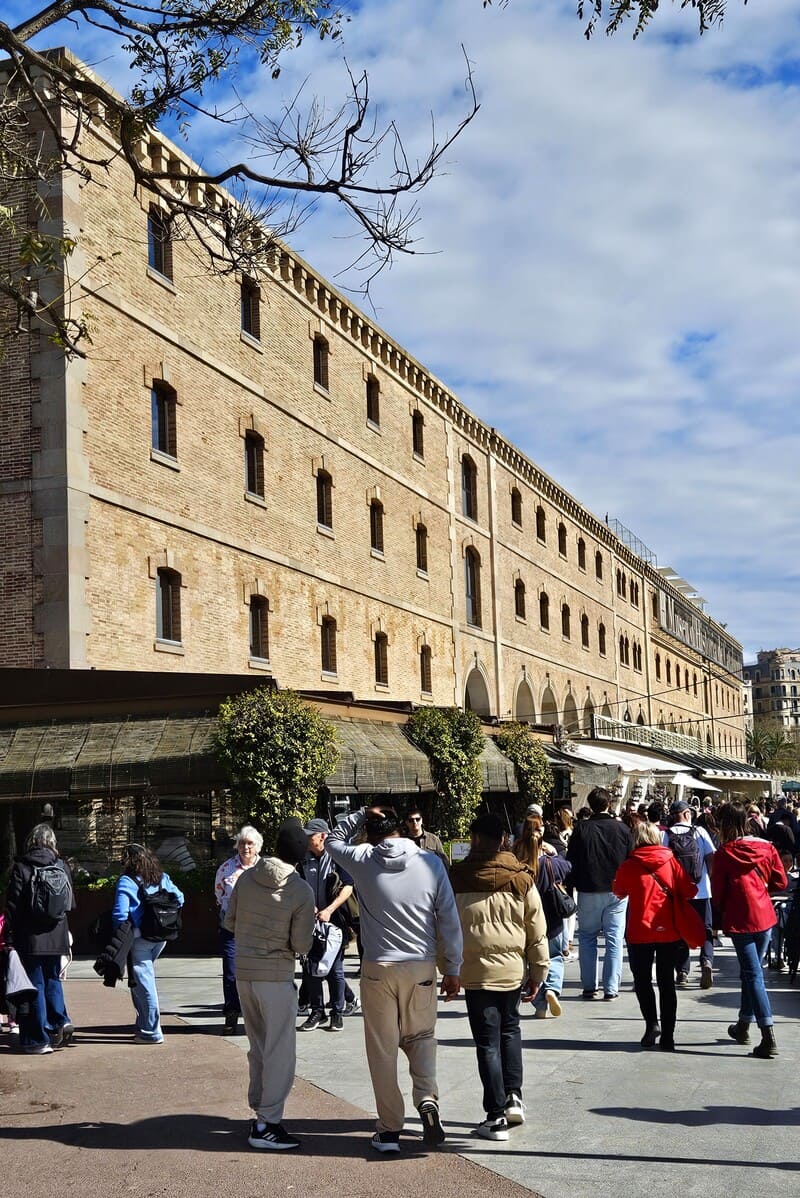
The big brick building at the harbor’s edge started life as a warehouse.
Engineer Maurici Garrán designed it in 1881, with English port warehouses in mind.
It is the only building of Barcelona’s old industrial port still standing.
The 1992 Olympics brought a renovation and a new rooftop terrace.
Today it houses the Museu d’Història de Catalunya, which opened in 1996.
The permanent exhibition runs from prehistory to the present day.
Save time for the terrace.
It looks over the Port Vell, Barceloneta and Montjuïc.
Check the museum’s site for ticket tiers, current prices and hours.
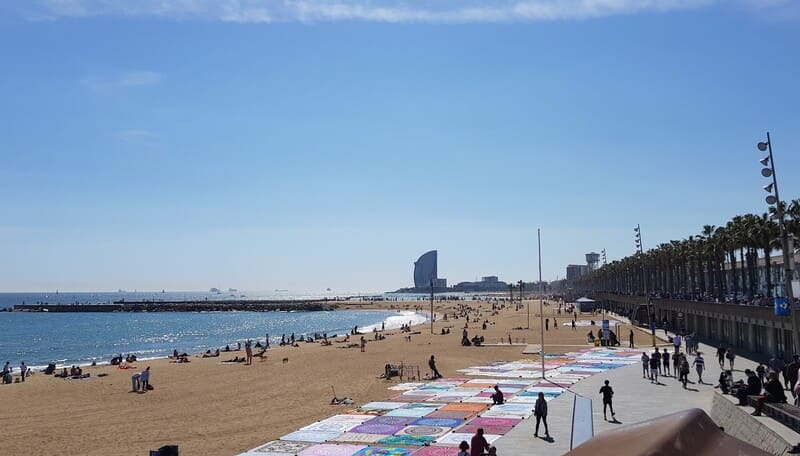
6) Barceloneta beach
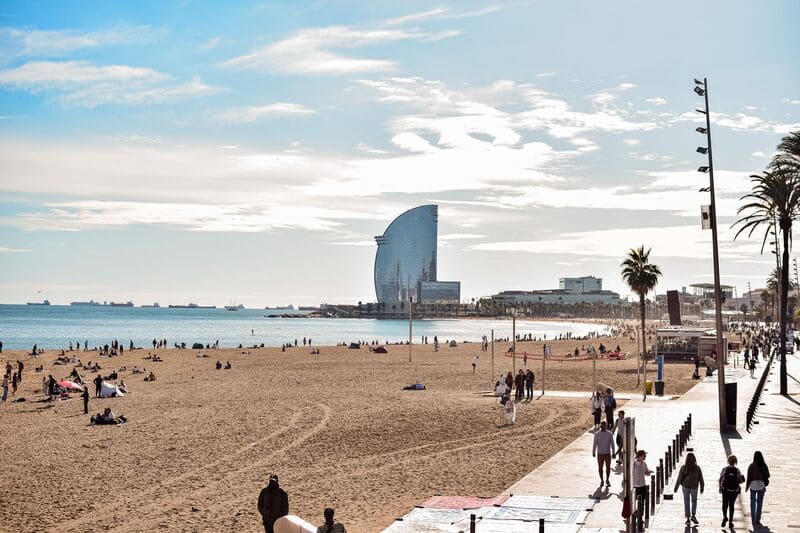
The beach is the obvious first stop.
It is almost 0.6 miles (1 km) long.
The sand you see today was rebuilt for the 1992 Olympics.
Around the year 1600, much of this area was still underwater.
According to the city, Cervantes set the final duel of Don Quixote on that early beach.
Smoking is banned on Barcelona’s beaches.
In winter it turns into a quiet place for a walk by the sea.
7) Mercat de la Barceloneta
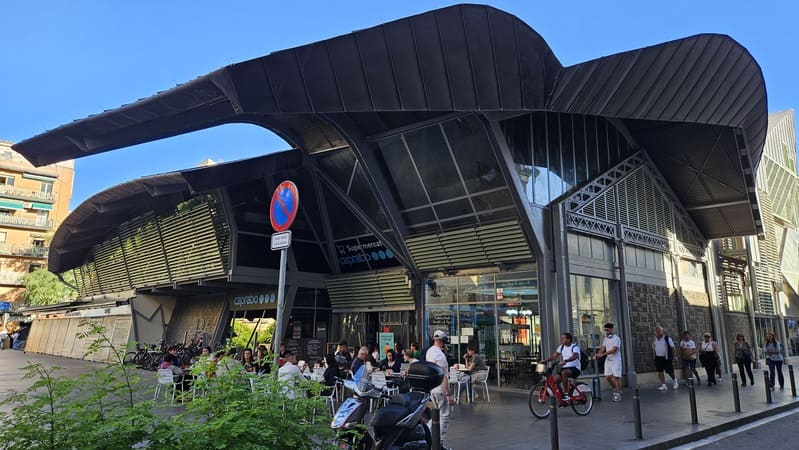
This is the neighborhood’s seafood market.
The original building dates from the 1880s and was designed by Antoni Rovira i Trias.
The market was rebuilt by architect Josep Miàs and reopened in March 2007.
The new design keeps the old structure and adds a roof covered in solar panels.
It won a city architecture prize.
Inside you will find fresh fish, tapas bars and restaurants.
It sits on Plaça del Poeta Boscà.
8) Sant Miquel del Port church
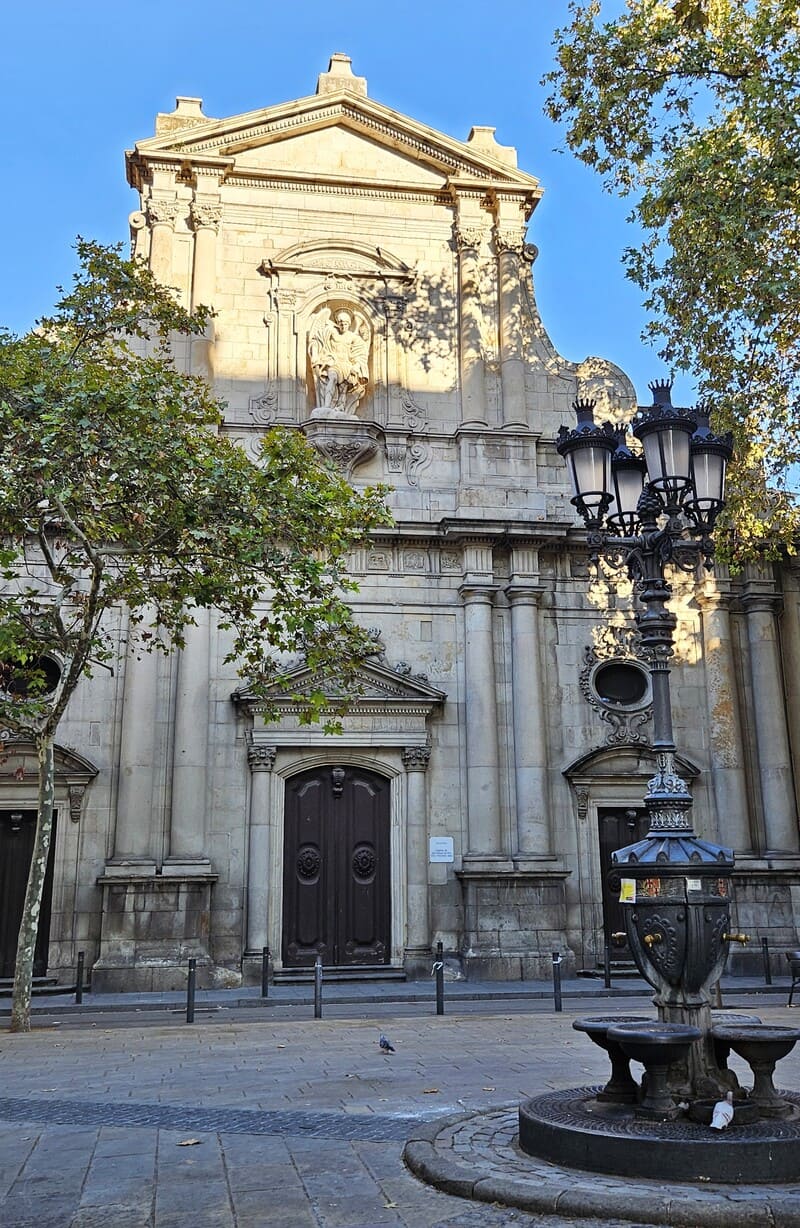
This church was built low on purpose.
It went up between 1753 and 1755, and it was the first building completed in the new neighborhood.
Its height was kept down so the cannons of the Ciutadella fortress could fire over it if needed.
The front is Baroque and takes its inspiration from Jesuit churches in Rome.
Look for the statues of Sant Elm and Santa Maria de Cervelló, two patron saints of Catalan fishermen.
The statue of Saint Michael caused a stir because he looks like a bodybuilder.
It stands on Plaça de la Barceloneta.
9) The Bus Nàutic
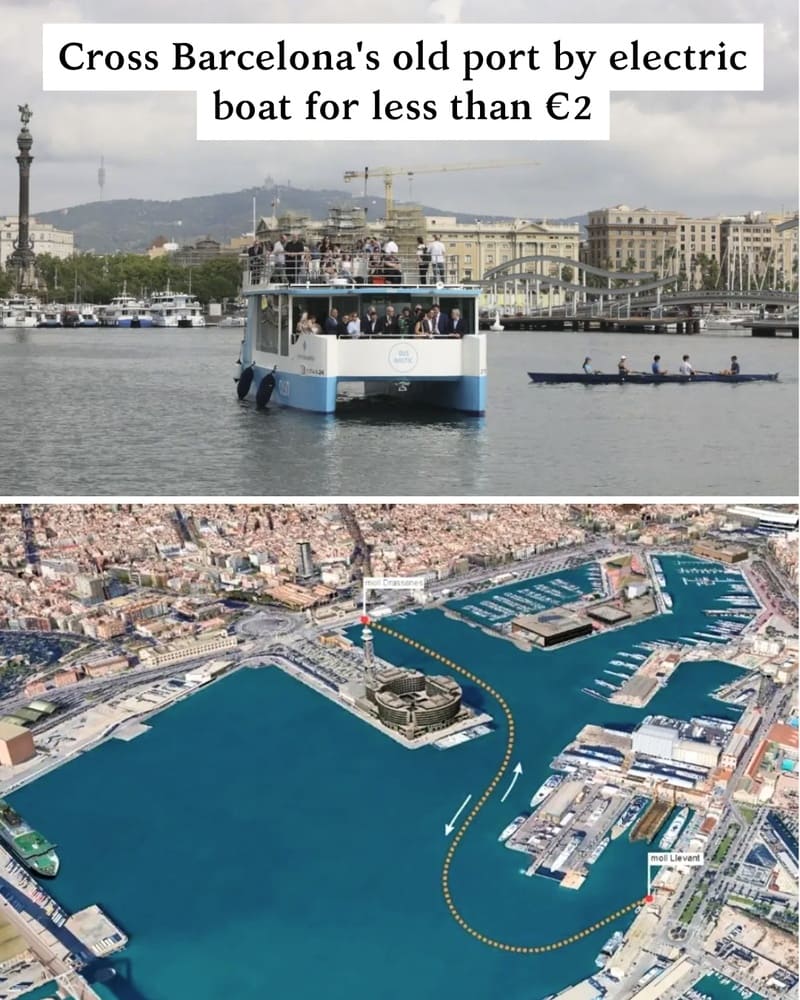
This one is a boat, and it is real public transport.
An electric catamaran links the Moll de Drassanes, by the Columbus Monument, with the Moll de Llevant, by Barceloneta beach.
The crossing takes about ten minutes.
It gives you a view of the city from the water without a full harbor tour.
At the Barceloneta end you reach the Nova Bocana.
That is a promenade on the old breakwater with a 360-degree viewpoint.
Check the official site for current schedules and fares.
10) W Barcelona, the Sail Hotel
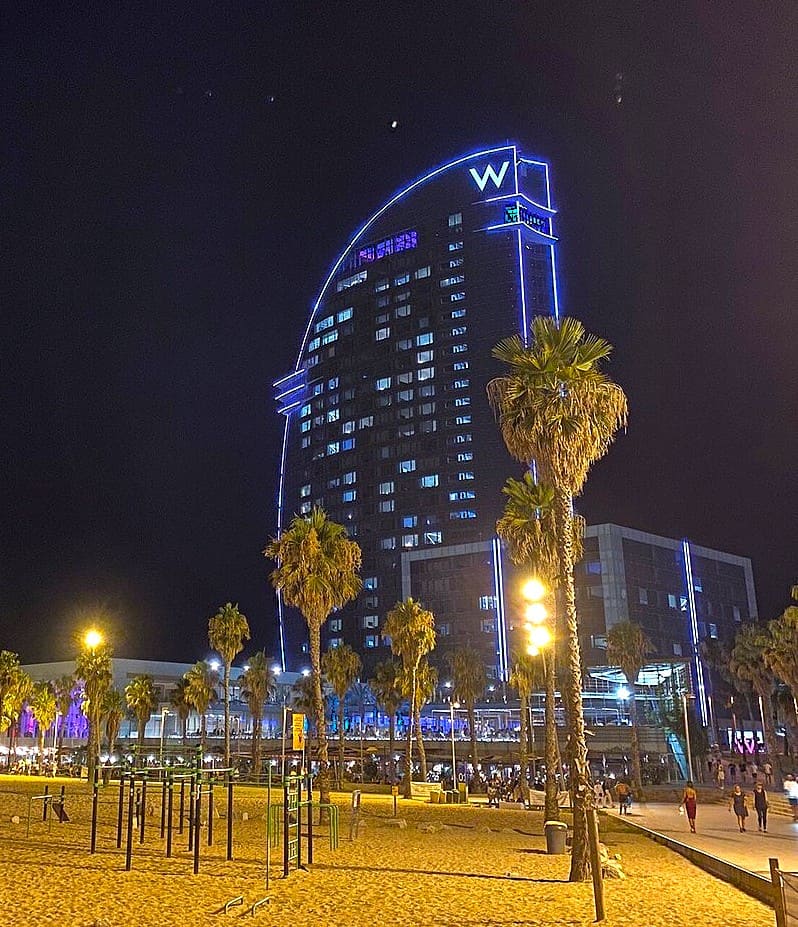
You can’t miss this one.
The W Barcelona is shaped like a sail, which is why locals call it the Hotel Vela.
The architect was Ricardo Bofill, and the hotel opened in 2009.
It stands about 324 feet (99 m) tall.
It sits on land gained from the sea, right where the harbor now opens.
You can spot it from many points along the seafront and from viewpoints around the city.
Check which of its bars and restaurants are open to non-guests before you go.
11) Frank Gehry’s giant fish
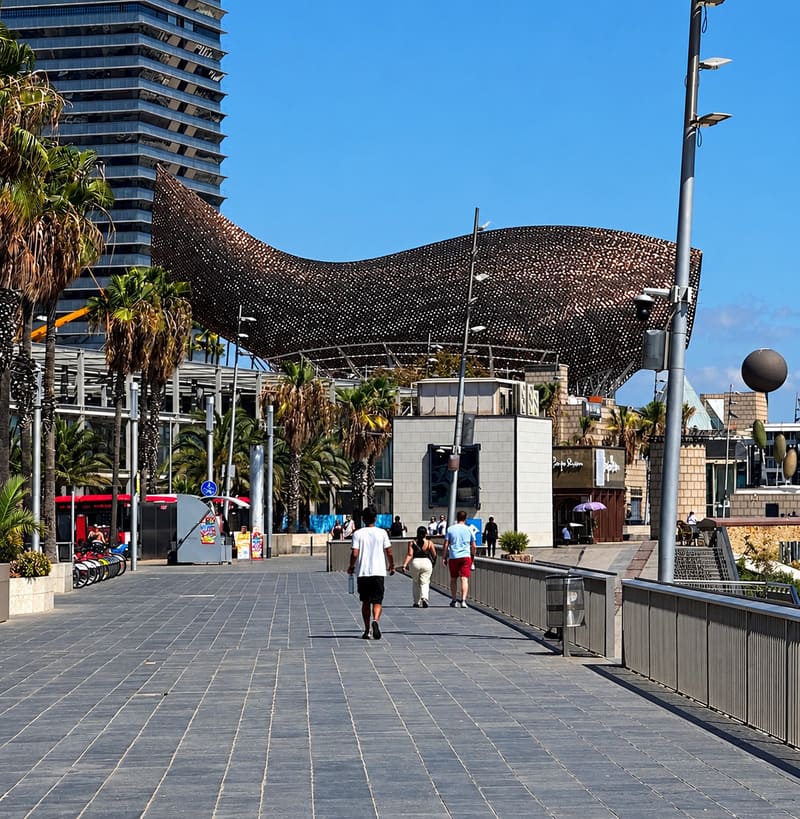
Gehry’s fish is just past the end of Barceloneta, at the Port Olímpic.
He designed it for the 1992 Olympics.
It is more than 170 feet (about 54 m) long.
The scales are copper-colored stainless steel, so the fish changes with the light.
It also works as a roof over restaurants and leisure spaces at the foot of the Hotel Arts.
You can see it from several of the city’s beaches.
12) Can Solé
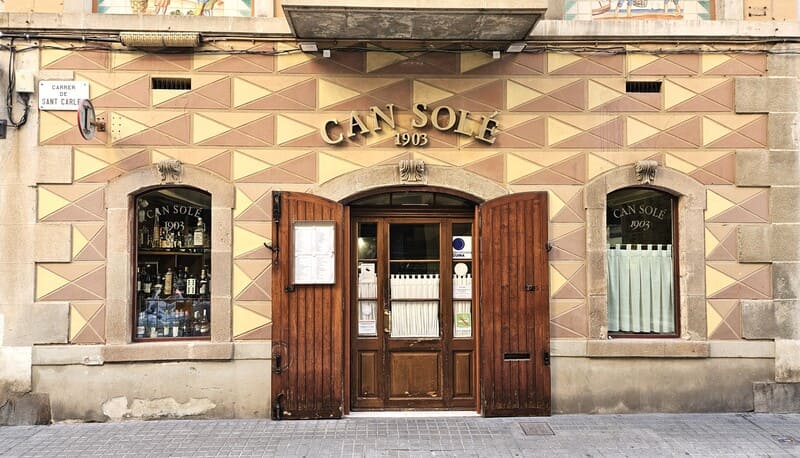
This is the place to eat rice.
Can Solé opened in 1903 as a fishermen’s tavern.
It is known for arroz caldoso, a soupy rice dish, and for fideuà, a noodle version of paella.
The writer Manuel Vázquez Montalbán once wrote that it served the best rice in the Mediterranean.
It won Spain’s national gastronomy prize in 1998, 1999 and 2000.
It is on Carrer de Sant Carles.
Check the restaurant’s site for opening days and reservations.
13) ElCielo rooftop at the Sofitel Barcelona Skipper
This is the rooftop pool bar on top of the Sofitel.
You get sea and city views from the terrace.
The menu mixes cocktails with Catalan tapas.
The pool is heated and big enough to swim in, which is rare for a Barcelona rooftop.
It can get lively, with DJs and summer events from Wednesday to Saturday.
14) L’Estel ferit, the Wounded Star
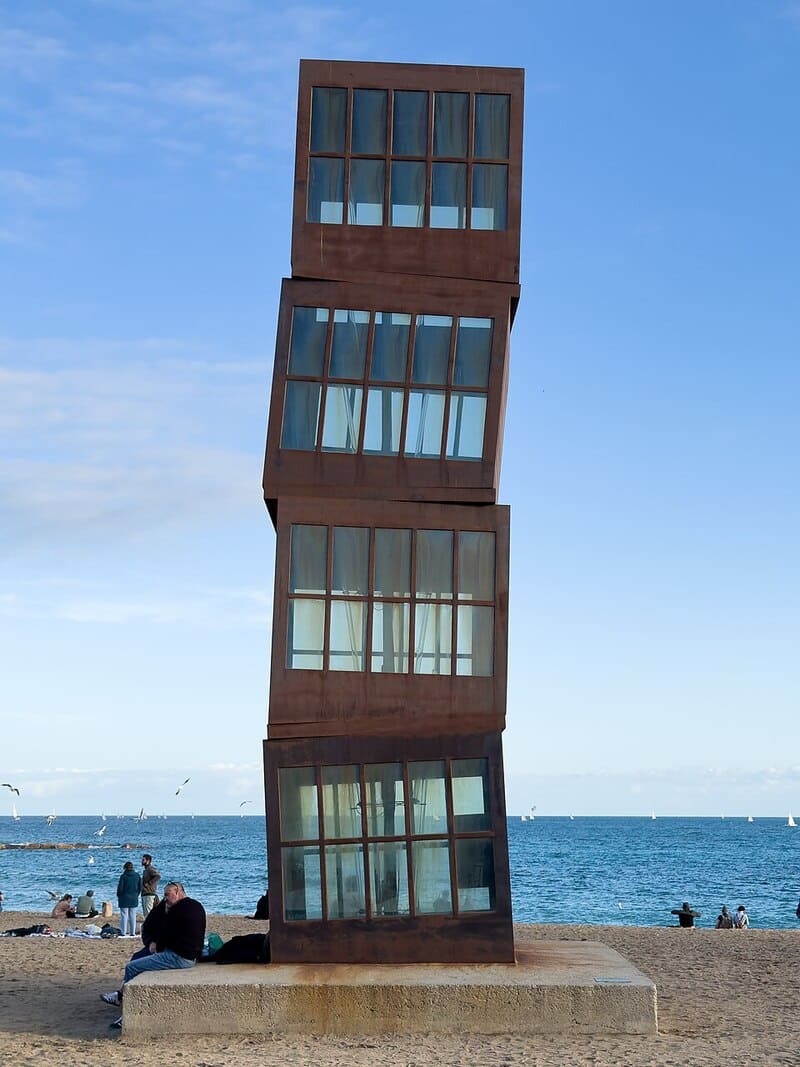
Locals call it “els cubs”, the cubes.
German artist Rebecca Horn made it in 1992.
Four rusty iron boxes are stacked into a crooked tower.
It stands about 35 feet (10.6 m) tall.
The salt-crusted windows reveal a mast inside.
At night, neon tubes on the mast light it up.
The piece nods to the neighborhood’s story, from a sand spit to a tightly planned grid.
Some people read it as a tribute to the old beach restaurants that disappeared before 1992.
15) Passeig de Joan de Borbó
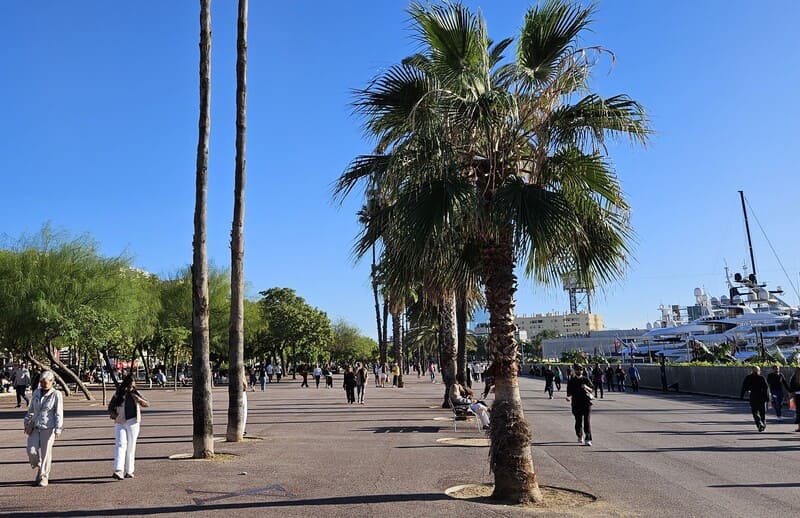
This is the harbor-side promenade.
It looks over the Port Vell, and many of the sights on this list sit along it.
The cable car’s tower, Palau de Mar and the Torre del Rellotge are all close by.
It is also lined with terraces and restaurants.
Several food writers suggest eating a few streets inland instead.
The next stops on this list will show you where.
16) Salamanca
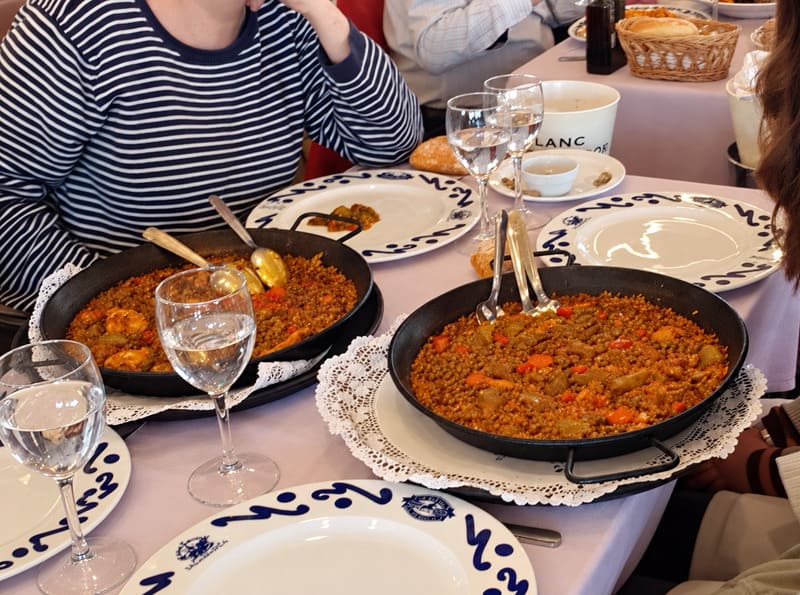
This is a classic for seafood and ham.
The founder was Silvestre Sánchez Sierra, a police officer from the province of Salamanca.
In the late 1960s he bought a bar called Rosich.
He turned it into the restaurant.
It became known for seafood, and for Spanish ham.
The restaurant says its meat comes from the owner’s own farm.
Check the restaurant’s site for the current address and hours.
17) Somorrostro beach
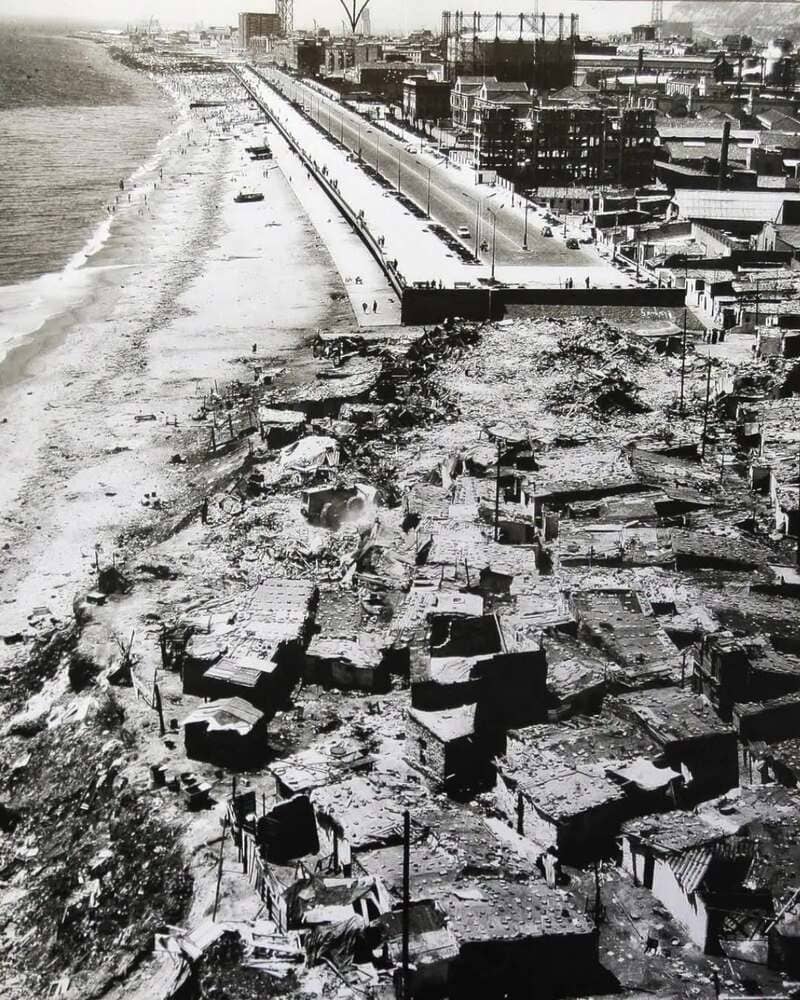
This stretch of sand once held a neighborhood.
Until the mid-20th century, a shantytown stood here.
It was home to about 15,000 people.
Fishing families and Roma families lived in huts by the sea.
The settlement had no running water and no electricity.
Demolition began in the late 1950s, when the seafront promenade was built.
The last huts were cleared in 1966.
The city later gave this section of beach the name Somorrostro, in memory of the people who lived here.
One of them was the flamenco dancer Carmen Amaya, born here in 1913.
She became famous around the world.
She starred in the 1963 film Los Tarantos, which was shot in Somorrostro.
A fountain in her name was inaugurated in 1959 near where the settlement stood.
18) Can Maño
This is a no-frills fish tavern.
It is on Carrer del Baluard, near the market.
The fish arrives as orders are taken.
The catch of the day is cooked two ways, fried or grilled with garlic and parsley.
Time Out says you can eat well here for around ten euros.
Expect a busy room.
Check the restaurant’s hours before you go.
19) Bodega Fermín
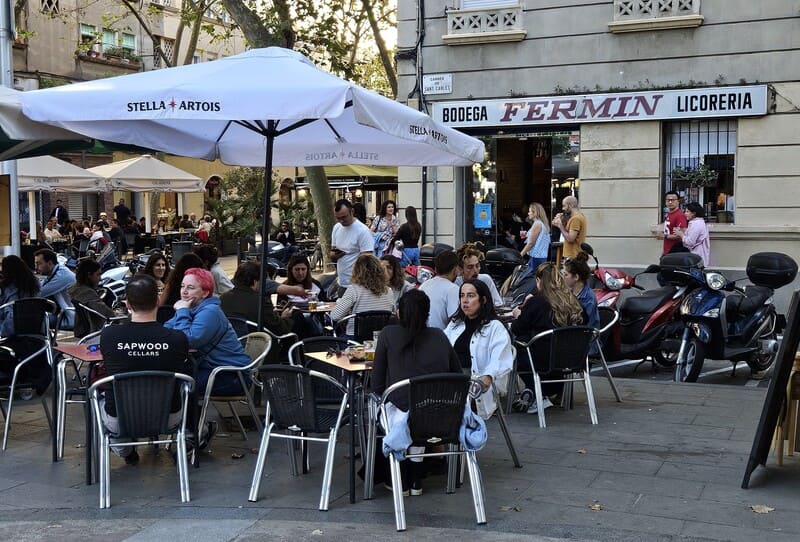
This is a corner bodega for vermouth.
It was founded in the 1950s by Fermín Puig.
It sits on Carrer de Sant Carles, next to Plaça del Poeta Boscà.
The menu focuses on vermouth, craft beer and tapas.
It is a short walk from the market.
Hours can change, so check before you go.
20) Bar Jai-Ca
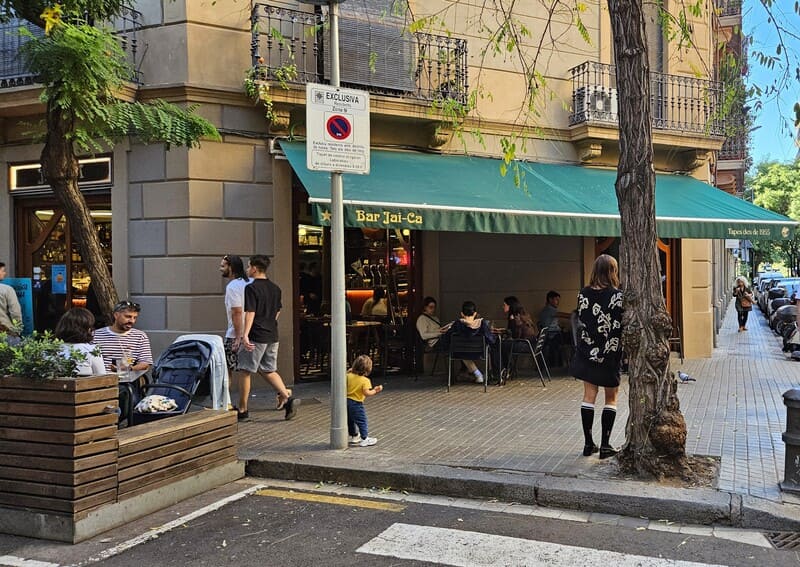
This is a vermouth bar on Carrer de Ginebra.
It sits a street away from the waterfront, so there is no sea view and no terrace on the promenade.
The bar has been family-run since 1955.
The wood-beamed room is loud, busy and full of local conversation.
Come for the hora del vermut, the vermouth hour before lunch.
Vermouth is a sweet fortified wine flavored with herbs.
In Barcelona it is a classic weekend aperitif, served with seafood snacks.
Here, that means fried calamari, mussels and small fried fish.
The menu also lists a house specialty: anchovies served with their fried backbone.
The bar gets crowded, especially on weekends.
21) The old fishermen’s streets
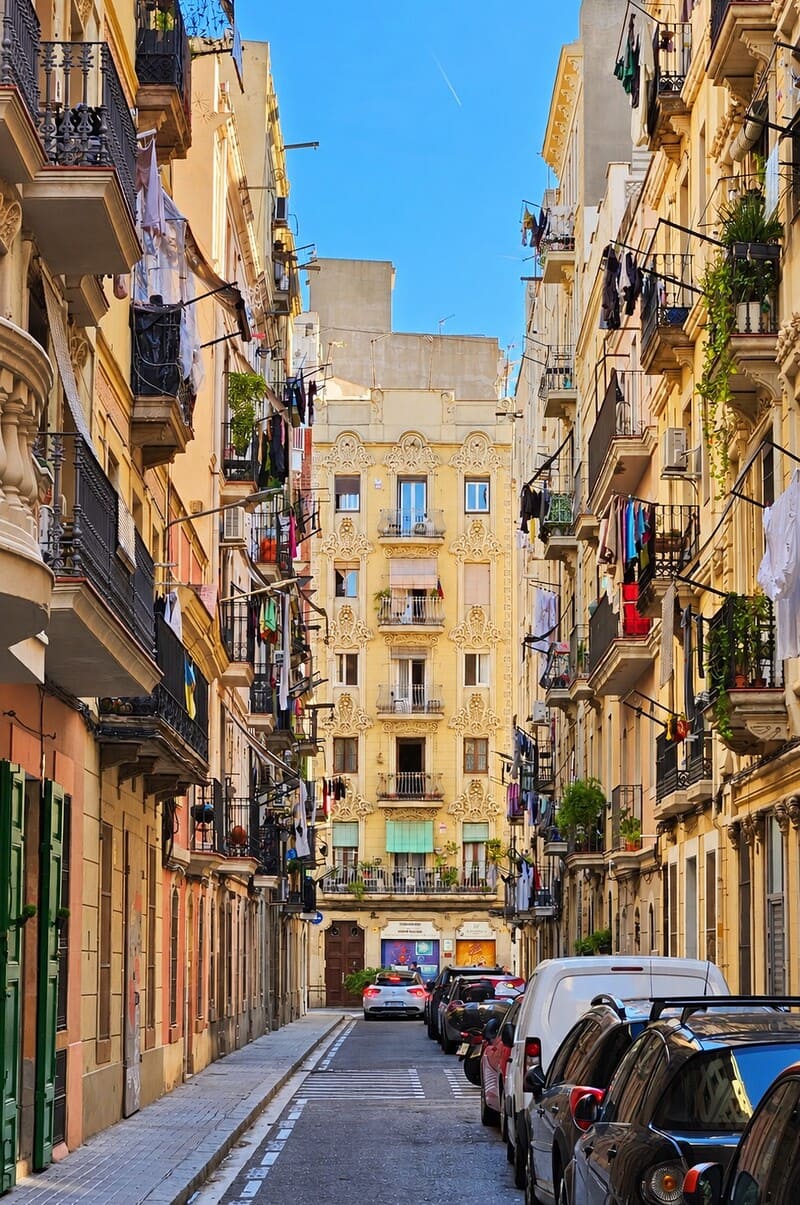
Finish here, on foot.
Barceloneta was founded in 1753, and the first stone was laid on 3 February.
It was built outside the city walls for families who had lost their homes near the Ciutadella fortress.
A military engineer laid it out on a strict grid.
That grid is still there.
Walk Carrer de Sant Carles, Carrer del Baluard and Carrer de l’Almirall Aixada.
Then wander the blocks around the market.
Several stops on this list sit on these streets.
Many food writers say the best meals here are in these narrow streets, not on the waterfront.
Where to go next
Barceloneta is only one chapter of the story.
The families who built it were moved here from La Ribera, the area around El Born, to make room for the Ciutadella fortress.
The streets they left behind are still there, under the old market that is now a cultural center.
I walk that whole route in my guide to the top things to do in El Born, and it picks up exactly where this story starts.
Then go back further in time.
Barceloneta dates from 1753, but the top things to do in the Gothic Quarter take you to Roman columns and tombs.
The contrast is the best way to feel how young this neighborhood really is.