Park Güell: My Complete Guide
By Dorian · Updated August 20, 2026
Park Güell gets sold to visitors as “a park,” which undersells it completely. It’s part failed real estate project, part open-air museum, part the closest thing you’ll find to walking directly into Gaudí’s imagination.
Here’s everything I’d want you to know before you go.
What Park Güell actually is
This wasn’t originally meant to be a park at all. Eusebi Güell, Gaudí’s most important patron, hired him in 1900 to design a private housing estate for Barcelona’s wealthy families, 60 plots on a hillside called Muntanya Pelada, inspired by the English garden city movement.
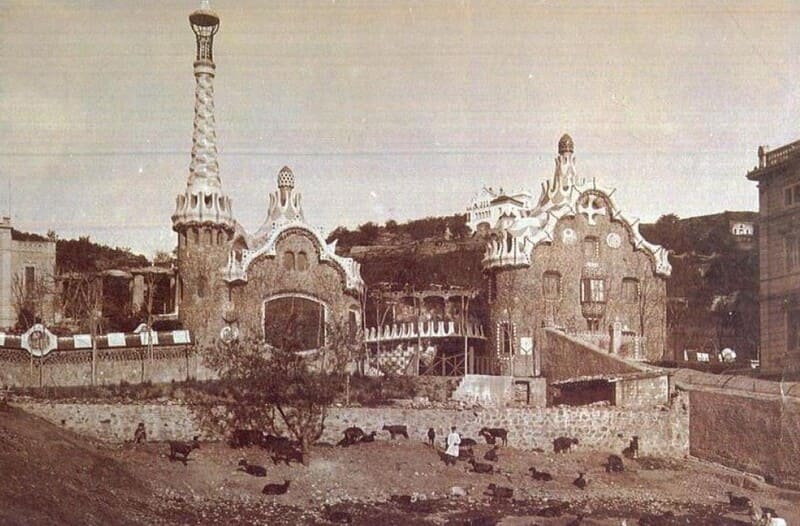
It flopped. Only two houses ever sold, one of them Güell’s own residence, the other a lawyer’s home built early in the project. Gaudí himself ended up living in a show home meant to attract buyers, staying there for the last 20 years of his life.
When the development collapsed in 1914, the city eventually bought the land from Güell’s heirs and opened it as a public park in 1926. Everything you see today, the mosaics, the columns, the terraces, was built for people who were never going to move in.
Getting there
Park Güell sits up in the Gràcia district, on a hillside, which means getting there always involves some uphill walking no matter which route you pick.
The most common approach is Metro Line 3 to Lesseps or Vallcarca, followed by a 15 to 20 minute walk.
From Vallcarca, there’s a series of outdoor escalators built into the hillside that take a good chunk of the climbing out of the walk, worth seeking out if stairs aren’t your favorite part of a trip.
The V19 bus is a solid alternative if you’d rather skip the incline altogether.
Tickets and timing
Here’s the part that trips people up: Park Güell is really two places wearing one name.
Most of the park, the forest paths, the outer gardens, the viewpoints, is free and open all day, no ticket required. But the part everyone actually comes for, the mosaic dragon, the columned hall, the wavy bench, sits inside a fenced Monumental Zone that requires a paid, timed ticket.
Entry is sold in 30-minute windows, and you have to arrive within your slot, there’s no grace period if you’re late. Book in advance, especially in high season, since slots do sell out. Once you’re inside, there’s no time limit on how long you stay.
For the best light and the smallest crowds, aim for the first slot of the day, right at opening, or one of the last slots before closing.
The Dragon Staircase
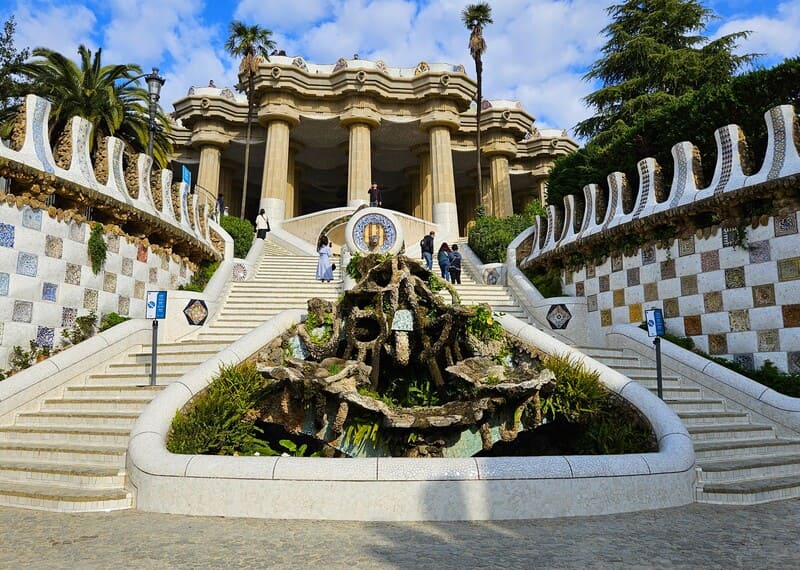
Just past the entrance, a grand double staircase climbs toward the Hypostyle Room, and partway up sits the single most photographed thing in the whole park: a mosaic creature everyone calls El Drac, “the dragon,” even though it’s technically closer to a salamander.
It’s covered head to tail in trencadís, Gaudí’s signature technique of covering curved surfaces with broken ceramic fragments, much of it made from factory rejects and discarded tiles rather than anything bought new.
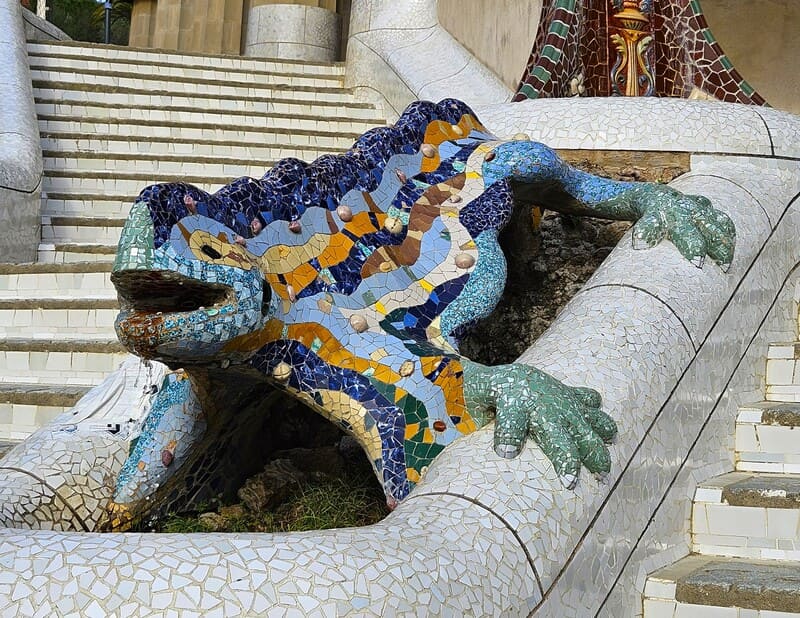
The dragon isn’t purely decorative either, it sits at the outlet of the park’s underground water system, and rainwater once flowed straight through it into a cistern below. Expect a short wait for a photo during busy hours.
The Hypostyle Room
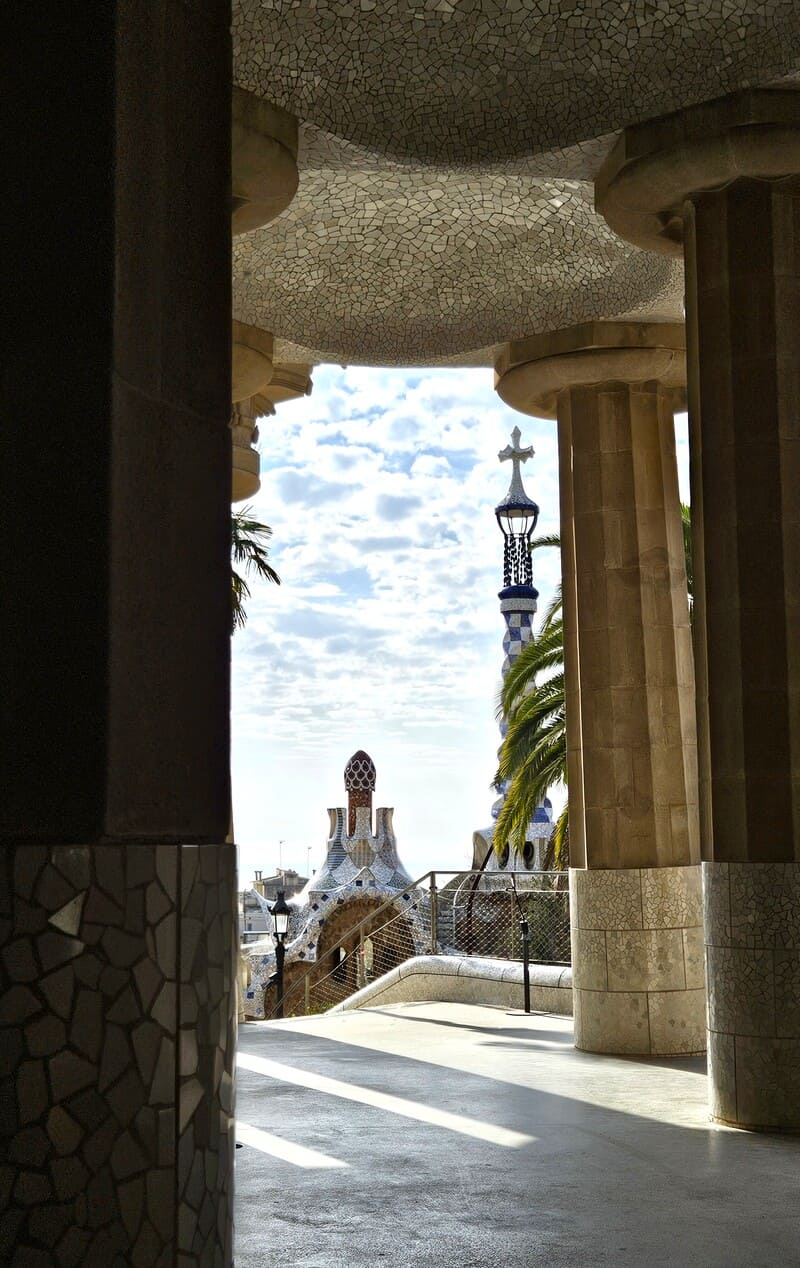
Above the staircase, you walk straight into a forest of 86 stone columns, originally designed as the covered marketplace for the housing estate that never materialized.
Look up. The ceiling between the columns is set with round mosaic medallions designed by Josep Maria Jujol, Gaudí’s closest collaborator, made from broken plates, glass, and ceramic pieced together into sun and constellation-like patterns.
It’s easy to walk through quickly on the way to the terrace above, but this room rewards a slower pace and a few minutes spent just looking up.
The main terrace and the serpentine bench
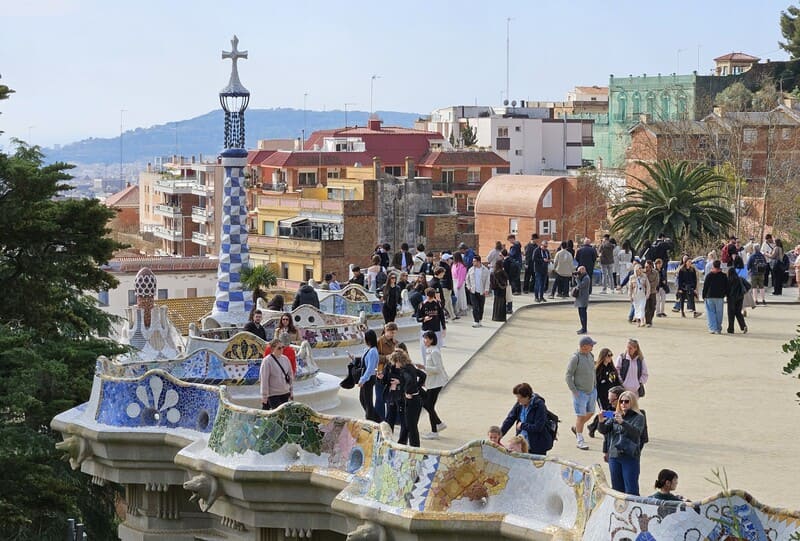
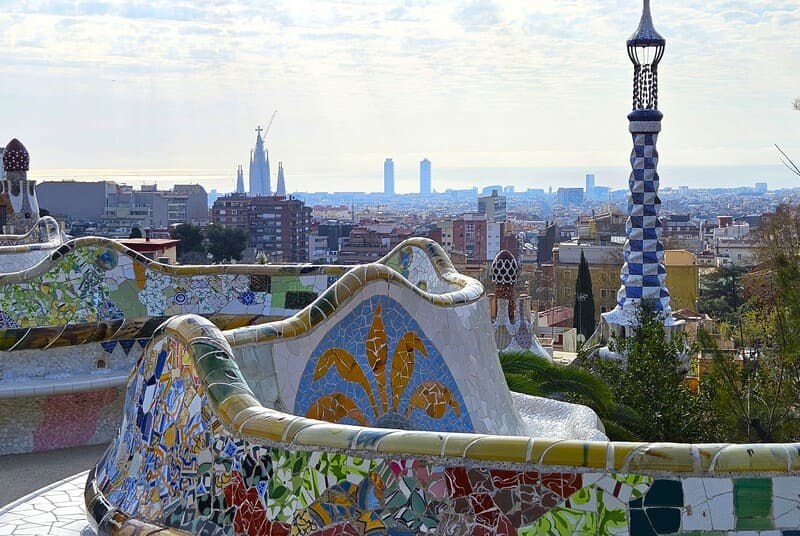
This is the view everyone pictures when they think of Park Güell: a long, undulating bench wrapping around the edge of a wide open terrace, entirely covered in colorful trencadís mosaic, with Barcelona and the sea spread out below.
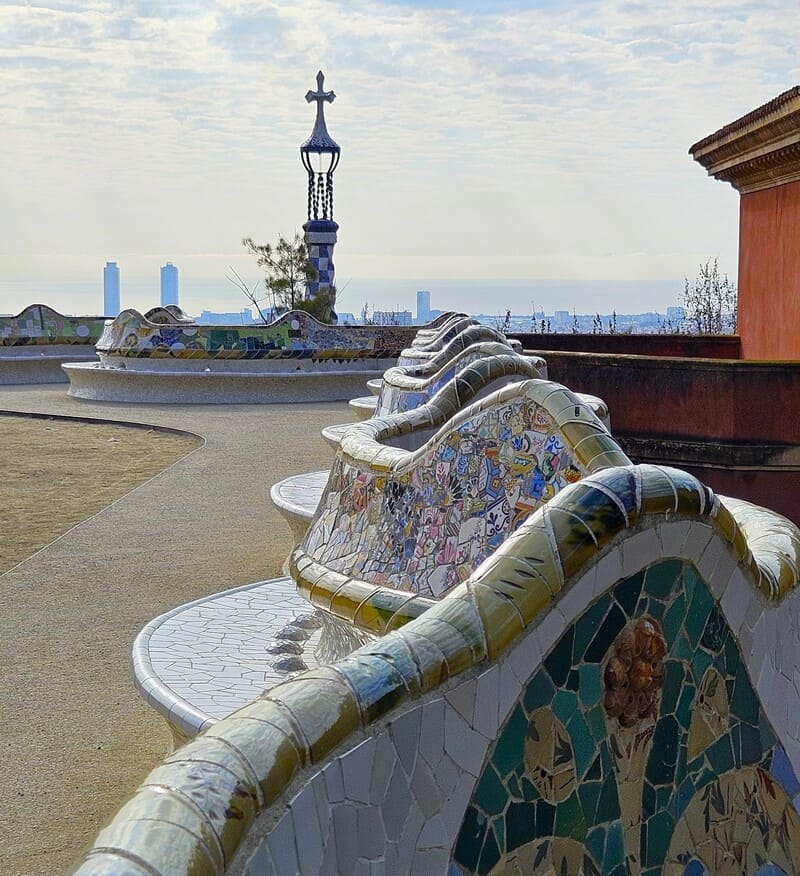
The bench stretches about 360 feet and was largely Jujol’s design work, built to follow the natural curve of a person’s back rather than a straight architectural line. It’s a genuinely good place to just sit for a while, which is exactly what it was designed for.
Gaudí House Museum
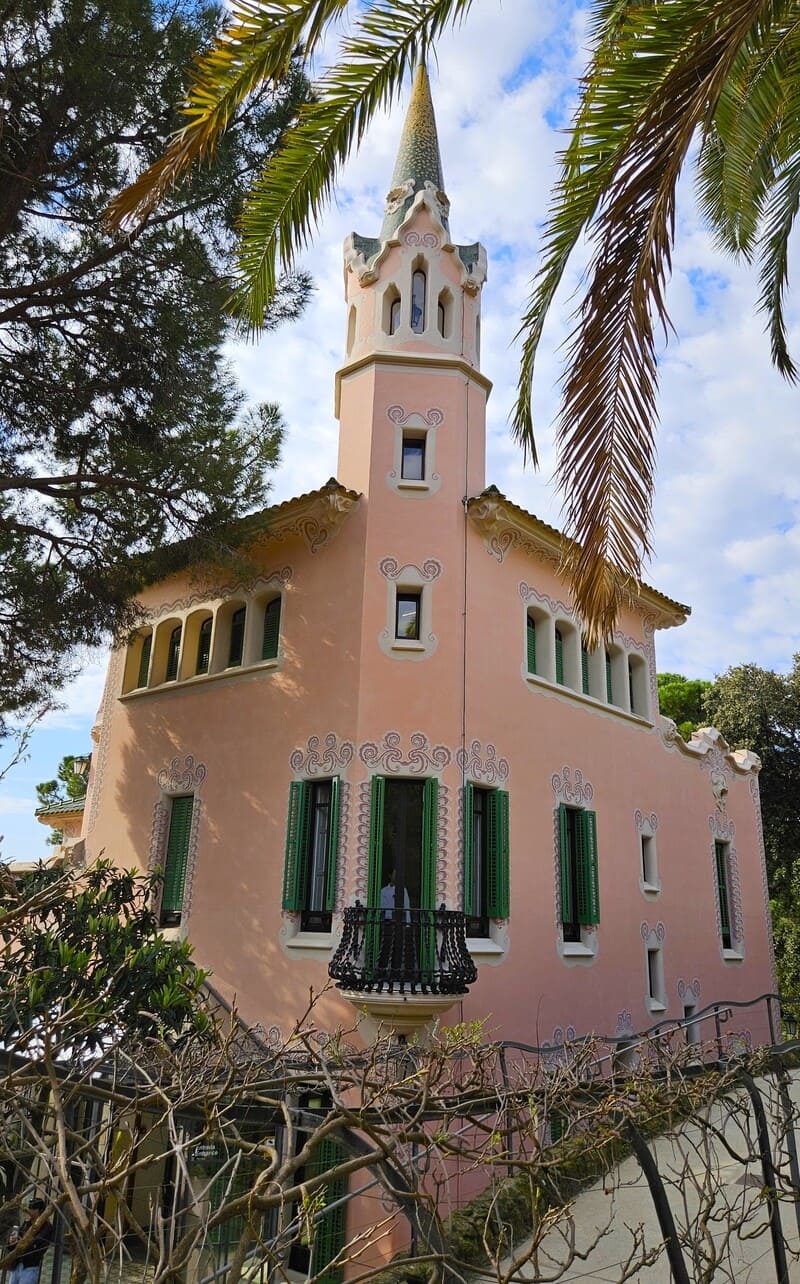
Tucked into the park is the actual house Gaudí lived in for two decades, now turned into a small museum with original furniture he designed for other buildings, including pieces from Casa Batlló and Casa Calvet.
It requires a separate ticket from the Monumental Zone, purchased at the house itself, so it’s easy to miss if you’re not looking for it. Worth adding if you want a more personal, less crowded pocket of the visit.
Don’t skip the free zone
Once you’ve seen the Monumental Zone, don’t just head straight back down. The surrounding forest paths, stone colonnades, and upper viewpoints are free and genuinely worth the extra time, quieter, shaded, and still full of Gaudí’s fingerprints in the way the paths and viaducts curve around the hillside like tree roots.
Budget around 90 minutes to two hours for the Monumental Zone alone, and add another hour if you want to properly explore the free areas around it.
Where to go from here
If Park Güell left you wanting more Gaudí, you’re actually not far from where his story starts. Casa Vicens, his first major house, sits just down the hill in Gràcia, quieter and far less crowded than anything else with his name on it.
I wrote a full guide to the buildings that came before he devoted himself entirely to Sagrada Família, and it picks up right where this one leaves off: Barcelona’s best Modernisme buildings (and why they’re not all Gaudí).
And if you’re still deciding how to fit Park Güell into a wider trip without exhausting yourself, I’d genuinely read this one before you finalize your plans. It’s the itinerary I’d hand a friend, built specifically around not overpacking your days: The perfect 3-day itinerary in Barcelona.