11 Barcelona Traditions Most Visitors Never Get to See
By Dorian · Updated September 9, 2026
The city’s real calendar runs on a separate clock: family rituals, neighborhood rivalries, and festivals most guidebooks barely mention.
Miss the timing by a week and you miss the whole thing.
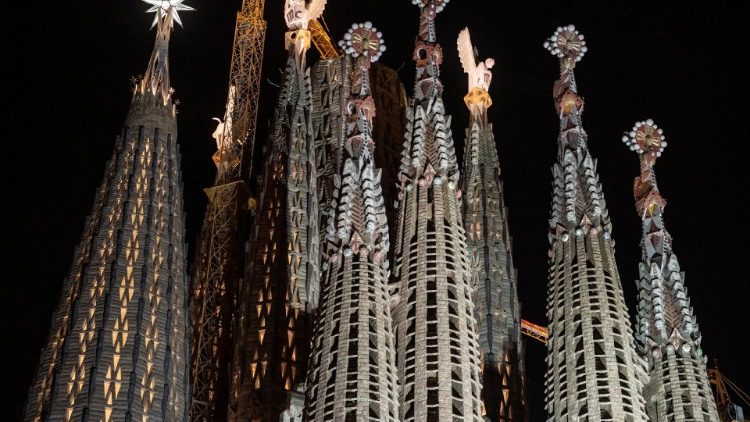
Here’s what’s actually happening while you’re busy photographing the Sagrada Família.
Sant Jordi, the day roses take over every street corner
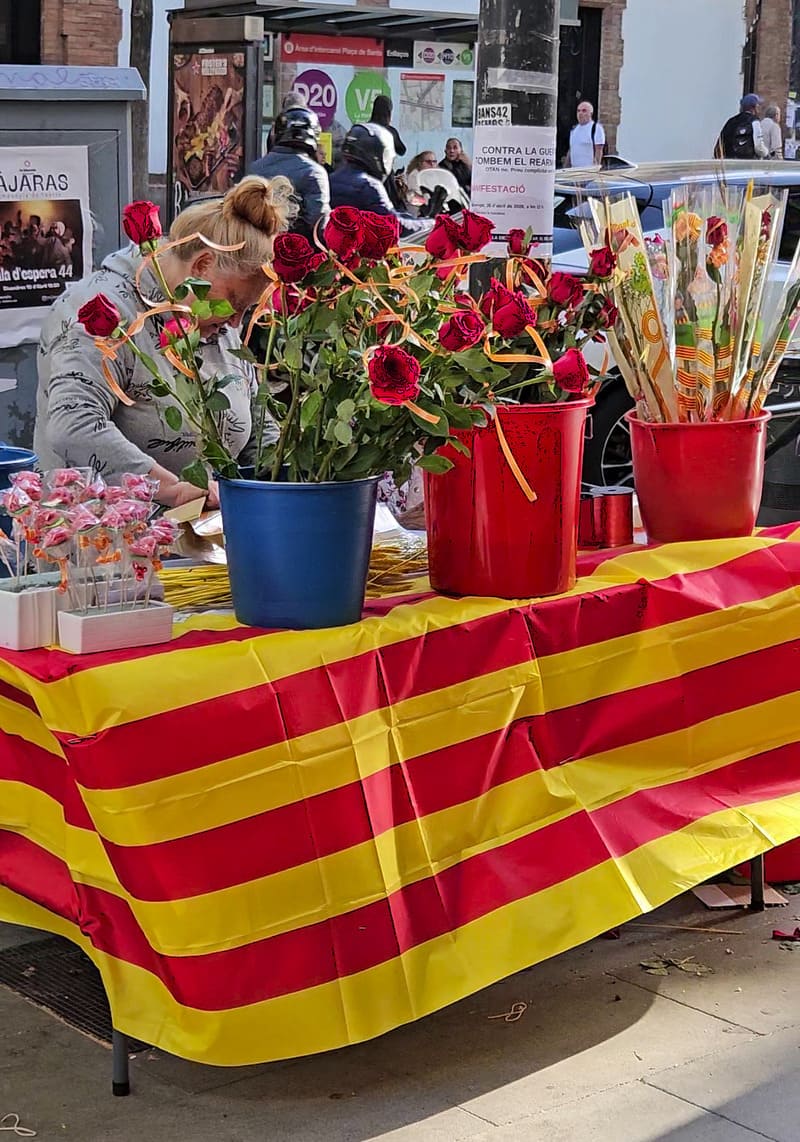
Sant Jordi is the patron saint of Catalonia.
Legend says he killed a dragon to save a princess, then handed her a rose that grew from the dragon’s blood.
That’s the origin of the rose half of the tradition, documented since at least the 15th century.
The book half is newer.
Barcelona booksellers started setting up stalls for the occasion in the 1920s, timed to the death of Miguel de Cervantes on April 23, 1616 (William Shakespeare died the same day, by the old English calendar).
In 1995, UNESCO adopted April 23 worldwide as World Book Day, inspired directly by what Barcelona was already doing.
Traditionally men gave women roses and women gave men books, though today anyone gives anyone either.
On the day itself, La Rambla and most other streets turn into one long open-air bookshop and flower market.
Miss April 23 and you miss the whole thing, since none of it happens the rest of the year.
2) Castells, the human towers with no safety net
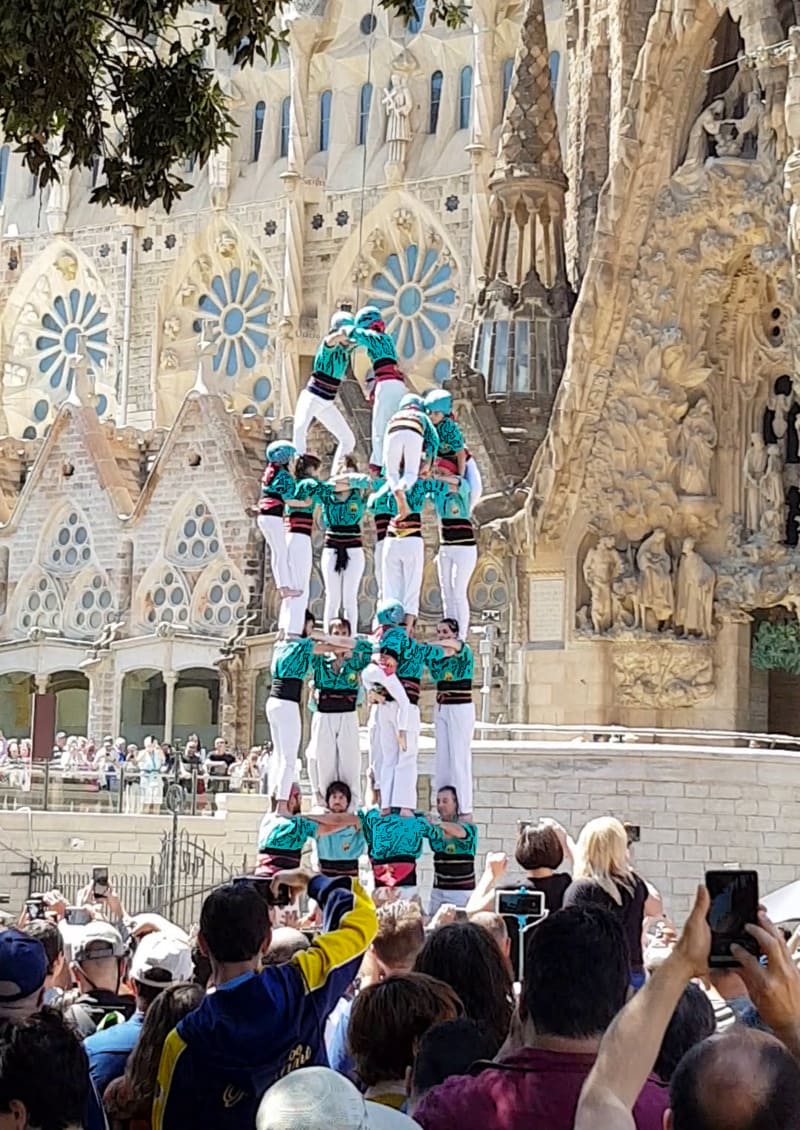
Castells are teams of people building a human tower, sometimes up to ten levels high.
They’re topped by a child called the enxaneta, who climbs to the very top and raises one arm the moment the tower is complete.
When the smallest climbers reach the top, it’s traditional to raise four fingers in the air, echoing the four red stripes of the Catalan flag.
In 2010, UNESCO added castells to its list of Intangible Cultural Heritage.
The base is the hardest part to appreciate from a distance.
It’s made of the sturdiest team members packed together to absorb the weight from above, a formation called the pinya.
The whole tower can come down in seconds if it goes wrong.
Castells aren’t a standing show. Teams from across Catalonia gather to build on set festival dates, mostly in Plaça de Sant Jaume.
If you’re not in the square that day, you don’t see them.
3) La Mercè, the birthday party Barcelona throws itself
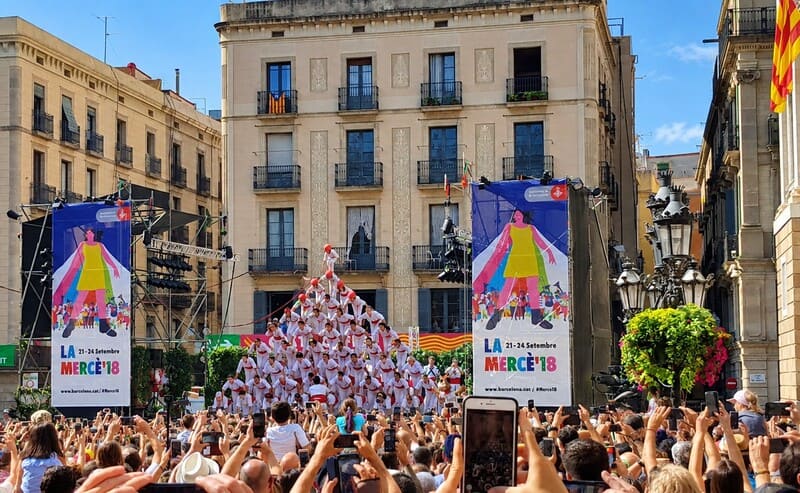
La Mercè is Barcelona’s own festival, in honor of the city’s patron saint, held every year around September 24.
It’s a public holiday, and in 2026 the citywide celebration runs September 23 to 27, closing streets and turning squares into stages for five straight days.
Most visitors have heard of Spanish festivals like the Running of the Bulls or La Tomatina, both of which happen elsewhere in Spain.
Almost none of them know Barcelona throws its own five-day party for itself every September.
More than 500 free events get packed into that one week: concerts, parades, workshops, and every other tradition on this list.
The festival closes with the Piromusical, a fireworks and music finale.
Different years have staged it at Montjuïc’s Magic Fountain or, more recently, along Bogatell Beach.
If you’re only in Barcelona in summer, you’ll never catch it, since it happens this one week of the year and nowhere else.
4) Correfoc, when devils run the streets on purpose
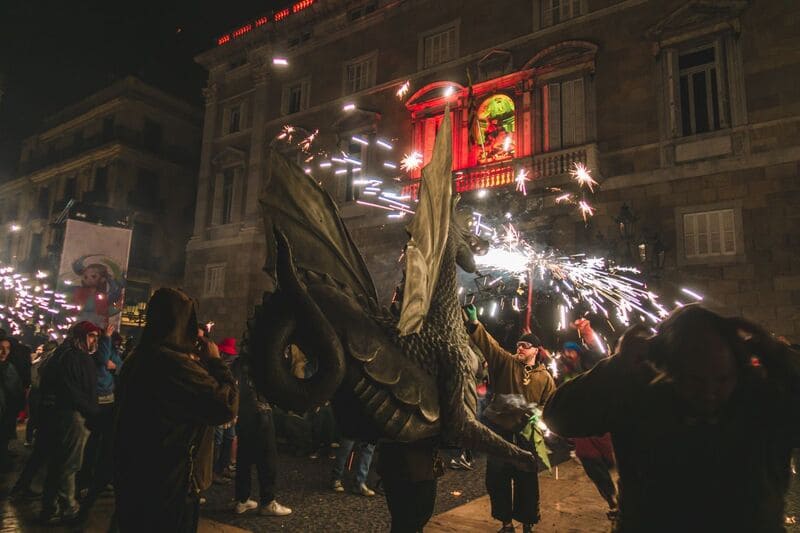
Correfoc means fire run, and that’s exactly what it is.
People dressed as devils and dragons move through the crowd with fireworks mounted on pitchforks, showering sparks over anyone standing close enough.
It’s one of the most anticipated events during La Mercè and other neighborhood festivals throughout the year.
Anyone can join the crowd inside the run, but it comes with real rules.
Cotton clothing only, no synthetic fabrics, long sleeves, closed shoes, and a hat, since actual sparks are landing on actual people.
The modern version was reintroduced in 1979, though the roots go back to devils and dragons appearing in medieval religious processions.
It only happens on specific festival nights, always after dark, and almost never anywhere near the main tourist streets.
5) Caga Tió, the log that gets beaten until it “poops” presents
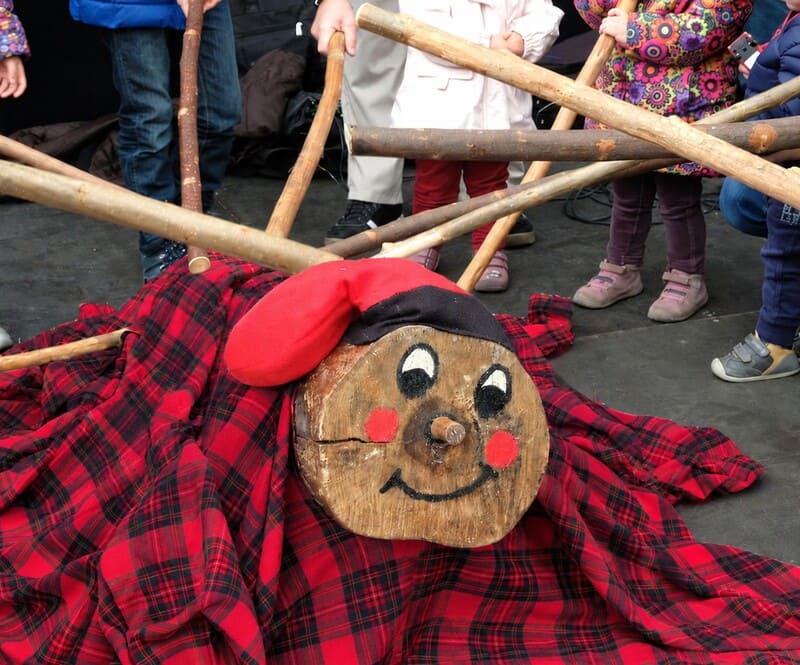
Starting December 8, Catalan families bring a log into the house, one with two little legs, a painted smiling face, and a red barretina cap.
From that day through Christmas, kids feed it scraps every night and tuck a blanket over it to keep it warm.
On Christmas Eve or Christmas Day, the kids sing a traditional chant ordering the log to “poop.”
Then they hit it with sticks until small gifts and sweets appear underneath the blanket, placed there in advance by an adult in on the ritual.
There’s no public event to attend for this one.
It happens entirely inside people’s homes, which is exactly why almost no visitor ever sees it in person, only the smiling logs stacked in shop windows every December.
6) El Caganer, the tiny figure hiding in every nativity scene
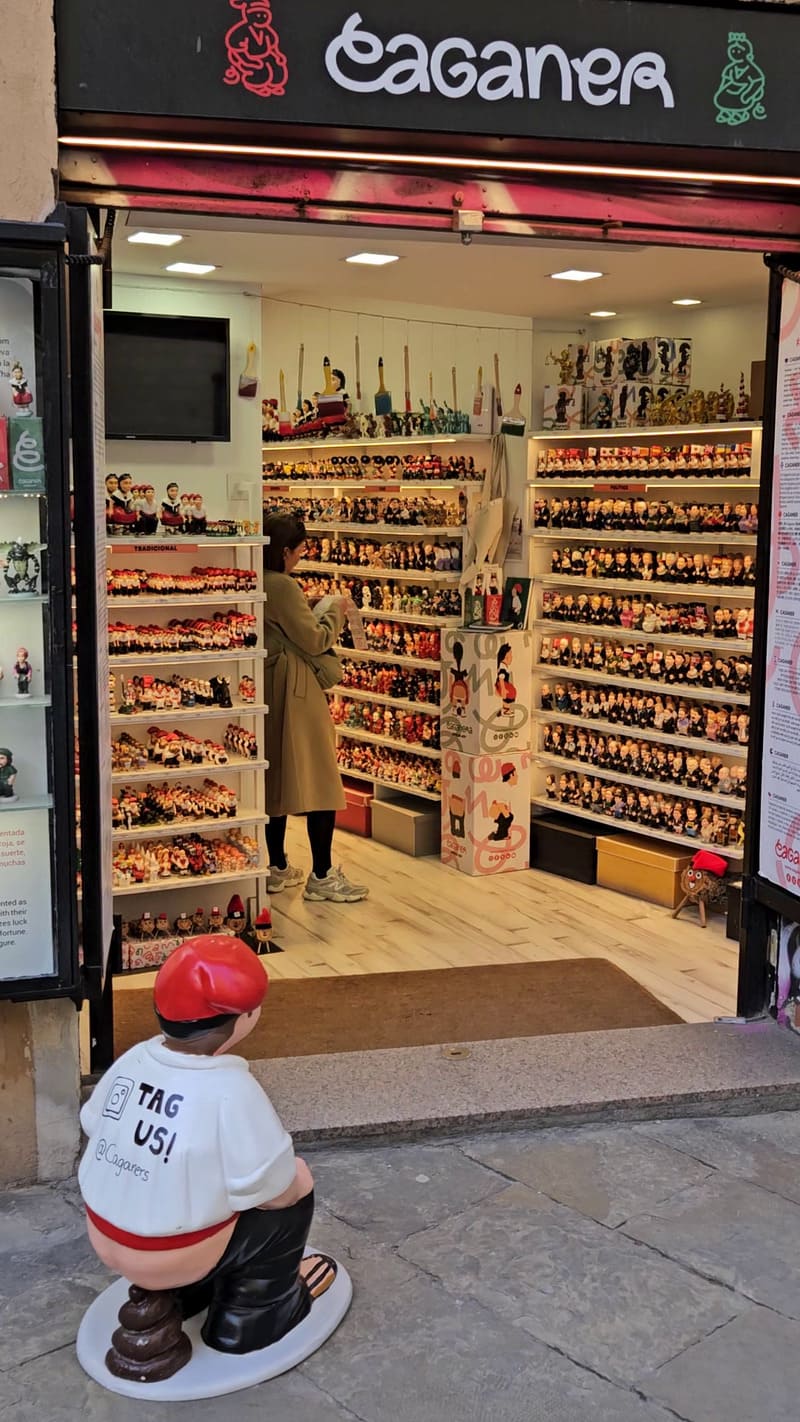
Tucked into the corner of a traditional Catalan nativity scene, usually behind a house or under a bridge, is a small figure squatting with his trousers around his ankles.
He’s called the caganer, and he’s been part of Catalan nativity scenes since at least the 17th or 18th century.
The classic version wears a red barretina and a white peasant shirt.
Modern versions come as footballers, politicians, and celebrities, sold by the hundreds at the Fira de Santa Llúcia Christmas market next to the Cathedral.
One interpretation holds that the figure fertilizes the ground beneath the scene for the year ahead.
Another reads it as a reminder that everyone, king or peasant, answers to nature eventually.
Barcelona’s official nativity scene, set up every year in Plaça de Sant Jaume at the Ajuntament, hides its own caganer somewhere in the display.
Finding him has become a small yearly tradition of its own for local families walking through with kids.
7) Gegants i Capgrossos, giants that have paraded since the 1400s
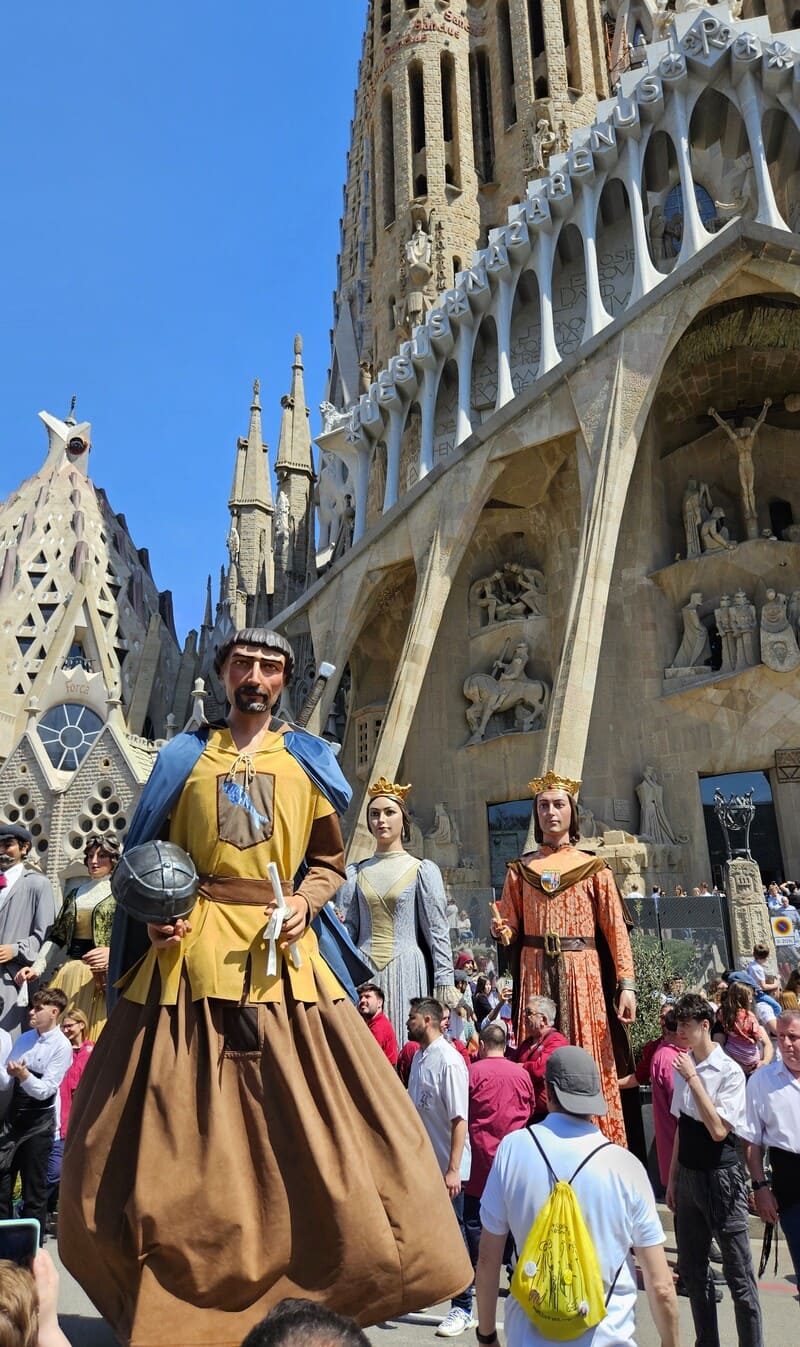
Barcelona’s giants, a towering pair named Jaume I and Violant d’Hongria after a medieval king and queen, are carried through the streets on the shoulders of a single hidden person.
That person spins and dances the figure to the sound of drums and traditional wind instruments.
The tradition goes back further than almost anything else on this list.
The first giant recorded anywhere in Europe appeared in Barcelona’s Corpus Christi procession in 1424, built for the city and representing Goliath.
Smaller, comic figures called capgrossos, oversized heads on human-sized bodies, joined the parades later and lead the procession as macebearers.
You’ll see them at La Mercè and at neighborhood festes majors throughout the year, but they don’t run on a fixed weekly schedule.
If you’re not at the right festival, they stay in storage.
8) Festa Major de Gràcia, a neighborhood that rebuilds itself in secret
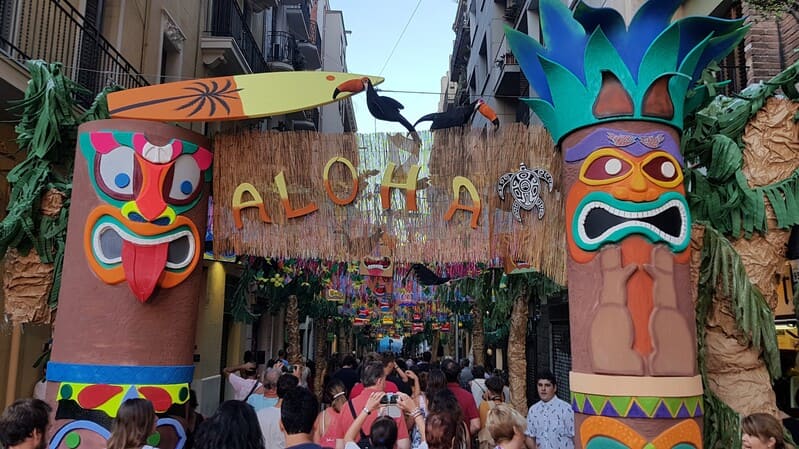
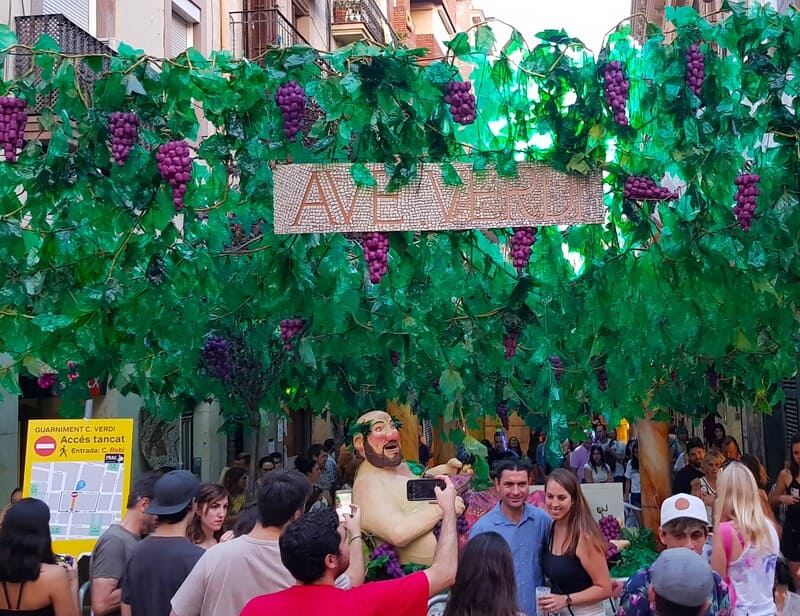
For one week every August, roughly 23 streets in the Gràcia neighborhood compete to build the most elaborate decorated tunnel over their own block.
They use almost entirely recycled materials: bottles, cardboard, wire, old fabric.
The themes are kept secret from every other street until the decorations go up all at once, usually mid-August.
Residents start planning as early as January, working in garages and community centers for months.
Past years have covered everything from underwater worlds to pointed commentary on the housing crisis.
It’s completely free, and it’s one of the most distinctive things happening in Barcelona all year.
It’s also confined to one neighborhood for one single week, which is exactly why most visitors never wander into it by accident.
9) La Sardana, the circle dance outside the Cathedral
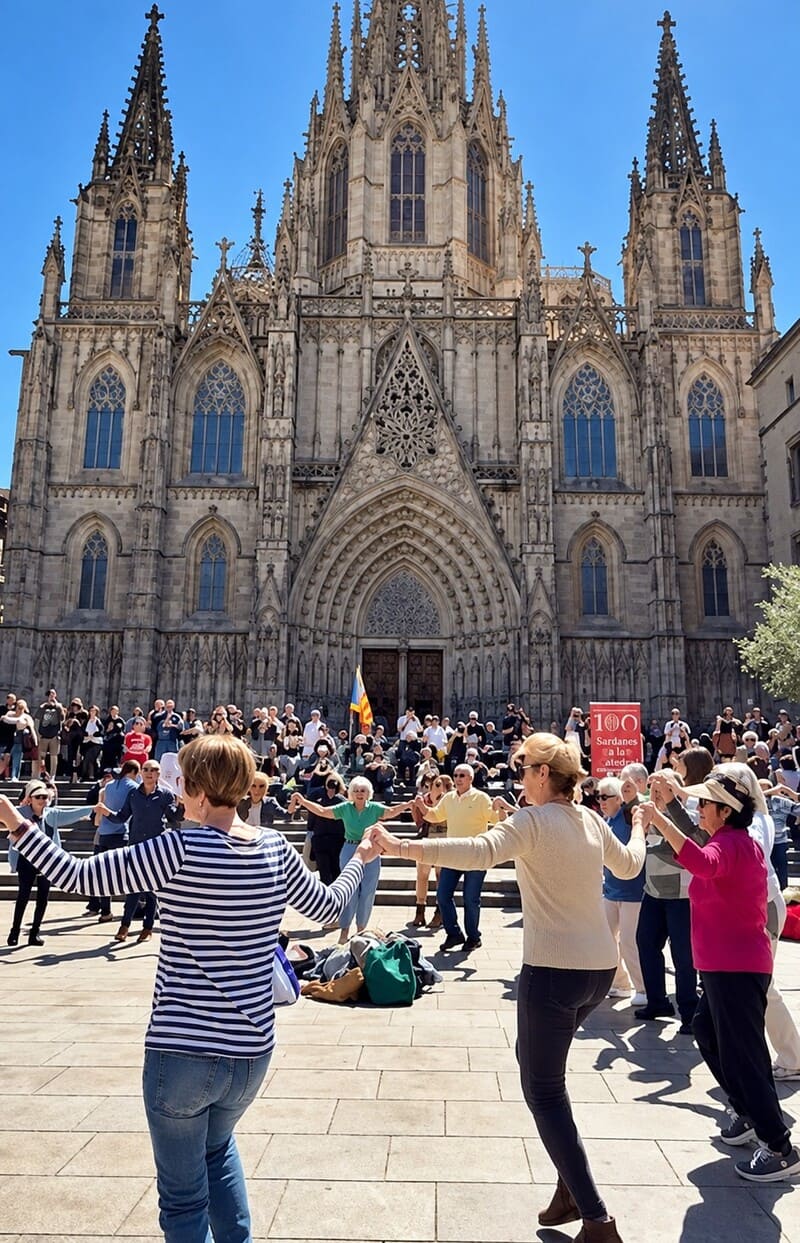
The sardana is Catalonia’s traditional circle dance.
A group joins hands, raises their arms, and moves through a set of counted steps to the music of a cobla, a small traditional wind-and-percussion band.
Anyone can join the circle, including complete beginners.
It happens most Sunday mornings and Saturday evenings right outside the Cathedral, in Plaça de la Seu, for free and without any advance planning needed.
It’s one of the most genuinely local moments available in the entire Gothic Quarter.
Most visitors walk right past it without knowing what they’re looking at.
10) Calçotada, the onion feast eaten with your bare hands
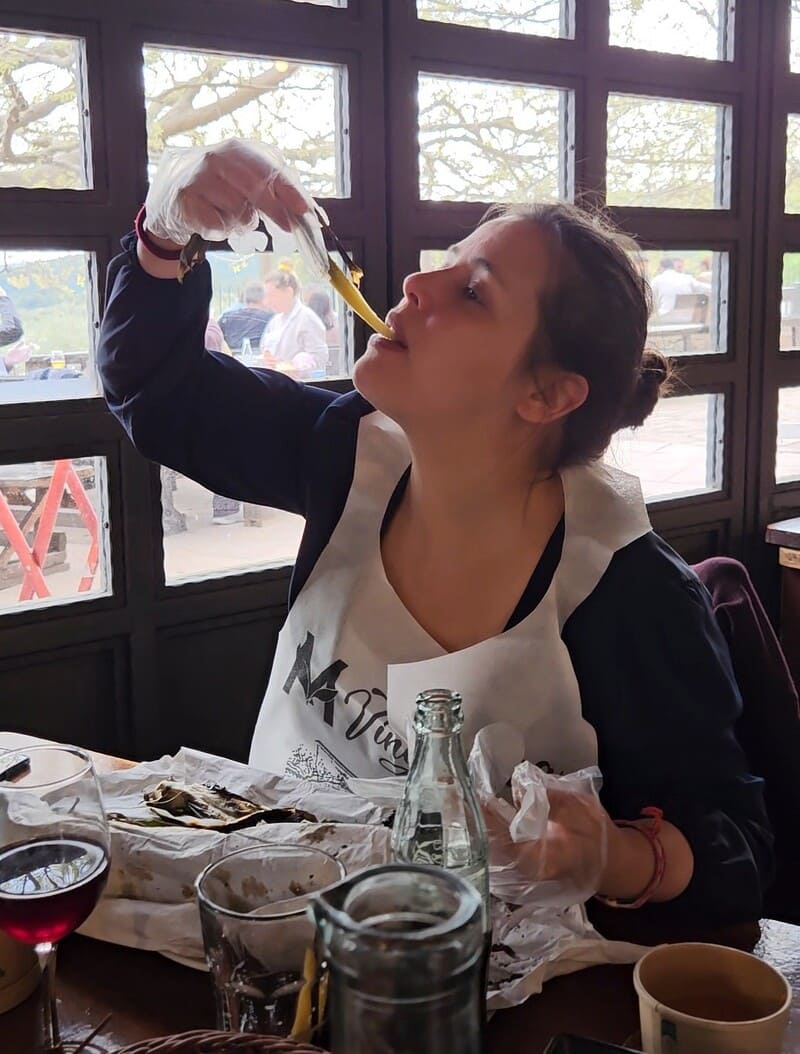
A calçotada is built around calçots, a type of long grilled spring onion, cooked directly over an open flame until the outside is charred black.
You peel them with your bare hands, dip them in a romesco-style sauce, and eat them messy, usually wearing a bib.
It’s a winter and early spring tradition, typically eaten at a big table with family or friends.
Often at a masia, a countryside farmhouse just outside the city, rather than in a central Barcelona restaurant.
Since the season runs through the colder months, most visitors are in Barcelona at exactly the wrong time of year to ever be handed a calçot.
Sauce dripping down their fingers, at a long table full of strangers turned friends for the afternoon.
11) Drinking from a porró, the pitcher that never touches your lips
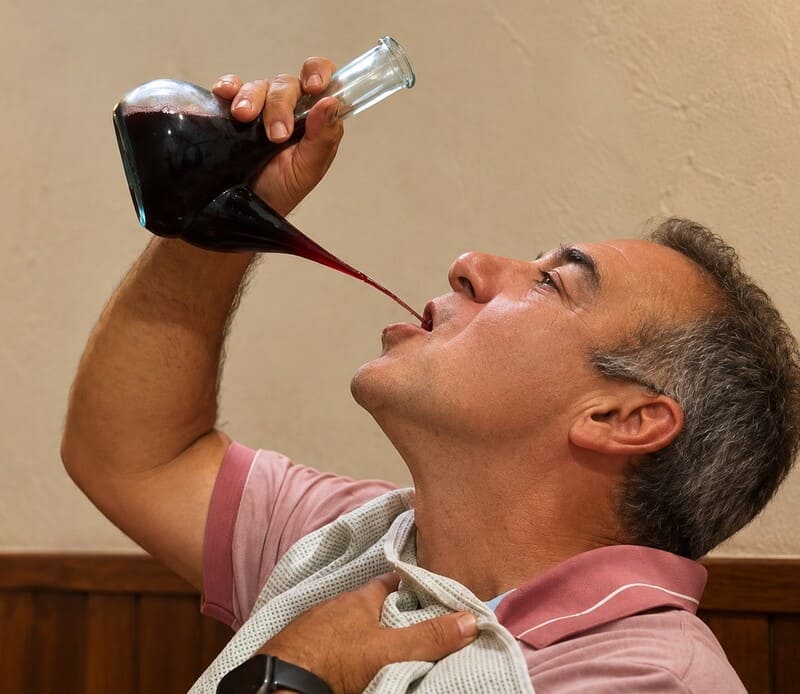
A porró is a glass pitcher with a long, narrow spout, somewhere between a watering can and a wine decanter.
You hold it away from your face, tip it, and let a thin stream of wine land directly in your mouth.
Nobody’s lips ever touch the glass, which is exactly the point.
The oldest known porró comes from Tarragona, dated to the 14th or 15th century, and the design caught on because Catalan households and taverns rarely had enough individual glasses to go around.
One pitcher gets passed hand to hand instead, and everyone drinks from it without anyone drinking after anyone else.
It looks easy until you try it. Beginners almost always end up with wine down their chin instead of their throat.
You’ll rarely see a porró at a restaurant table aimed at tourists, but it shows up constantly at a calçotada, where a shared pitcher making its way around the table is close to mandatory.
Where to go next
Half of what’s on this list costs nothing to watch, and that’s true of a lot more in this city than people realize. I’ve put together everything else that won’t cost you a euro in the free things to do in Barcelona guide, if you want to keep the streak going. And if this is your first trip and you want the fuller picture beyond festival dates, here’s what else is worth your time while you’re here.