Top 18 Best FREE Things to Do in Barcelona
By Dorian · Updated August 31, 2026
I used to think “free things to do” meant a consolation list, the stuff you settle for once the budget runs out. Then I put this list together and realized half of it beats what you’d pay for. Judge for yourself.
1) Watch the Font Màgica put on a free light show
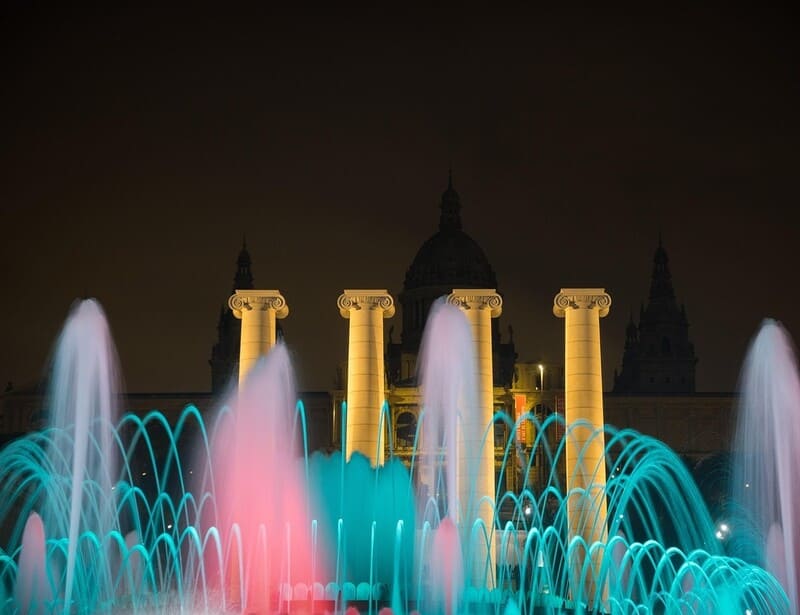
At the foot of Montjuïc, facing the Palau Nacional, the Font Màgica (Magic Fountain) puts on a synchronized water, light, and music show several evenings a week, typically Thursday through Sunday in the warmer months.
No ticket, no reservation.
Each performance runs about 20 to 30 minutes, and most evenings have two or three back to back with short breaks between.
Show up 20 minutes early to get a good spot on the wide pavement in front of the basin, and check the current schedule online before you go since it shifts by season.
2) Wander the free forest zone of Park Güell
Most people think Park Güell means paying to see the mosaic lizard and the serpentine bench. Those famous pieces sit inside the Monumental Zone, a ticketed 12 hectare section that also covers the Hypostyle Room and the Dragon Staircase.
But the park is roughly 20 hectares total, and the remaining forest area outside that zone is free, with no gate and no hours.
The free zone includes the Turó de les Tres Creus, the park’s highest point at about 600 feet (182 meters), with a 360 degree view over the city. It’s a genuinely pleasant walk even without setting foot in the paid section.
3) Browse Mercat dels Encants, one of Europe’s oldest flea markets
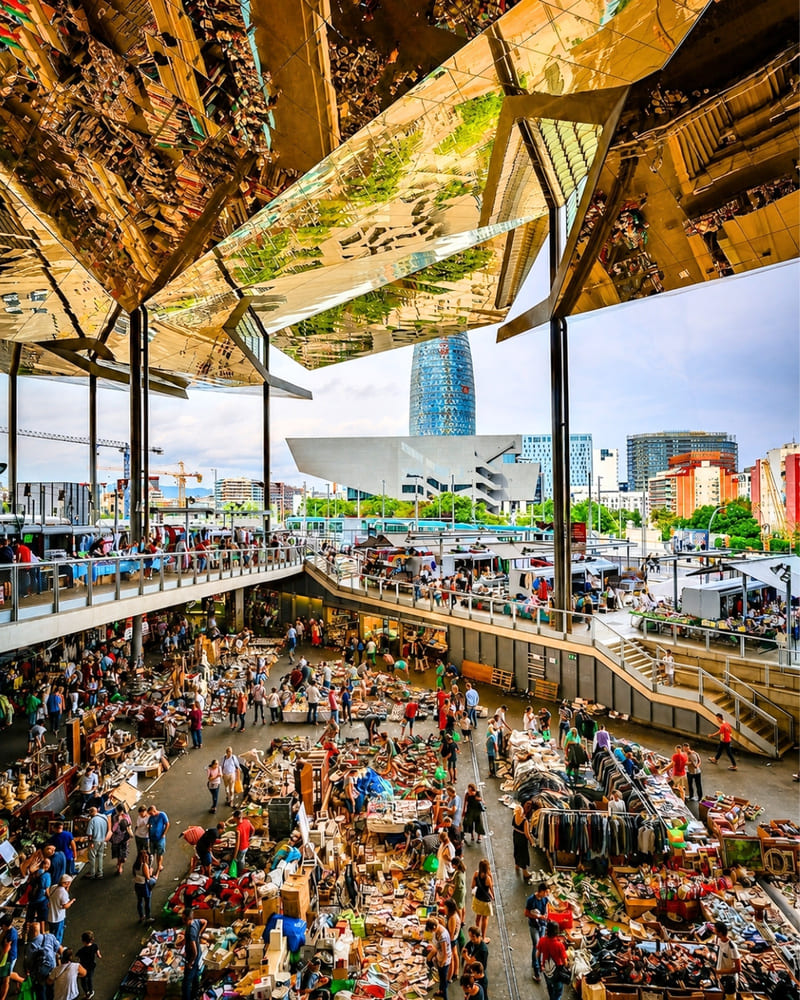
Mercat dels Encants dates back to the 14th century, making it one of the oldest flea markets in Spain. It now operates out of a striking modern building near Plaça de les Glòries, with a mirrored canopy roof that reflects the stalls below.
You don’t need to buy anything. Walking the aisles, past furniture, antiques, and secondhand oddities, is free and a good way to see a side of the city that has nothing to do with tourism.
4) Find the Roman columns hiding inside a Gothic Quarter building
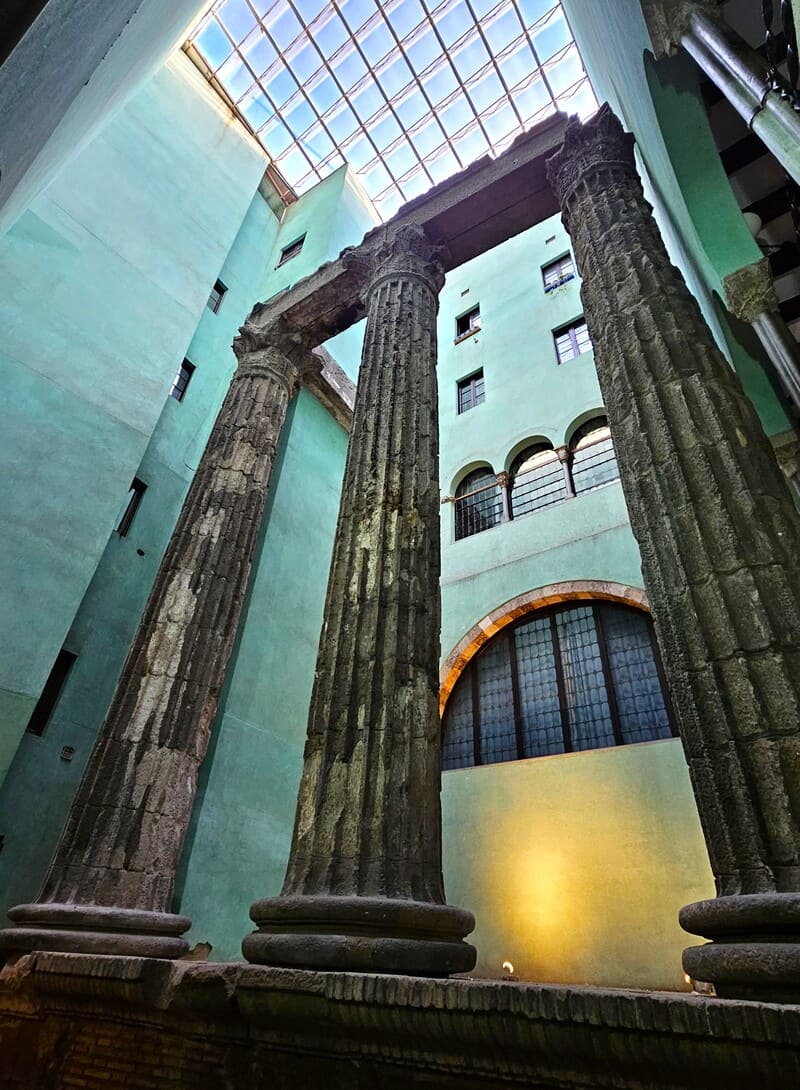
Tucked into Carrer del Paradís, just steps from the Cathedral, are four columns from the Temple of Augustus, built in the 1st century BC as part of the Roman forum of Barcino. They’re the tallest visible Roman remains in the city.
The site is part of the MUHBA (Barcelona History Museum) network and is always free to visit. It’s easy to walk right past the entrance since there’s no grand facade, just a doorway leading into a small courtyard where the columns still stand.
5) Step inside La Llotja de Mar, newly opened to the public
La Llotja de Mar was built between 1380 and 1392 as Barcelona’s medieval maritime trading hall, and its Gothic Contracting Hall, with its soaring stone columns, is one of the city’s great civil Gothic spaces.
For most of its history it’s been closed off, used as the headquarters of the Barcelona Chamber of Commerce.
As of July 2026, that changed. The Chamber began opening the building to the public free of charge, generally from 11am to 5pm, Monday through Sunday, whenever institutional activity allows. This is genuinely new, so check current hours before planning a visit around it.
6) Spend an afternoon in Parc de la Ciutadella
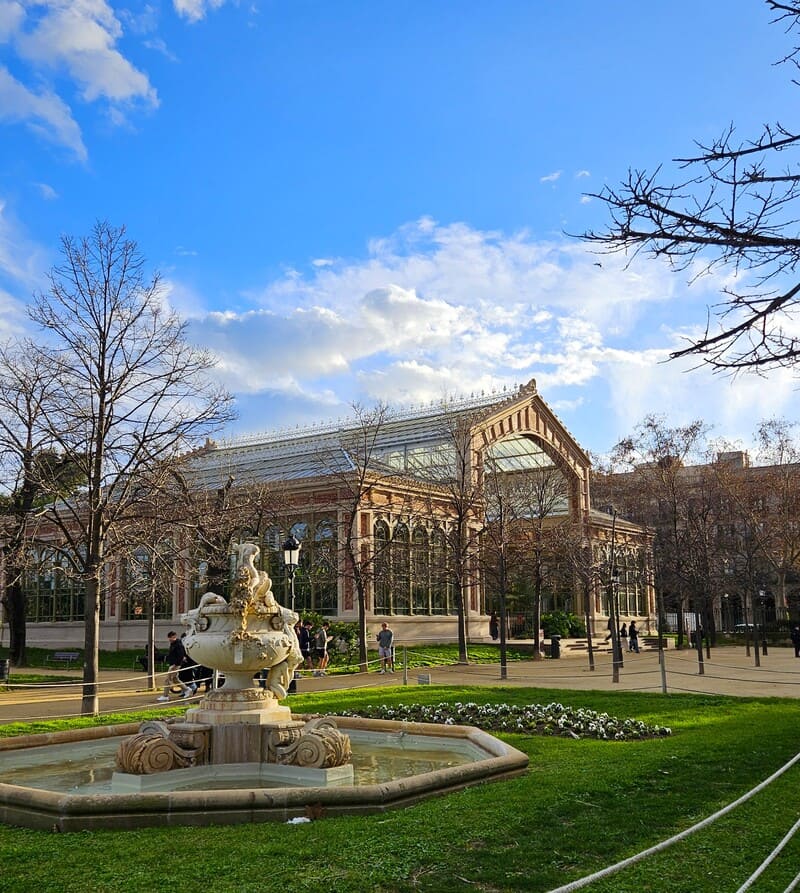
Parc de la Ciutadella sits on the site of a former military citadel and is now the city’s grandest public park, with wide paths, a boating lake, and the elaborate Cascada fountain, which a young Antoni Gaudí worked on as an engineering student.
It’s free to wander at any time, and it’s central enough to combine easily with a walk through El Born or Barceloneta.
7) Sit inside Santa Maria del Mar, the people’s cathedral
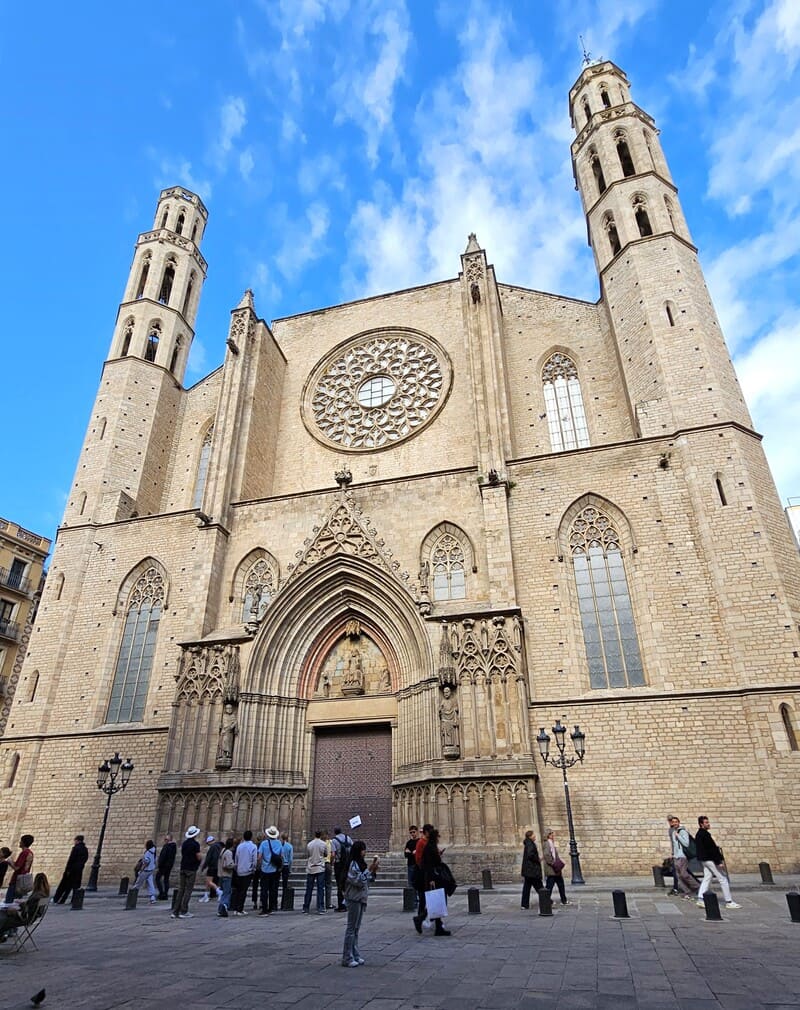
Santa Maria del Mar was built in just 55 years, between 1329 and 1383, funded largely by the dockworkers and merchants of La Ribera rather than by the church or nobility.
That origin earned it the nickname “the people’s cathedral,” and its clean, soaring Catalan Gothic lines are often considered more striking than the actual Cathedral’s.
Entry to the nave is donation based rather than ticketed. It’s a working church, so dress modestly and expect quiet during services.
8) Time a visit around Barcelona’s rotating free museum days
Several of Barcelona’s major museums open their doors free on a regular schedule.
The Museu Picasso runs free evening entry a few nights a week in summer and free afternoon entry in winter, plus the first Sunday of every month.
MNAC offers free entry every Saturday afternoon and on the first Sunday of the month.
The catch is that free slots require advance online booking, even though they cost nothing, and they tend to fill fast.
Check each museum’s official site a few days ahead to reserve a spot before your trip.
9) Meet Barcelona’s giants at La Casa dels Entremesos
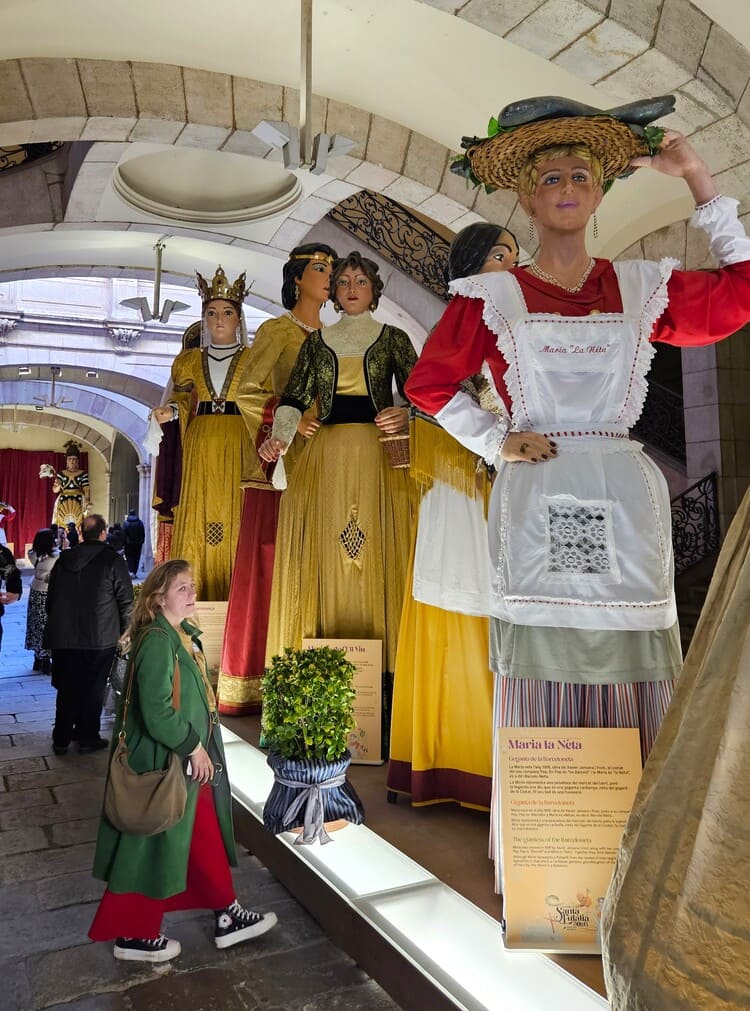
Near the Palau de la Música, La Casa dels Entremesos houses around fifty of the towering figures that parade through Barcelona’s biggest festivals: gegants (giants), capgrossos (oversized heads), and bestiari (mythical beasts like dragons and eagles).
It’s a small museum, and it’s free, with a donation box for anyone who wants to leave something. It’s an easy, fun stop for understanding what you’re actually looking at if you catch a festival parade later in your trip.
10) Visit the Cathedral’s cloister and its 13 geese
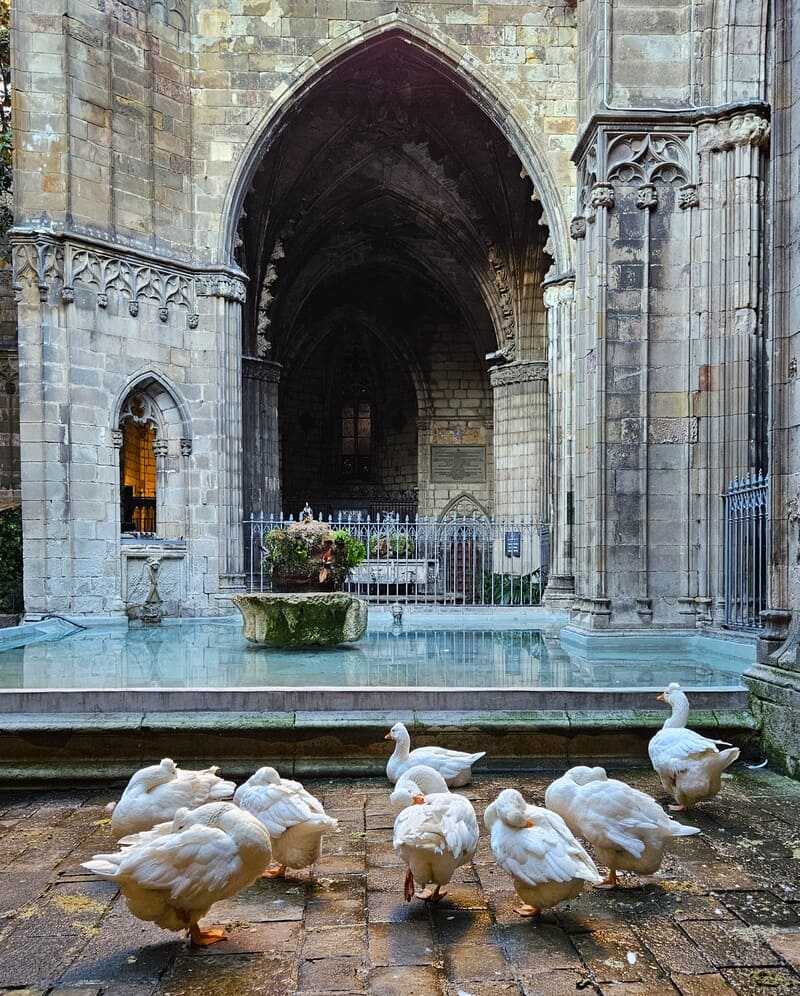
The Cathedral’s main nave and cloister are free to enter roughly before 12:30pm and after 5:15 or 5:45pm, Monday through Saturday, outside the paid tourist visiting hours in the middle of the day. Confirm the exact window on the official site, since it shifts slightly with the mass schedule.
The cloister itself, with palm trees and a mossy fountain, is home to 13 white geese, a tradition tied to Santa Eulàlia, Barcelona’s co-patron saint, who was martyred at 13 years old. Every Corpus Christi, the cloister also hosts l’Ou com Balla, the “dancing egg,” a tradition where an egg is balanced to spin atop the fountain’s water jet.
11) Wander La Boqueria without spending a euro
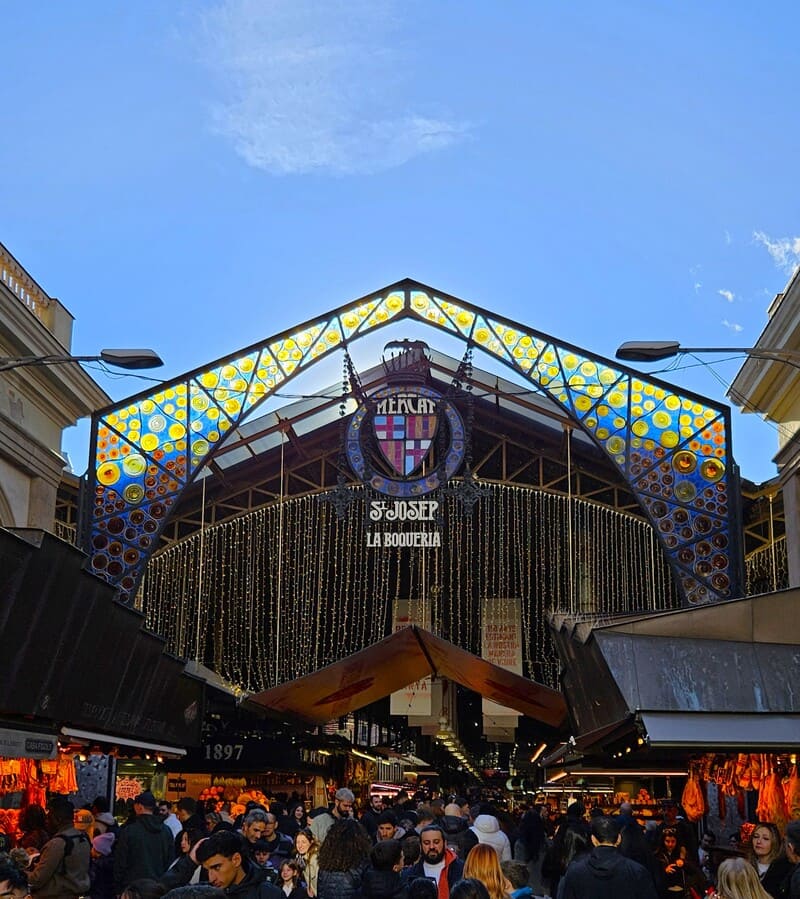
La Boqueria, just off La Rambla, is one of Europe’s most photographed food markets, and simply walking its aisles, past stacked fruit, hanging jamón, and fresh seafood, costs nothing.
Go earlier in the day if you want to see it working rather than performing for tourists. Locals do their actual grocery shopping here too, mostly in the stalls further from the main entrance.
12) Catch a free exhibition at Palau de la Virreina
Right on La Rambla, Palau de la Virreina is an 18th century Baroque and rococo palace built for the Viceroy of Peru.
It’s now home to the Centre de la Imatge, with a rotating, always free program of photography, film, and contemporary art exhibitions.
The building also permanently displays some of the city’s giant festival figures, including the Àliga (eagle) of Barcelona. No ticket, no booking required.
13) Walk over the ruins of pre-1714 Barcelona at El Born
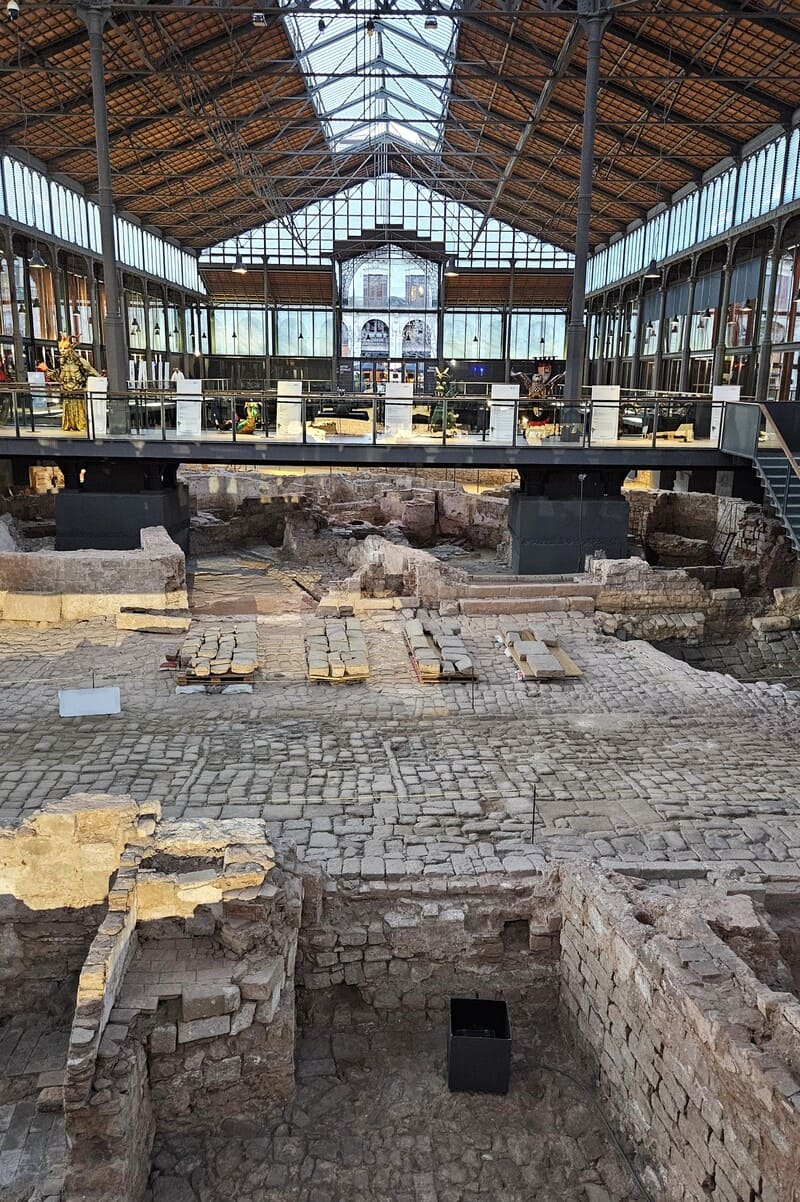
El Born Centre de Cultura i Memòria occupies a soaring 19th century cast iron market hall, built in 1876. Beneath it lie the excavated remains of an entire neighborhood, streets, houses, and workshops, that were demolished after Barcelona’s 1714 siege during the War of the Spanish Succession, when the area was flattened to build a military citadel.
Walking the raised walkways above the ruins and reading the surrounding exhibition panels is free. A separate ticketed exhibition covers additional historical context if you want to go deeper, but the main archaeological space needs no ticket at all.
14) Explore contemporary art inside a former convent
At the foot of La Rambla, Centre d’Arts Santa Mònica occupies a 17th century convent that’s been an exhibition space since 1988.
It’s always free and shows a rotating mix of contemporary art, from visual art to performance and design.
It’s one of the least crowded cultural stops in the entire old town, largely because so few visitors know it’s there.
15) Stop by Palau Robert’s gardens and exhibitions
Near Passeig de Gràcia, Palau Robert combines a quiet public garden with a program of always free exhibitions covering Catalan culture, history, and current affairs.
It’s an easy add-on if you’re already walking Passeig de Gràcia for the Modernista architecture, and a good spot to sit down for a few minutes away from the crowds.
16) Get some quiet in Montjuïc’s gardens
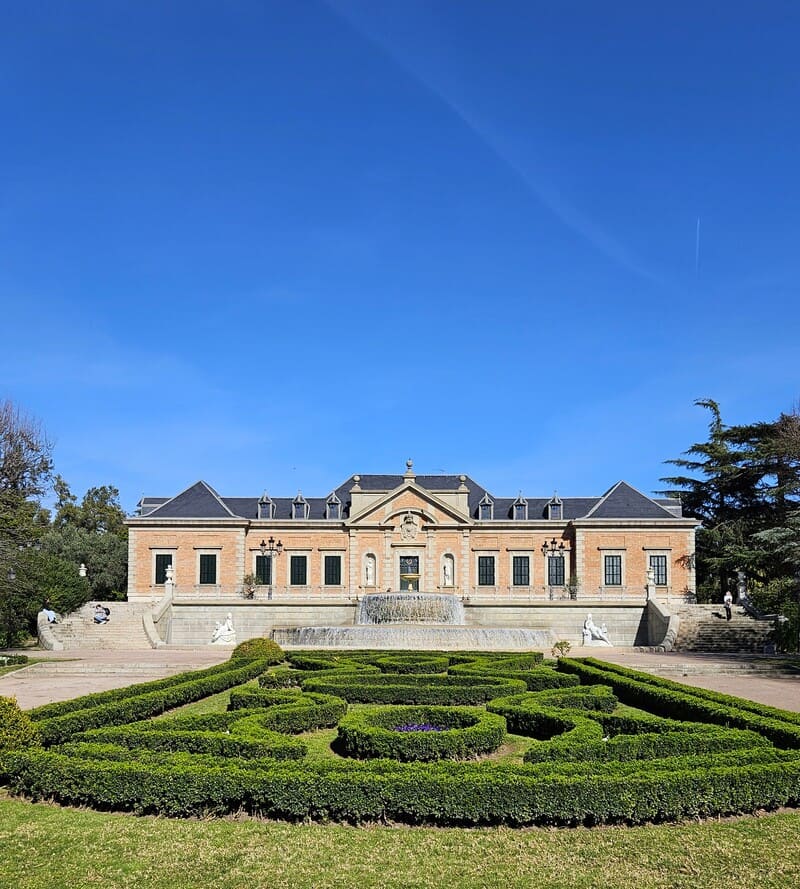
Montjuïc is full of paid attractions, but its gardens aren’t among them. Jardins de Mossèn Costa i Llobera, a cactus and succulent garden on a south facing slope, and Jardins de Mossèn Cinto Verdaguer, known for its bulbs and water features, are both free and often nearly empty.
Both offer sea views without the crowds you’ll find at Montjuïc’s ticketed sites.
17) See Barcelona the way locals do at Parc del Guinardó
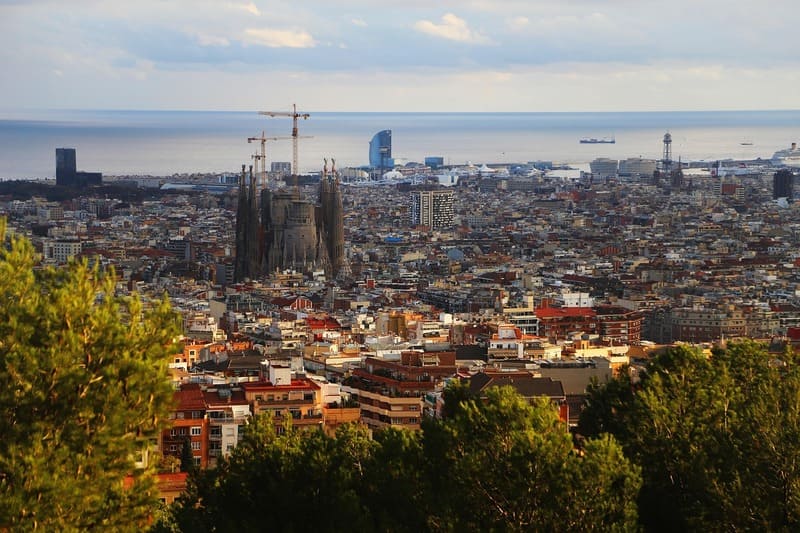
Parc del Guinardó sits well outside the usual tourist path, which is exactly its appeal. It’s a hilly, green, genuinely local park with panoramic views over the city, and on any given afternoon you’ll see far more Barcelona residents than visitors.
It’s a good stop if you want a break from the old town crowds without committing to a longer hike.
18) Try to catch the sardana outside the Cathedral
The sardana is Catalonia’s traditional circle dance, danced by holding hands in a ring and following a precise sequence of small steps while a cobla, an eleven piece band, plays live.
It’s historically been danced outside the Cathedral on Sunday late mornings, roughly 11:30am to 1pm.
Worth knowing before you plan a trip around it: the regularity of this Sunday gathering has become less consistent in recent years. Your best odds of catching it are during major festivals like La Mercè in September or Sant Jordi in April, when sardana performances are reliably scheduled.
Where to go next
A few of the spots on this list, Santa Maria del Mar, the Cathedral’s cloister and its geese, the ruins at El Born, show up again in the fuller version of Barcelona’s essentials, where I go deeper on each one, including how to actually get onto Sagrada Família’s rooftop and where Gaudí’s rooftop chimneys at Palau Güell fit into the story: 19 things you should actually do in Barcelona.
And if the Roman columns hiding inside that Gothic Quarter building got you curious, there’s another free Roman site just as easy to walk past, actual tombs from Barcino sitting under an ordinary-looking square. I cover that one, along with a handful of other quiet corners most visitors never find, here: 14 hidden corners of Barcelona worth seeking out.