19 Things You Should Actually Do in Barcelona
By Dorian · Updated August 28, 2026
Everyone lands in Barcelona with the same five names circled: Sagrada Família, Park Güell, La Rambla, Boqueria, Casa Batlló. Good places, all of them. But treating that list as the whole trip is like reading only the first chapter of a book everyone’s still talking about by the last page. Here’s the rest of it.
1. Go inside Sagrada Família at midday
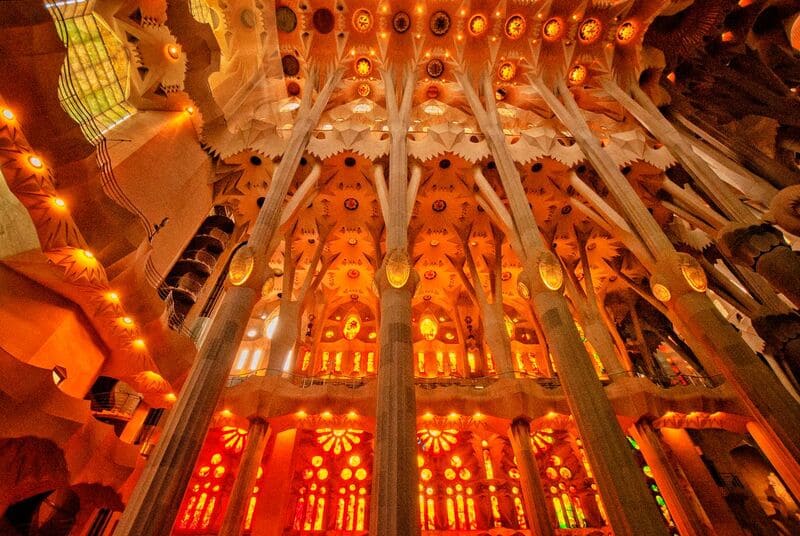
Most people photograph the outside and move on. Go inside instead, ideally around noon on a sunny day.
The light comes through the stained glass differently depending on the side, blue and green on one, orange and red on the other. It changes the whole feeling of the building, and it’s the part most visitors never plan for.
2. Visit Casa Vicens before Casa Batlló
This was Gaudí’s first major commission, tucked into the Gràcia neighbourhood, and it draws a fraction of the crowds his later, more famous buildings do.
It’s smaller and quieter, and easier to actually look at without a crowd in the way. You can see the ideas that later became his signature style, just earlier and less polished.
3. Book Park Güell for the first entry slot
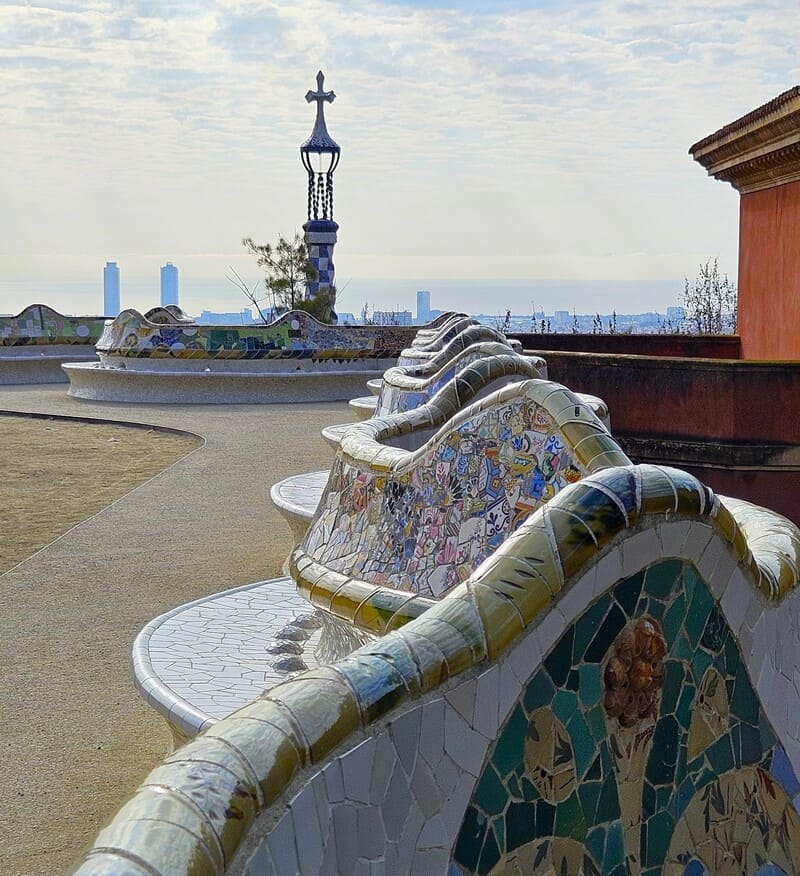
Park Güell is worth it, no question, but only if you go early. The monumental zone gets genuinely uncomfortable by mid-morning in high season.
Book the first available slot and you get a completely different experience of the same place.
4. Sit inside Santa Maria del Mar
A favourite among locals, and free to enter. Pure Catalan Gothic, tall and plain, built by the people of the old Ribera neighbourhood rather than commissioned by a bishop.
Sit for ten minutes. It’s the kind of quiet you don’t expect two streets from El Born’s bars.
5. See Barcelona Cathedral, and don’t confuse it with Sagrada Família
This is the actual cathedral, La Seu, in the Gothic Quarter, not the Gaudí basilica.
Go inside for the cloister, where 13 white geese live permanently in a pond, a centuries-old tradition tied to Saint Eulàlia, the city’s co-patron saint, said to represent her age when she was martyred.
6. Walk the rooftop of Palau Güell
Just off La Rambla and constantly overlooked. This was Gaudí’s first big project for his patron Eusebi Güell.
The rooftop has twenty chimneys, each one different, covered in broken tile mosaic. Same technique he later used at Park Güell, just earlier and far less crowded.
7. Walk La Rambla the right way
Not going to tell you to skip it, it’s the spine of the city. But walk it early morning or later evening, not at 2pm in August.
Look at the building facades above the shopfronts, that’s where the real architecture is. And keep a hand on your bag, it’s the most pickpocketed street in the city.
8. Get to Boqueria before 10am
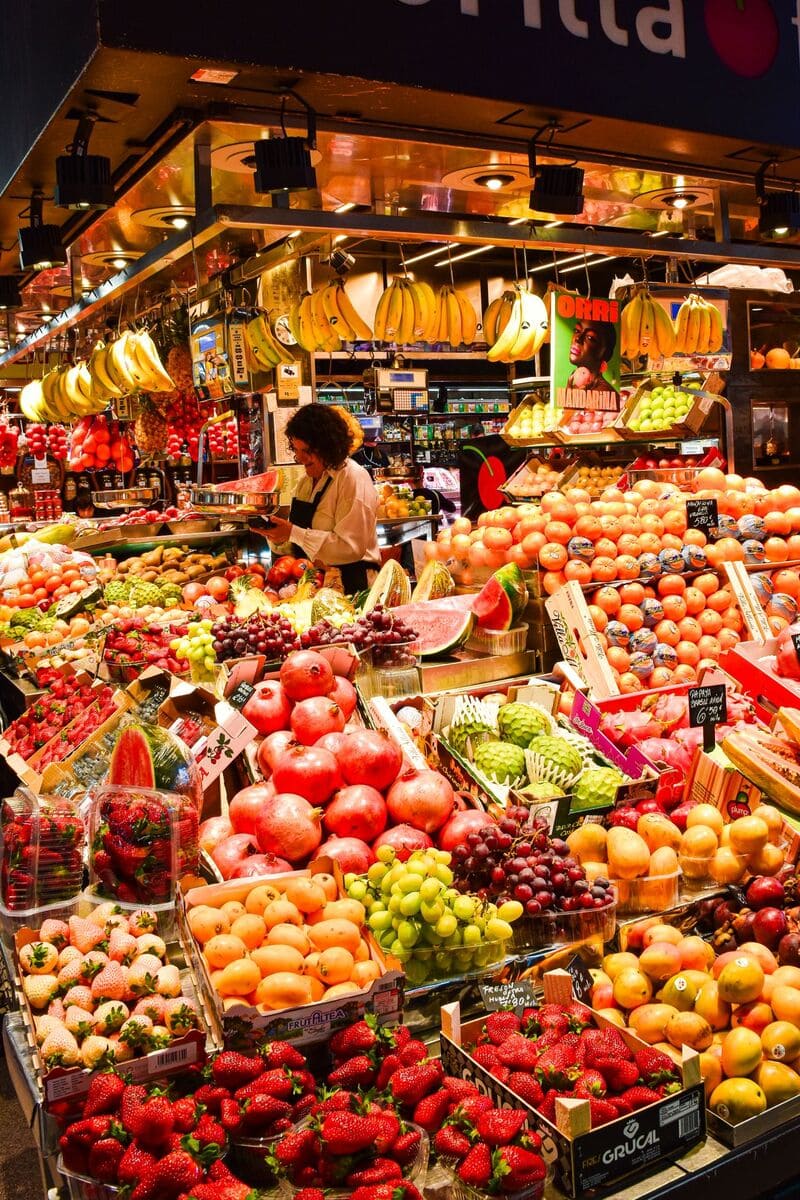
By lunchtime, Boqueria is a tour group bottleneck. Before 10am, it’s still a working market with locals buying fish and produce for the day.
Grab a coffee or a fresh juice at one of the counter bars near the back and watch the city wake up.
9. Walk the ruins at El Born Centre de Cultura i Memòria
Underneath a 19th century iron market hall is an entire excavated neighbourhood, streets, homes, and workshops, destroyed in 1714 during the War of the Spanish Succession.
You walk over glass floors looking down at 300 year old streets. One of the most quietly powerful places in the city, and one of the least visited.
10. Go up to the roof of Casa Batlló
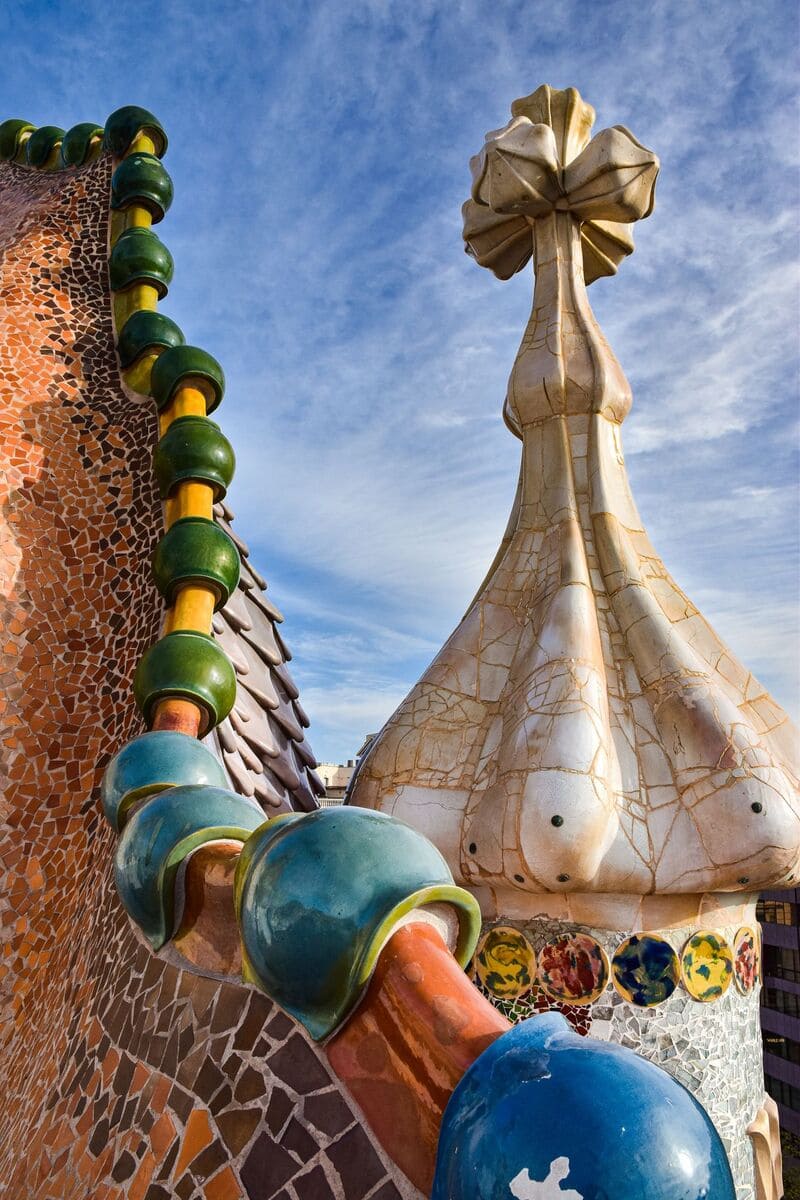
Touristy, yes, book ahead. But the roof, shaped like the back of a dragon with a cross for a spine, earns the crowd.
It’s said to represent Saint George slaying the dragon, Catalonia’s own patron saint legend.
11. Compare it with La Pedrera
Casa Batlló and La Pedrera (Casa Milà) sit a few blocks apart on the same avenue, designed by the same man within a few years of each other, and they feel completely different.
La Pedrera’s rooftop, with its helmet shaped chimneys, has a strange, almost lunar quality Casa Batlló doesn’t. Do both on the same afternoon and the contrast says a lot about how much Gaudí was still experimenting.
12. See Hospital de Sant Pau, not just the Gaudí buildings
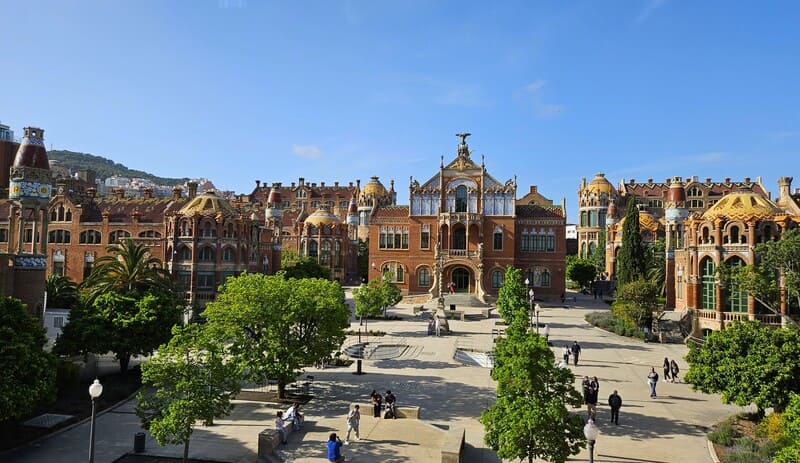
Modernisme in Barcelona isn’t only Gaudí. Built by Lluís Domènech i Montaner, Sant Pau was a working hospital until 2009 and is now a UNESCO World Heritage Site in its own right, alongside Gaudí’s works.
It’s a short walk from Sagrada Família and rarely gets added to the day. It should be.
13. Do “la hora del vermut” properly
Skip the sangria, that’s for tourists. The real local ritual is vermouth before lunch, ideally on a Sunday, served over ice with an olive and a slice of orange, alongside small salty snacks.
Find a real vermuteria, sit outside if you can, and let lunch happen an hour later than planned. That’s the point.
14. Take a guided tour inside Palau de la Música Catalana
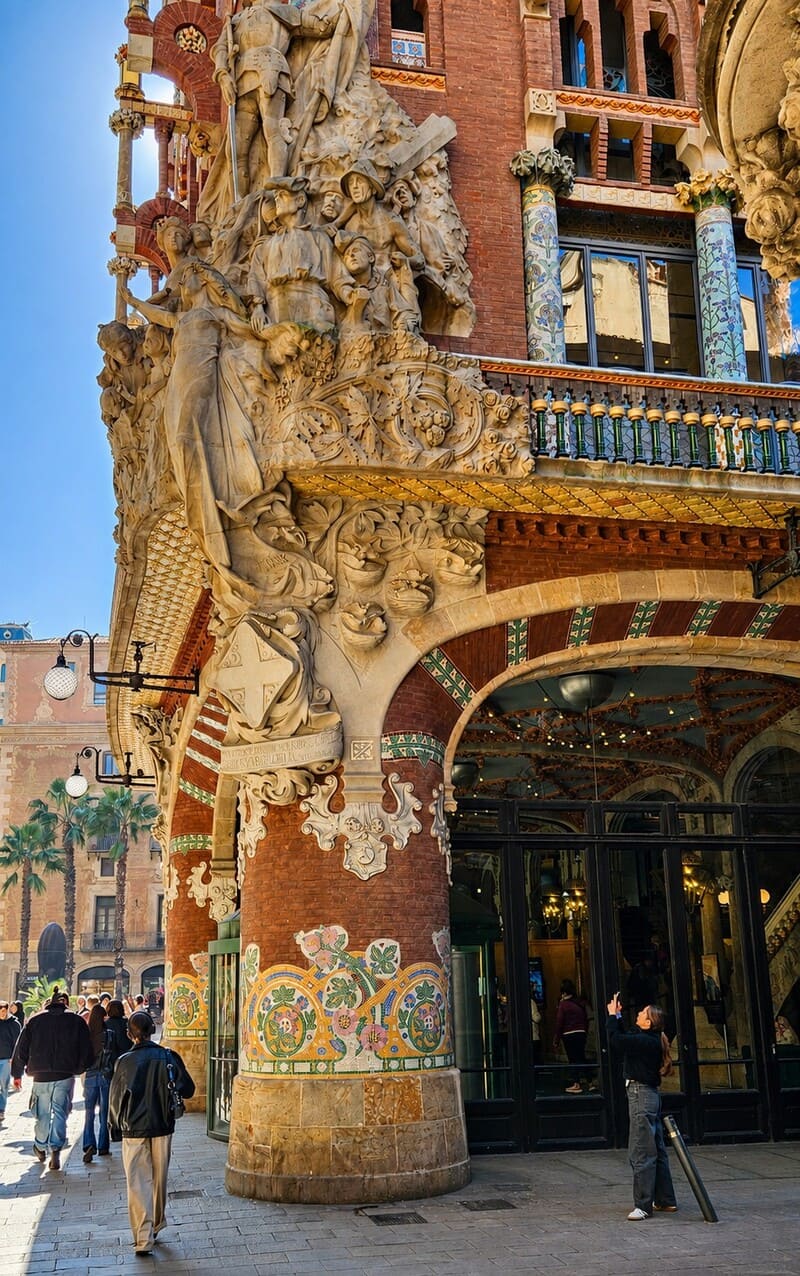
The outside is beautiful. The inside is something else, a concert hall with a stained glass ceiling that seems to float above the audience.
It’s a UNESCO World Heritage Site alongside Sant Pau, both by the same architect. Unless you catch a concert, you’ll need the guided tour to get inside.
15. Wander Gràcia’s small squares
Once its own separate town before Barcelona grew around it, Gràcia still feels like a village inside the city.
Plaça de la Vila de Gràcia and Plaça del Sol are where locals actually sit for a coffee or a beer, no six-language menu in sight.
16. Spend an hour at Museu de la Xocolata
Small and a bit eccentric. Chocolate has real history in this city, tied to trade with the Americas, and the museum doesn’t take itself too seriously, including chocolate sculptures of local landmarks.
Good for an hour between two heavier stops.
17. Ride the cable car up Montjuïc
Montjuïc has gardens, a castle, and some of the best views in the city, and the cable car ride up is part of the experience, not just transport.
Go late afternoon for the light over the port and the sea.
18. Take a day trip to Montserrat
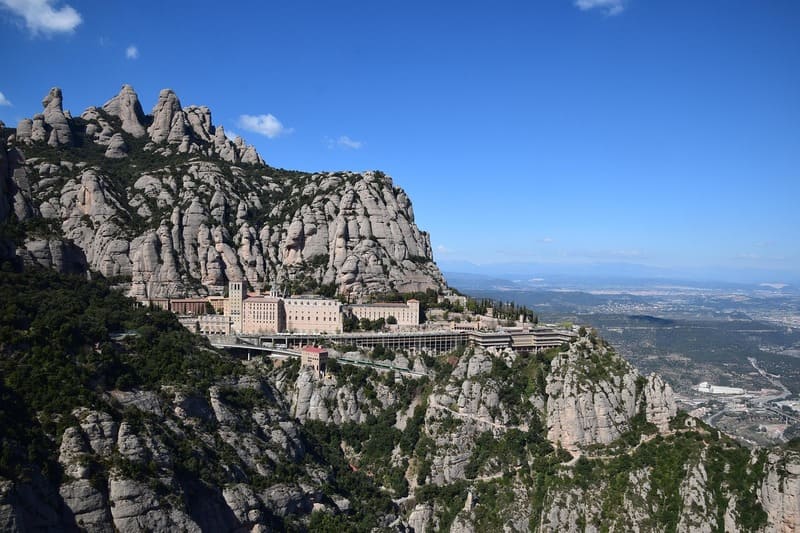
An hour outside the city by train, Montserrat is a Benedictine monastery built into a mountain that doesn’t look real the first time you see it.
Easy day trip, no car needed, and the one thing on this list that feels the least like Barcelona and the most worth doing anyway.
19. Go treasure hunting at Mercat dels Encants
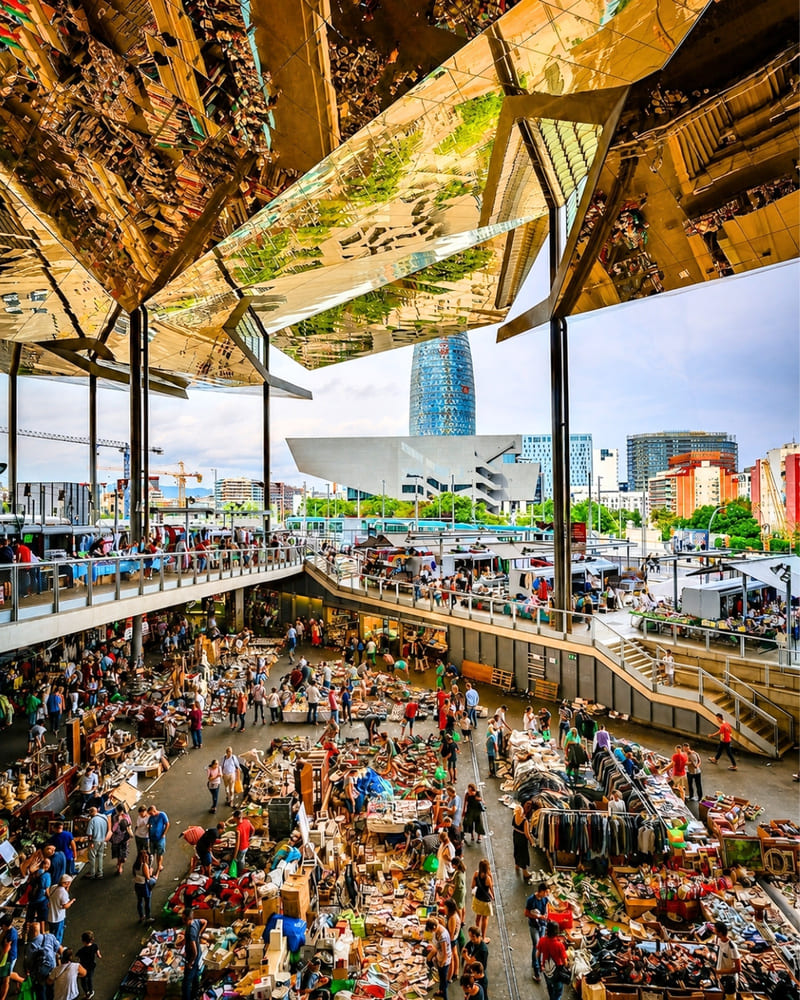
Most people heading to Glòries are only there for the Torre Agbar photo. The flea market next to it deserves its own stop.
Encants has been trading since the 14th century, one of the oldest second-hand markets in Europe, and it still runs on public auctions, a tradition almost extinct elsewhere on the continent. Furniture, antiques, vintage clothing, odd finds nobody can quite explain. Go early for the best pieces, later for the best prices.
All of it sits under a gold mirrored roof hanging 82 feet (25 metres) overhead, added in 2013, that reflects the entire market back at itself. Look up and the stalls, the shoppers, the skyline all show up fractured and doubled above your head.
What to read next
A couple of these deserve more than the single paragraph I gave them up above.
Montserrat especially. Calling it “an hour outside the city” barely scratches it, so I put together the fuller version, how to actually get up the mountain, when to time it around the boys’ choir, which short walk is worth adding if you have the legs for it: Montserrat: My complete guide.
And Hospital de Sant Pau got mentioned almost as an aside above, which isn’t really fair to it. It’s one of the best buildings in the city, and most people walk right past it on their way to Sagrada Família without knowing what’s behind the gates. I wrote a proper guide to it, including the short walk that connects the two: Hospital de Sant Pau: My complete guide.