12 Mistakes To Avoid in Your First 3 Days in Barcelona
By Dorian · Updated August 30, 2026
I get asked some version of “wish someone had told me” almost every week. So here’s everything I’d want you to know before your first three days in Barcelona, the stuff that actually changes how your trip goes.
1) Assuming you can walk up and buy a Sagrada Família ticket
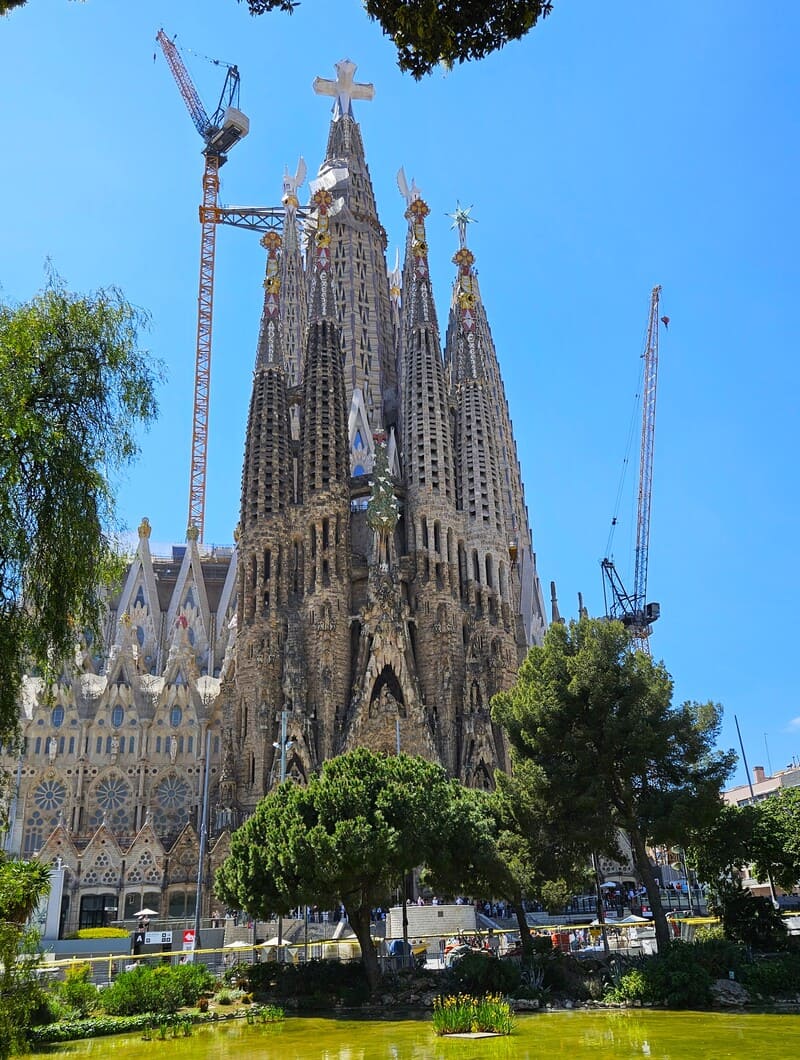
There is no ticket office at the Sagrada Família anymore.
Every entry, at every price point, is a pre-booked online reservation with a timed slot. Security at the entrance will turn away anyone who shows up without one.
2026 makes this even less forgiving. It’s the centenary year of Gaudí’s death, and the basilica is drawing record crowds. Slots that used to be available a day or two out are now selling out well in advance.
Book the moment your travel dates are confirmed. Choose between the basic entry, the guided tour, or the tower add-on. Check the official Sagrada Família site for current availability and pricing rather than a resale site.
2) Making the same mistake at Park Güell
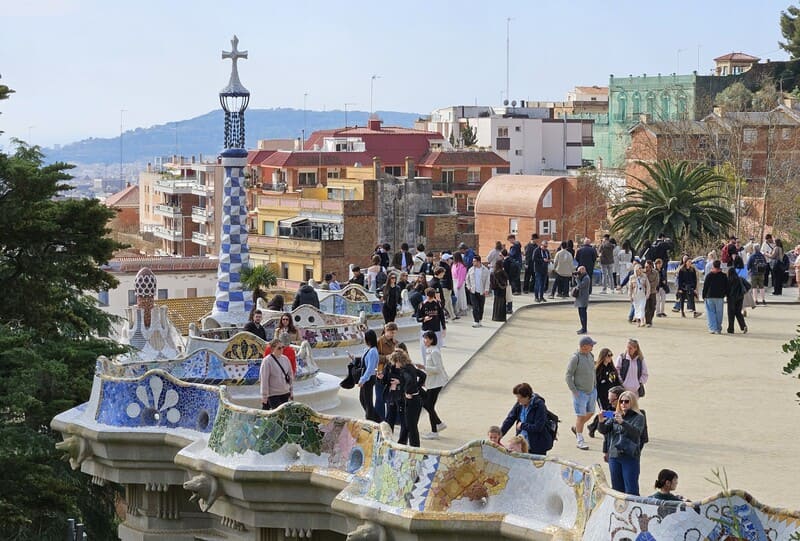
Park Güell is really two parks.
The outer forest zone is free and open to anyone, no ticket required. But the part everyone actually comes for, the Monumental Zone with the mosaic dragon, the undulating bench, and the columned hall, has been ticketed and capped at a set number of visitors per hour since 2013, when overcrowding forced the city’s hand.
Walk-up sales for the Monumental Zone don’t exist. If you want to see Gaudí’s mosaics up close, book a timed slot on the official Park Güell site before you leave home.
3) Trying to do too much on day one
The Sagrada Família, Park Güell, the Gothic Quarter, and a beach afternoon all sound reasonable on paper.
In practice, they’re spread across a city that rewards a slower pace. Rushing between them usually means arriving tired and distracted at the one thing you actually flew here to see.
Pick two anchors for the day. Leave real gaps between them. Let the rest of your itinerary stay loose.
You’ll remember more of what you actually visited.
4) Tipping like you would back home
This one’s mainly for my American readers, since tipping culture is where the gap with home is widest.
Tipping in Spain is optional, not a percentage-based obligation. Restaurant staff are paid a living wage. Locals rarely leave anything beyond rounding up the bill or leaving a euro or two for genuinely good service.
If a receipt says “servicio incluido,” the service charge is already in the total. Otherwise, a small tip in cash is a kind gesture, not a requirement. Leaving nothing at all is completely normal here, and no one will think twice about it.
5) Booking a hotel far from the center to save money
A cheaper nightly rate outside the center often disappears once you factor in transit time and the extra fares it takes to get back and forth.
Barcelona’s most walkable, central neighborhoods, the Eixample, the Gothic Quarter, and El Born, keep you within reach of most major sights on foot.
Staying central also means you can duck back to your room to change, charge a phone, or rest between activities. That becomes a lot more valuable on a short trip.
6) Showing up for a “local” dinner at 6:30pm
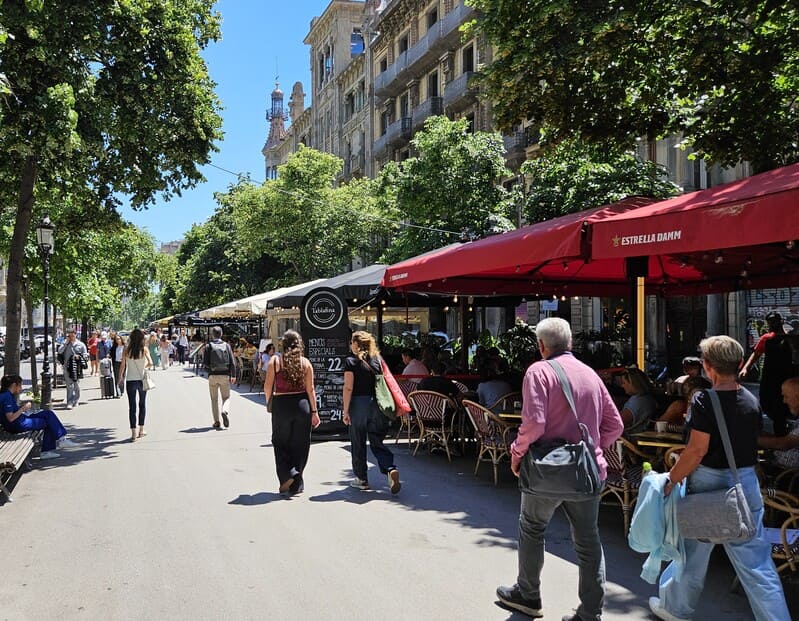
On the main tourist strips, plenty of restaurants open early for dinner on purpose, because that’s when visitors want to eat. You won’t have trouble getting a table at 6:30 near La Rambla or right by the Cathedral.
The catch is the moment you step off those streets. In neighborhood spots, the ones locals actually go to, the kitchen often isn’t in full swing until 8:30 or 9. Lunch runs roughly 1pm to 3pm, and dinner picks up closer to 9 or later.
If a place feels like it’s tucked into a residential street rather than sitting on a tourist route, that’s your cue to wait until closer to 9pm.
7) Eating anywhere directly on La Rambla
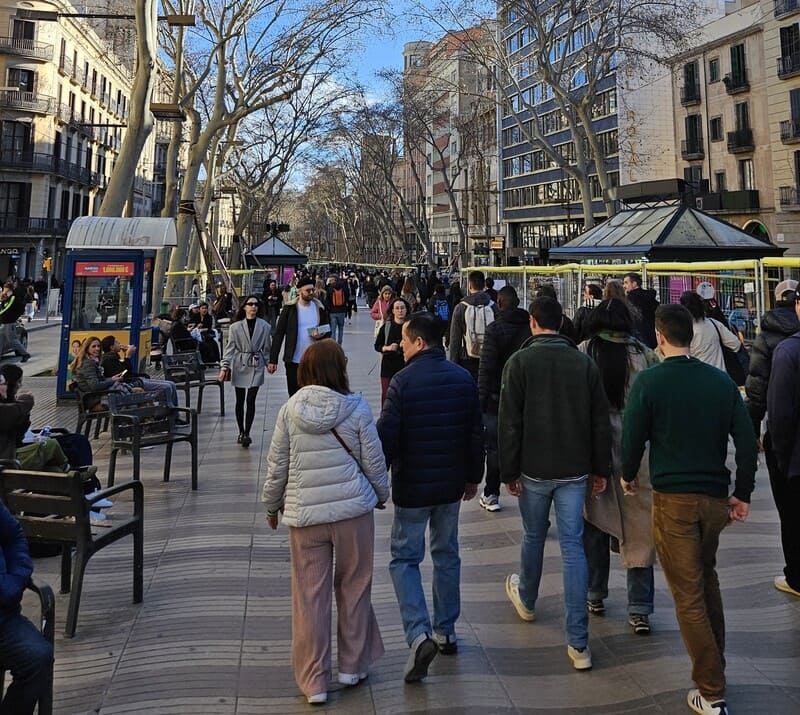
La Rambla is worth walking once, during the day, if only to say you’ve done it.
But the restaurants lining it are almost entirely built for visitors who won’t be back. That tends to show up as inflated prices and unmemorable food.
Walk a few streets in any direction, into El Raval, the Gothic Quarter, or El Born, and the quality per euro improves dramatically.
8) Being casual with your phone and bag in crowded spots
Barcelona is genuinely safe when it comes to violent crime.
But petty theft is a real and well-documented issue in exactly the places first-time visitors linger: the metro, La Rambla, the beach, and outdoor restaurant tables.
Simple habits go a long way. Keep bags in front of you in crowds. Don’t hang a purse on the back of a chair. Keep your phone off the table when you’re not using it.
9) Never leaving the tourist triangle
The Sagrada Família, the Gothic Quarter, and La Rambla make up most first-timers’ entire mental map of the city. But that leaves out most of how Barcelona actually lives day to day.
Gràcia has the feel of a small town stitched into the city, with plazas that fill up with neighbors in the evening.
Poble Sec is where a lot of locals go for tapas without the markup.
Neither takes much effort to reach. Both make the rest of your trip feel less like a checklist.
10) Not budgeting for the city’s overnight tourist tax
Barcelona adds a nightly tourist tax to every stay, charged per person and separate from the room rate you see when booking.
It’s collected at check-in or check-out, not built into the price you were quoted online. It doubled as of April 2026, and it’s set to keep climbing by a euro or so every year through 2029.
To give you a sense of scale: a 3-star hotel currently runs around 6 euros per person, per night. A 4-star runs closer to 8.50 euros per person, per night. Multiply that by your group size and the number of nights, and it adds up faster than people expect.
The exact amount depends on your accommodation category and can change from year to year, so it’s worth checking your booking confirmation or asking at check-in rather than relying on last year’s numbers.
11) Dressing for the beach when visiting the Sagrada Família
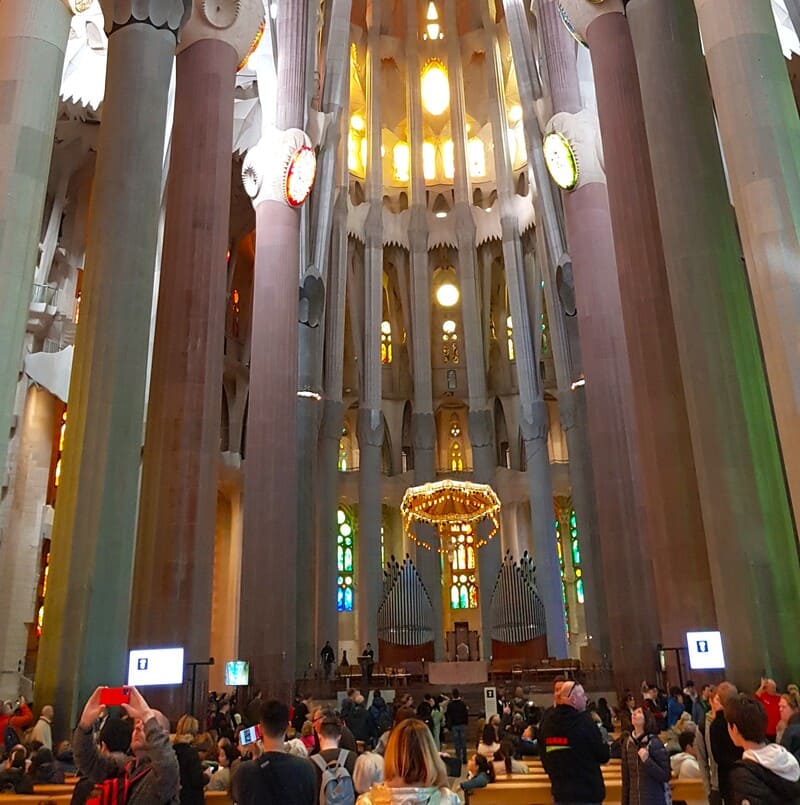
The Sagrada Família is a working basilica, and its dress code is strictly enforced at the door: shoulders covered, and shorts or skirts at least to the knee.
Security can and does turn people away. Tickets are non-refundable if that happens.
Pack a light scarf or a cardigan in your day bag on the days you’re visiting any of Barcelona’s churches. It takes up no space and solves the problem instantly.
12) Buying bottled water out of fear the tap isn’t safe
Barcelona’s tap water is fully regulated to EU and WHO standards. It’s safe to drink straight from the faucet or from one of the city’s public drinking fountains.
The only real complaint locals have is the taste, since the water can carry a noticeable mineral or chlorine note depending on the neighborhood.
If the taste bothers you, a small filter bottle solves it for the whole trip. There’s no safety reason to spend your trip’s budget on bottled water.
Where to go next
Once you’ve got these sorted, the rest of a Barcelona trip mostly falls into place on its own.
La Rambla comes up more than once in this list, and for good reason. I go deeper into exactly why it undersells the city in why La Rambla disappoints most first-time visitors, and what to do instead.
And if you want the fuller picture beyond just mistakes, I’ve also pulled apart the assumptions people bring to this city before they’ve even landed in the biggest misconceptions about Barcelona.