10 Most Beautiful Streets in the Gothic Quarter
By Dorian · Updated September 5, 2026
The Gothic Quarter is full of narrow medieval lanes, but a handful of them are worth deliberately seeking out. Here are nine, each with its own reason to slow down and look up.
1. Carrer del Bisbe
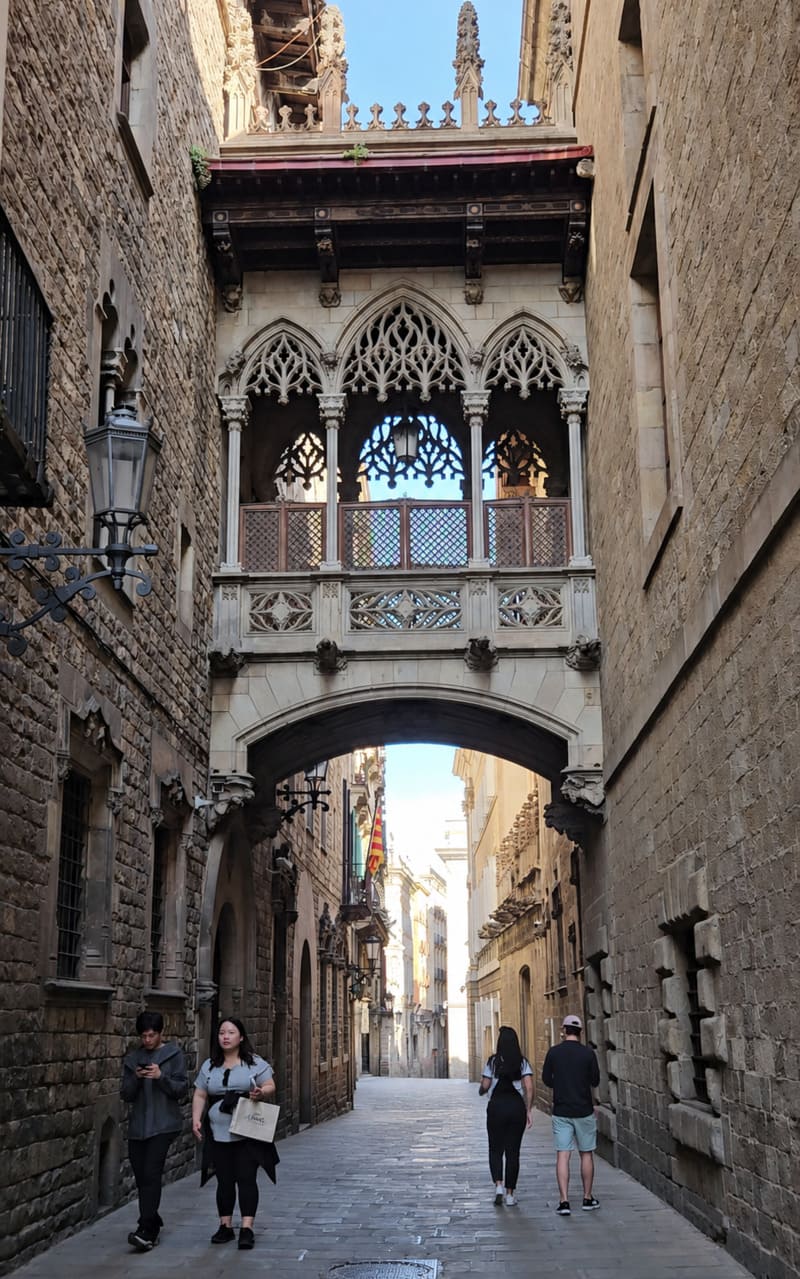
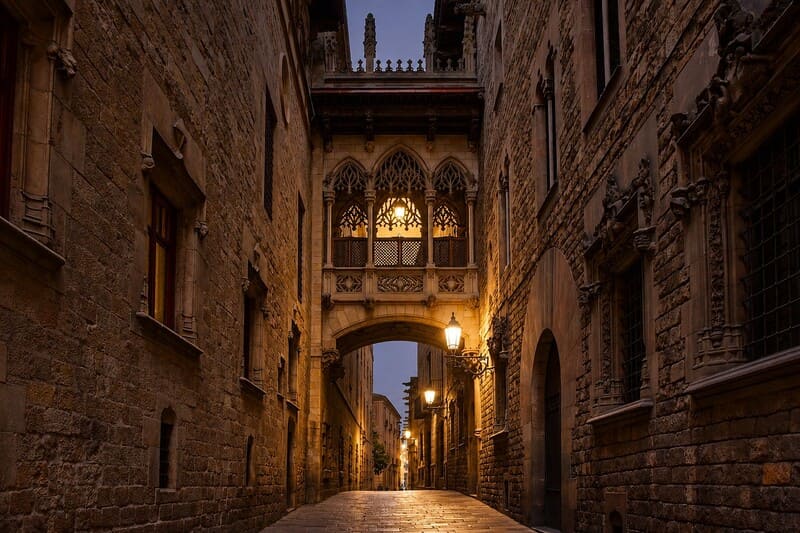
This is the postcard shot of the Gothic Quarter, and for good reason. A dramatic neo-Gothic bridge arches overhead, connecting the Palau de la Generalitat to the Casa dels Canonges. Look underneath it and you’ll spot a small carved skull with a dagger through it, local legend says staring straight at it brings a curse.
The bridge itself is younger than it looks, built in 1928, but it’s designed to blend seamlessly with the genuinely medieval buildings on either side.
2. Carrer de Petritxol
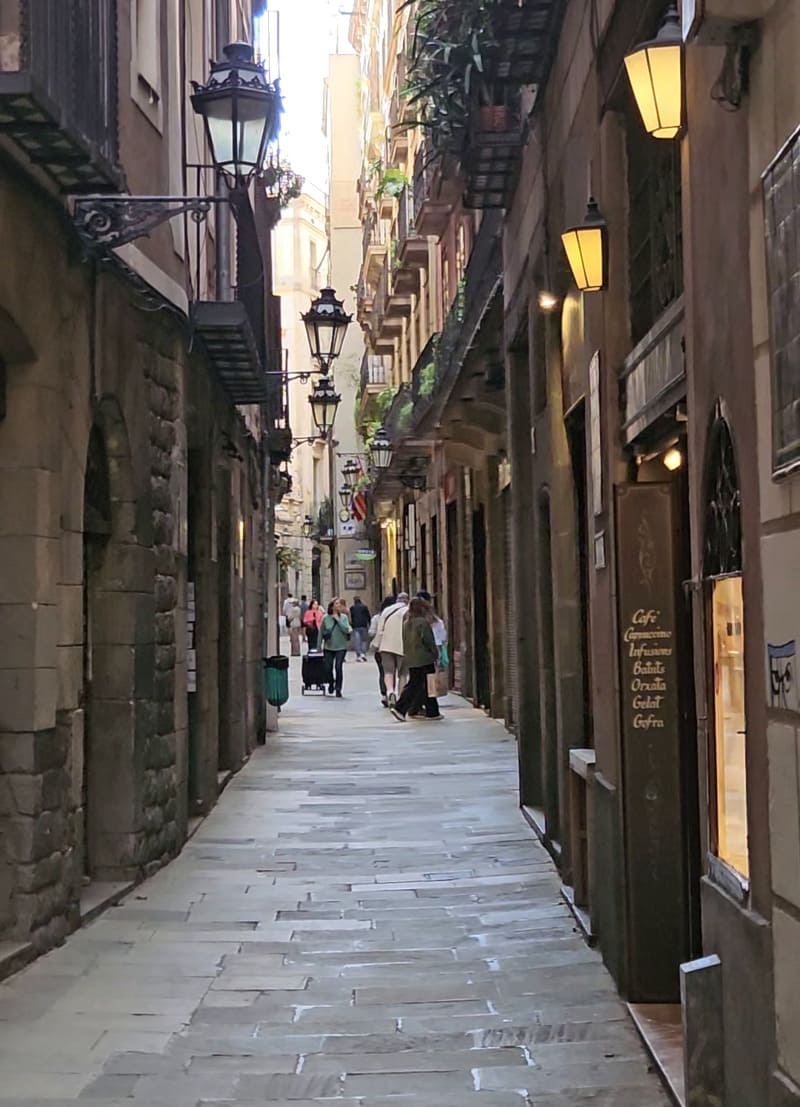
Barcelona’s first fully pedestrian street, closed to traffic since 1959. Chocolaterías and art galleries line both sides, and it’s been that way for generations, the opera singer Montserrat Caballé once rehearsed in a studio here, next to one of the street’s oldest chocolate shops.
It’s narrow enough to feel intimate even at busy times, and it rewards a slow walk rather than a quick pass-through.
3. Carrer de Banys Nous
The name means “new baths,” a reference to a 12th-century bathhouse that’s long gone. The street roughly follows the line of Barcelona’s old Roman wall, and today it’s known for antique shops, faded signage, and old-world storefronts that haven’t changed much in decades.
It connects naturally to the Baixada de Santa Eulàlia, a short, sloped lane worth wandering down on the same walk.
4. Carrer del Call
This is the gateway to Barcelona’s medieval Jewish quarter, among the narrowest and oldest streets in the city. The Jewish community here dates back centuries, until they were expelled in the late 15th century by royal order.
A small ceramic plaque between two doorways marks a detail from Cervantes’ Don Quixote, which mentions a print shop supposedly located on this very street.
5. Carrer de la Palla
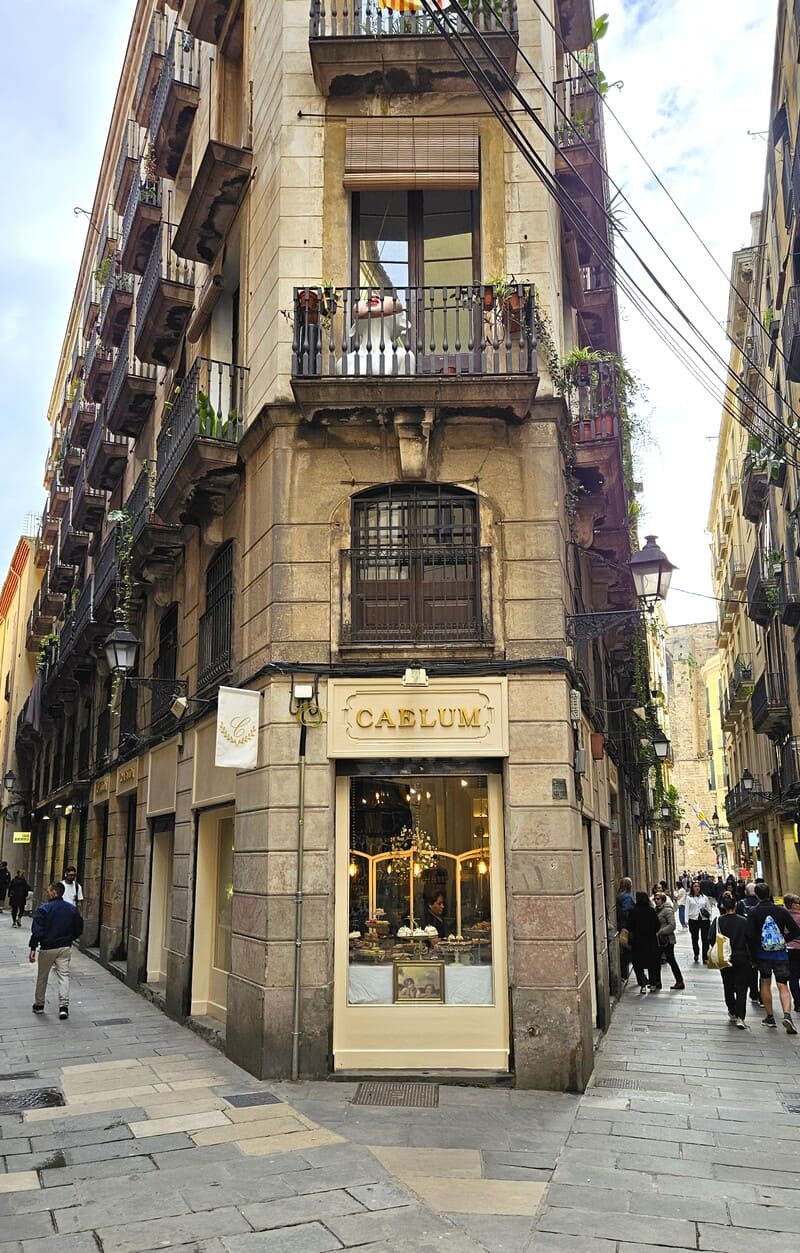
Quieter and less photographed than Banys Nous just around the corner, though it shares the same antique-dealer character. Old shopfronts, low doorways, and a general sense of having been passed over by the busier tourist routes nearby.
It’s a good street to walk when you want the Gothic Quarter’s atmosphere without the crowds that gather closer to the Cathedral.
6. Carrer Paradís
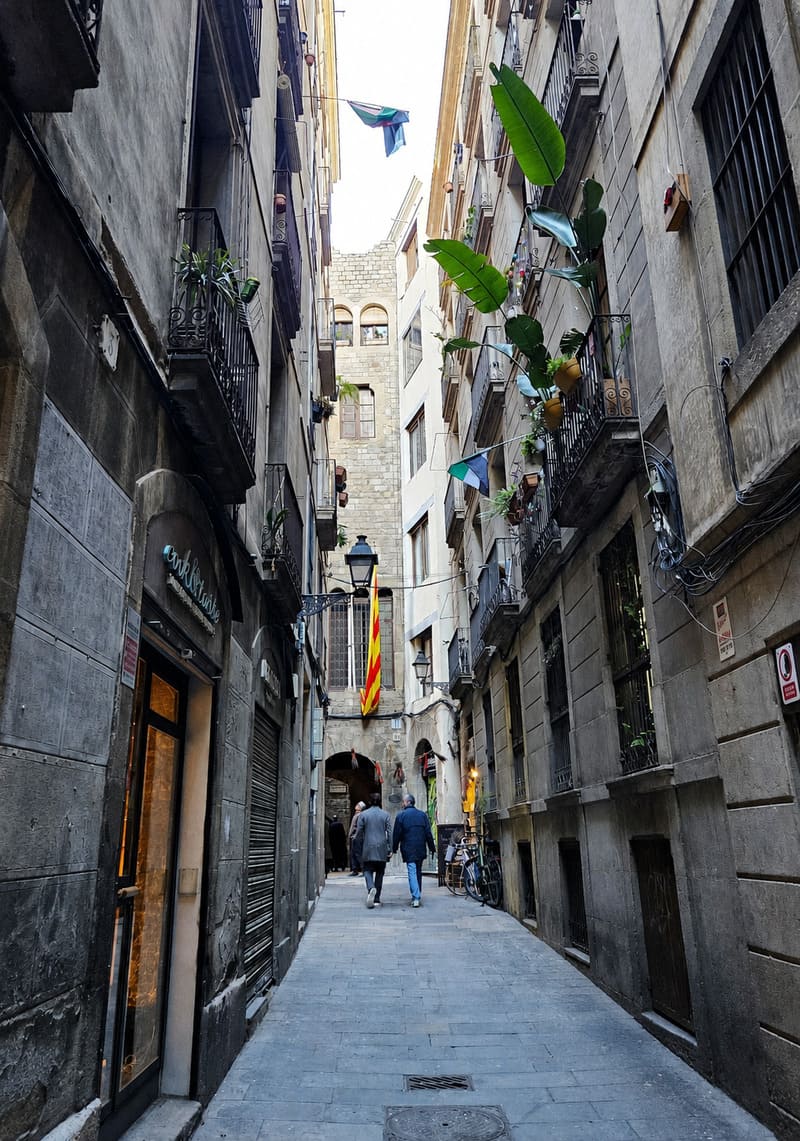
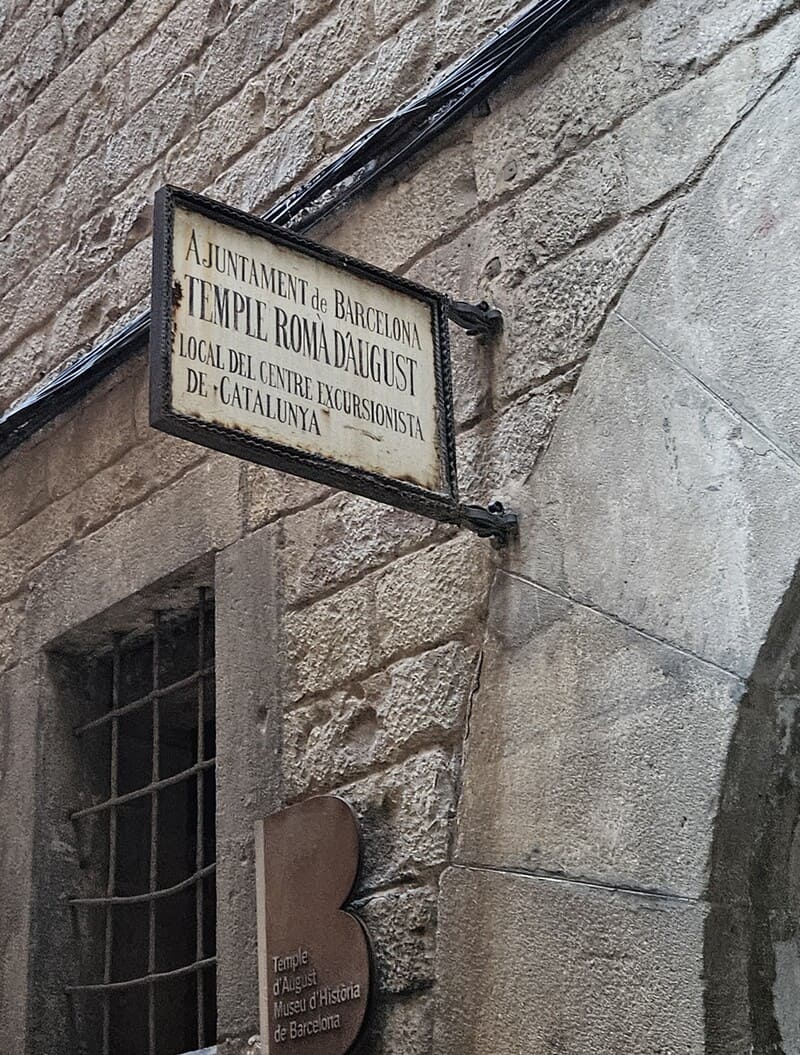
Easy to miss entirely, and that’s exactly the appeal. Tucked into a courtyard just off this street are four Corinthian columns, over 30 feet tall, the surviving remains of a Roman temple built when Barcelona was still the young colony of Barcino, more than 2,000 years ago.
Nothing marks it from the street itself except a small doorway, one of the best-kept surprises in the entire quarter.
7. Carrer de la Carabassa
A short, quiet, deeply medieval stretch that doesn’t get much attention outside local food guides, where it’s known for a handful of good, unpretentious restaurants tucked into centuries-old buildings.
It’s a good example of the Gothic Quarter’s texture at its most unpolished, uneven stone, low arches, no souvenir shops in sight.
8. Carrer dels Escudellers
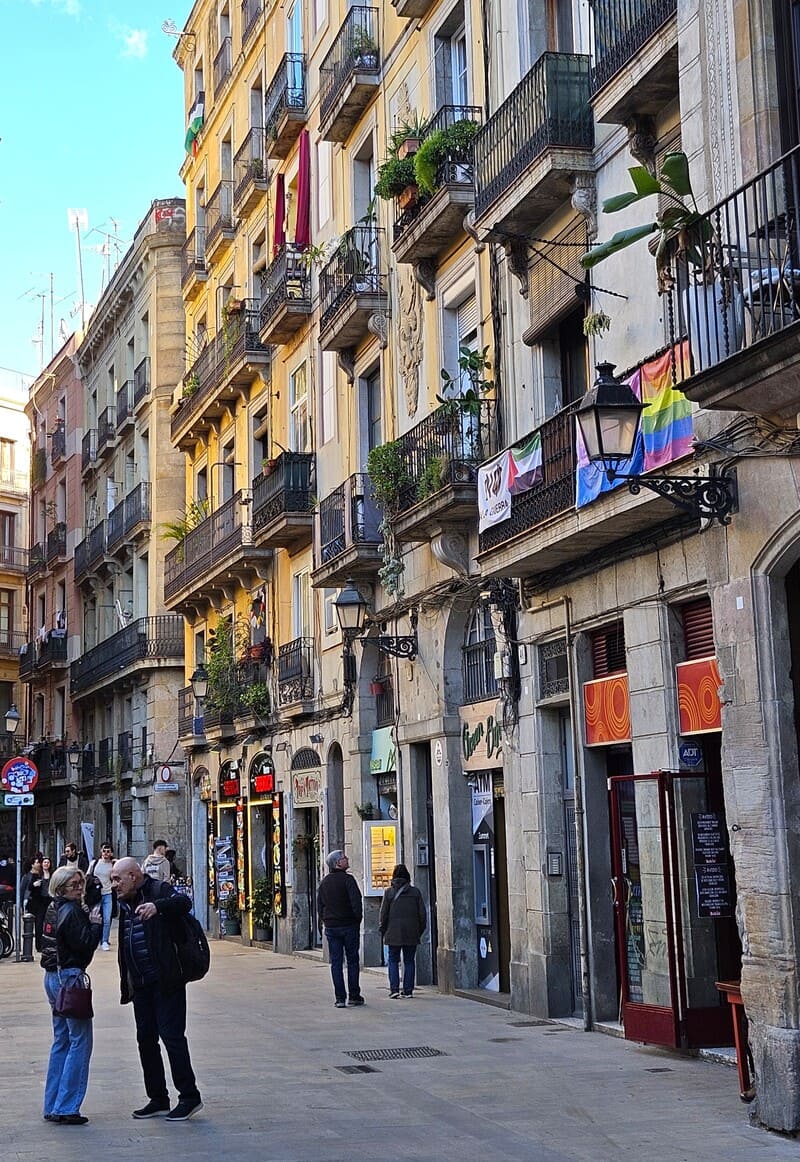
Named for the escudellers, potters who once worked this street making earthenware bowls, a trade that shaped the neighborhood for generations.
That history is still visible today at Art Escudellers, a shop with one of the city’s largest collections of Spanish ceramics.
The street also holds a few genuinely old, ornate dining rooms worth glancing into even if you don’t stop to eat, along with ironwork and tilework that hint at its Art Nouveau-era storefronts.
9. Plaça del Pi and Carrer del Pi
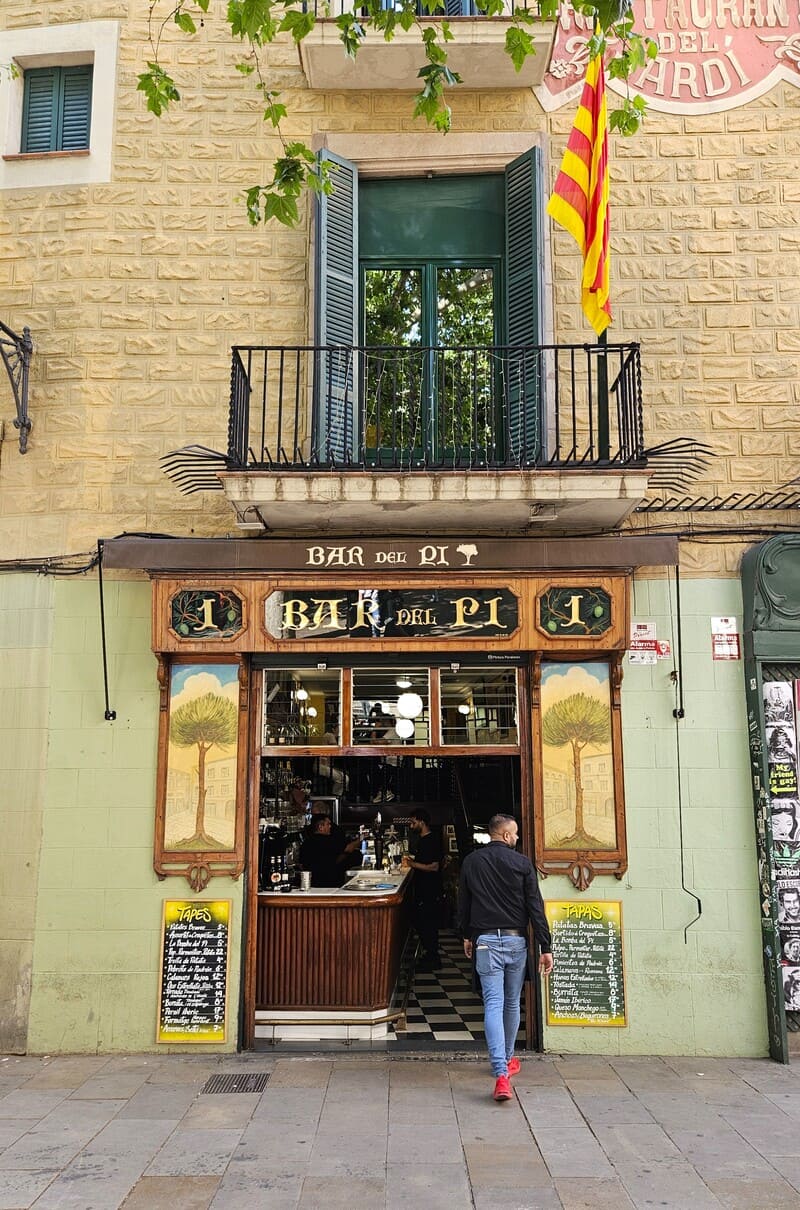
Not a single street but a natural pair, anchored by the Gothic church of Santa Maria del Pi. On weekends, an art market fills the square, and the surrounding cafés spill out under the trees.
Carrer del Pi itself connects the square back toward Carrer de Petritxol, making this a natural point to link several of the streets on this list into one unhurried loop.
10. Plaça de Sant Felip Neri
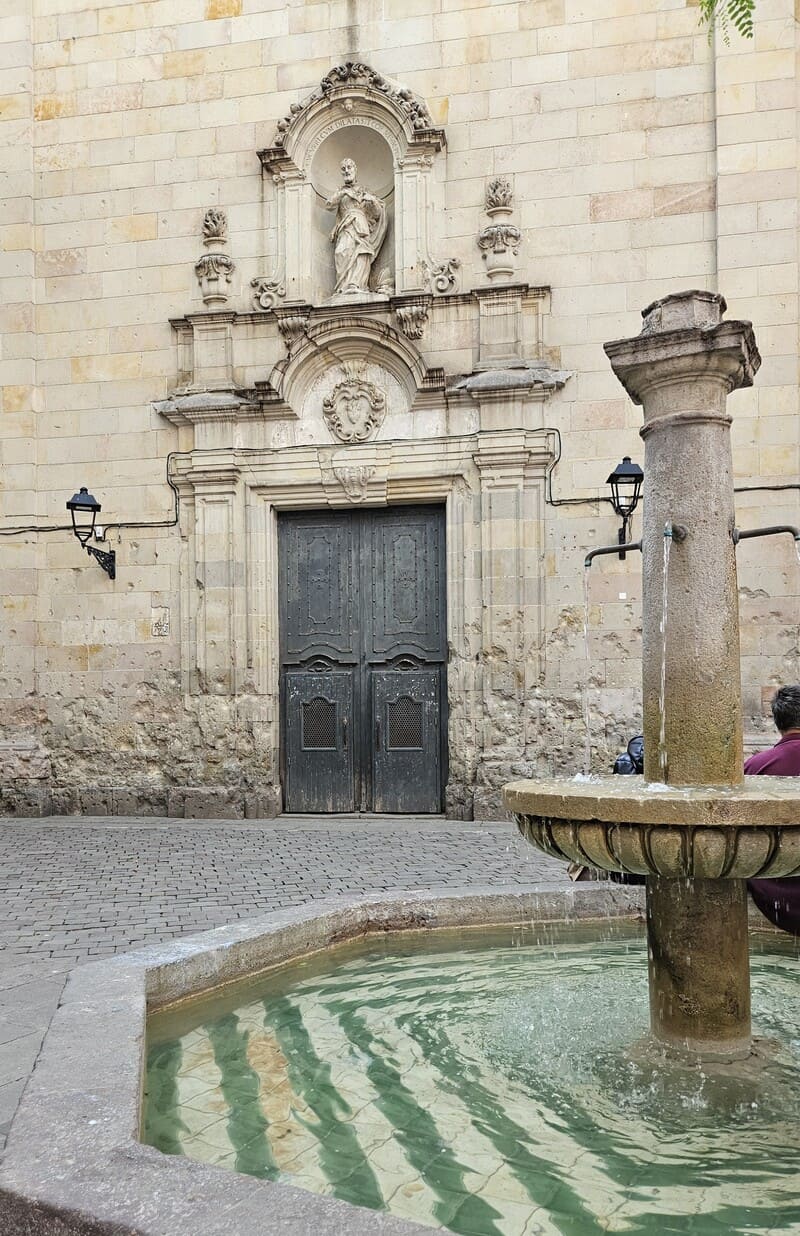
One of the quietest, most photogenic corners of the whole quarter, a small Baroque church, an old ombú tree, and a stone fountain, tucked away just behind the Cathedral. Early morning or late afternoon light here is genuinely special.
Look closely at the church façade and you’ll notice pockmarked scarring in the stone, left from a bombing during the Spanish Civil War in 1938, when the church was being used as a shelter and a number of children lost their lives. The marks were deliberately never repaired, and today the square holds both that history and an everyday, lived-in calm side by side.
What to read next
If you’re planning to walk a few of these, here’s where to go next:
14 hidden corners of Barcelona worth seeking out
More quiet, overlooked spots across the city, beyond just the Gothic Quarter. Read it on the blog.
18 things you should actually do in Barcelona
The full list of essential places and rituals worth your time. Read it on the blog.