8 Historic Barcelona Cafés and Sweet Shops (Some Since 1825)
By Dorian · Updated October 17, 2026
Barcelona changes fast. Owners change, menus change, prices definitely change.
A few small places just keep going. These cafés, granjas and pastry shops have served the same corner of the city for generations, and you can still walk in, sit down and order something sweet.
1) Cafè de l’Òpera, from stagecoach inn to Rambla classic
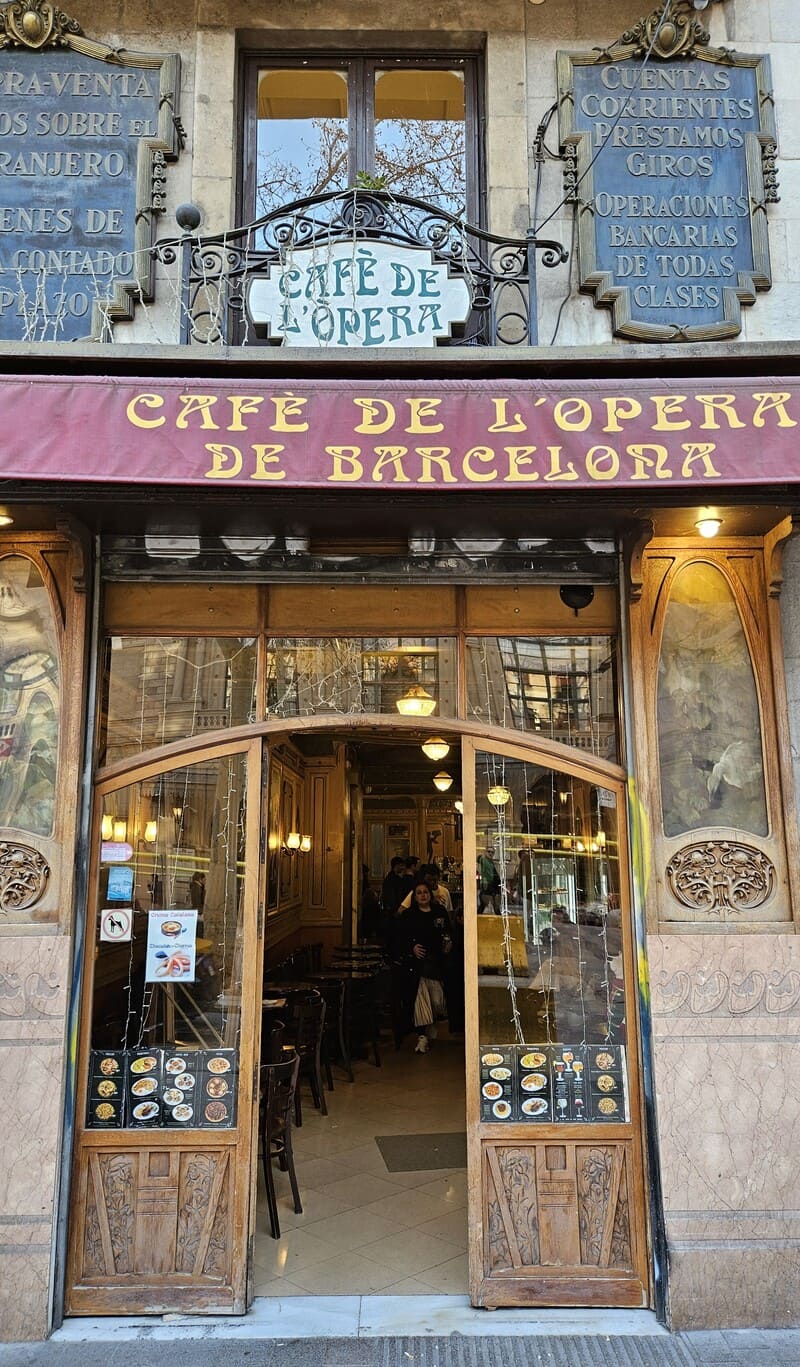
Across from the Liceu opera house, this café has had more lives than a cat.
In the 18th century, the building was an inn. Stagecoaches left from here for cities like Zaragoza and Madrid.
By the mid 1800s it had become a hot chocolate shop, popular with people leaving the opera. It officially opened as the Cafè de l’Òpera in 1929, with the Modernista makeover you still see today.
Look up at the decorated ceilings and across at the engraved mirrors.
The guest list over the years has been wonderfully mixed: King Alfonso XIII, anarchists, bohemians, writers and opera singers.
Order the house coffee, also called the Cafè de l’Òpera. It comes with chocolate mousse.
It sits right on La Rambla, so expect tourists. Go in anyway. The room is worth it.
2) Granja Dulcinea, on Barcelona’s chocolate street
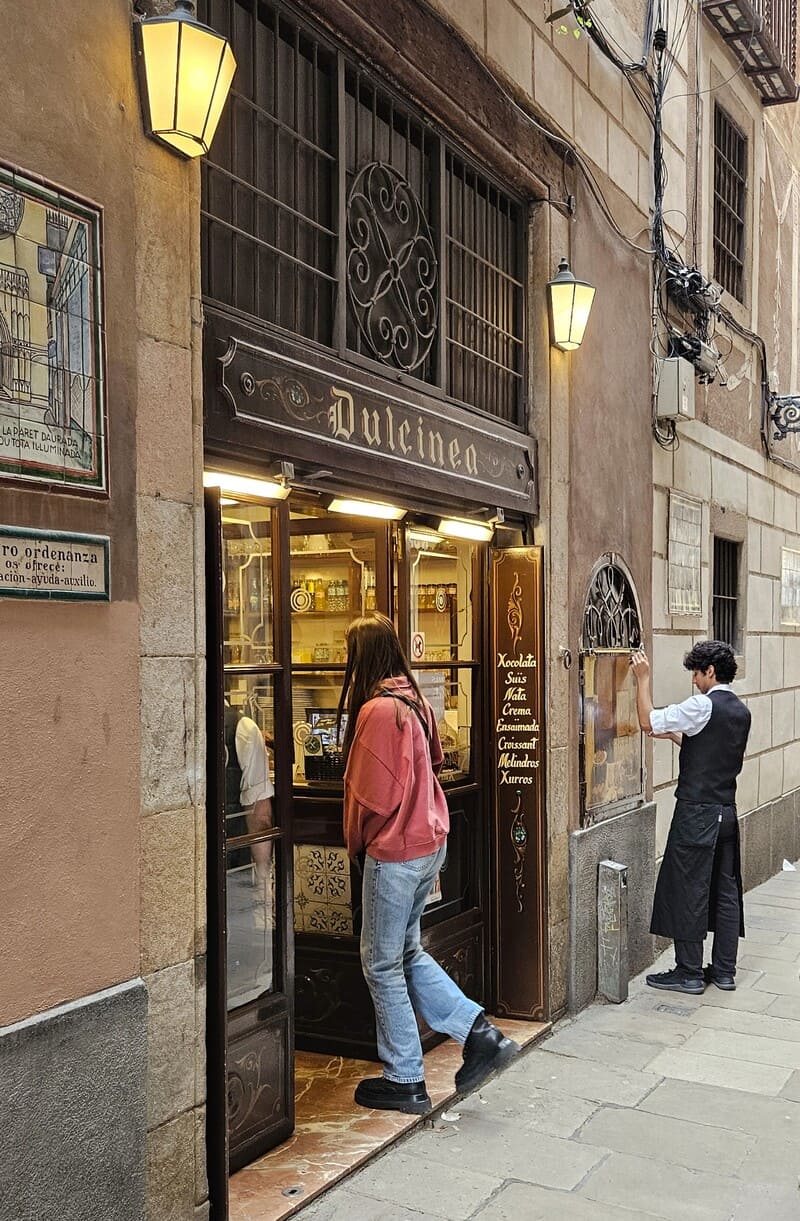
Carrer Petritxol has been a chocolate street since the 17th and 18th centuries, when the first chocolate shops opened here. In Barcelona, the name Petritxol is practically a synonym for hot chocolate.
The most famous stop is Granja Dulcinea, at number 2.
The chocolate is thick, dark and almost like a mousse. Order it suís, which means topped with a cloud of whipped cream. Then dunk a melindro (a soft sugar-topped sponge biscuit) or a churro in it.
The family says it all began in the early 1930s. Most guides say 1941. Either way, it has been serving chocolate for more than 80 years.
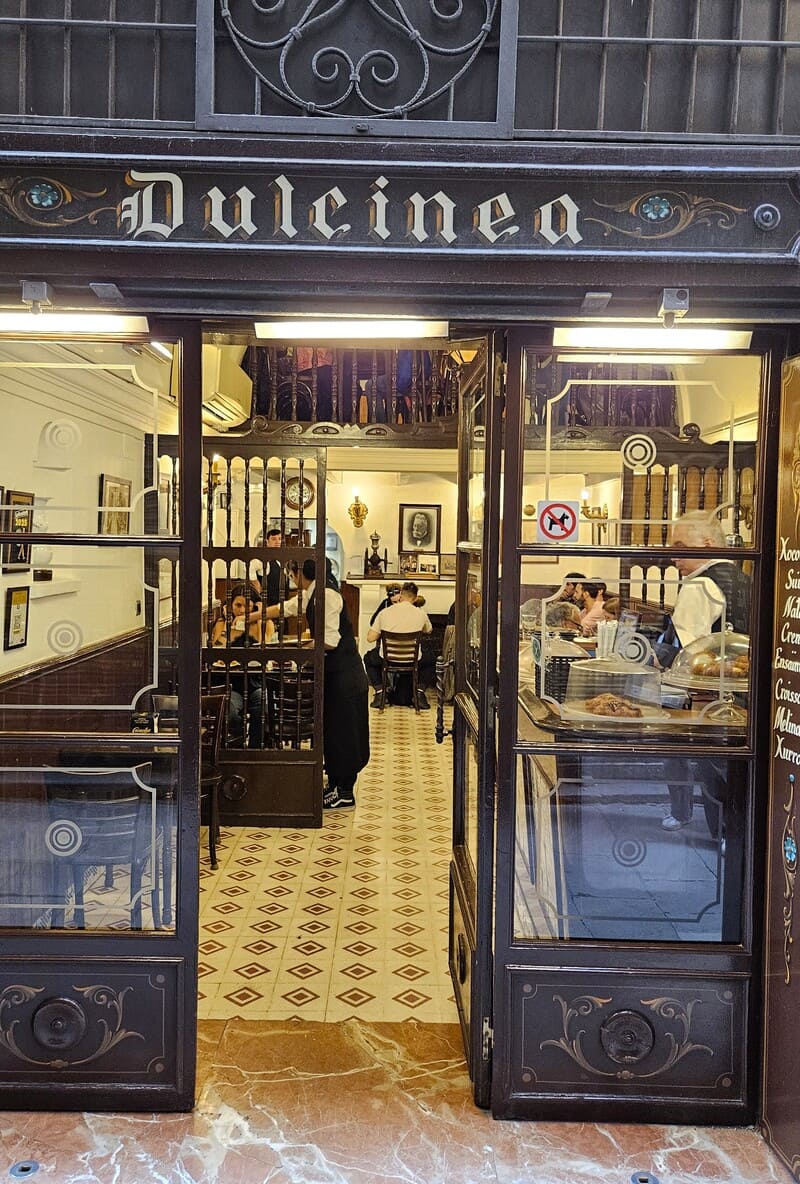
The name comes from Don Quixote. The building’s caretaker was reading Cervantes, and Dulcinea is the knight’s imaginary love.
The owner also says his father, an opera singer, was the first to put whipped cream on hot chocolate here. Nobody has found written proof. It’s a good story anyway.
Like many small places in the city, it closes for a break in the afternoon, so check before you go.
3) Mesón del Café, a tiny coffee bar since 1909
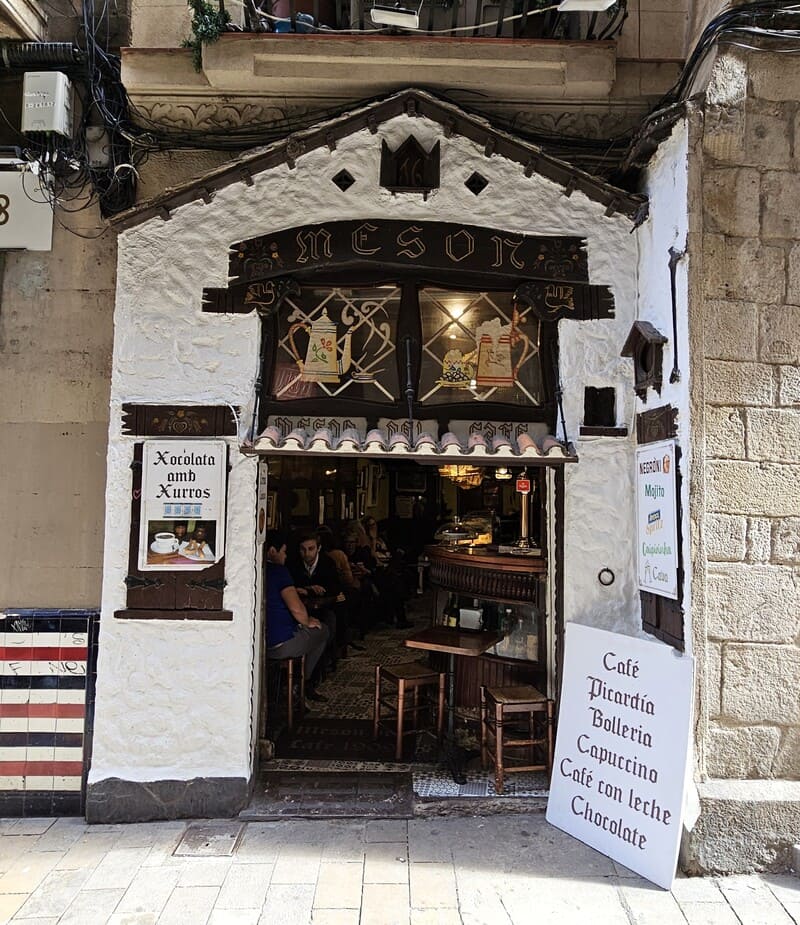
Look for a white façade that imitates a farmhouse, with rustic walls and a pointed roof. That’s Mesón del Café on Carrer de la Llibreteria.
It opened in 1909 and it is small. Really small. It runs along a narrow strip of the building, with a back entrance on Carrer de Jaume I.
Much of the original furniture is still here, including the long wine cabinet behind the counter and a cabinet built for the old coffee machine.
The dark wood and the lively staff give it more of a tavern feel than a café feel.
It’s the kind of place you pass on the way to the Cathedral, and then spend half an hour in.
4) Mauri, the Rambla de Catalunya pastry shop with a ceiling to look at
The founder, Francesc Mauri, came from Manresa. He learned the trade there, then opened a pastry shop in the Hostafrancs neighborhood.
But he wanted a business of his own. In 1929, he and his wife took over a shop on the corner of Rambla de Catalunya and Carrer de Provença.
That corner is still the home of Mauri.
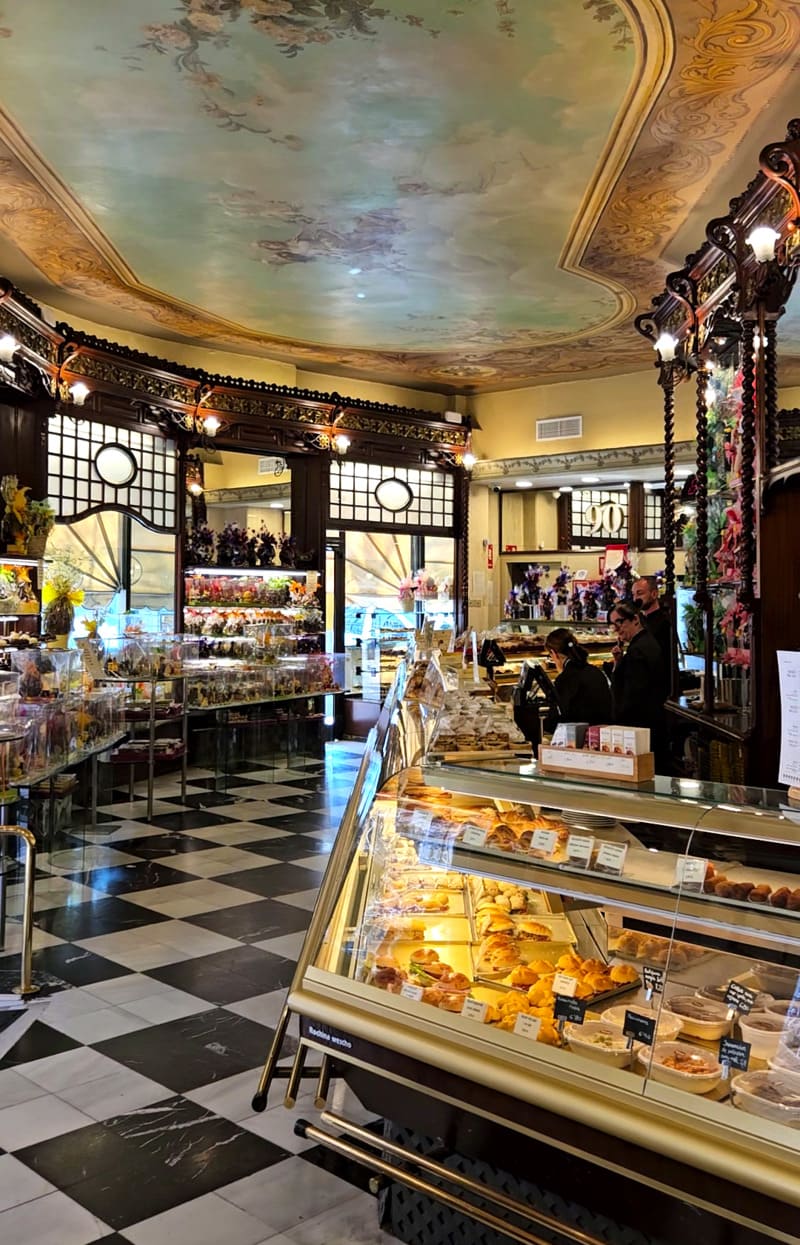
The Modernista decor is the reason to come in. Look up for the ceiling painting of the goddess of abundance, which was restored not long ago.
Mauri was also one of the first pastry shops in the city to put a tasting salon inside, so you could eat the cake where it was made.
Four generations of the family have worked here, and a fifth is already helping. They say their recipes use no additives or preservatives.
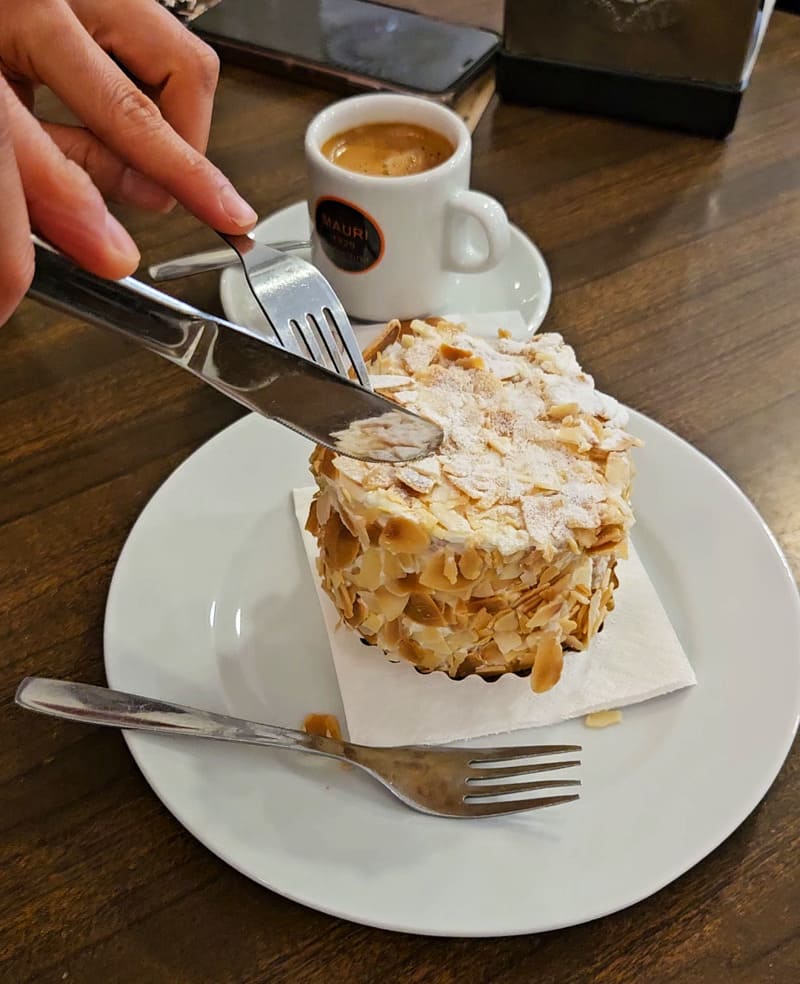
Try an ensaïmada, the spiral pastry from Mallorca, or a tarta Sara like me.
Since 2012, there’s also a terrace on the tree-lined central promenade of Rambla de Catalunya.
5) La Colmena, the candy shop that turned a plaça into a time capsule
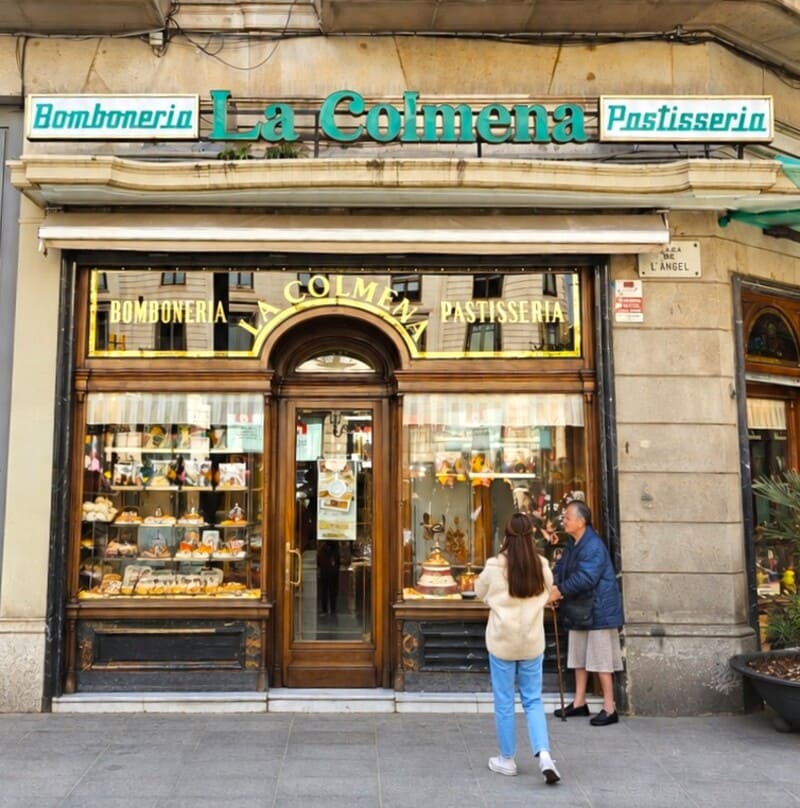
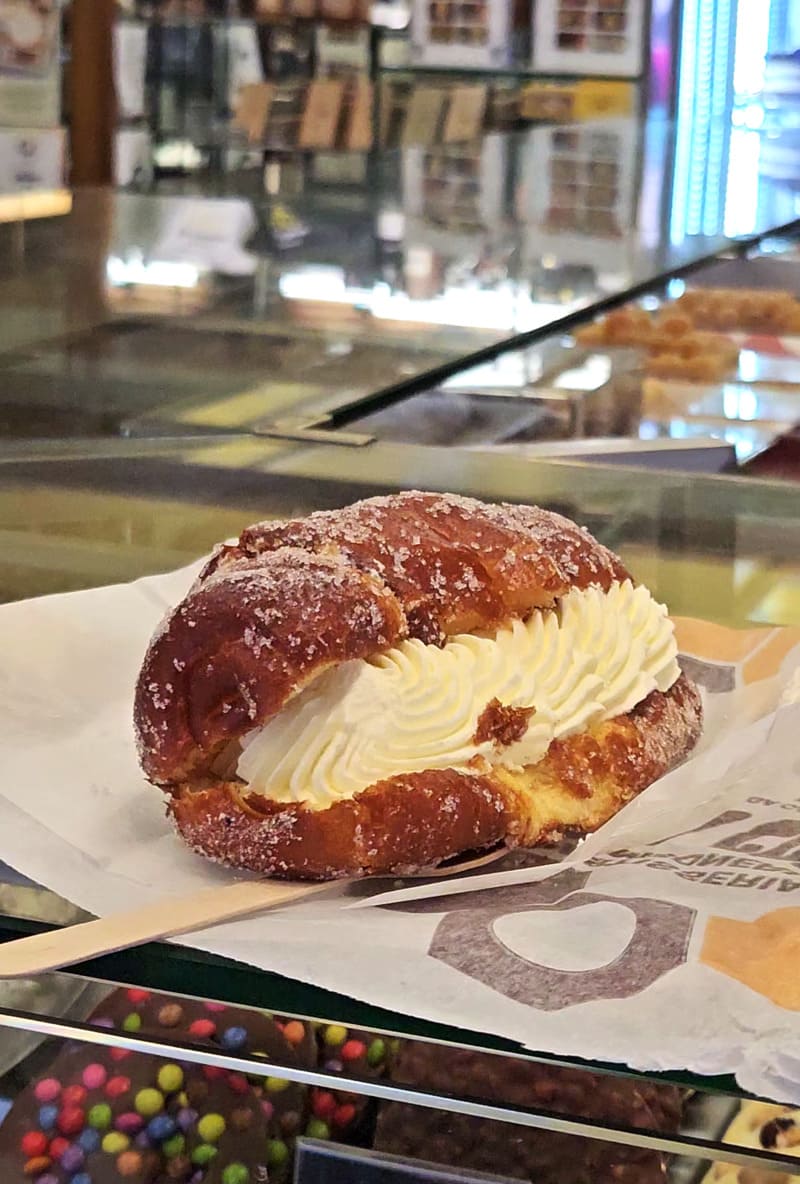
La Colmena (“The Beehive”) started in 1849 as a shop called Ca l’Abella, across from where it stands today on Plaça de l’Àngel.
The Costa family later bought it and renamed it La Colmena. The Roig family took over in 1927 and still run it.
Look at the pavement outside. A small plaque marks it as one of the city’s emblematic establishments. Barcelona gives these plaques to its few remaining historic businesses.
The famous product is the hand-wrapped candy. Square, hard, flavored with honey and Mediterranean herbs like thyme and rosemary, and still wrapped by hand in the same kind of paper.
The original recipe used rosemary honey and sugar. That’s it.
There used to be a sister shop in the Gràcia neighborhood, which opened in 1835. It has since closed, which makes this one even more special.
Buy a bag of candies, then walk 100 steps to the Cathedral.
6) Granja M. Viader, where Cacaolat was invented
A granja is a traditional Barcelona dairy café. The word literally means “farm.”
Granja M. Viader opened in 1870 on Carrer d’en Xuclà, in the Raval, as a dairy shop.
Then came a surprise. In 1931, the family saw a milk and cocoa drink at a trade fair in Budapest. They worked on it for months and patented it as Cacaolat.
Yes, that Cacaolat. The chocolate milk you’ll see in every Spanish supermarket started here.
The fourth and fifth generations of the family run it today.
Order it the old-fashioned way. Hot chocolate with a plate of whipped cream, and melindros on the side.
The family says its crema catalana recipe is more than 100 years old, and they still prepare fresh cheeses on the premises.
A city plaque at the entrance marks it as an emblematic establishment. It sits a few steps from the tourist trail, and it feels like another century.
7) Brunells, the 1852 pastry shop that closed and came back
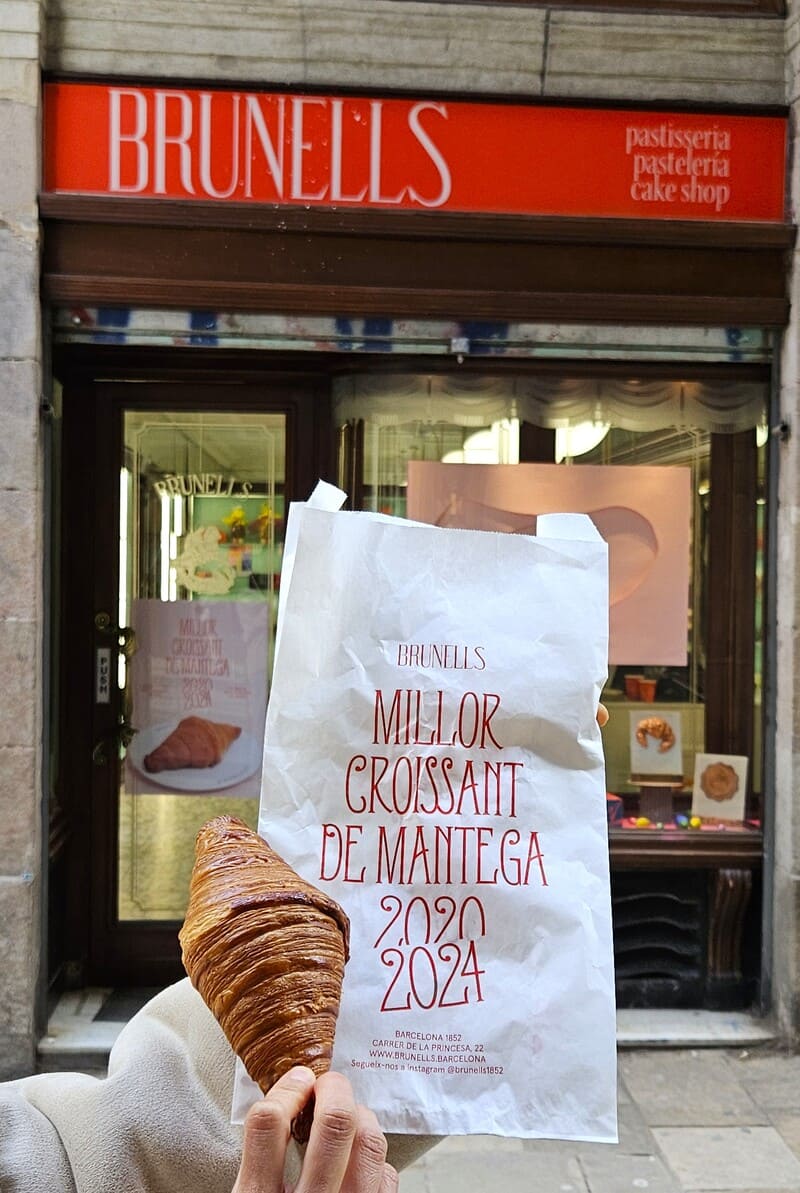
Brunells stands on the corner of Carrer de la Princesa and Carrer de Montcada, in El Born. It dates to 1852.
In 2018, it closed.
Then in 2020, it reopened with Pastisseria Canal and El Magnífico behind the project. The classic recipes stayed. Others were updated.
The result surprised everyone. The butter croissant won the title of best artisan butter croissant in Spain in 2020, and again in 2024.
It’s a straight-horned croissant, and it’s the product the baker, Andreu Sayó, calls the star of the house.
Weekends are busy, so go early. Like many small shops in the city, it closes one day a week, so check before you plan your morning.
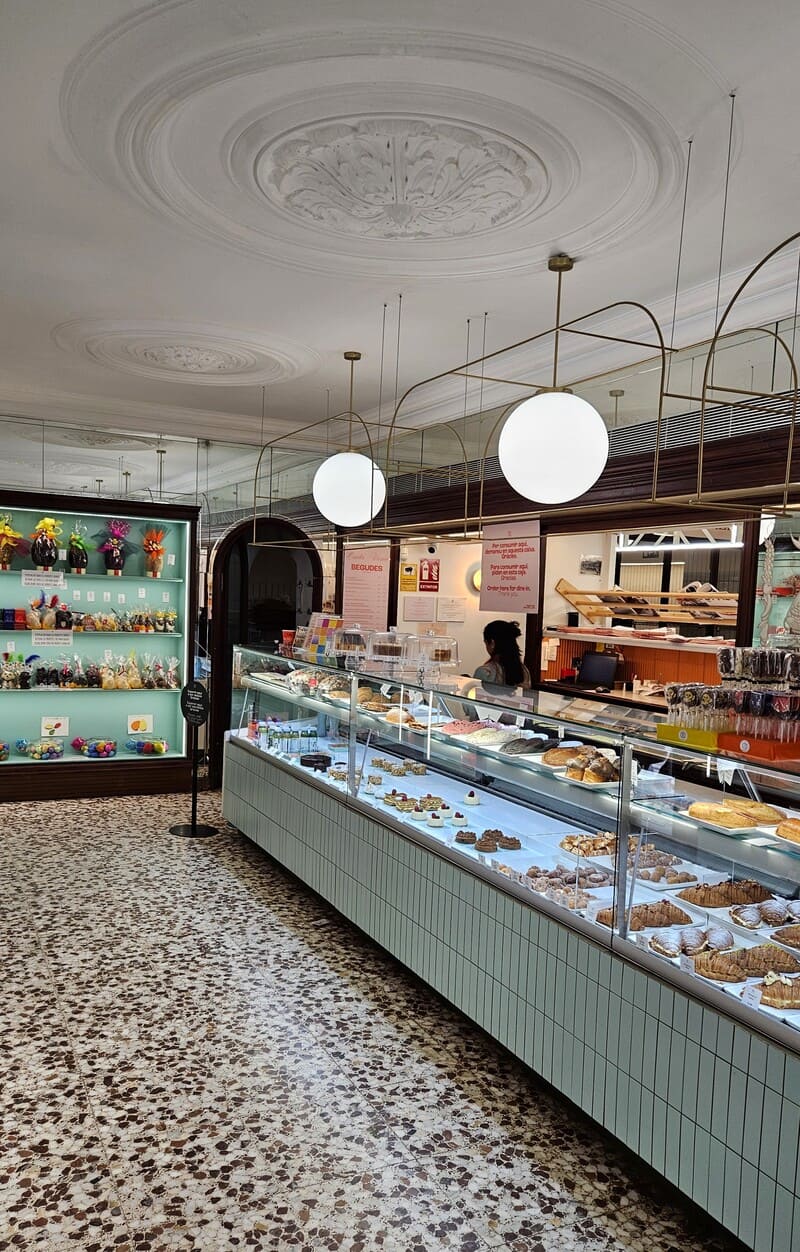
8) La Estrella, Barcelona’s oldest pastry shop
This is the oldest of them all.
La Estrella opened in 1825 on Carrer Nou de la Rambla, in the Raval. Barcelona still had its medieval walls then.
It is widely described as the oldest pastry shop in the city still selling sweets. In 2025, it turned 200.
The look you see today comes from a 1950 remodel, and the vaulted oven is still original. The shop has the city’s highest heritage protection.
In 1927, a pastry worker named Simeó Pujol took over. He put the shop’s name on the marble façade, along with an eight-pointed star. His family ran it until 2015.
Then it almost vanished.
In September 2024, the shop was closed and up for transfer. Two friends in their twenties, Anna Campos and Judit Servent, who had both started their careers behind this counter, took it over. They reopened it on 30 November 2024.
Locals talk about the truffles that children in the Raval found under their pillow when they lost a tooth. And about the Swiss rolls, called brazo de gitano, that families bought for big celebrations.
The traditional classics are still here, and a few new ones.
Where to go next
If this list made you hungry, I’ve got a good next stop. I put together the places where Barcelona’s rice is still worth the wait, and it’s a great way to turn one of these mornings into a proper lunch: 9 places in Barcelona where paella is still done right.
And before you plan your days, do yourself a favor and read this one too. It covers the small things I’d quietly tell a friend before they land, so the city shows you its best side from day one: 12 things no one tells you about visiting Barcelona.