7 Barcelona Tourist Traps That Look Authentic
By Dorian · Updated October 17, 2026
Some places in Barcelona look exactly like the real thing.
The old stones, the market stalls, the dancers.
A few of them are not quite what they seem.
Others charge you more for the look than they should.
Here’s how I’d tell the difference.
1) The front stalls at La Boqueria
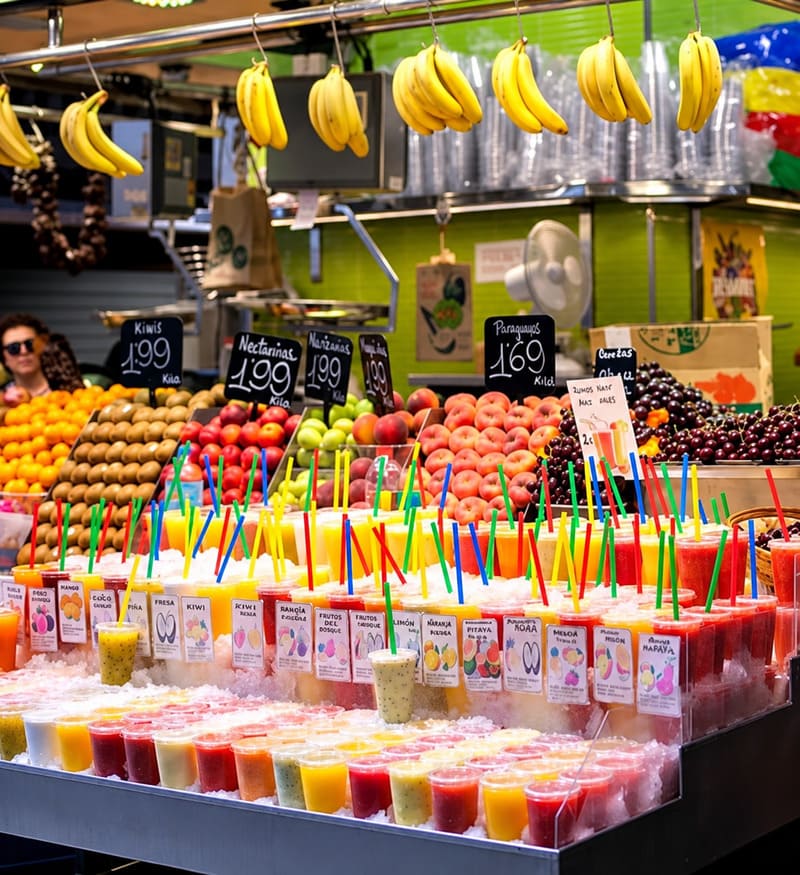
La Boqueria is one of the most famous stops in Barcelona.
It sits right on La Rambla and looks like the classic food market.
Colourful stalls and piles of fresh produce.
It’s still worth a walk through.
But the stalls near the entrance are aimed squarely at people passing by.
Think pre-cut fruit cups and smoothies, at prices above what you’d pay elsewhere.
Some food here costs about double what it does in other markets in the city.
Walk further in.
Prices tend to drop toward the back.
The small fruit and vegetable stalls in the little square on the Carrer del Carme side are usually cheaper too.
For a market where locals do their shopping, try Mercat de Santa Caterina.
It’s easy to spot, thanks to its wavy, colourful roof.
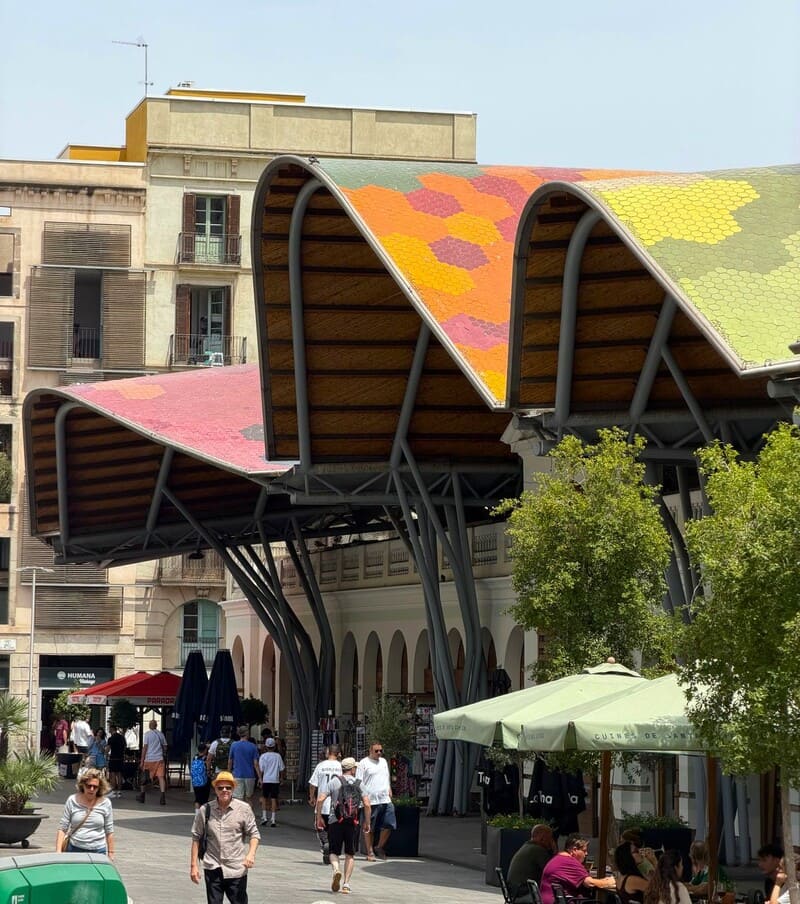
Mercat de Sant Antoni is another good one.
On Sundays, a market of old books and stamps sets up outside.
The better move: browse La Boqueria, then buy your food somewhere calmer.
2) The “medieval” Pont del Bisbe
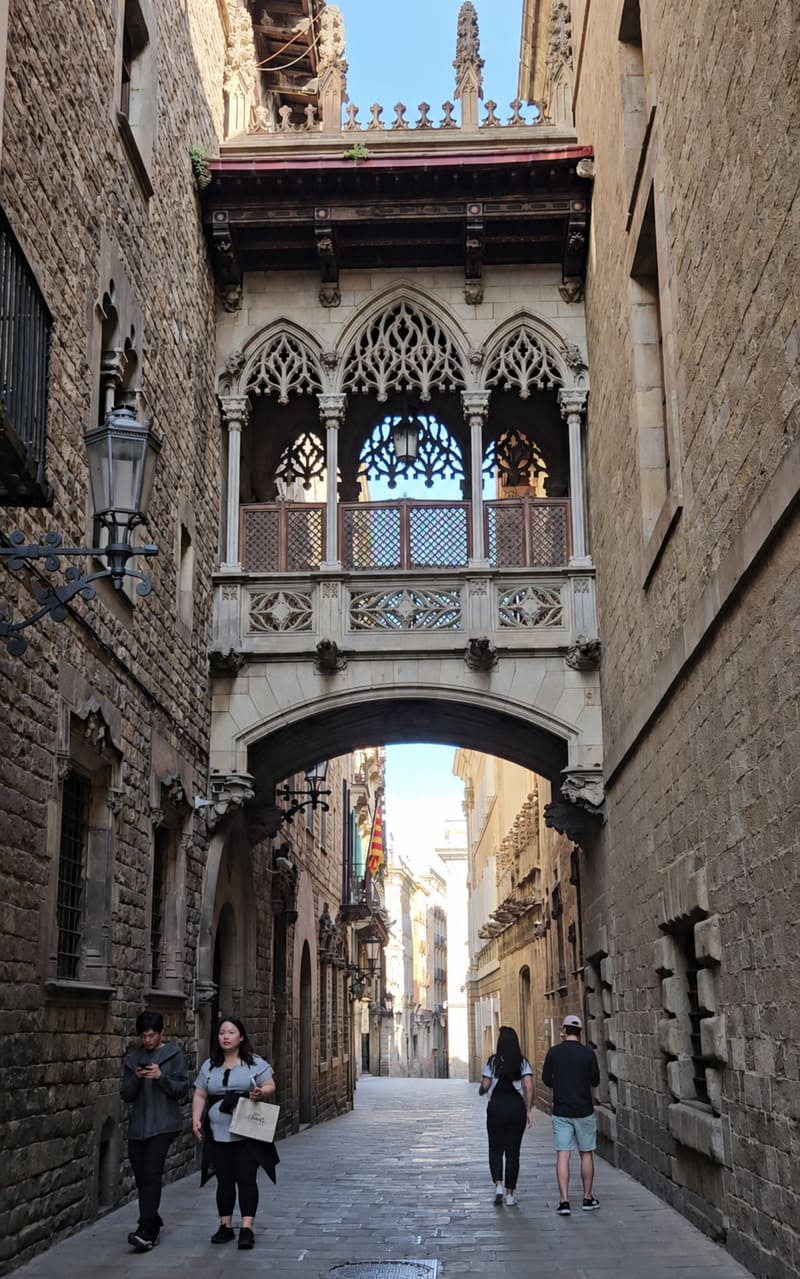
The Pont del Bisbe is the little covered bridge on Carrer del Bisbe.
It links the Palau de la Generalitat and the Casa dels Canonges.
Carved stone, Gothic arches, a very medieval look.
It looks like it has been there for centuries.
It was built in 1928.
The architect was Joan Rubió, a Modernista architect.
The neighbourhood was being restored at the time, in time for the 1929 International Exhibition.
So it’s a new bridge, dressed to match the old buildings around it.
It’s still lovely to look at.
But it’s worth knowing what you’re photographing.
The better move: take the photo, then tell whoever you’re with how old it really is.
3) Paella as the local dish
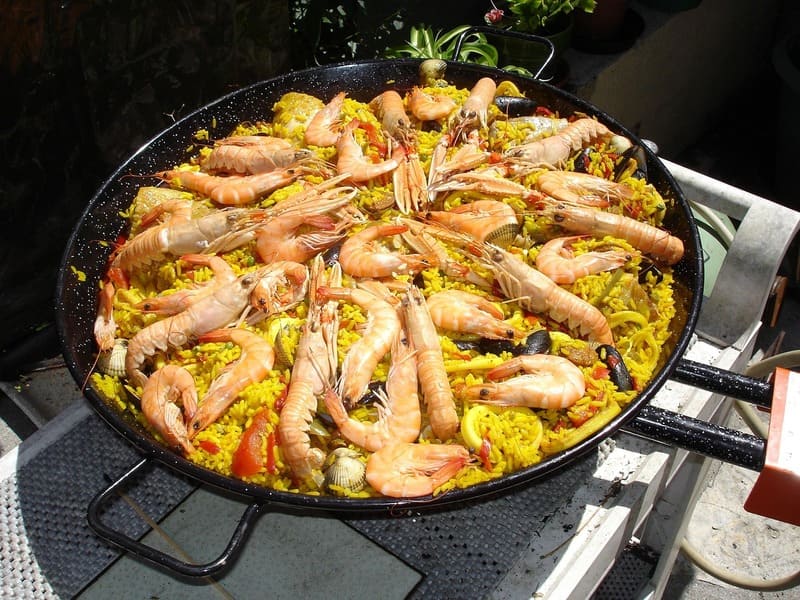
Almost every menu in Barcelona offers paella.
Paella comes from Valencia, not Catalonia.
A traditional Valencian paella has no seafood.
It’s made with chicken, rabbit and beans.
Barcelona has its own rice dishes.
Fideuà is cooked like paella, but with short, thin noodles instead of rice.
Arròs negre is black rice, cooked with squid ink and often cuttlefish.
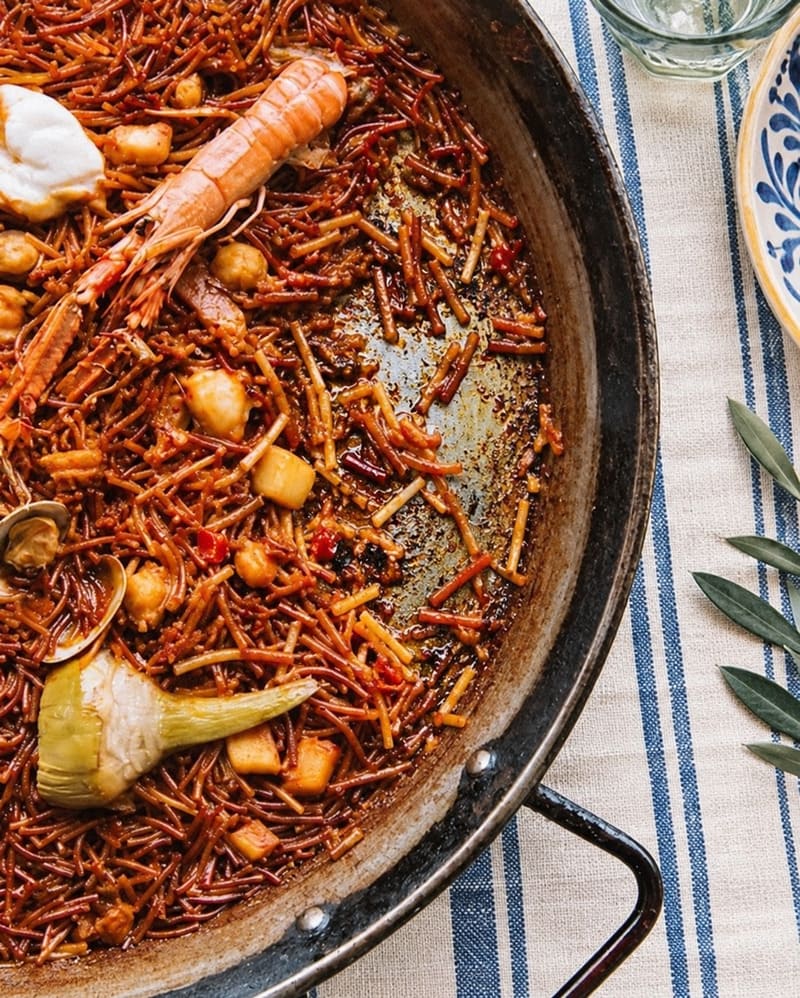
Seafood paella is common here, and it can be very good.
It just isn’t the original dish.
The trouble starts with the combo deals and the bright yellow rice sitting under heat lamps.
A paella made from scratch needs at least 20 minutes to cook.
If yours arrives in a few minutes, it was probably cooked earlier.
The better move: order fideuà or arròs negre, and don’t mind waiting for it.
4) The cathedral’s medieval facade
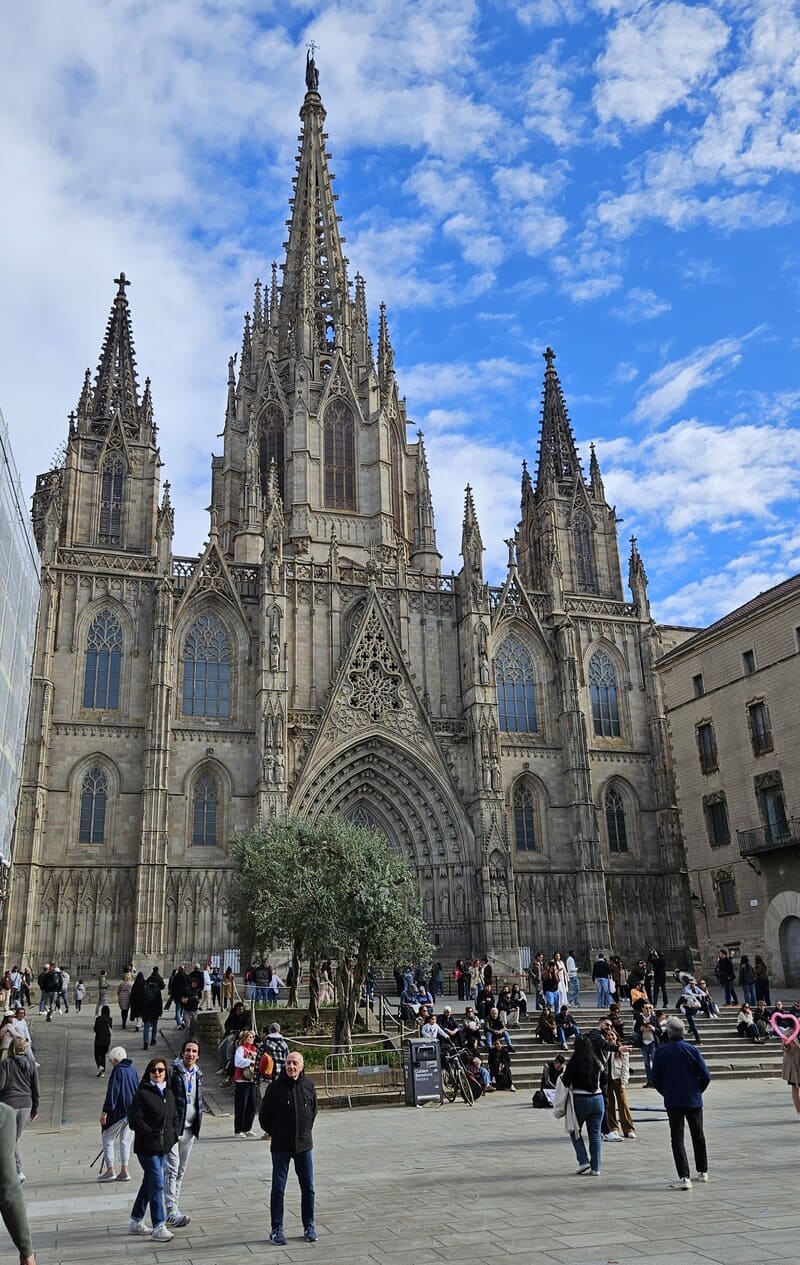
Barcelona Cathedral looks like the Middle Ages in stone.
Pointed arches, spires, stone gargoyles.
The cathedral itself is medieval.
Work on the Gothic building began on 1 May 1298.
But the main facade you photograph from the square is much younger.
It was finished in 1913.
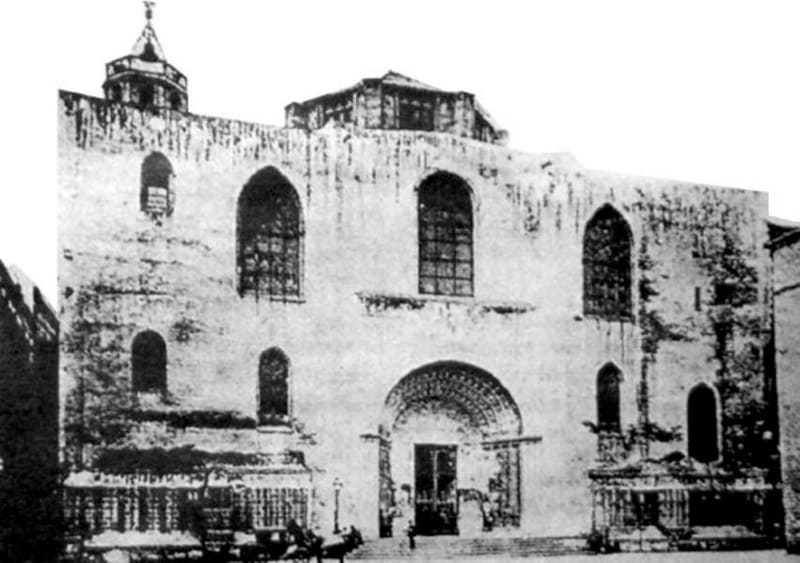
The medieval builders had left the front plain, with a simple west facade completed in 1417.
The version you see today follows a 15th-century design, redrawn in the 1800s by architect Josep Oriol Mestres.
So it isn’t a fake.
It’s a medieval plan, finished more than a century ago.
Step inside for the older part.
The cloister was completed in 1448.
It’s home to 13 white geese.
The number is said to match the age of Saint Eulalia, the city’s co-patron saint, when she was martyred.
The better move: photograph the facade, then go and see the cloister.
Visiting rules can change, so check the cathedral’s official site before you go.
5) Restaurants with photo menus and touts
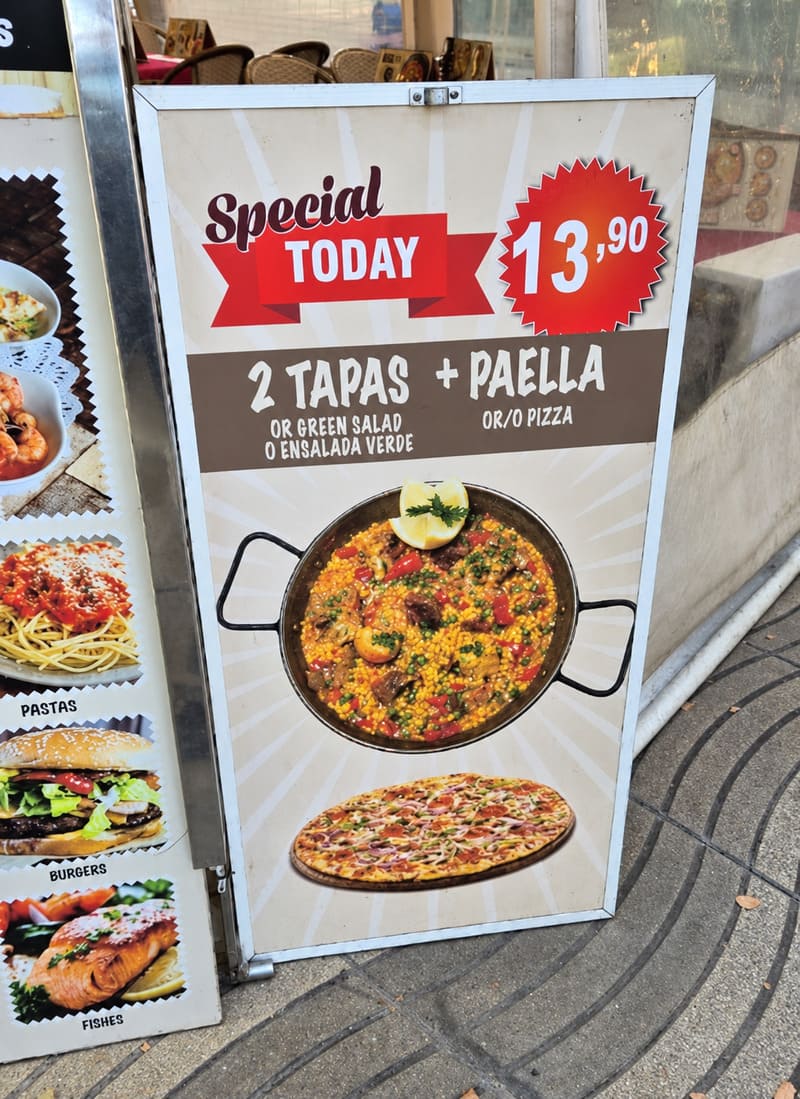
This is the easiest trap to spot, and the most common.
You’re hungry, you’re on or near La Rambla, and a friendly person at the door waves you in.
Look for the signs.
A tout outside.
A giant menu with photos.
Combo deals like “paella and sangria”.
Menus in English out front, especially with pictures, tell the same story.
Better signs are a short menu in Catalan or Spanish, with printed prices.
Seasonal dishes.
A room full of locals.
The simplest rule is to avoid eating on or right beside La Rambla.
Neighbourhoods like Gràcia and Sant Antoni, and the backstreets of El Born, are where locals eat.
The better move: walk five minutes in any direction before you choose.
6) Flamenco as a local tradition
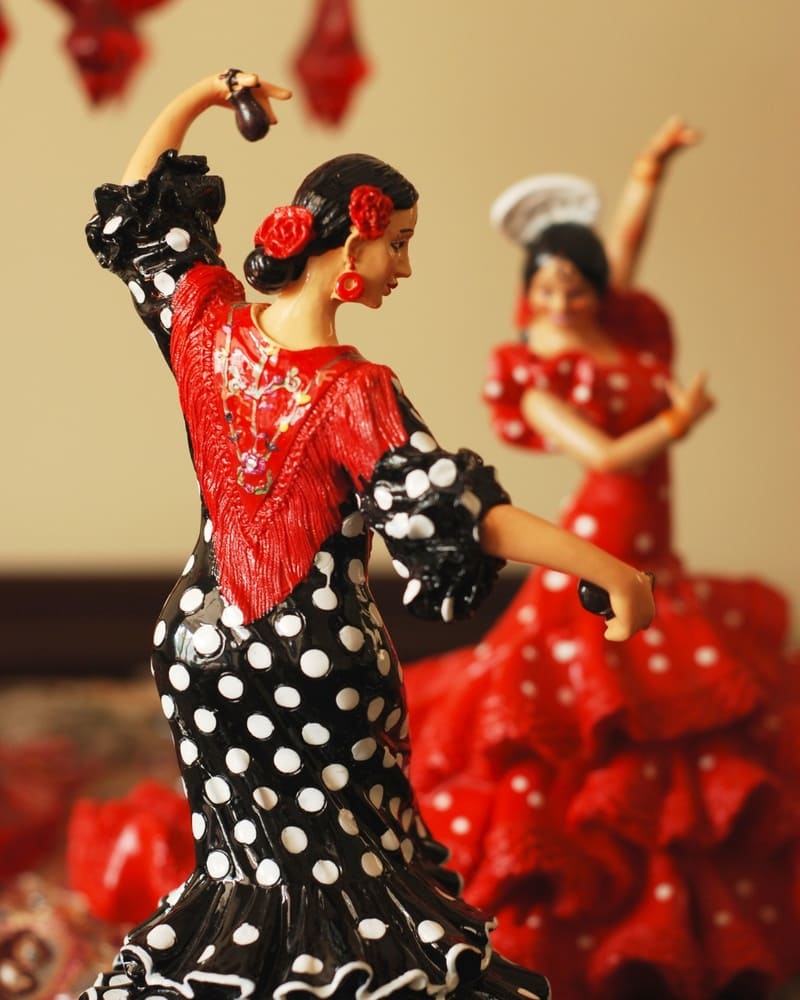
Flamenco is passionate, dramatic and unforgettable.
It is also not Catalan.
It comes from Andalusia, in the south of Spain.
It reached Barcelona in the 19th century, when workers from Andalusia moved here during the industrial boom.
Today the city has tablaos, venues built around flamenco shows.
The word comes from tablado, a wooden platform.
A good tablao can be a great night.
The trap is thinking it’s what Barcelona does.
Catalonia has its own traditions.
The sardana is a circle dance, with dancers holding hands and their arms raised.
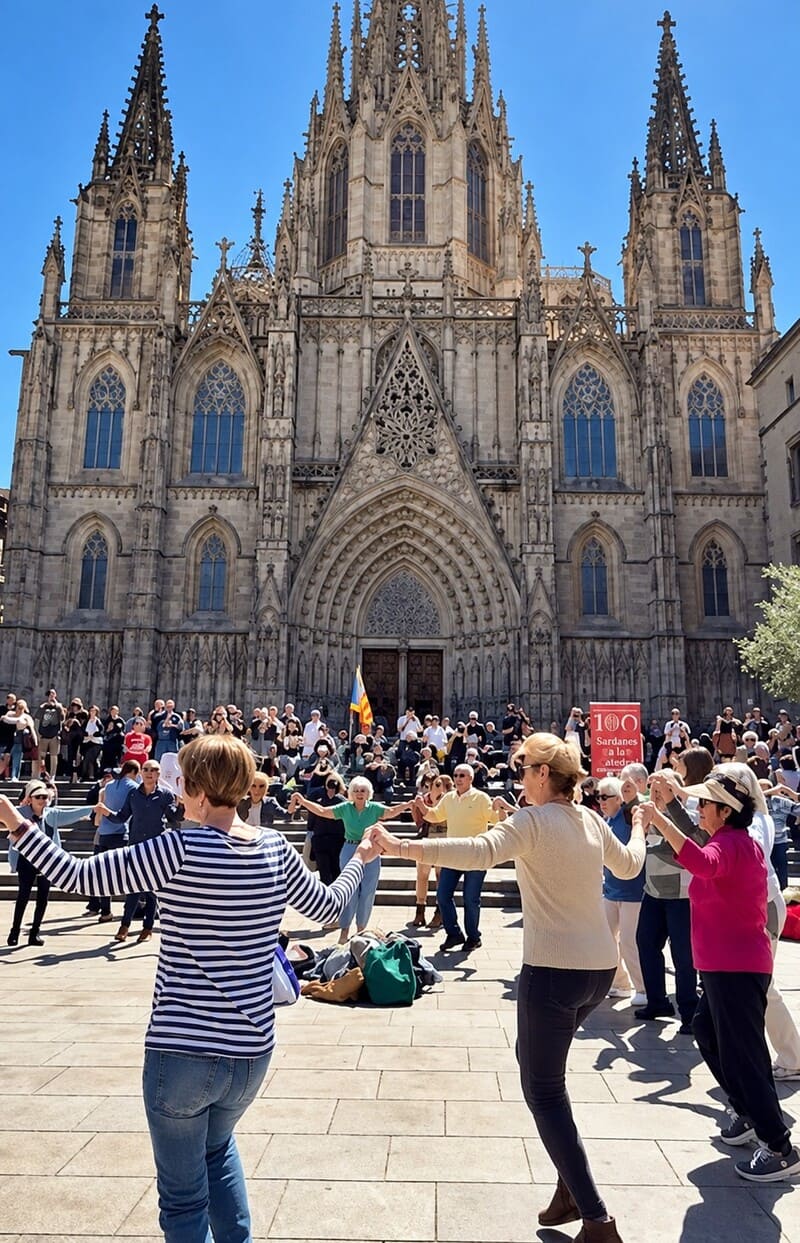
The castells are human towers, built by teams at festivals.
UNESCO recognised them in 2010.
The city builds one in front of the town hall during La Mercè, its big annual festival.
The better move: enjoy a flamenco show if you like, and see a castells performance too if the dates line up.
7) Souvenirs that say Spain, not Barcelona
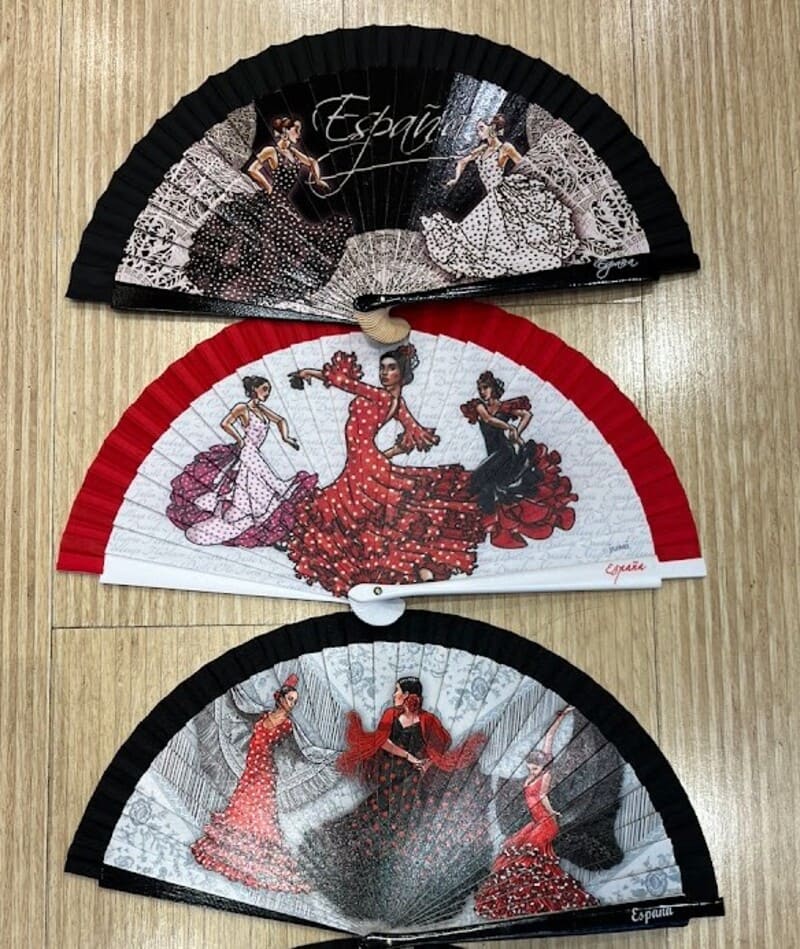
Many souvenir shops in the centre sell flamenco dresses and dancer dolls.
They’re charming.
They’re also Spanish, not Catalan.
Barcelona has its own souvenirs.
The caganer is a small figure of a person in a red barretina, crouching in a very private moment.
It’s a Catalan Christmas tradition, and it’s meant to make you smile.
Many Catalan homes include one in their Christmas decorations.
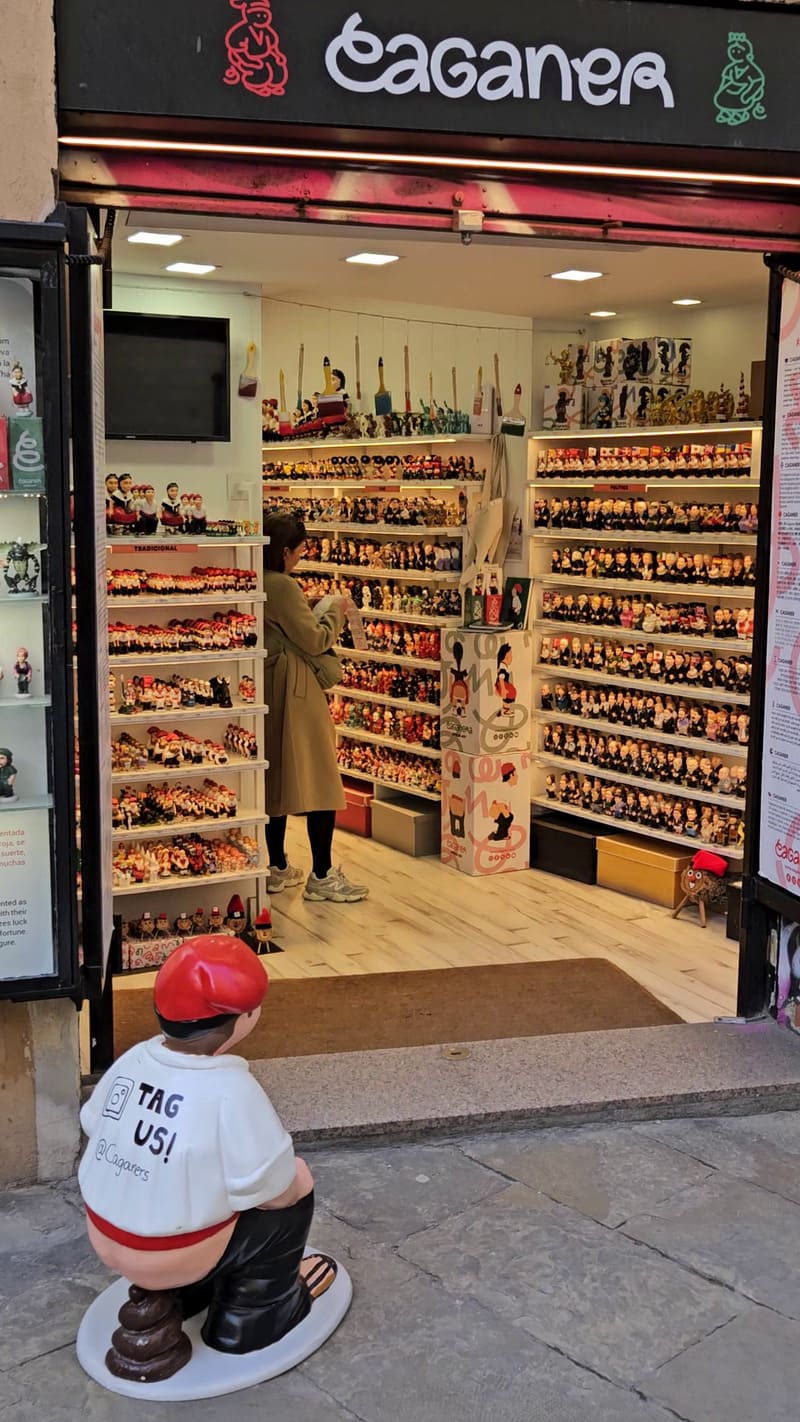
The barretina is the red hat the figure wears.
It’s traditional Catalan clothing.
The better move: skip the dancer doll and ask for a caganer.
Where to go next
If the paella section made you hungry, I’d go straight to where Barcelona paella is still done right.
It’s the antidote to the heat-lamp rice.
And if La Boqueria left you wanting a market where people actually shop, read about the local food markets next.