17 Underrated Barcelona Spots You’ve Probably Walked Past
By Dorian · Updated September 7, 2026
Barcelona’s postcard landmarks get all the attention.
Everyone photographs the same three or four buildings.
But some of the city’s best stories are sitting on streets you’ve probably already crossed.
Here’s what to actually stop and look at next time.
1) Palau Güell hides the invention of Gaudí’s signature technique
Just off La Rambla in El Raval sits Gaudí’s first major commission.
Built between 1886 and 1890, for his patron Eusebi Güell.
It was the first Gaudí building added to UNESCO’s World Heritage list, back in 1984.
That’s a full decade before Park Güell or Casa Milà joined it.
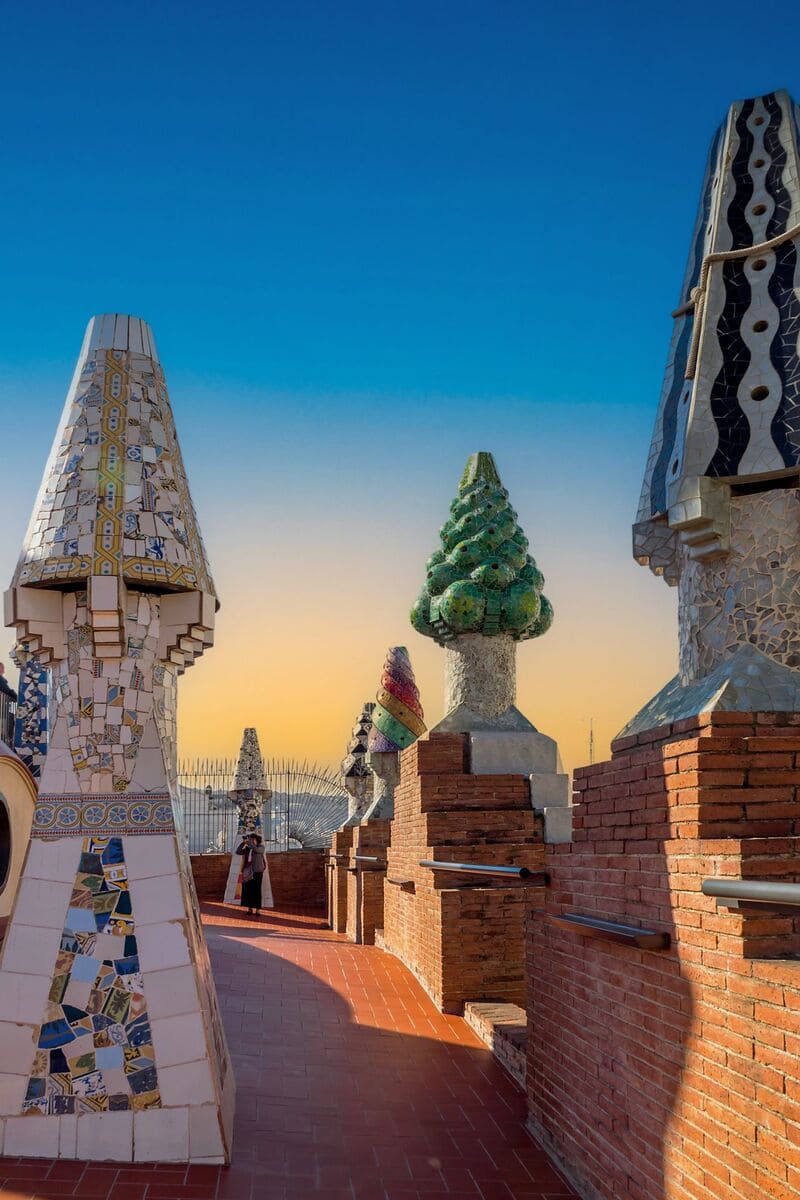
The real reason to go is the roof.
Twenty chimneys, each one different, covered in fragments of broken tile.
This is where Gaudí invented trencadís, the mosaic technique he’d use everywhere for the next 40 years.
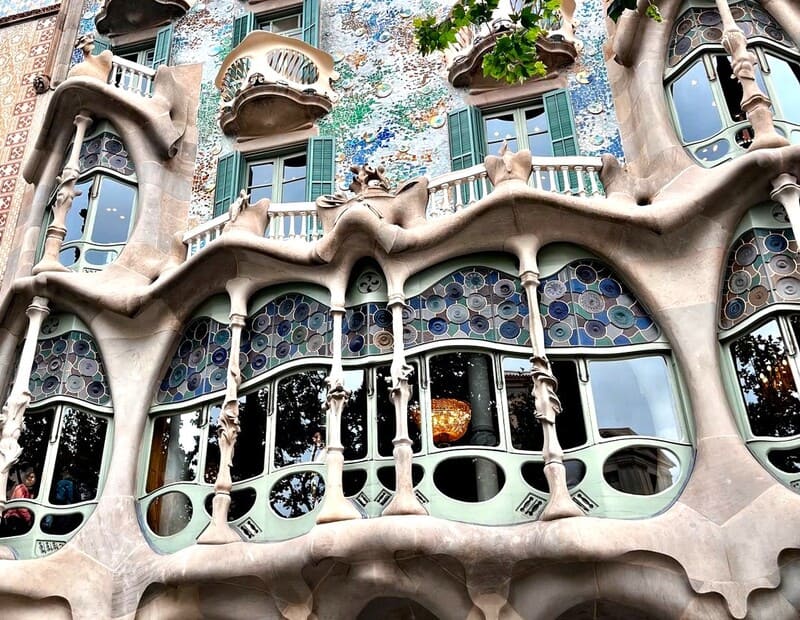
You’re standing at the birthplace of the style everyone associates with Casa Batlló.
Fifteen years before Casa Batlló existed.
2) Barcelona Cathedral keeps 13 geese for a reason nobody expects
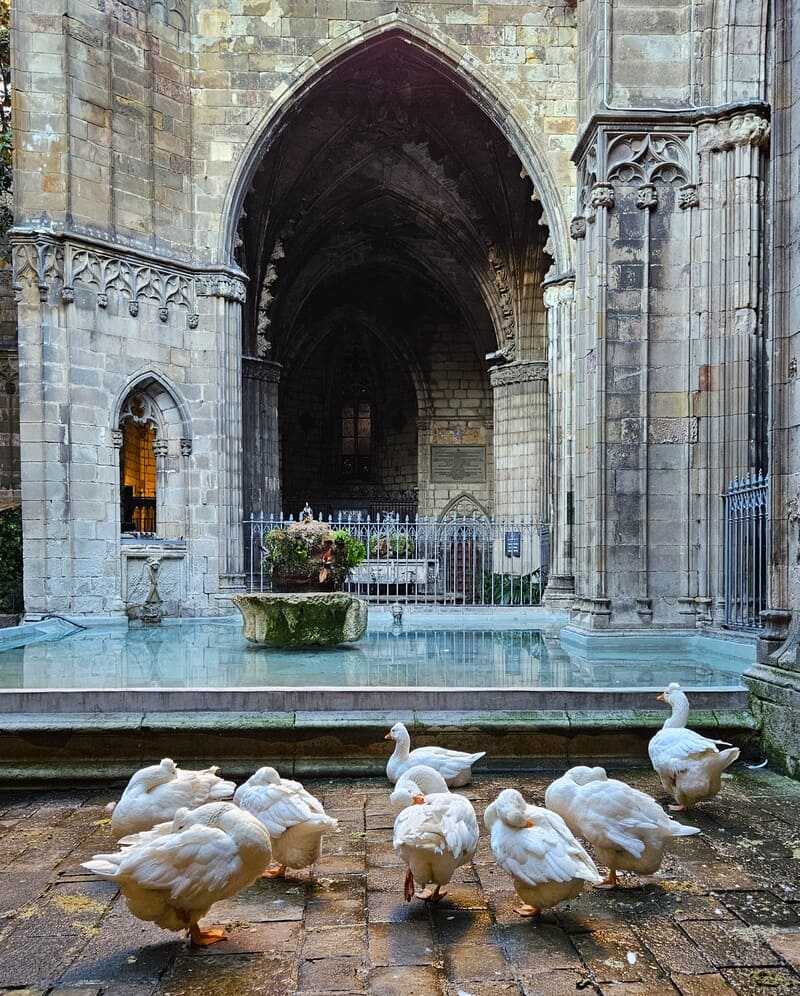
Inside the Cathedral’s Gothic cloister, alongside the fountains and the palm trees, live 13 white geese.
It’s not decoration.
And it’s not a quirk someone added recently.
The number is said to reference the age of Santa Eulàlia, Barcelona’s co-patron saint.
She was 13 when she was martyred under Roman rule.
The geese have lived in the cloister for centuries.
Locals still bring their kids to see them, without necessarily knowing why they’re there.
3) Hospital de Sant Pau is a bigger Modernista site than Sagrada Família
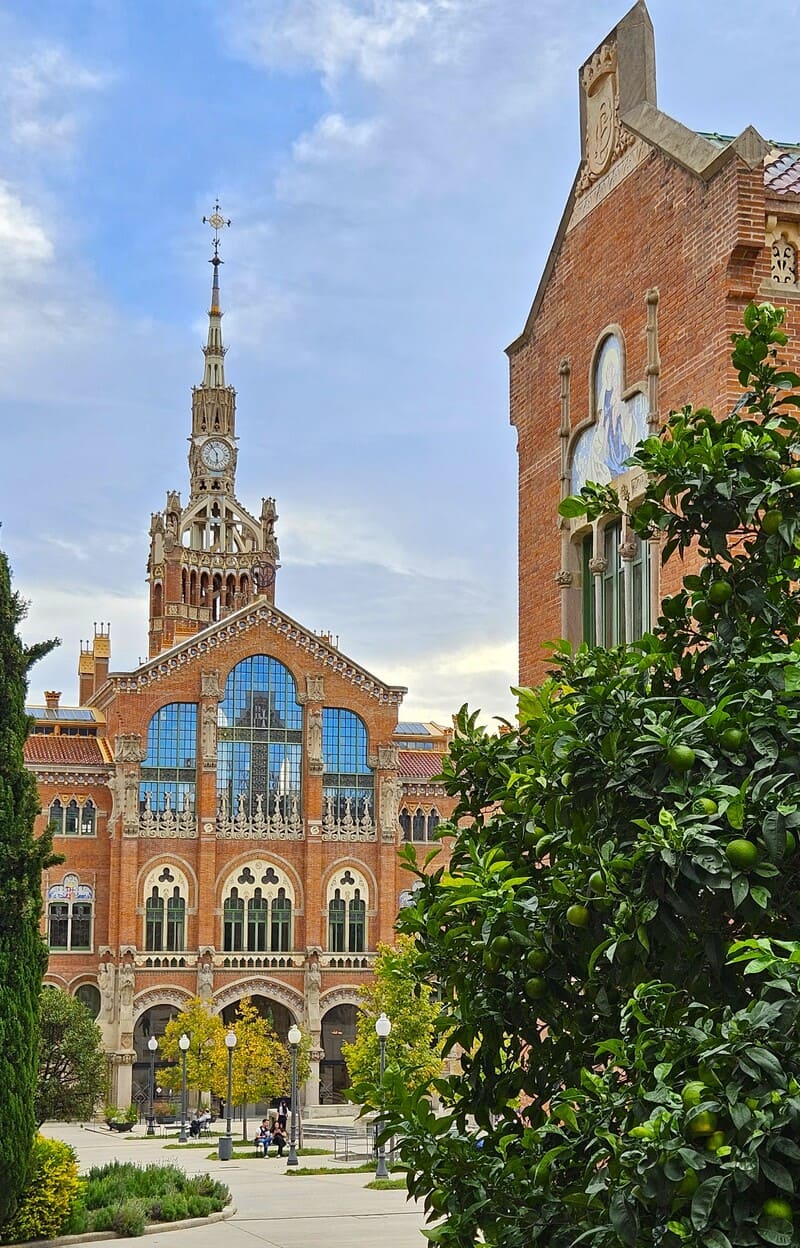
Five minutes’ walk from Sagrada Família sits a UNESCO World Heritage complex.
Most visitors never enter it.
Hospital de Sant Pau was a working hospital until 2009.
Built as a garden city of pavilions rather than one large building.
The theory: patients heal faster surrounded by light, art, and green space.
Every pavilion is covered in tile work, sculpture, and stained glass.
The underground tunnels that once connected them are still walkable.
It functioned as a real hospital for over a century before becoming a museum.
That’s part of why it still gets a fraction of the crowds next door.
4) Plaça Sant Felip Neri’s walls tell you exactly what happened here
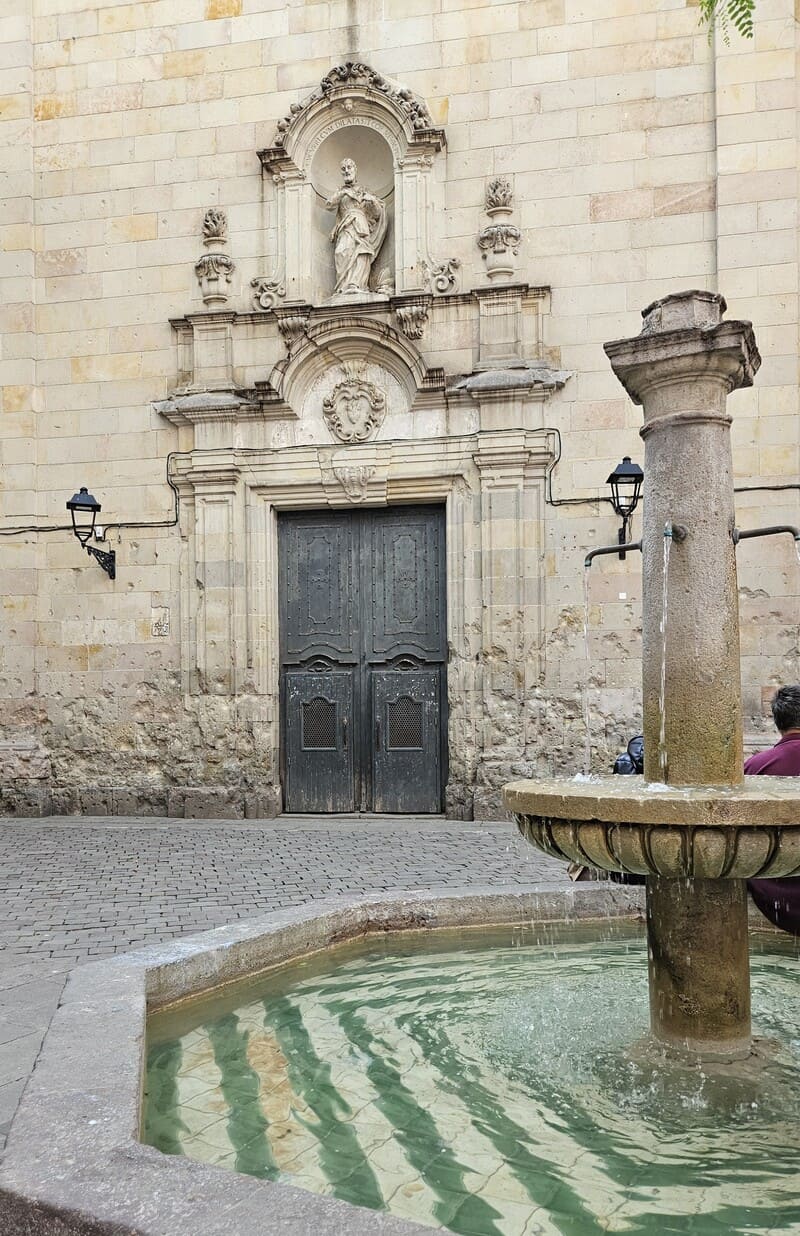
This small square in the Gothic Quarter looks peaceful.
A fountain. A school playground.
Look closer at the church façade and you’ll see it’s pitted with what looks like bullet holes.
They’re not from executions, despite a myth that spread for decades.
On 30 January 1938, during the Spanish Civil War, the church was hit during an aerial bombing.
It was sheltering children from the neighborhood at the time.
Dozens of people died. Many of them children.
The city has never repaired the façade.
It stays exactly as the bombing left it, as a record rather than a monument.
5) Casa Amatller stands next to the building everyone photographs instead
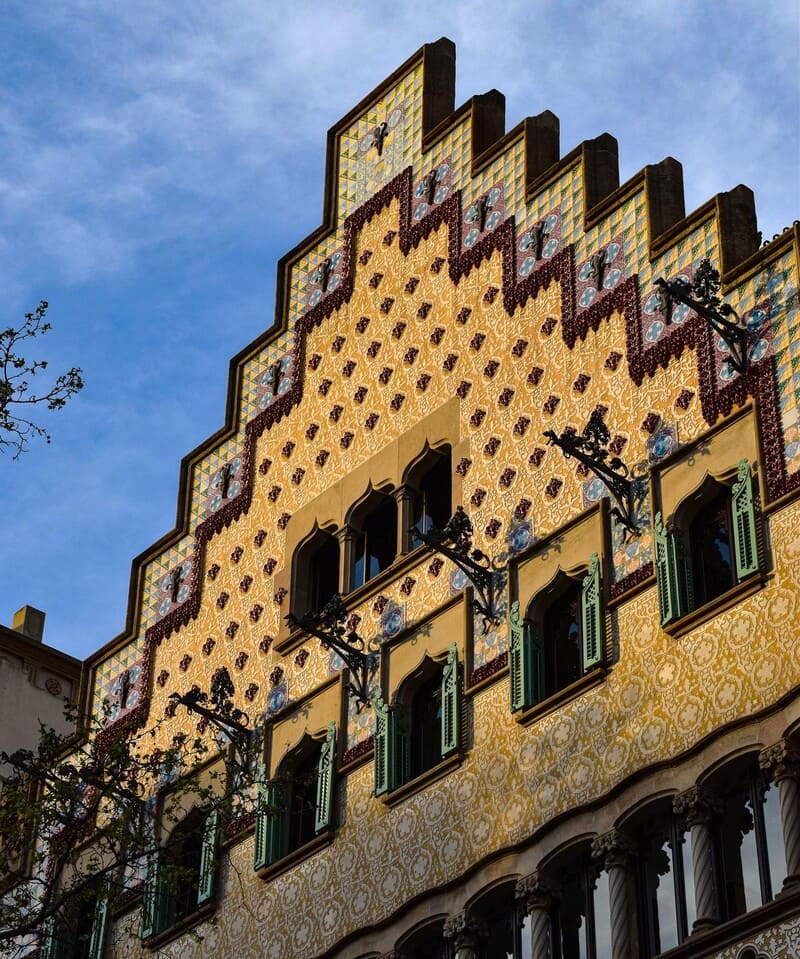
On Passeig de Gràcia, Casa Batlló draws the crowds and the queues.
Right next door, Casa Amatller gets walked past by nearly everyone taking that photo.
It was designed by Josep Puig i Cadafalch.
Same architect behind Casa de les Punxes, further down this list.
Casa Amatller mixes Dutch gabled rooflines with Catalan sgraffito decoration.
A combination you won’t find anywhere else on the street.
The ground floor still has its original tile work, from when it was the home and chocolate business of industrialist Antoni Amatller.
6) Refugi 307 is where Barcelona hid from the sky
Cut into the hillside at the foot of Montjuïc.
Refugi 307 is one of the largest air-raid shelters built during the Spanish Civil War.
Nearly 400 meters of tunnels, dug by local residents themselves, not military engineers.
It could hold up to 2,000 people.
It had running water, toilets, and an infirmary.
It’s now part of the Barcelona History Museum.
It can only be visited on a guided tour, on weekends, with advance booking.
What makes it different from a typical museum visit: the tunnels are unchanged.
You’re not looking at a reconstruction.
You’re standing in the actual shelter Poble-sec families dug with their own hands.
7) Torre Bellesguard is the Gaudí building most people have never heard of
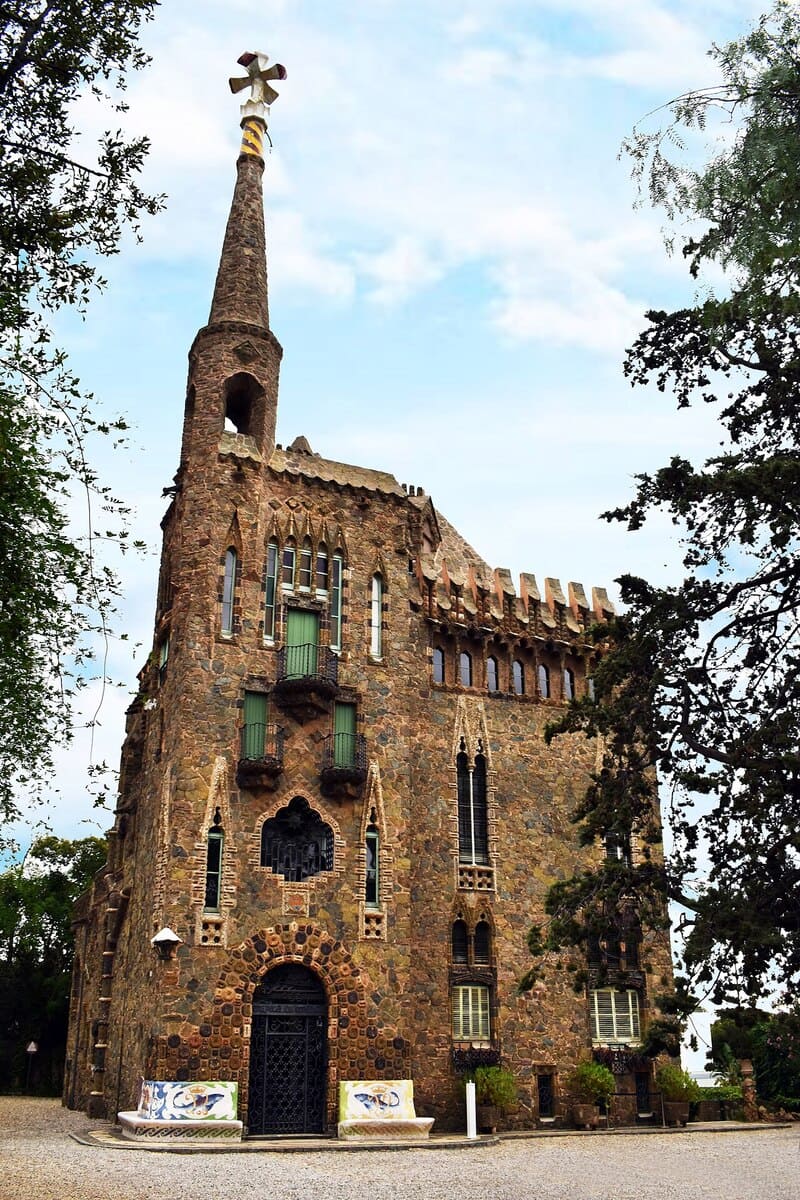
Up in Sant Gervasi, away from the main tourist circuit.
Torre Bellesguard was built by Gaudí between 1900 and 1909.
On the ruins of a real medieval castle that belonged to Martí I, the last king of the medieval Catalan dynasty.
Unlike almost everything else Gaudí built, Bellesguard is made of straight lines rather than curves.
A deliberate nod to the castle it replaced.
It only opened to the public in 2013.
Which is a big part of why it still gets a fraction of the visitors of Casa Batlló or Casa Milà, despite being a genuine Gaudí work.
8) The Temple of Augustus is older than the city as most people know it
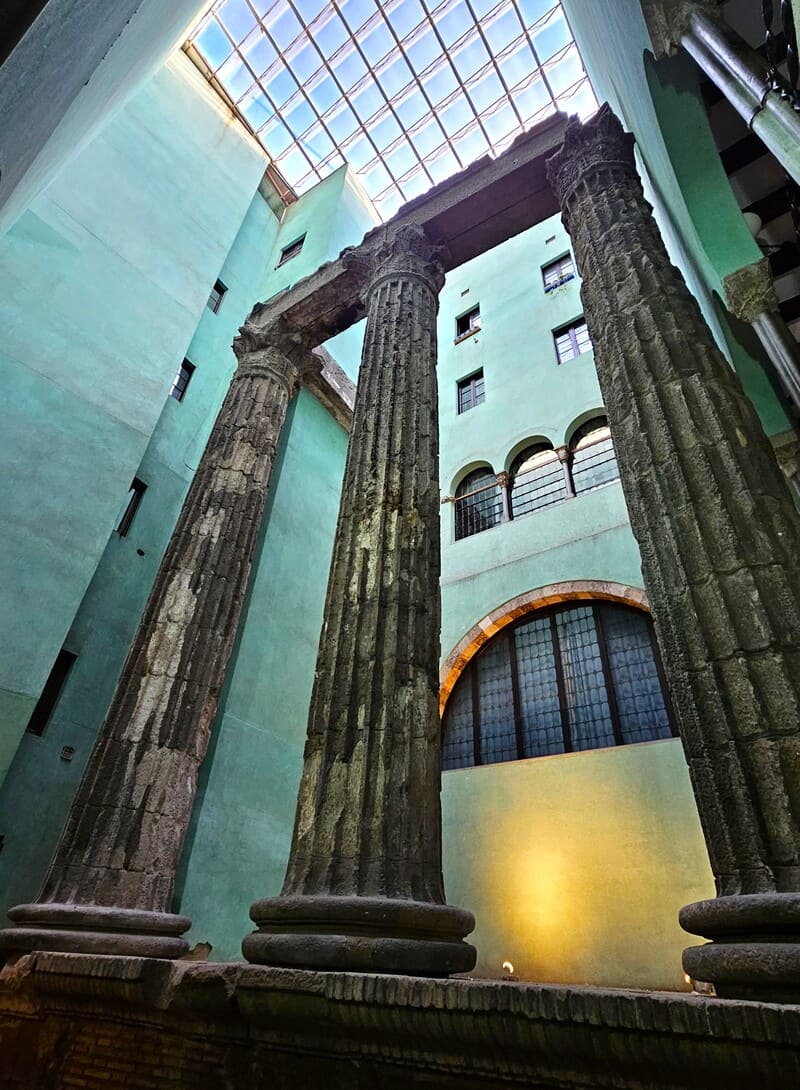
Tucked inside a courtyard on Carrer del Paradís.
Four Roman columns, over 9 meters tall, are all that remain of a temple built in the 1st century BC.
Dedicated to Emperor Augustus.
It once stood at the highest point of Roman Barcino, on a hill called Mont Tàber that no longer looks like a hill at all.
Entry is free.
The columns sit inside an ordinary-looking building, a few steps from the Cathedral.
Most people walk right past the door on their way to somewhere else.
Without realizing they just passed something 2,000 years old.
9) Mercat dels Encants has been trading since the 14th century
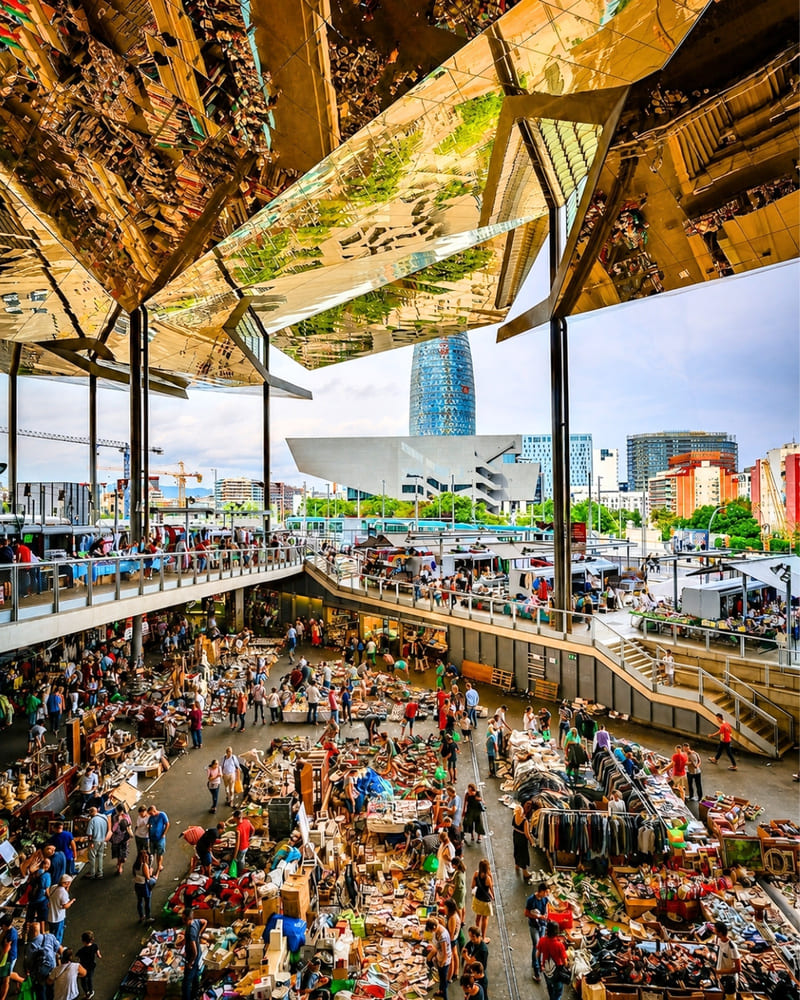
Barcelona’s flea market is one of the oldest in Europe.
Roots going back roughly seven centuries, under its original name, Encants Vells.
In 2013 it moved into a striking three-story structure near Plaça de les Glòries.
Topped by a giant mirrored canopy that reflects the stalls below.
Public auctions, a tradition recorded here since the 14th century, still happen on select mornings.
It’s one of the only places left in the city where you can watch a centuries-old trading custom happen inside a genuinely modern building.
10) Casa de les Punxes was built to look like a castle on purpose
On Avinguda Diagonal, Casa de les Punxes rises with six pointed towers.
The silhouette of a fairy-tale fortress.
Puig i Cadafalch designed it between 1903 and 1905, for the three Terradas sisters.
Three separate homes, blended into what looks from the street like one continuous building.
Each tower and entrance was customized for a different sister.
The building’s medieval styling was inspired by northern European castles, not anything actually Catalan.
It’s been a National Historical Monument since 1976.
Most passersby still treat it like just another Diagonal office building.
11) Cementiri de Montjuïc turns a hillside into an open-air art museum
Opened in 1883, on the southwestern slopes of Montjuïc.
The cemetery stretches down the hill in terraces.
Elaborate neo-Gothic mausoleums, stacked above simple wall niches.
It functions as an unintentional museum of Catalan sculpture, from the last 140 years.
Painter Joan Miró is buried here.
So is Ildefons Cerdà, the engineer who designed Barcelona’s Eixample grid.
And Joan Gamper, the founder of FC Barcelona.
The views over the port from the upper terraces are some of the best in the city.
Almost nobody comes here for the view.
12) Fundació Antoni Tàpies is crowned by a sculpture most people mistake for construction equipment
The building on Carrer Aragó was designed in the early 1880s.
By Lluís Domènech i Montaner, the same architect behind Hospital de Sant Pau.
It was the first building in the Eixample to combine exposed brick and iron.
It originally housed a publishing house.
What sits on top now is a massive tangle of steel wire and aluminum tubing.
Called Núvol i Cadira, Cloud and Chair, created by artist Antoni Tàpies himself.
From street level it looks abstract enough that plenty of people assume it’s scaffolding.
Not art.
13) Els Quatre Gats is where a teenage Picasso first showed his work
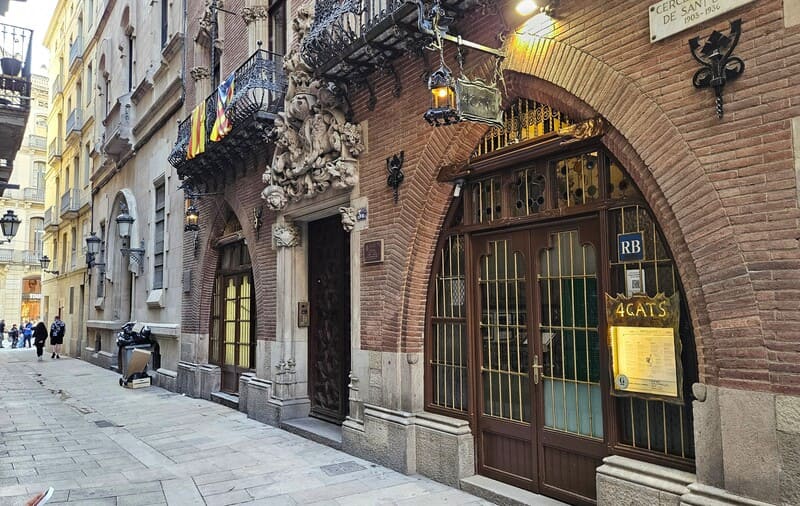
This tavern on Carrer Montsió opened in 1897, inside Casa Martí.
Another Puig i Cadafalch building, modeled on the Parisian cabaret Le Chat Noir.
It quickly became the meeting spot for Barcelona’s Modernista artists.
Including a young Gaudí and Ramon Casas.
A teenage Pablo Picasso, newly arrived in the city, held his first public exhibition of drawings here.
Before he was known anywhere outside Catalonia.
The restaurant is still open today.
The original poster Picasso designed for the menu is still part of its identity.
14) Barcelona still has two intact chunks of its Roman wall
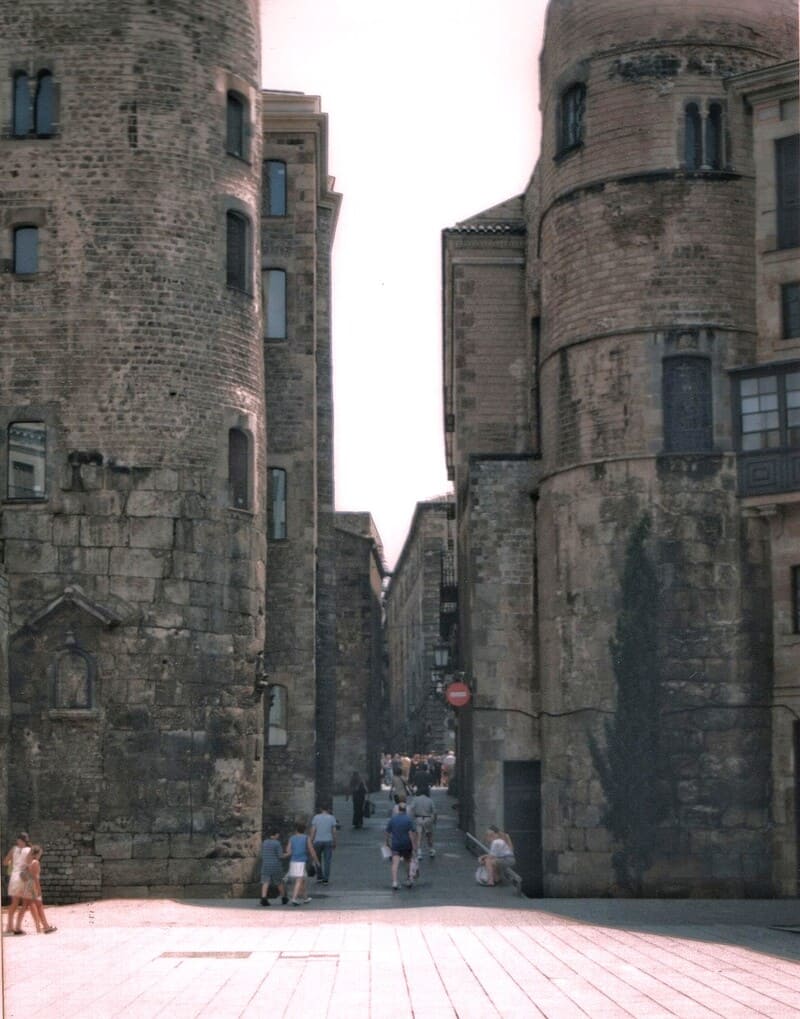
At Plaça Nova, right beside the Cathedral.
Two cylindrical Roman towers still flank what was once the main gate into Barcino.
Alongside a reconstructed stretch of the aqueduct that once carried the city’s water.
A second, larger section is visible nearby at Plaça de Ramon Berenguer.
Where a medieval chapel sits directly on top of the ancient stonework.
Most people cross Plaça Nova to get somewhere else, phone out.
Without registering that the round towers on either side date back roughly 2,000 years.
They mark exactly where Roman Barcelona ended and the outside world began.
15) Mercat de Sant Antoni is the modernista market without the queues
La Boqueria gets the crowds and the tour groups.
Mercat de Sant Antoni gets the actual neighborhood.
A fully restored Modernista iron-and-glass market, a short walk from the Gothic Quarter.
It’s arranged in a distinctive cross shape.
Produce, meat, and fish stalls inside.
A well-known Sunday book and collectibles market spills out around the building.
It’s the version of a Barcelona market where you’re shopping alongside residents doing their actual weekly groceries.
Not other visitors.
16) Monestir de Pedralbes has the largest Gothic cloister in the world, and 2026 is its 700th year
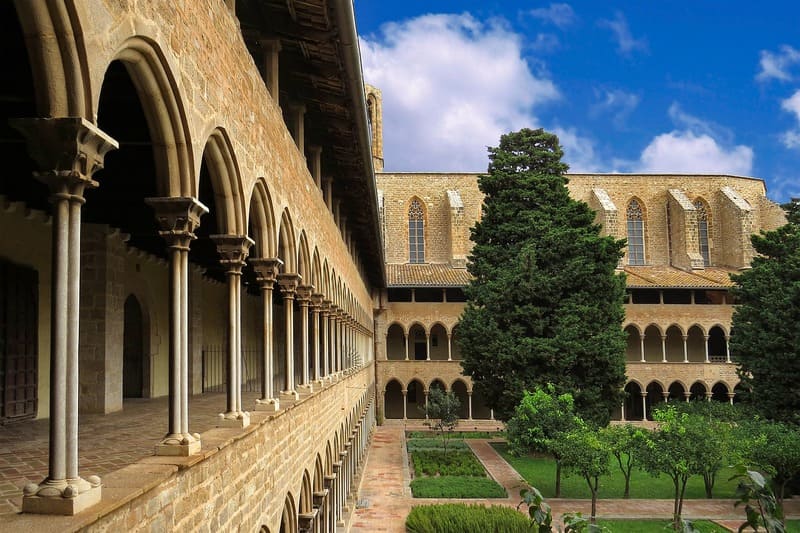
Founded in 1326 by Queen Elisenda de Montcada, widow of King James II.
This Gothic monastery in the Pedralbes neighborhood has housed a community of Poor Clare nuns almost continuously since it opened.
The three-story cloister that wraps around the complex is believed to be the largest of its kind anywhere.
2026 marks 700 years since construction began.
A milestone most visitors to the city have no idea is happening.
The queen’s own tomb sits inside the church.
The monastery still functions as both a working religious community and a public museum.
17) Parc del Laberint d’Horta hides a real hedge maze most tourists never find
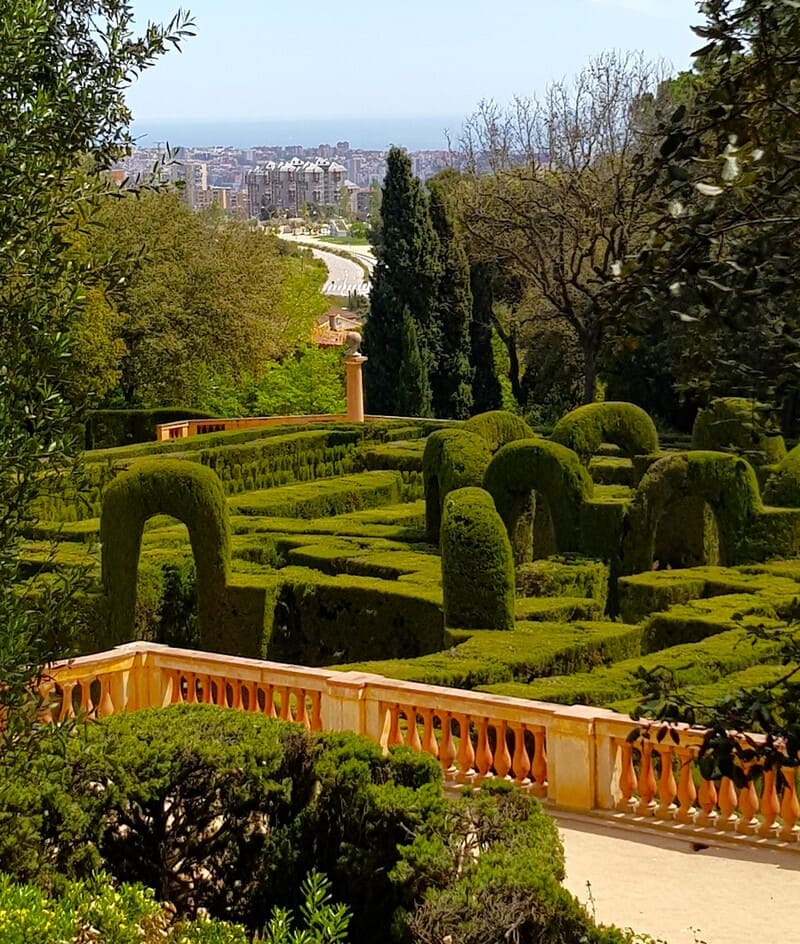
Barcelona’s oldest surviving garden sits in the Horta district.
Built in the late 18th century, around a genuine boxwood hedge maze that’s still open to the public.
A quieter, older kind of park than Park Güell or Ciutadella.
Neoclassical statues and shaded pavilions, scattered through terraced gardens.
Entry requires a small ticket, with free admission on certain days of the week.
Worth checking current hours before heading up.
Because it sits further from the center than most of this list, it stays one of the few genuinely quiet green spaces left in the city.
Note: The hedge maze itself has been closed for restoration and isn’t expected to reopen until early 2027, though the rest of the park stays open.
Where to go next
If you’re putting together a first trip around all of this, I’ve laid out the essentials in everything a first-timer actually needs to do in Barcelona, which picks up where a list like this one leaves off.
And before you lock in an itinerary, it’s worth reading the mistakes almost everyone makes in their first three days here.
A few of them are the same reasons people walk right past half the places on this list.