Top 24 Things to Do in El Born (+ Some Unique Finds!)
By Dorian · Updated September 5, 2026
El Born is the neighbourhood where Barcelona actually feels lived-in.
Medieval streets built by merchants and shipbuilders now hold basement speakeasies, a magic shop older than electricity, and a bakery that beat all of Spain at croissants.
Skip the greatest-hits list. Here’s how I’d actually spend a day wandering it.
1) Santa Maria del Mar
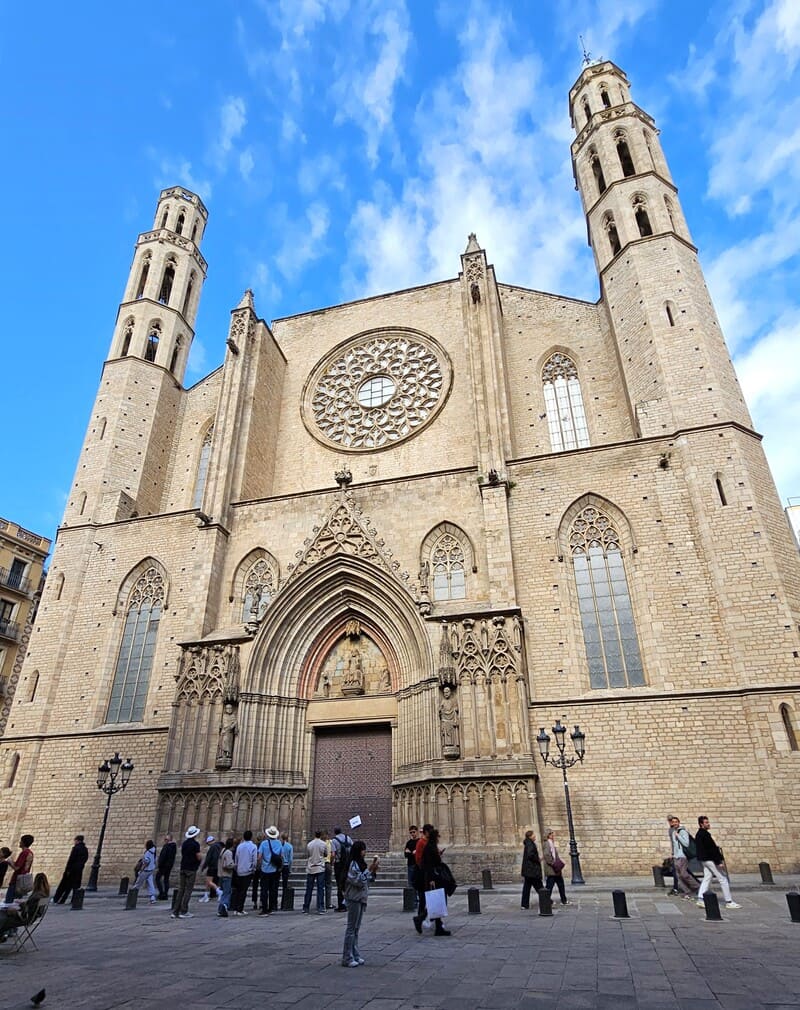
This is the building that gives El Born its soul.
Built between 1329 and 1383 by the neighbourhood’s own shipbuilders and merchants, it’s the purest example of Catalan Gothic architecture in the city.
It also has the widest-spaced columns of any Gothic church in Europe.
That spacing is what makes the inside feel so open. No clutter of pillars breaking up the view. Just one long, light-filled hall.
Go in the late afternoon, when the sun hits the rose window and the whole nave glows.
2) Casa Gispert
Tucked on a quiet street near Santa Maria del Mar, Casa Gispert has been roasting nuts since 1851.
That makes it the oldest food shop in Barcelona.
At the back of the shop sits the oven that started it all. It’s the oldest working wood-fired roasting oven in Europe.
They still use it to roast almonds, hazelnuts and coffee the same way they did nearly two centuries ago.
Pick up a small bag of whatever’s roasting that day. It’s the kind of souvenir that actually tastes like the trip.
3) Picasso Museum
Spread across five connected medieval palaces on Carrer Montcada, this museum holds the deepest collection anywhere of Picasso’s formative years.
That’s the period when he was a teenager training and living in Barcelona, long before Cubism or Paris.
It’s less about his famous later work. More about watching a genius figure out how to see.
The permanent collection ticket is separate from any temporary exhibition. Check the official site for current tiers.
Book ahead. It sells out on weekends.
4) Carrer de les Mosques
Barcelona claims a lot of superlatives. This one is real.
Carrer de les Mosques, tucked between Carrer de la Vidrieria and Carrer dels Canvis Vells, is said to be the narrowest street in the city. Barely wide enough for one person.
It’s not on any official landmark list. Nothing to buy or photograph beyond the street itself.
That’s the point. It’s a two-minute detour that shows you how tightly this neighbourhood was built.
5) Passeig del Born
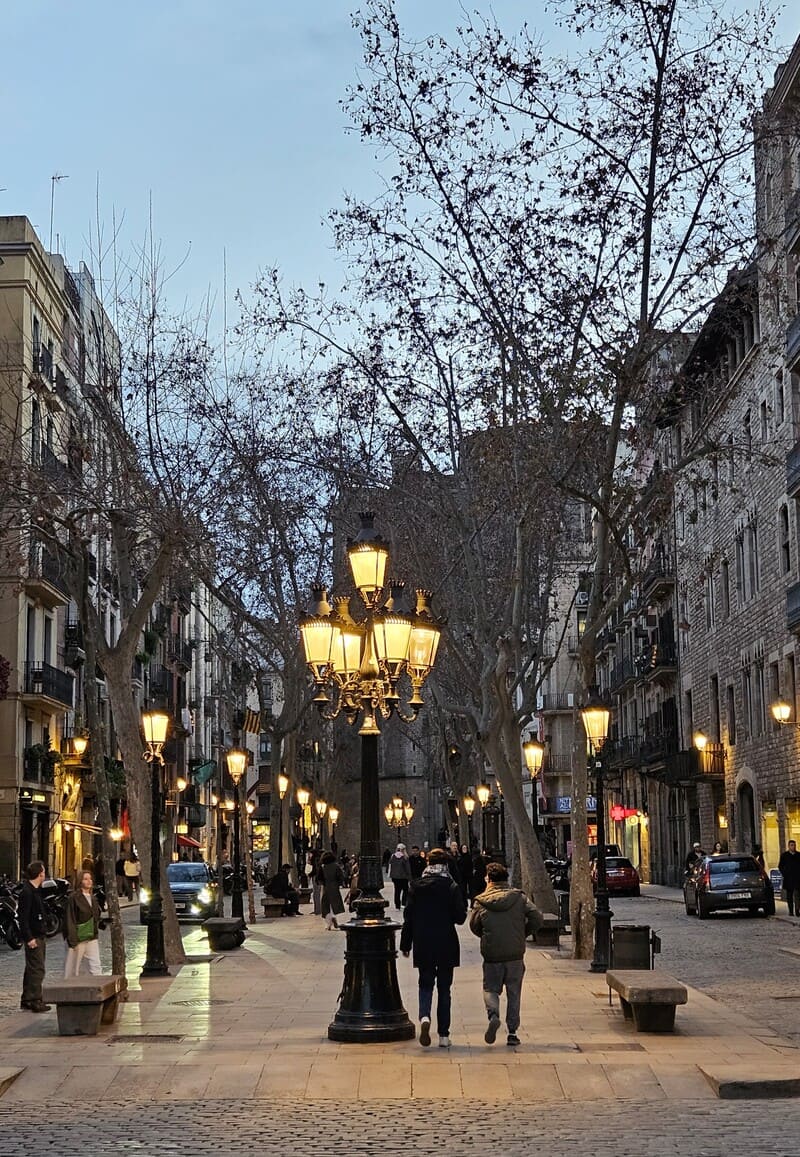
This wide, tree-lined promenade is El Born’s main artery.
It has been since medieval times, when it hosted jousts, markets and public celebrations.
Today it’s lined with bars and restaurants. But the bones of the old meeting place are still there.
Walk it slowly. It connects the old market building at one end to Santa Maria del Mar at the other, and every side street off it leads somewhere worth seeing.
6) El Rei de la Màgia
Founded in 1881 by the magician Joaquim Partagàs, El Rei de la Màgia is the oldest magic shop in the world still open in its original location.
Some records suggest the shop was actually trading a few years earlier. Partagàs just liked 1881, since it reads the same forwards and backwards.
Inside, it’s all trick decks, wands and brass gadgets, under a portal with a magician watching the street.
Want the deeper story? There’s a small theatre-museum nearby with archives, objects and live shows.
7) Palau de la Música Catalana
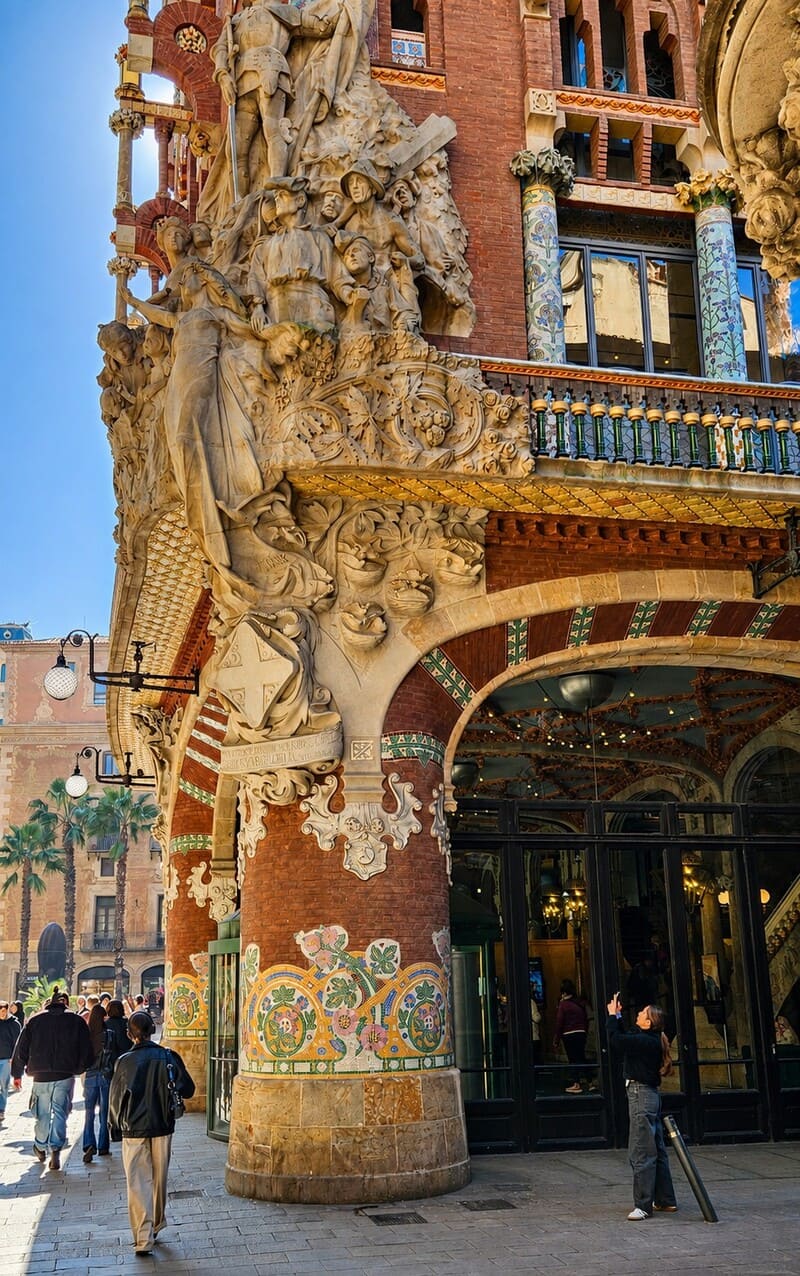
Just on El Born’s edge, this 1908 concert hall by Lluís Domènech i Montaner is the only concert venue in the world with UNESCO World Heritage status.
The facade alone, packed with mosaics and sculpture, is worth the walk over.
Inside, a central stained-glass skylight floods the auditorium with natural light.
Guided tours run separately from concert tickets. Decide which experience you want and check the official site for the current schedule.
8) Monk
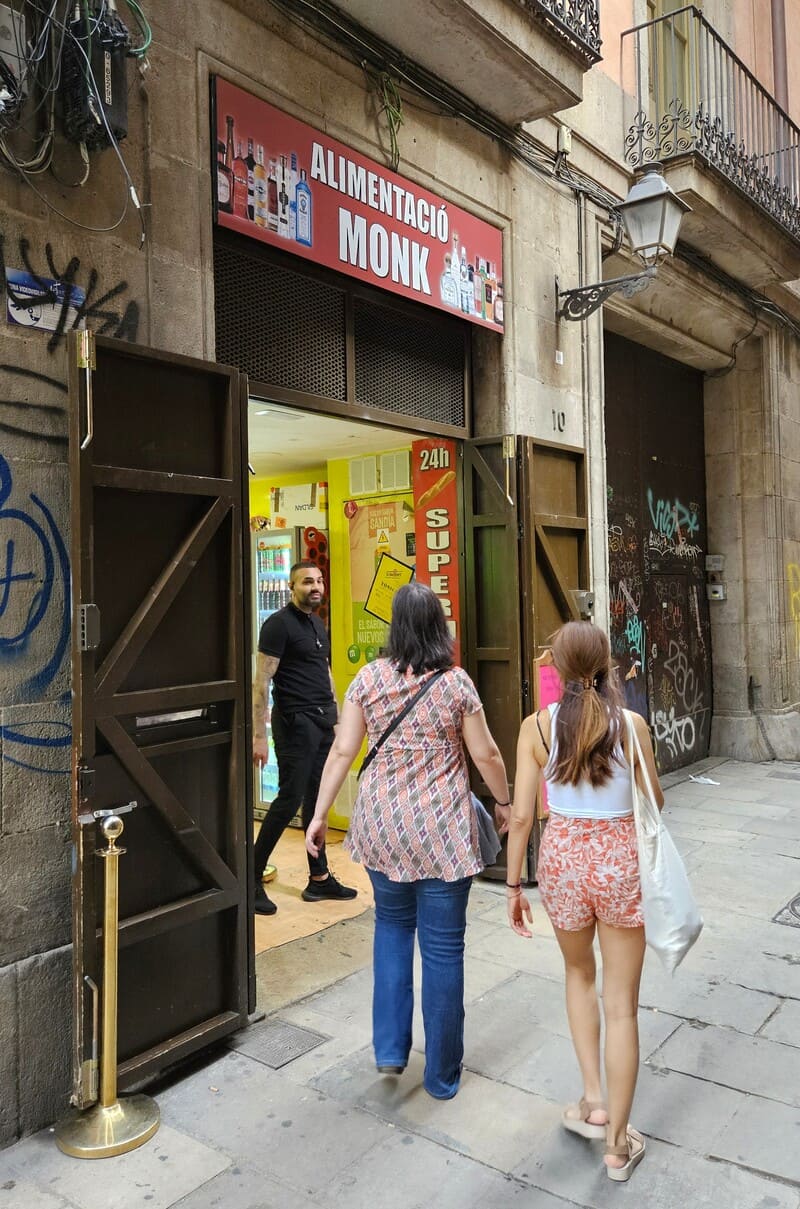
From the street, Monk looks like an ordinary corner shop.
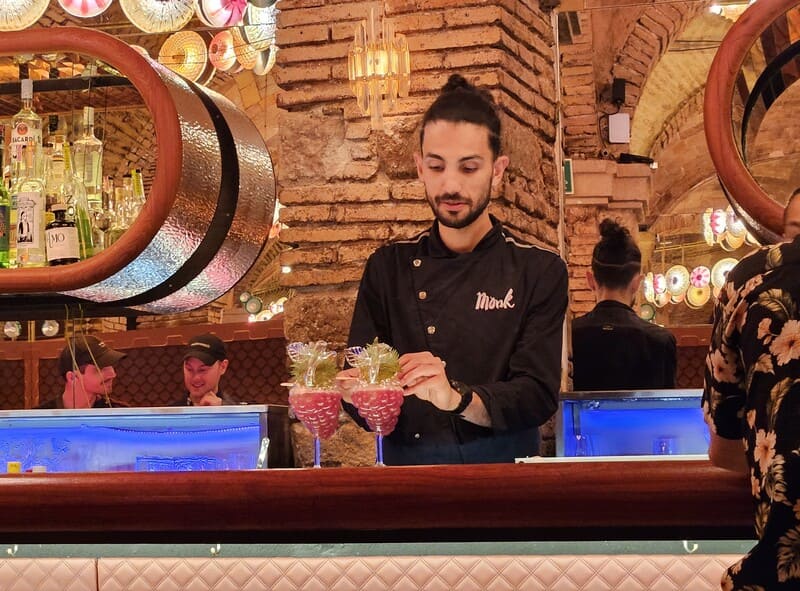
Walk past the chips and toward the back left, and a door opens into a speakeasy cocktail bar styled like a slightly irreverent church. Stone walls, dramatic lighting.
It’s the sister bar to Paradiso, one of the city’s most celebrated cocktail spots.
The drinks menu leans creative and colourful rather than classic. Go later in the evening for the full effect.
9) Parc de la Ciutadella
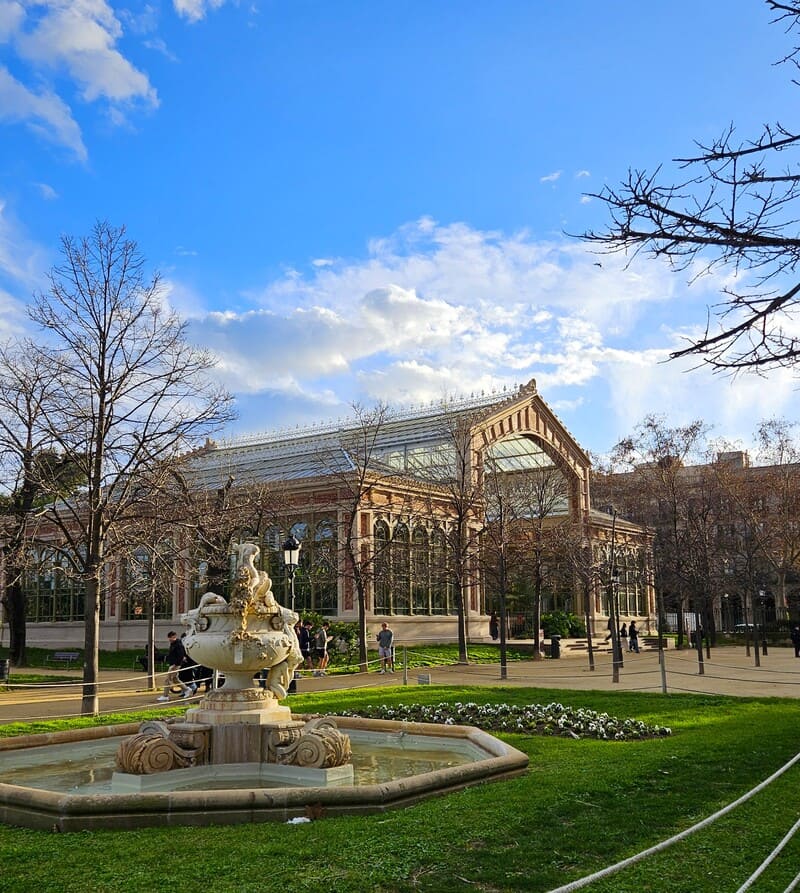
El Born’s green lung sits just past the Arc de Triomf.
Inside you’ll find the building that now houses the Catalan Parliament, a small zoo, and the Cascada monumental fountain.
A young Antoni Gaudí helped build the Cascada as a student assistant.
It’s a good spot to slow down after a morning of narrow streets. Locals walk dogs, row boats on the small lake, or just sit under the trees.
10) Sucre Cremat
Opened in 2025 near Santa Maria del Mar, Sucre Cremat is a tiny shop devoted entirely to crema catalana.
That’s Catalonia’s own custard dessert, served to go in small tubs with the sugar crust still crackling.
The founders, a Brazilian and Portuguese couple with family roots in the Born, wanted to give the dessert the same souvenir status as a pastel de Belém in Lisbon.
Don’t confuse it with French crème brûlée. Crema catalana is lighter, made with milk instead of cream, and flavoured with lemon, orange and cinnamon.
11) Arc de Triomf
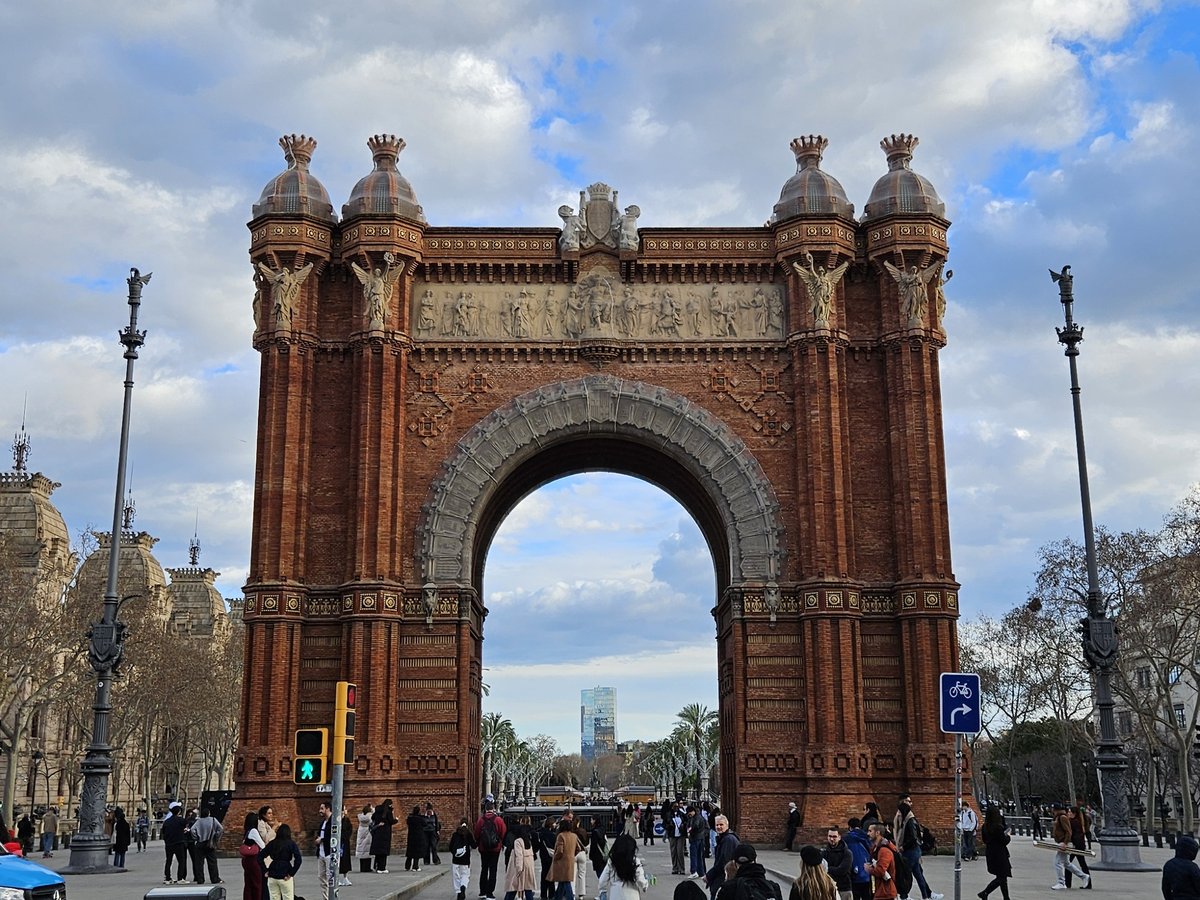
This brick archway was built as the ceremonial gateway to Barcelona’s 1888 Universal Exposition.
It still marks the formal entrance to Parc de la Ciutadella from the north.
Walk underneath and look up at the detailed relief work along the top before continuing down the wide promenade toward the park.
It’s one of the few spots in the city built purely to impress. It still does.
12) Passatge de les Manufactures
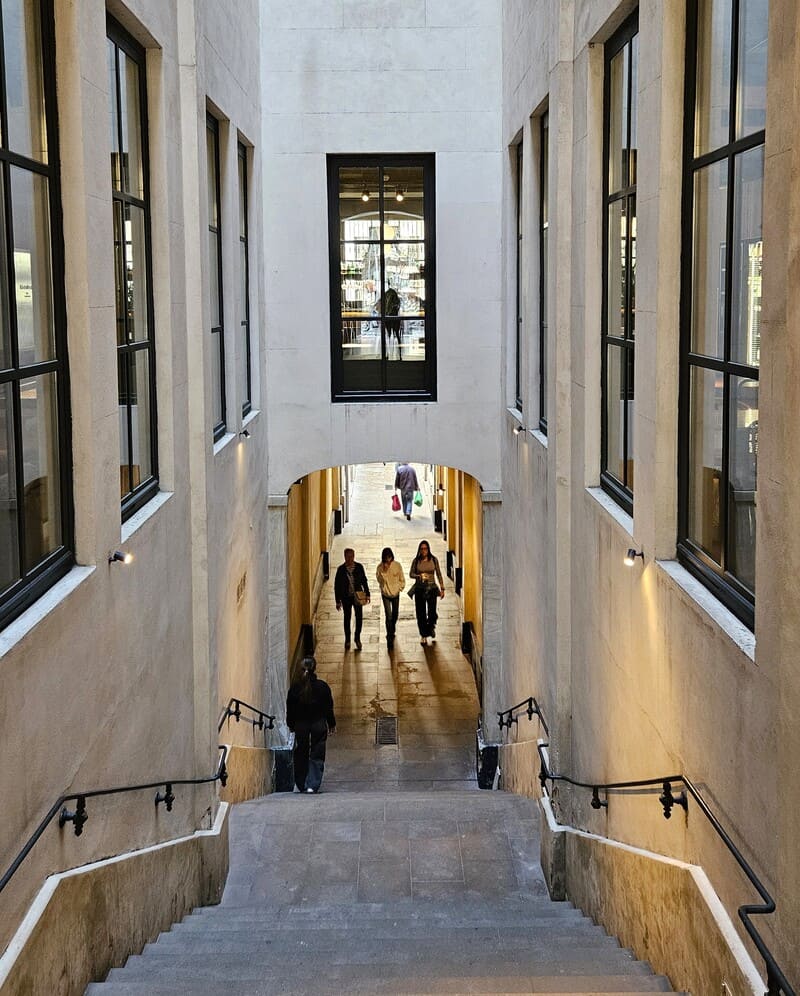
This covered passage opened in the 1870s as home to small textile workshops and the housing of the families who ran them.
It has since been fully renovated. It now connects Carrer de Trafalgar to Sant Pere Més Alt.
Today it holds a boutique hotel with a well-known rooftop and a healthy-eating restaurant. But the industrial bones are still visible if you look up.
It’s a quick, quiet cut-through most visitors walk straight past.
13) Carrer Montcada, the museum street
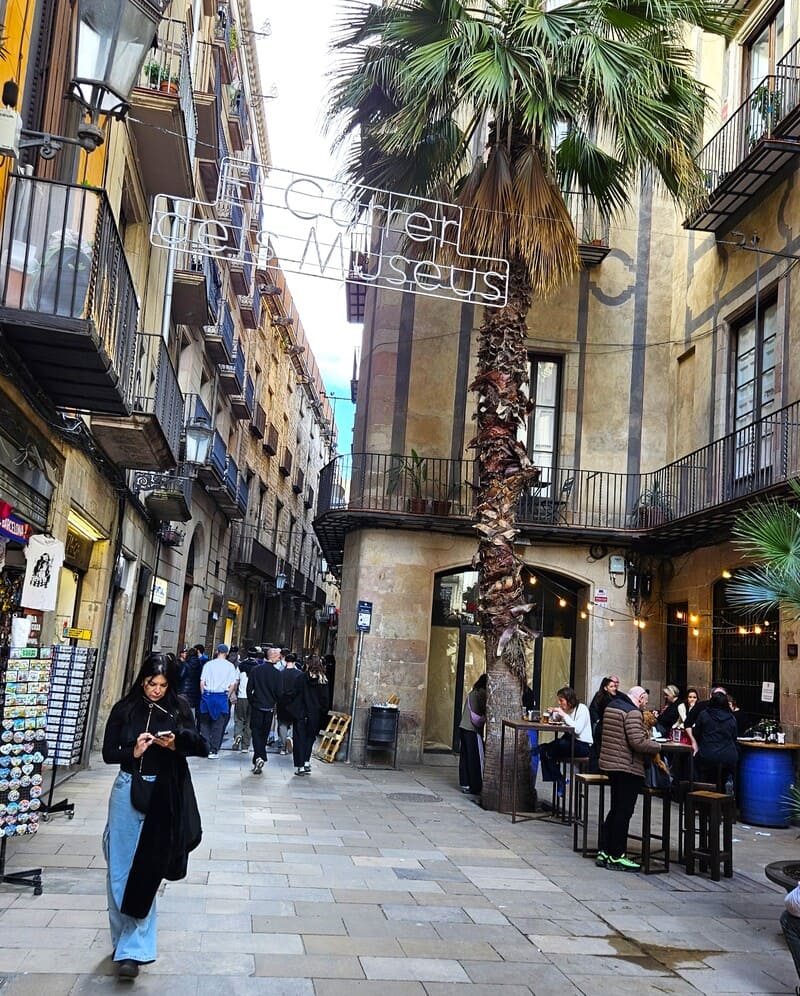
Beyond the Picasso Museum, Carrer Montcada is worth walking end to end.
The street dates back to the 12th century, when it was granted to the Barons of Montcada. Wealthy maritime merchants built their mansions here in Catalan Gothic style.
Several of those palaces now hold museums.
The Moco Museum, dedicated to modern and contemporary art with names like Banksy, Warhol and Basquiat, sits inside the 16th-century Palau Cervelló at number 25.
Ticket tiers vary by exhibition, so check current pricing on the official site.
14) Passatge Sert
Named for the Sert family, who ran a textile factory on this spot, this narrow, plant-lined passage is quieter and more residential than most of El Born.
It was also the birthplace of the painter Josep Maria Sert.
A specialty coffee shop sits tucked down here, easy to miss unless you’re looking for it.
Good stop if you want a break from crowds without leaving the neighbourhood.
15) Fossar de les Moreres
This square sits right beside Santa Maria del Mar.
It marks the site of a cemetery where defenders of the city were buried after the siege of Barcelona ended the War of the Spanish Succession in 1714.
An eternal flame and a line of verse by Frederic Soler mark the spot today.
Many Catalans treat this place with real reverence, especially on 11 September, Catalonia’s national day, when floral tributes are laid here.
Worth a quiet moment even if you’re just passing through.
16) Jon Cake
What started as a pandemic side project from a former aeronautical engineer turned into one of Barcelona’s biggest food obsessions.
Jon Cake opened its first shop on Carrer dels Assaonadors in 2021.
The queues have barely let up since.
The draw is the cheesecake, made in small batches and sold fast.
If you see a line, that’s usually a good sign rather than a warning.
17) El Born Centre de Cultura i Memòria
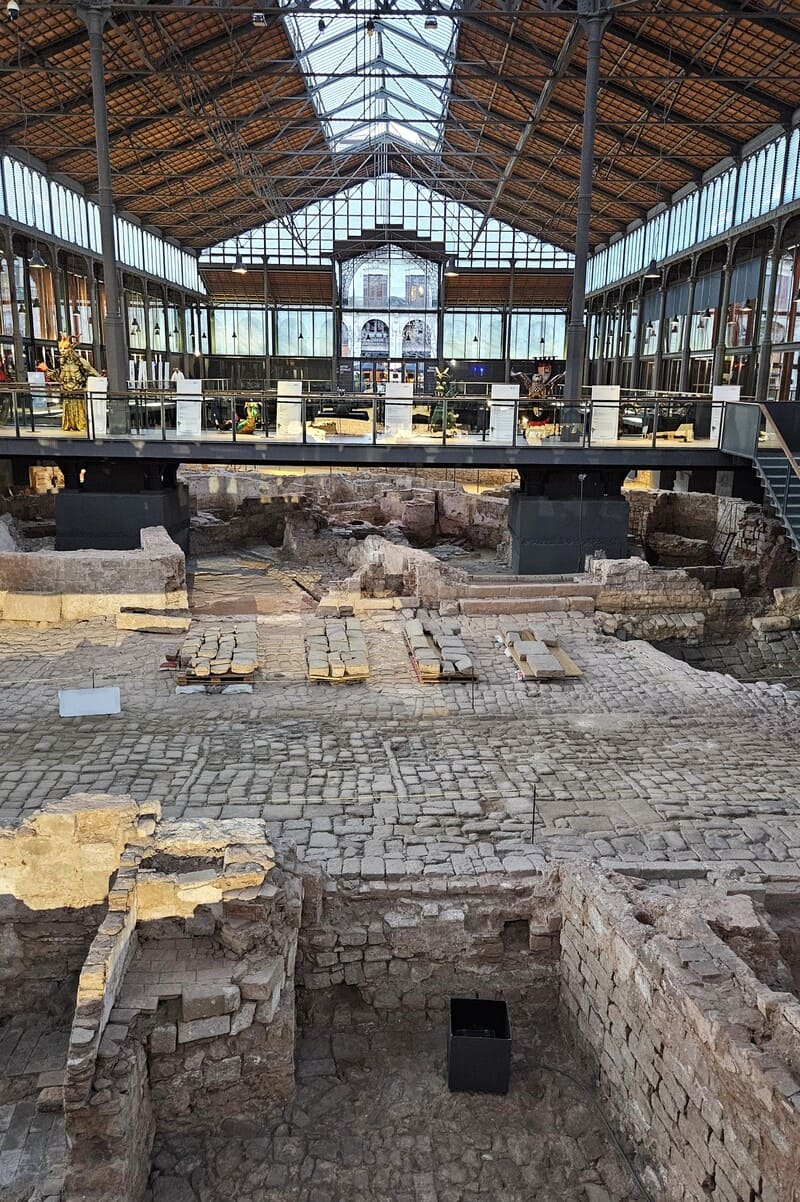
This building was Barcelona’s main wholesale market from 1876 until the 1970s.
When it was later renovated, archaeologists found the remarkably preserved remains of an entire 18th-century neighbourhood underneath.
That neighbourhood was destroyed after the 1714 siege, to make way for the military Ciutadella.
You can now walk above those excavated streets and house foundations while exhibitions explain the history layer by layer.
Entry tiers range from the archaeological site alone to guided visits with the permanent exhibition. Check the official site for current options.
18) Brunells
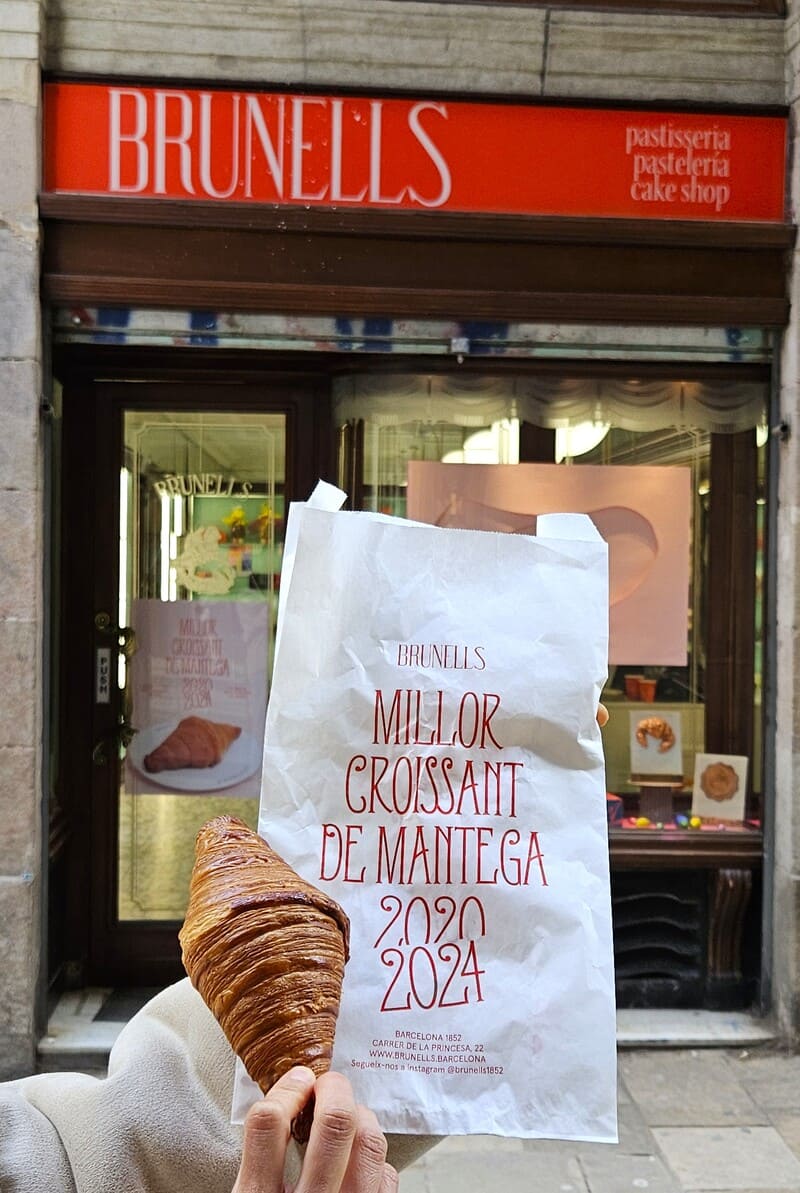
Founded in 1852 on Carrer de la Princesa, Brunells is one of El Born’s oldest pastry shops.
It’s won Spain’s award for best artisan butter croissant twice, in 2020 and again in 2024.
The winning croissant is baked straight, not curved. The pastry chefs there believe curving the dough damages its texture.
Order one fresh with a specialty coffee and you’ll understand the fuss.
19) Mercat de Santa Caterina
Just north of El Born in the neighbouring Sant Pere district, this was Barcelona’s first covered market, opened in 1848.
In 2005, architects Enric Miralles and Benedetta Tagliabue gave it a striking wave-shaped roof made of more than 300,000 colourful ceramic tiles.
Underneath, the market still functions as a working food hall.
A section near the back preserves excavated remains of the medieval convent that once stood on the site.
Less touristy than the city’s more famous market, and worth the short walk.
20) Carrer de l’Argenteria
Once the street of the city’s silversmiths, Carrer de l’Argenteria is now lined with small cafes and shops.
It makes a natural walking route between the Gothic Quarter and Santa Maria del Mar.
It’s not a destination street on its own. But it’s the kind of connective tissue that makes wandering El Born rewarding.
Take it slow rather than treating it as a shortcut.
21) El Xampanyet
A neighbourhood institution for cava and tapas.
The kind of bar where you stand at the counter, order a glass of house cava, and pair it with anchovies or a plate of cheese.
It gets loud and crowded fast, especially in the evening. That’s part of the charm.
Go early if you want a spot at the bar rather than waiting by the door.
22) The leafy squares
El Born has several small, tree-shaded squares built for sitting rather than sightseeing.
Plaça de Sant Pere, Plaça de la Ciutat de Barcelona and Plaça de Sant Agustí Vell all offer a bench, some shade and a chance to watch the neighbourhood go about its day.
None of them are must-see landmarks.
But stringing a few together into your walking route breaks up the sightseeing with the kind of unhurried pause this neighbourhood is actually built for.
23) 7 Portes
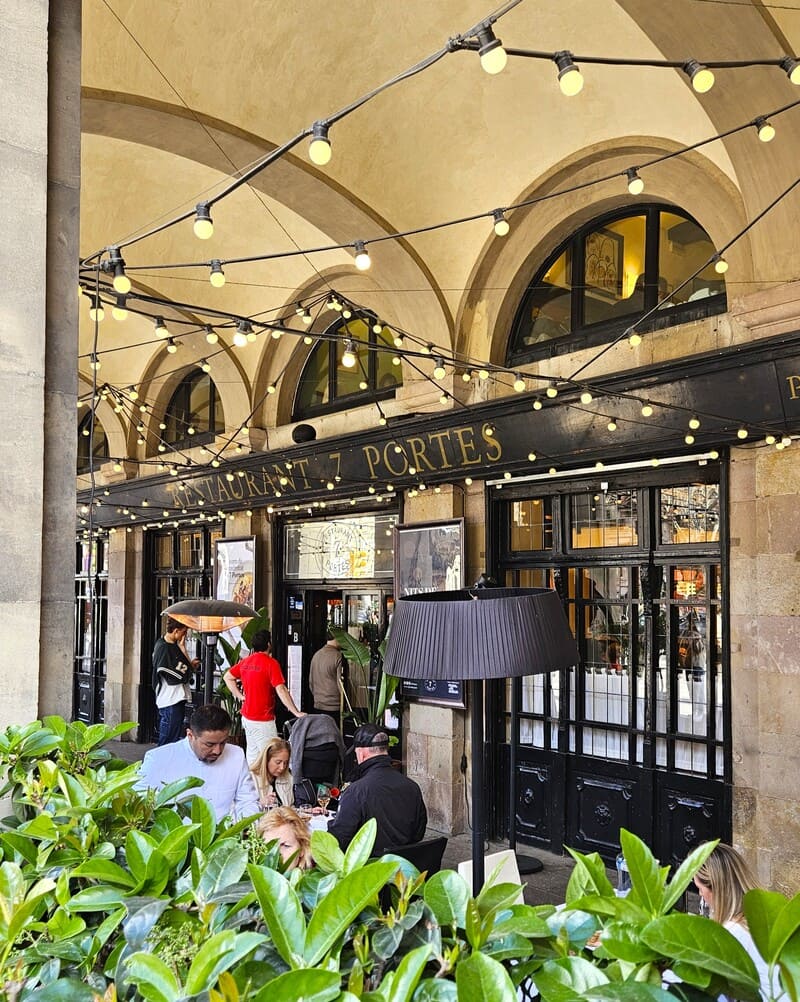
Opened in 1836 as the Cafè de les 7 Portes under the arcades of the Porxos d’en Xifré, this is one of Barcelona’s oldest working restaurants.
It’s famous above all for paella.
Its dining rooms have hosted everyone from Picasso to Miró over the decades.
It’s a large, formal place with white tablecloths and bow-tied waiters. Suits a proper sit-down meal rather than a quick bite.
Reserve ahead, especially for dinner.
24) Estació de França
On El Born’s southern edge sits this grand 1929 train station.
Built in the Modernista-adjacent style of its era, with an iron-and-glass roof that still impresses even if you’re not catching a train.
It’s a good closing stop on a walking day. It also marks the natural border between El Born and the waterfront.
Step inside even briefly to see the scale of the old departure hall.
Where to go next
If El Born is where you started your Barcelona trip, it’s worth building the rest of your first days around it properly.
I put together a full rundown of what’s genuinely worth doing when you’re new to the city, not just the obvious stops: everything I’d tell a first-timer to do in Barcelona.
And before you lock in the rest of your itinerary, read this one too.
It’s the list of mistakes I watch visitors make over and over in their first three days here, and catching them early saves real time and money: the mistakes to avoid in your first three days in Barcelona.