Montserrat: My Complete Guide
By Dorian · Updated September 1, 2026
Montserrat gets sold as “the mountain near Barcelona,” which barely covers it.
It’s a jagged, oddly-shaped peak. A working Benedictine monastery. One of the most venerated religious sites in Spain. And a genuinely good hiking destination, all on the same afternoon out.
Here’s everything I’d want you to know before you go.
What Montserrat actually is
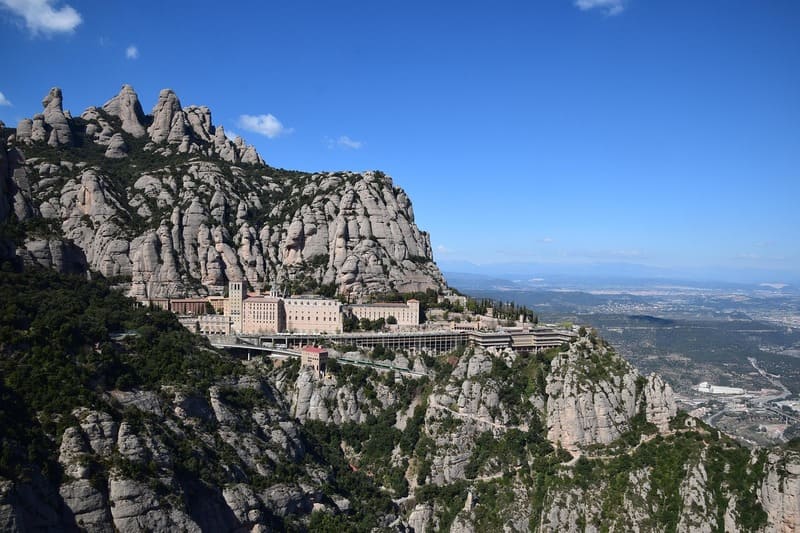
Montserrat means “serrated mountain” in Catalan.
One look at its strange, rounded rock towers explains the name. It’s not volcanic, and it’s not granite either. It’s conglomerate rock, millions of years of sediment cemented together, then slowly carved by erosion into these unusual shapes.
The monastery itself, Santa Maria de Montserrat, traces back to 1025, built beside a chapel that had already existed for over a century.
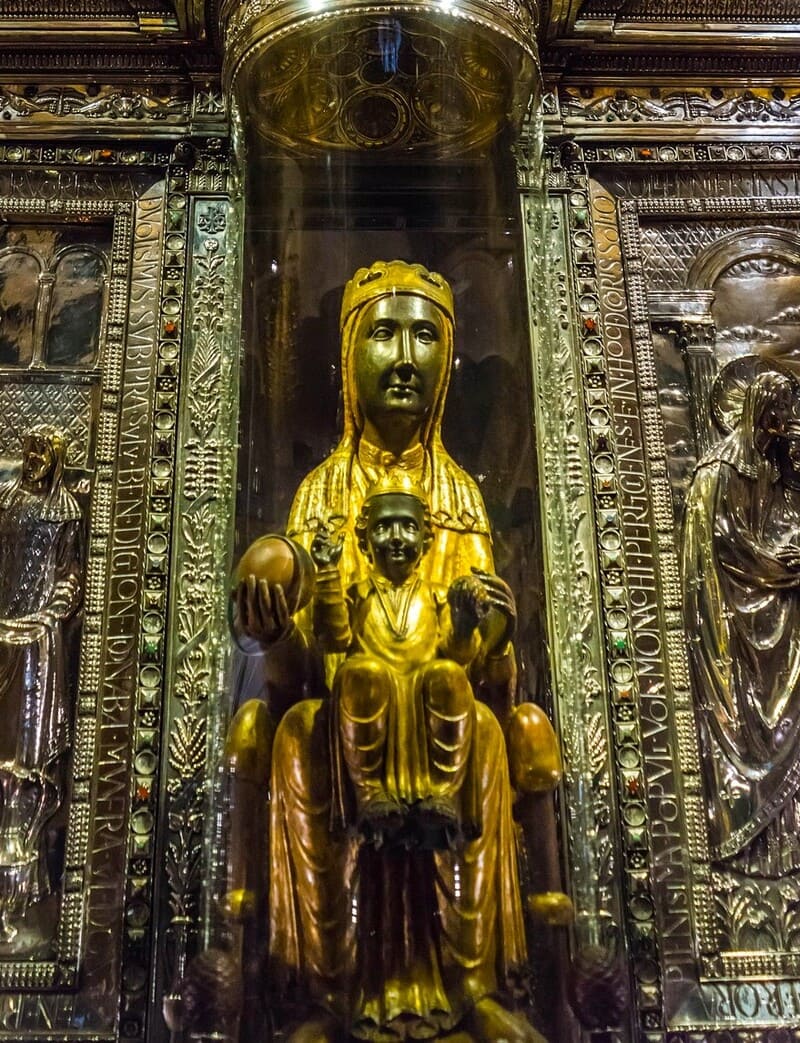
According to legend, shepherds discovered a statue of the Virgin Mary in a cave on the mountain in 880, guided by lights and music, after it had been hidden there during an earlier invasion. When people tried to move the statue elsewhere, it supposedly became too heavy to lift, taken as a sign it was meant to stay.
That statue, La Moreneta, “the little dark-skinned one,” has remained at Montserrat ever since. It’s now the patron saint of Catalonia.
A mountain with a long memory
Montserrat’s pull isn’t just medieval legend, it’s shaped centuries of real history too.
In 1522, a wounded soldier named Ignatius of Loyola made a pilgrimage here, laid down his sword at the altar, and set off on the path that would eventually lead him to found the Jesuits. His night of prayer at Montserrat is often cited as the real turning point in his life.
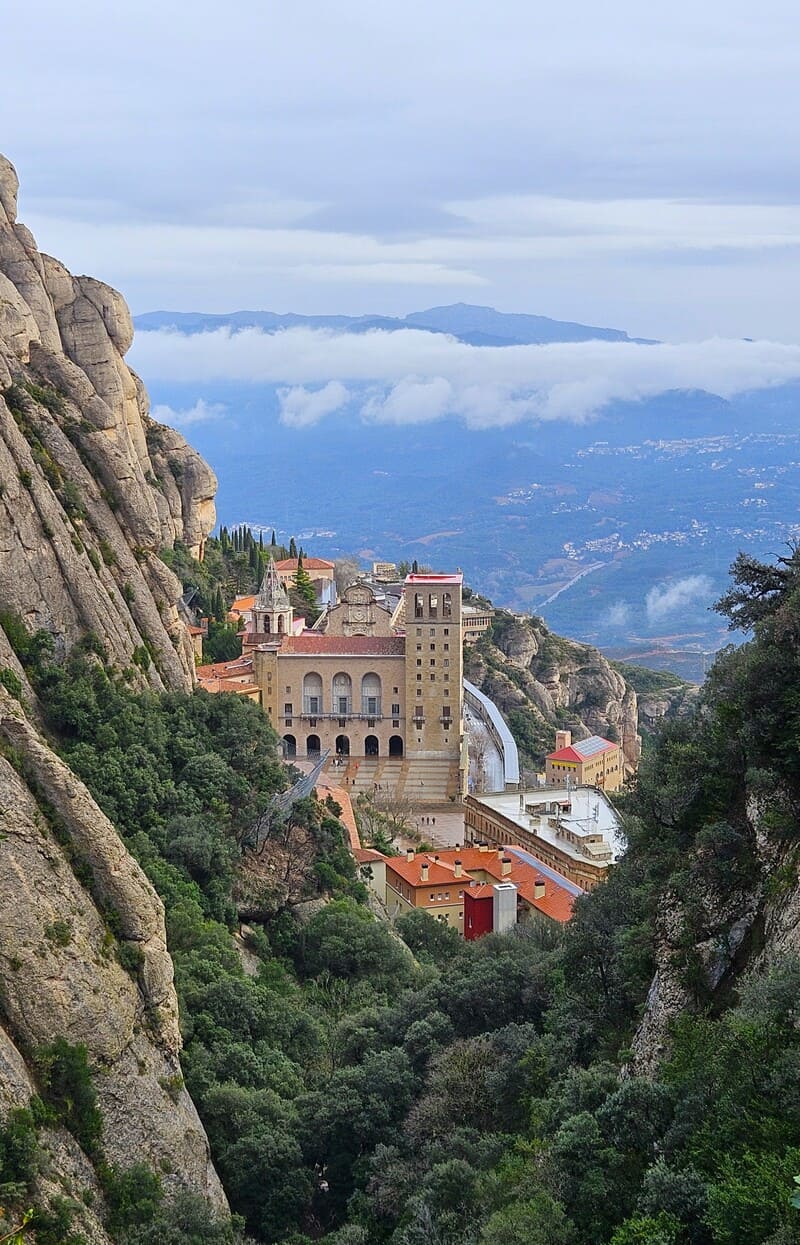
The monastery hasn’t always stood untouched, either. It was largely destroyed in 1811, during the Napoleonic Wars, when French troops looted and burned much of the complex.
What stands today was almost entirely rebuilt afterward, which is worth knowing next time someone tells you a building “has always looked like this.”

Getting there
The standard route is the FGC R5 train from Plaça Espanya, about an hour, followed by either a cable car or a rack railway up the final stretch.
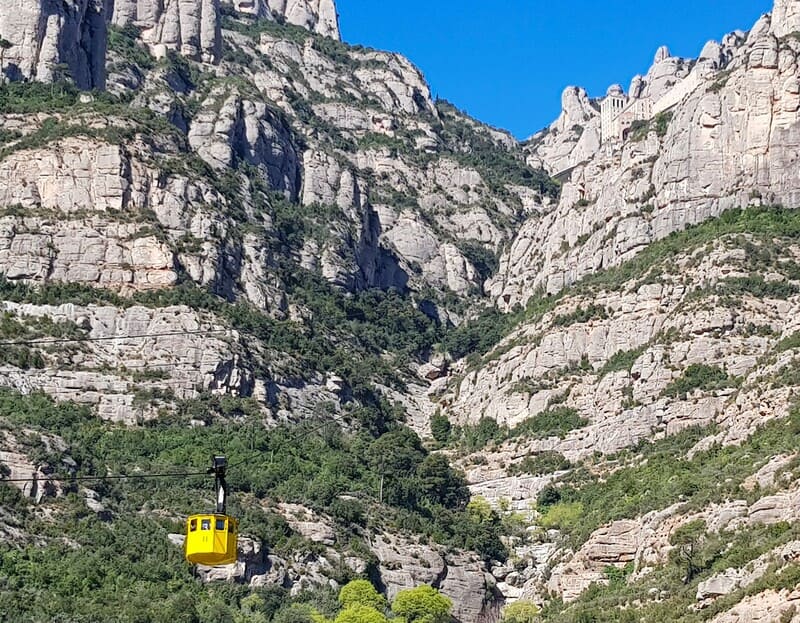
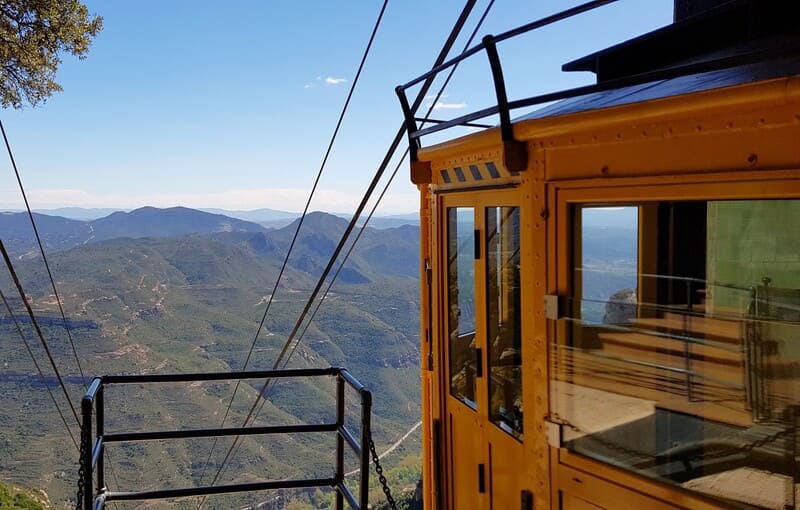
The Aeri de Montserrat cable car is the faster, more dramatic option. Open-air, sweeping views, about 5 minutes. It also carries fewer passengers per trip, so lines build fast at busy times.
The Cremallera, a cog railway with proper seats, takes 15 to 20 minutes. It runs more frequently and is the better choice if heights aren’t your thing, or if you’re traveling with kids.
One thing to know either way: whichever you pick applies to both your ascent and your return. Tickets don’t let you mix and match on the same day.
Tickets
A few ticket combinations exist, and it’s worth picking the right one rather than buying pieces separately.
Trans Montserrat bundles the round-trip metro, the train, your choice of cable car or rack railway, both mountain funiculars, and basilica entry. Everything you need for a solid half-day visit.
Tot Montserrat adds the museum and a buffet lunch on top of that. Worth it for a full day rather than a quick visit.
Both run roughly €50 to €70 depending on season and inclusions. If you’d rather book pieces separately, the Cremallera alone runs around €15 round trip, and the cable car about the same.
For timing, think of it as two versions of the same trip. A half-day visit, door to door around 4 to 5 hours, comfortably covers the basilica, the Black Madonna, the main square, and the short walk to Creu de Sant Miquel. A full day, closer to 7 to 8 hours, gives you room to add the museum, a longer hike toward Sant Joan or Santa Cova, and lunch on the mountain rather than rushing back for it in Barcelona.
Best time to visit
Spring (March to May) and fall (September to November) are the sweet spot, mild temperatures, clearer skies, and noticeably thinner crowds than summer.
Summer brings the best odds of a clear, warm day, but also the most visitors, July is the warmest month on the mountain. Winter is quieter and often strikingly peaceful, but it’s colder and windier up here than in Barcelona, and the days are shorter, so you’ll want to start earlier if you’re going between December and February.
Whatever season, the single best move is arriving early. The mountain is noticeably calmer between 7:30 and 10am, before the day-trip crowds from Barcelona start arriving.
The main square
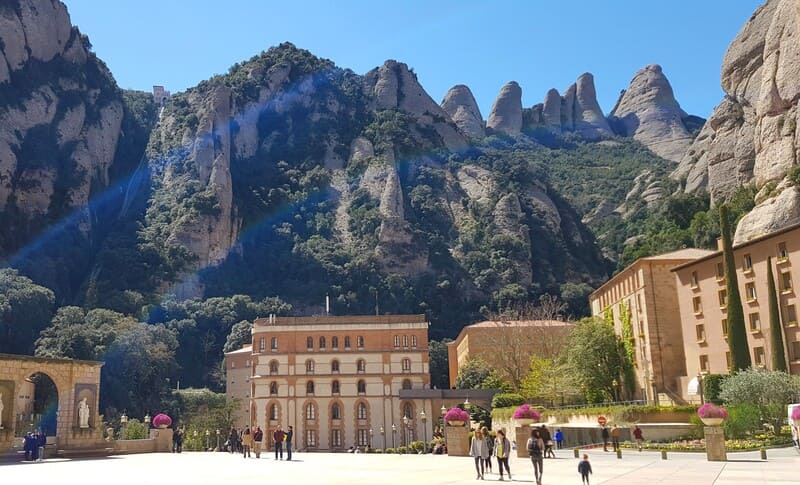
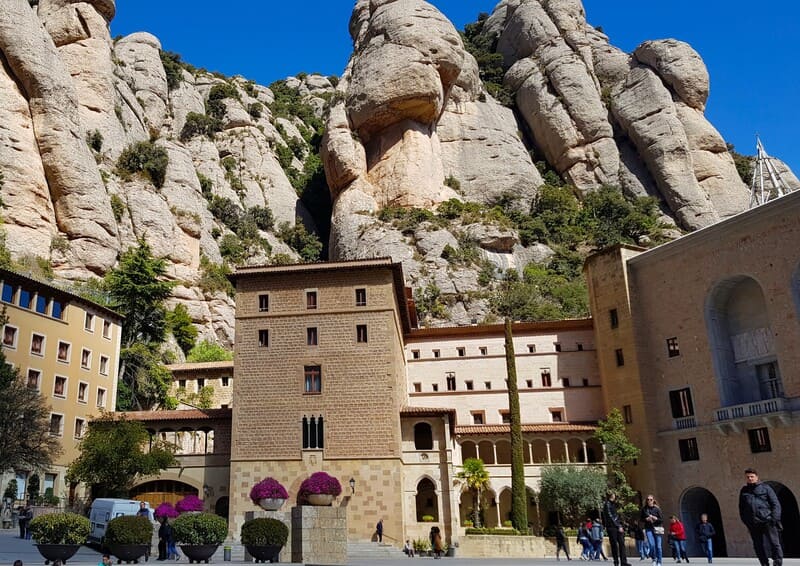
Before you go inside, spend a minute in Plaça de Santa Maria, the square that fronts the monastery.
It’s actually three connected squares linked by steps, framed on one side by five stone arches, each with a carving of one of the mountain’s founding saints between them. To the left sits the Gothic Cloister, dating to 1476, its columns carved with plants, animals, and, if you look closely, a small image of the mountain itself.
It’s worth pausing here before the crowds inside the basilica pull your attention elsewhere.
The Basilica and the Black Madonna
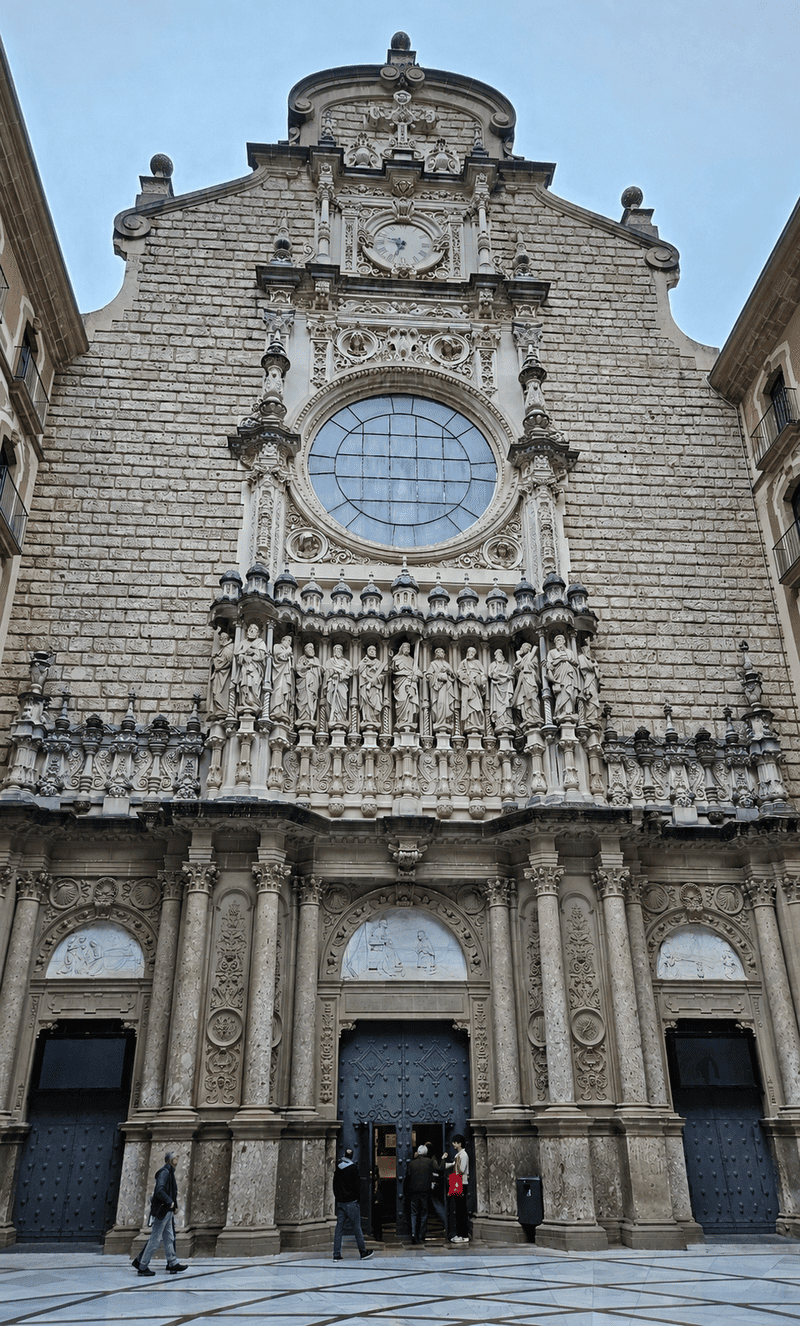
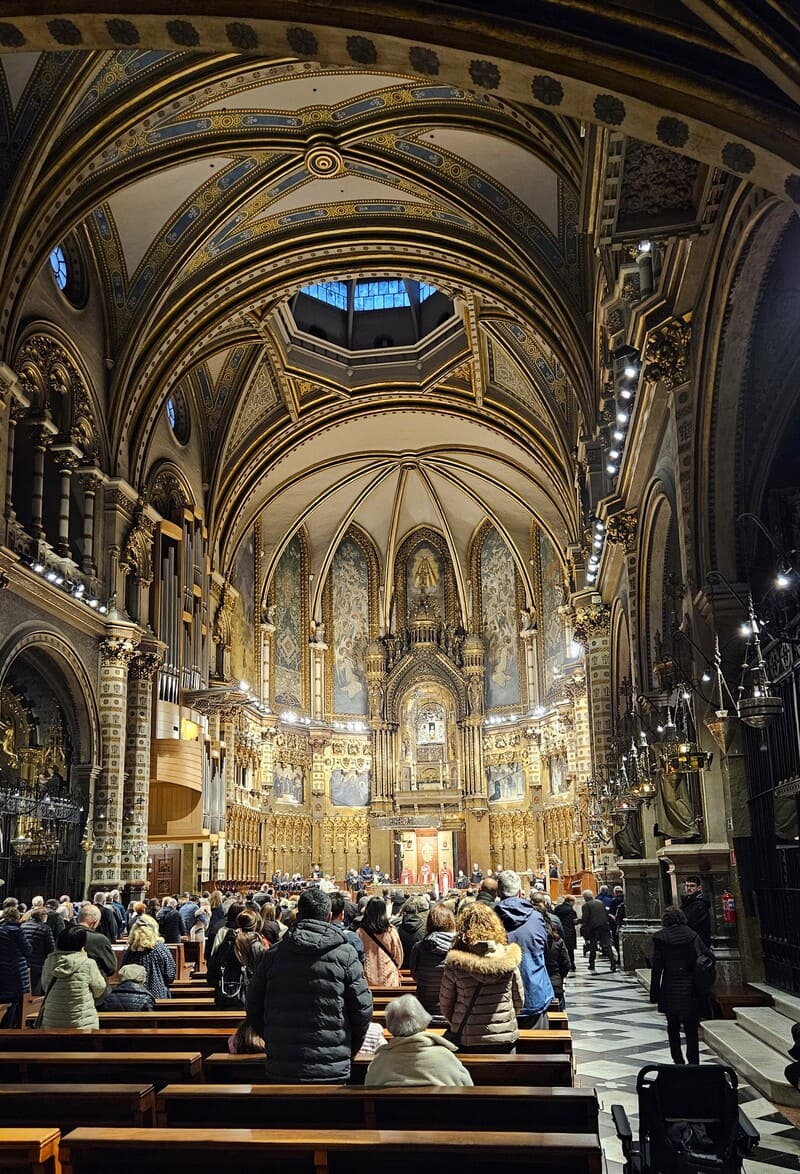
This is the heart of the visit for most people.
Inside the basilica, a raised walkway leads visitors behind the altar to a small chamber where La Moreneta sits. You’ll have about 30 seconds in front of her before moving along, brief, but genuinely moving even if you’re not particularly religious.
The way out isn’t quite as straightforward as the way in. Most visitors leave through the Camí de l’Ave Maria, a narrow passage lined with rock niches where hundreds of candles burn at once, lit by pilgrims leaving prayers, thanks, or requests behind. It’s a quieter, more affecting moment than the queue itself, worth slowing down for rather than walking straight through.
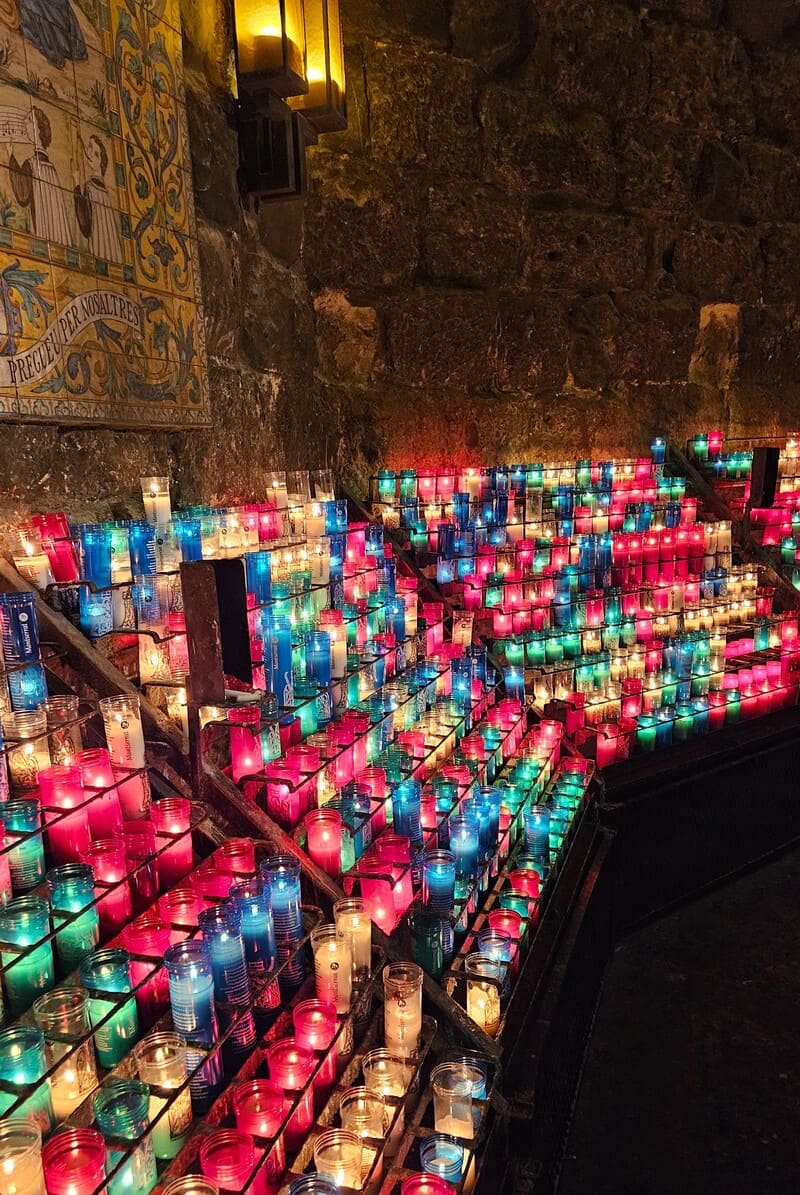
Photography isn’t allowed in her chamber, and shoulders covered is appreciated once you’re inside the basilica itself.
If you can time your visit around 1pm, the Escolania, one of the oldest boys’ choirs in Europe, dating to the 13th century, sings most days, usually the Salve Regina and the Virolai, the hymn of Montserrat. The choir does pause at points during the year, so check the schedule before planning around it.
The museum
Easy to skip. Worth doing if you have the time.
The building itself was designed in 1929 by Josep Puig i Cadafalch, the same architect behind Casa Amatller and CaixaForum in Barcelona, so it’s a small piece of Modernisme in its own right, tucked into a mountain monastery of all places.
Inside, the collection is genuinely surprising for the setting. Old Masters like El Greco and Caravaggio share space with early works by Picasso and Dalí, alongside French Impressionist pieces by Monet and Degas, a Byzantine and Slavic icon collection, and an archaeology section covering Mesopotamia, Egypt, and the Holy Land. None of it feels like it belongs on top of a mountain, and that’s exactly what makes it worth the detour.
What the monks make
Montserrat isn’t only a place of prayer, it’s also been a working, self-sustaining community for centuries.
The monastery has run its own printing press since the late 15th century, among the oldest in continuous operation anywhere in the world. Today, the shops around the monastery sell what the monks and local producers still make by hand: honey, mató cheese, fig cakes, and herbal liqueurs distilled from mountain plants.
It’s a small, easy way to bring home something that actually came from the mountain rather than a generic souvenir shelf.
Hiking and the funiculars
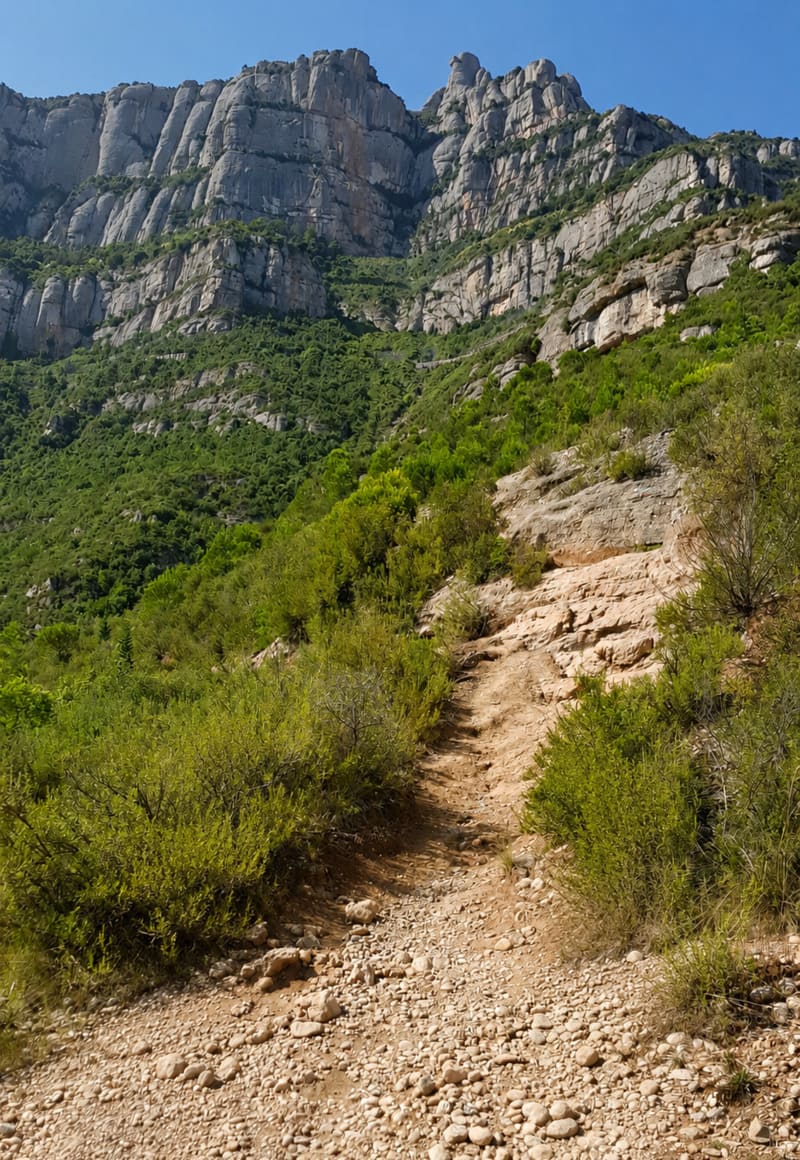
Beyond the monastery buildings, Montserrat is genuinely good hiking territory, with trails branching out across the ridgeline at varying difficulty levels.
The single easiest walk is to Creu de Sant Miquel, Saint Michael’s Cross, about 20 minutes each way on a shaded, gently uphill path starting right from the monastery grounds. This was the spot where pilgrims once got their first glimpse of the monastery, back when everyone arrived on foot. The payoff at the top is a sweeping view back over the monastery itself and the valley below, and on a clear day, the Pyrenees in the distance.
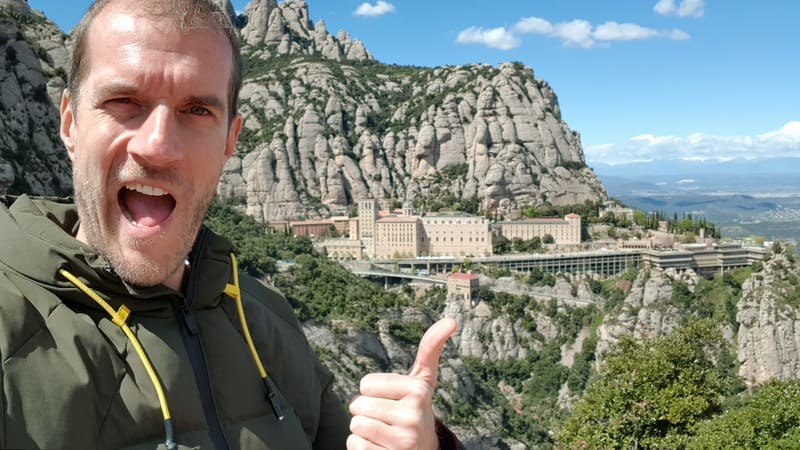
The Funicular de Sant Joan climbs toward Sant Jeroni, the highest peak in the massif at just over 4,000 feet. On a clear day, the views stretch out toward the Pyrenees in one direction and, occasionally, as far as Mallorca in the other.
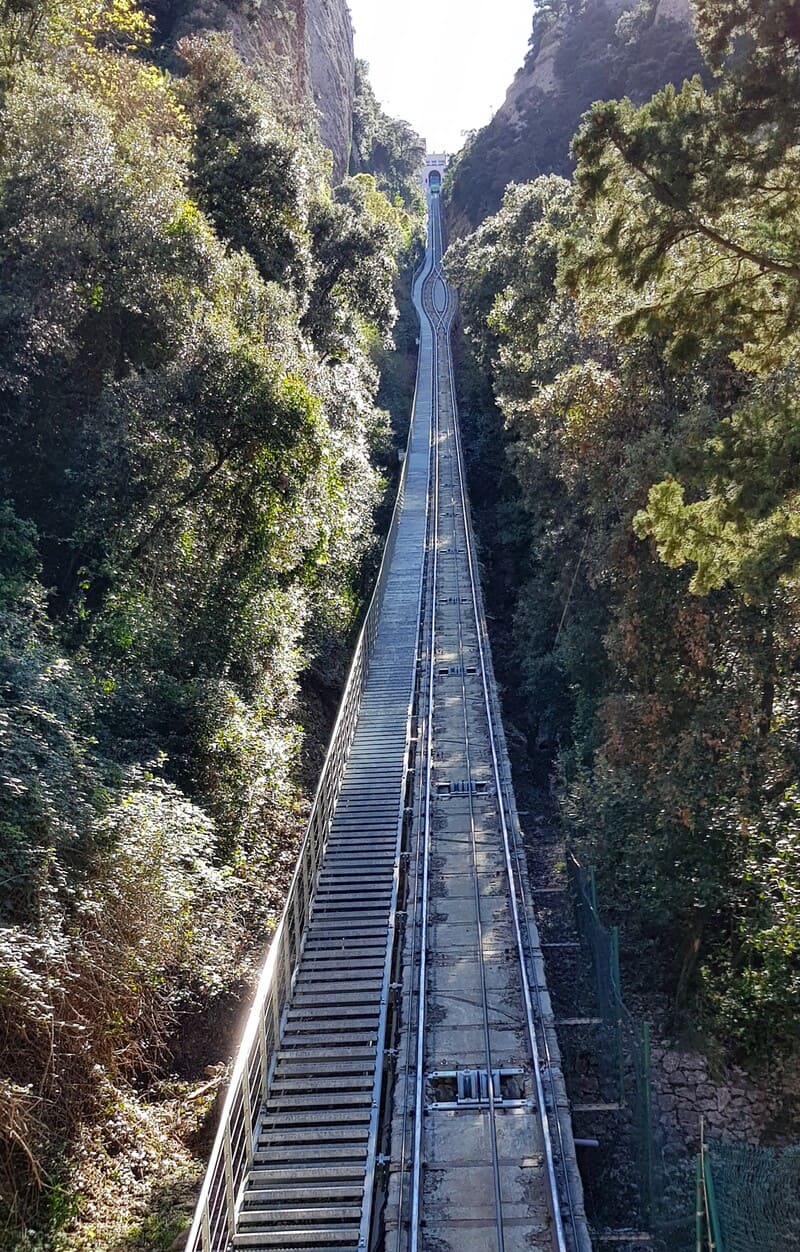
The Funicular de Santa Cova heads the opposite way, down toward the chapel built at the spot where the Black Madonna was supposedly found. It doesn’t run every day, so check before counting on it.
If you only have time for one short walk, the path down to Santa Cova and back is manageable, and gives a quieter, more reflective side of the mountain than the busy monastery esplanade above.
A few practical things to know
The mountain sits over 4,000 feet up, so it’s noticeably cooler and windier than Barcelona, even in summer. Bring a layer, even if it feels unnecessary at sea level.
Weekends and holidays get busy, both with tourists and with pilgrims, since this is still an active religious site, not just an attraction. If crowds bother you, aim for a weekday and the first train out.
Food on the mountain is fine, not great, the main restaurant is pricey and often full, so you can lose more time waiting for a table than you’d like. If the weather’s good, packing a simple picnic is the better move, several of the viewpoints along the hiking trails have stone benches practically built for it.
And book ahead. Tickets to the basilica and Black Madonna do sell out, especially in high season, and there’s no upside to arriving without one.
Where to go from here
If a mountaintop monastery scratched an itch for something outside the city, Gaudí actually got there before you. Colònia Güell, his other UNESCO World Heritage site, sits a short train ride from Barcelona and was where he first tested the tilted columns and structural tricks he’d later use at Sagrada Família. I covered it alongside a few other easy train trips out of the city, and it’s a much quieter, more personal stop than Montserrat: The best day trips from Barcelona, no car required.
And if you’re trying to figure out where a day at Montserrat fits into a wider trip without exhausting yourself, I’d read this one before locking in your plans. It’s the pacing I actually recommend, not the version that tries to cram in everything: The perfect 3-day itinerary in Barcelona.