The 9 Best Day Trips from Barcelona (No Car Required)
By Dorian · Updated September 6, 2026
Barcelona’s train and bus network makes it easy to get out of the city for a day without renting a car. Here are nine trips worth the ticket, each reachable on regular public transit.
1. Montserrat
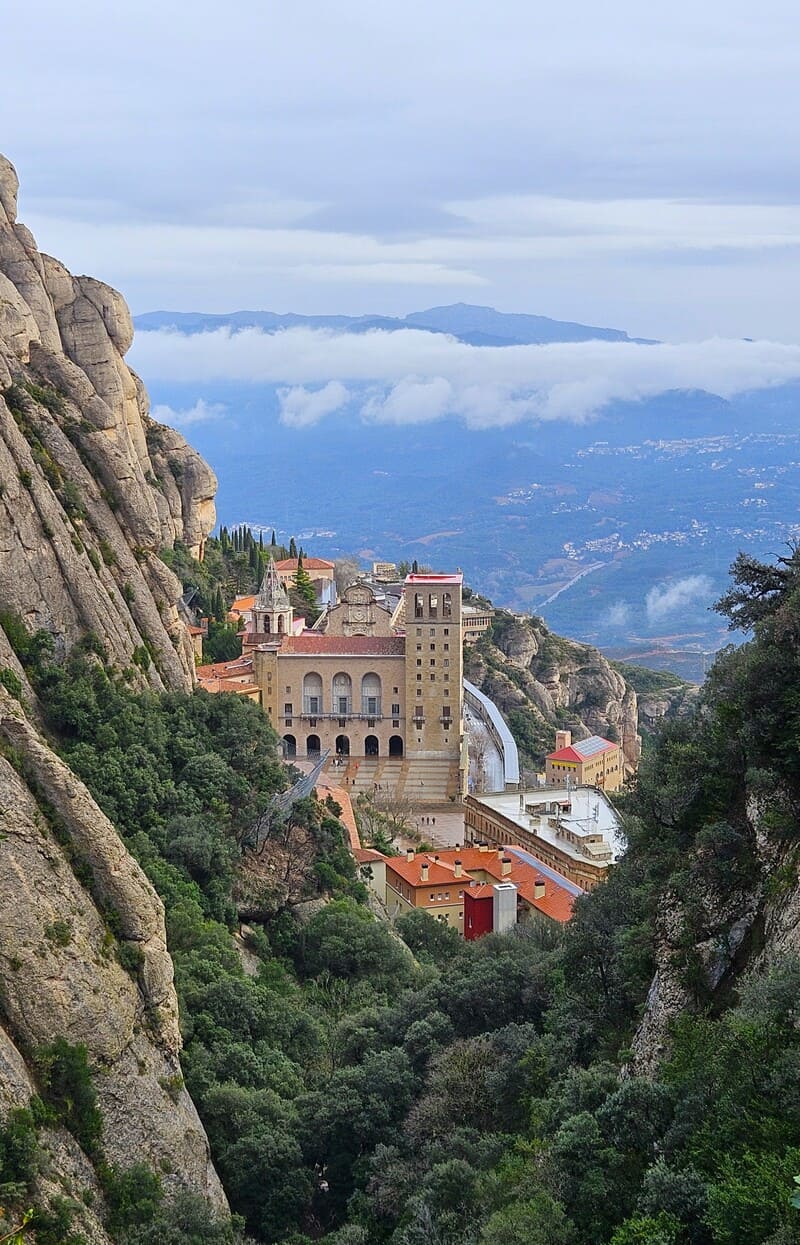
Distance: 30 miles (48 km)
How to go: About 1 hour by FGC train from Plaça Espanya, plus a 15-minute rack railway or 5-minute cable car up the mountain.
A mountain monastery with sweeping views and a famous Black Madonna inside the basilica. The rack railway is the gentler, more scenic option; the cable car is faster but steeper, and offers better views on the way up.
Beyond the monastery itself, the mountain has walking trails and two smaller funiculars leading to quiet chapels and viewpoints. If timing allows, the Montserrat Boys’ Choir, one of Europe’s oldest, sings daily in the basilica, usually around midday. Trains run roughly every hour, seven days a week, so there’s no need to book far ahead.
2. Girona
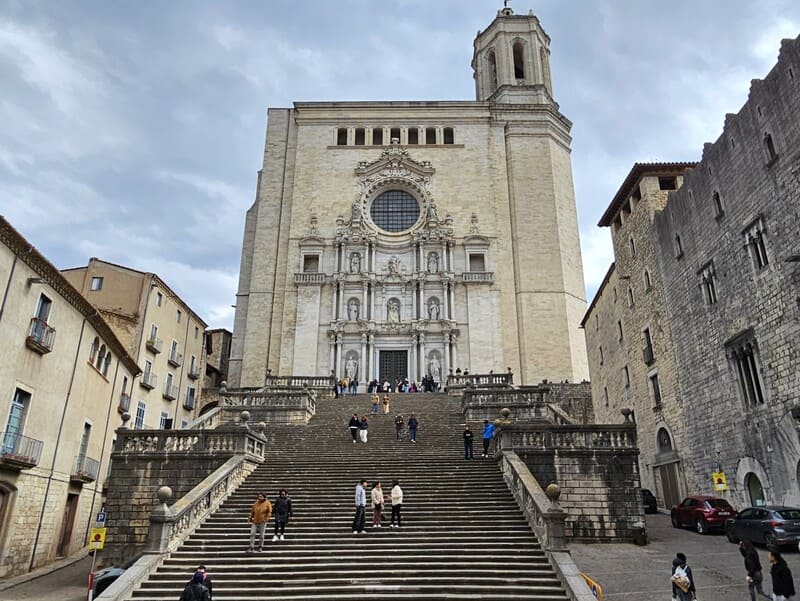
Distance: 62 miles (100 km)
How to go: 40 minutes to 1 hour 15 minutes by train from Barcelona Sants, depending on the service.
A compact medieval old town with a striking cathedral, colorful houses along the Onyar River, and one of Europe’s best-preserved Jewish quarters, known as El Call.
Climb the cathedral’s bell tower for a view over the rooftops, then walk the old city walls, which offer a different vantage point over the same skyline. If you happen to visit in May, the city fills with elaborate flower displays for its annual Temps de Flors festival, transforming courtyards and stairways across the old town.
3. Sitges
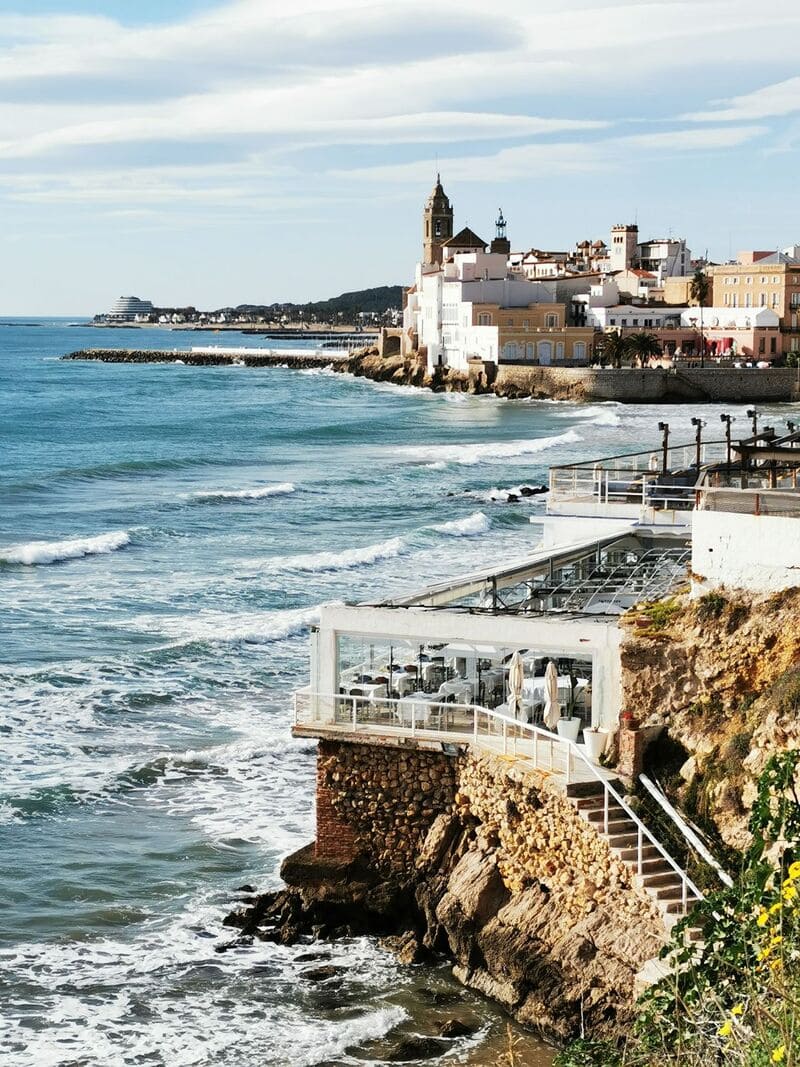
Distance: 22 miles (35 km)
How to go: 35 to 40 minutes by regional train from Barcelona Sants, no advance booking needed.
The easiest coastal escape from the city, with a walkable seafront and a slower pace than Barcelona’s own beaches.
The whitewashed church of Sant Bartomeu i Santa Tecla sits right on the point overlooking the water, one of the most photographed spots on the Catalan coast. Between the beach, a few small museums, and a long lunch by the water, it’s a good choice for a lower-key day.
4. Figueres
Distance: 85 miles (136 km)
How to go: About 55 minutes by high-speed train from Barcelona Sants.
Home to the Dalí Theatre-Museum, designed by the artist himself and built on the ruins of the town’s old theater, complete with a geodesic glass dome and giant egg sculptures along the roofline.
Dalí is buried in a crypt beneath the stage, which adds a strange, fitting layer to a museum that was always meant to feel more like a piece of art than a traditional gallery. Best treated as a focused trip built around the museum, morning train, a few hours inside, a short walk around town, then back, rather than paired with too much else.
5. Tarragona
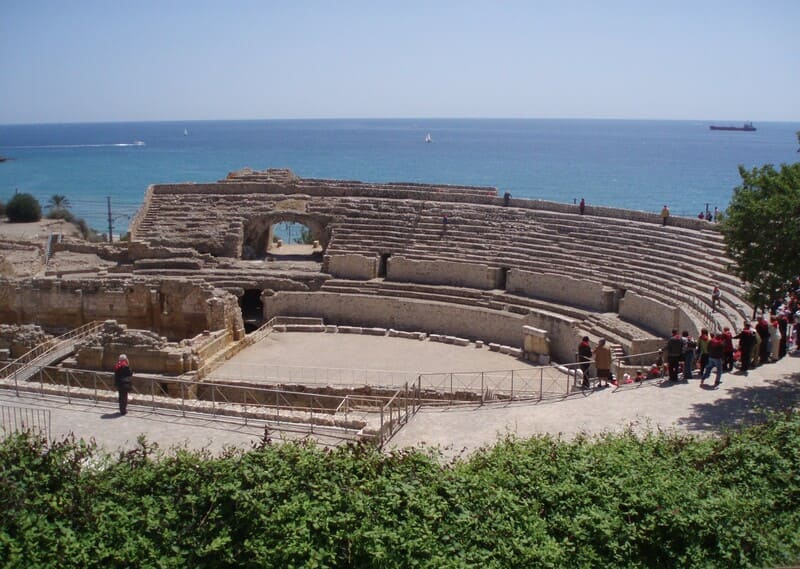
Distance: 60 miles (99 km)
How to go: About 1 hour by train from Barcelona Sants.
Once more important than Barcelona under the Romans, when the city was known as Tarraco. Today it holds a genuinely impressive amphitheater, positioned dramatically above the sea, along with a forum and long stretches of city wall, several of them UNESCO-listed.
Just outside town sits the Pont del Diable, or Devil’s Bridge, a Roman aqueduct still standing after two thousand years. Pair it with a walk through the old town and cathedral, and you’ll have a full, unhurried day without needing to book anything in advance.
6. Sant Sadurní d’Anoia
Distance: 29 miles (47 km)
How to go: About 45 minutes by regional train from Barcelona Sants or Passeig de Gràcia.
The center of Catalonia’s cava-producing region, home to major houses that have been making sparkling wine using the same traditional method as Champagne since the late 19th century.
Several cellars here offer tours and tastings, walking through cool underground caves lined with aging bottles, a good next step for anyone who enjoyed the vermut hour in the city and wants to go deeper into the region’s wine culture.
7. Colònia Güell
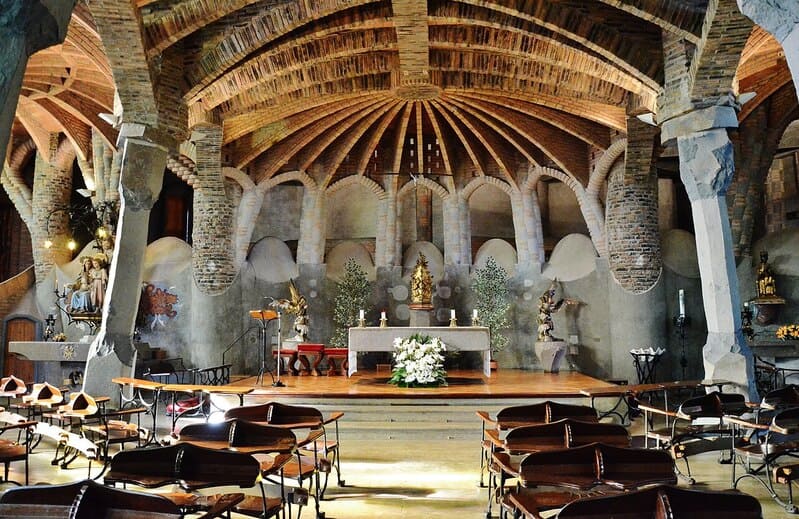
Distance: 14 miles (23 km)
How to go: About 20 to 25 minutes by FGC train from Plaça Espanya.
Gaudí’s other UNESCO World Heritage site, an unfinished crypt that served as his testing ground for the tilted columns and catenary arches he later used at Sagrada Família.
The crypt sits within a small planned workers’ village, built for the textile factory that once employed the community here, adding a layer of social history alongside the architecture. It draws far fewer visitors than anything in the city, so there’s rarely a crowd to work around.
8. Tossa de Mar
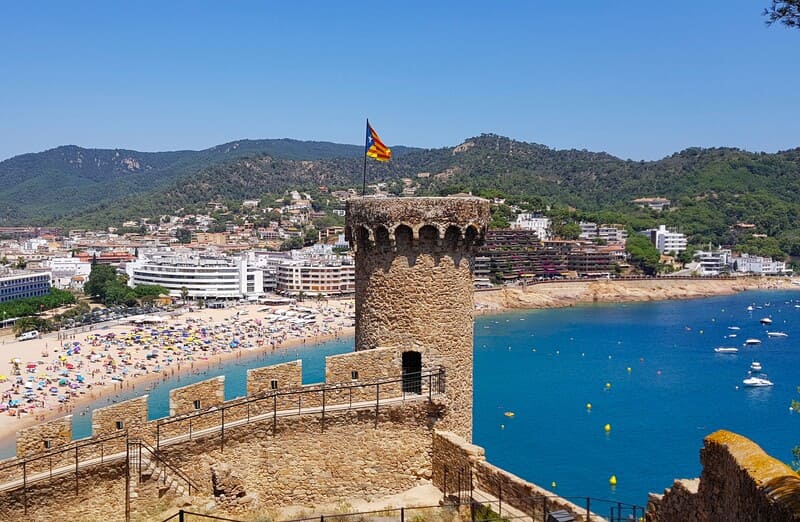
Distance: 53 miles (85 km)
How to go: About 1 hour 20 minutes by direct bus from Barcelona’s Estació del Nord.
A genuinely beautiful stretch of Costa Brava coastline, with medieval walls rising directly above the beach and a small old town, known as the Vila Vella, tucked below them.
Inside the walls, a bronze statue commemorates Ava Gardner, who filmed “Pandora and the Flying Dutchman” here in 1950 and reportedly fell in love with the town on sight. Walk the ramparts, wander the old streets, then find a spot along the coastal path for the view before heading back.
9. Besalú
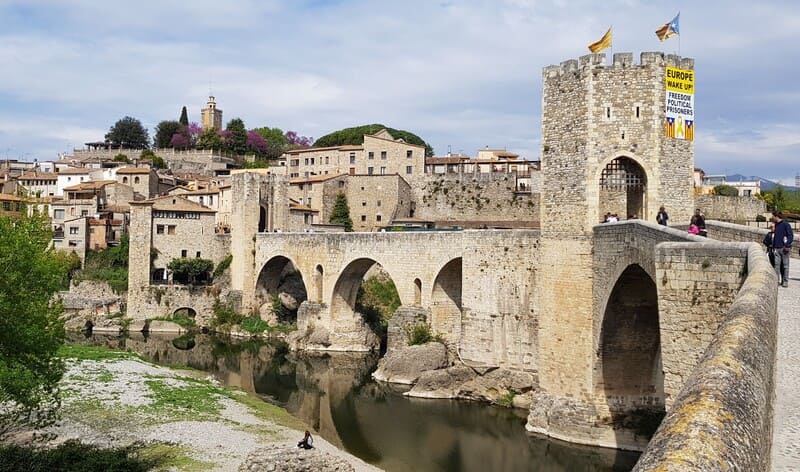
Distance: 81 miles (130 km)
How to go: About 2 hours by direct bus from Barcelona, or train to Girona plus a connecting local bus.
A small medieval village built around a dramatic, angled stone bridge, one of the most photographed spots in this part of Catalonia. The bridge’s zigzag layout was originally designed as a defensive feature, meant to slow down anyone trying to cross by force.
Beneath the streets sits a 12th-century mikveh, a Jewish ritual bath and one of only a handful preserved anywhere in Europe, a quiet reminder of the Sephardic community that once thrived here. It’s a slower, more low-key stop than the others on this list, best paired mentally with an unhurried afternoon rather than a packed itinerary.
Where to go next
If Colònia Güell caught your eye on this list, it’s worth knowing it’s not the only spot in Catalonia that draws a fraction of the crowds you’ll find in the city center. I’ve rounded up more of these in 14 hidden corners of Barcelona worth seeking out, including another look at what makes that unfinished crypt worth the short trip out.
And if you’re still working out how to fit one or two of these trips around your time in the city itself, I’d start with the perfect 3-day itinerary in Barcelona. It’s built to leave room for exactly this kind of day away, without you feeling like you’re racing back for the next thing on the list.