Barcelona’s Best Modernisme Buildings (And Why They’re Not All Gaudí)
By Dorian · Updated September 1, 2026
Say “Modernisme” in Barcelona and most people picture Gaudí. But Gaudí was one of three great architects competing for the same commissions at the same time, and some of his rivals’ buildings are just as extraordinary, standing in plain sight, mistaken for Gaudí’s work more often than they should be.
1. Casa Batlló
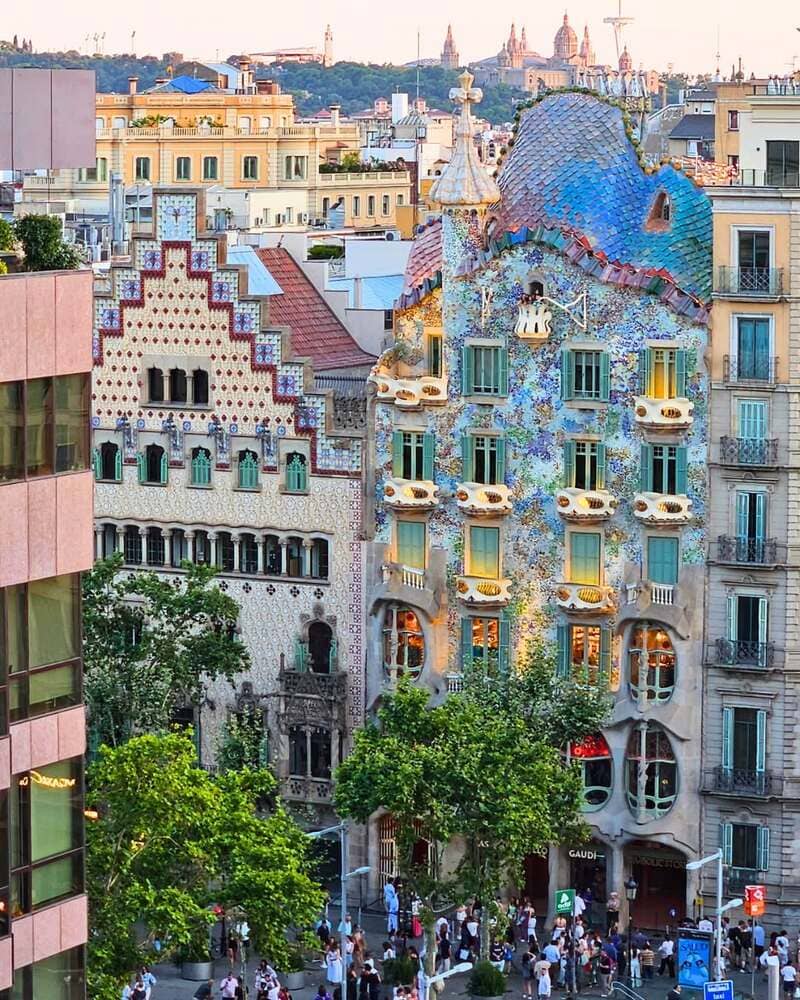
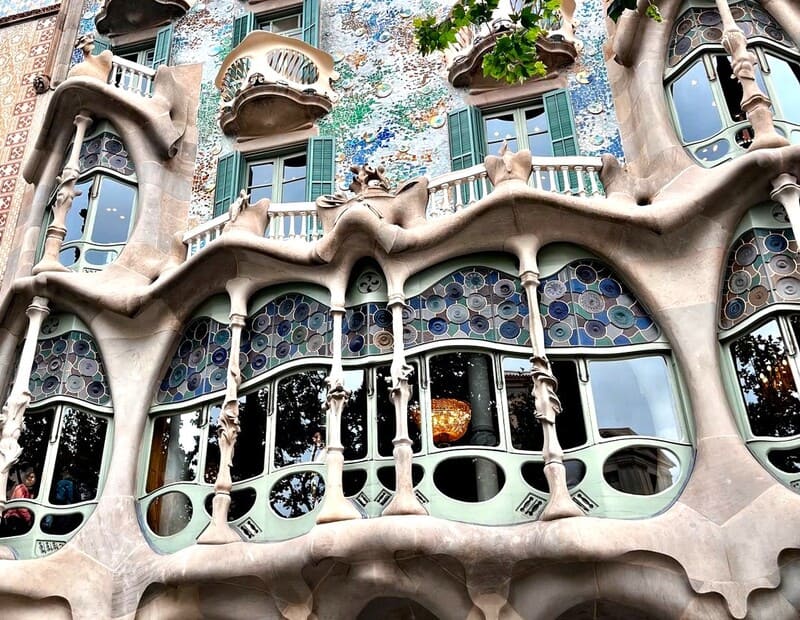
Gaudí’s, and rightfully famous: the dragon-scale roof, the bone-like balconies, the shifting blue-tiled facade.
It anchors this list because it also anchors one of the best stories in Barcelona architecture, which starts right next door.
2. Casa Amatller
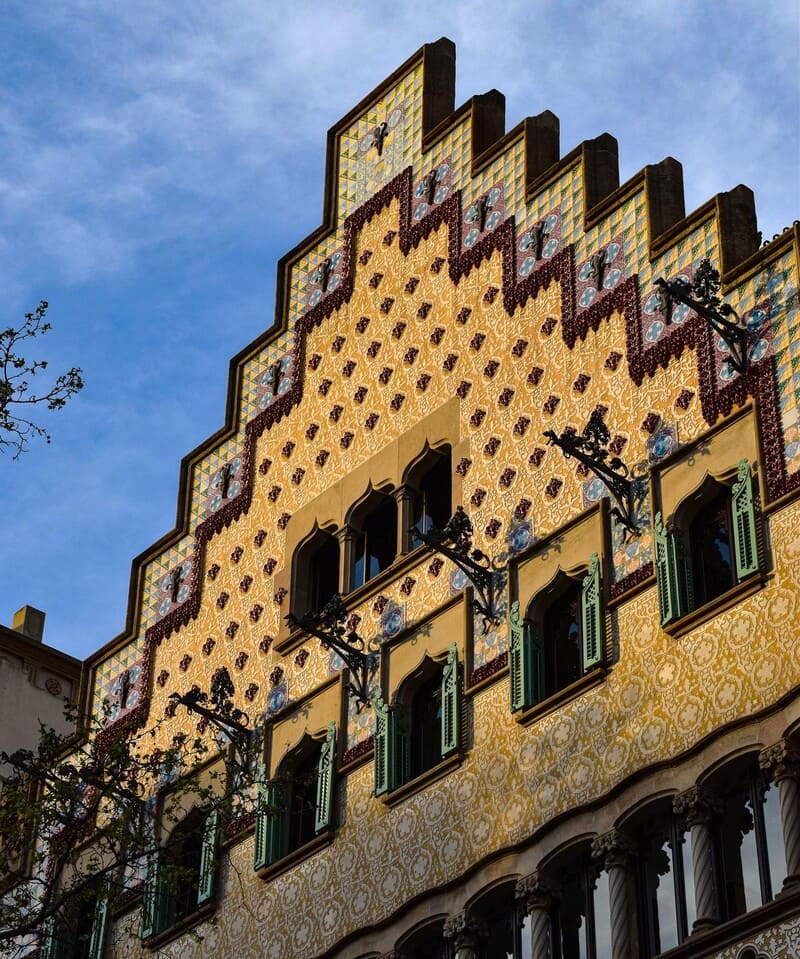
Literally attached to Casa Batlló, designed by Josep Puig i Cadafalch, a stepped Neo-Gothic facade inspired by Dutch gabled houses, commissioned by a wealthy chocolatier.
Together with its neighbors, it forms what locals call the Illa de la Discòrdia, the “Block of Discord,” three architects, three completely different visions, built side by side on purpose, each one trying to outdo the others.
3. Casa Lleó Morera
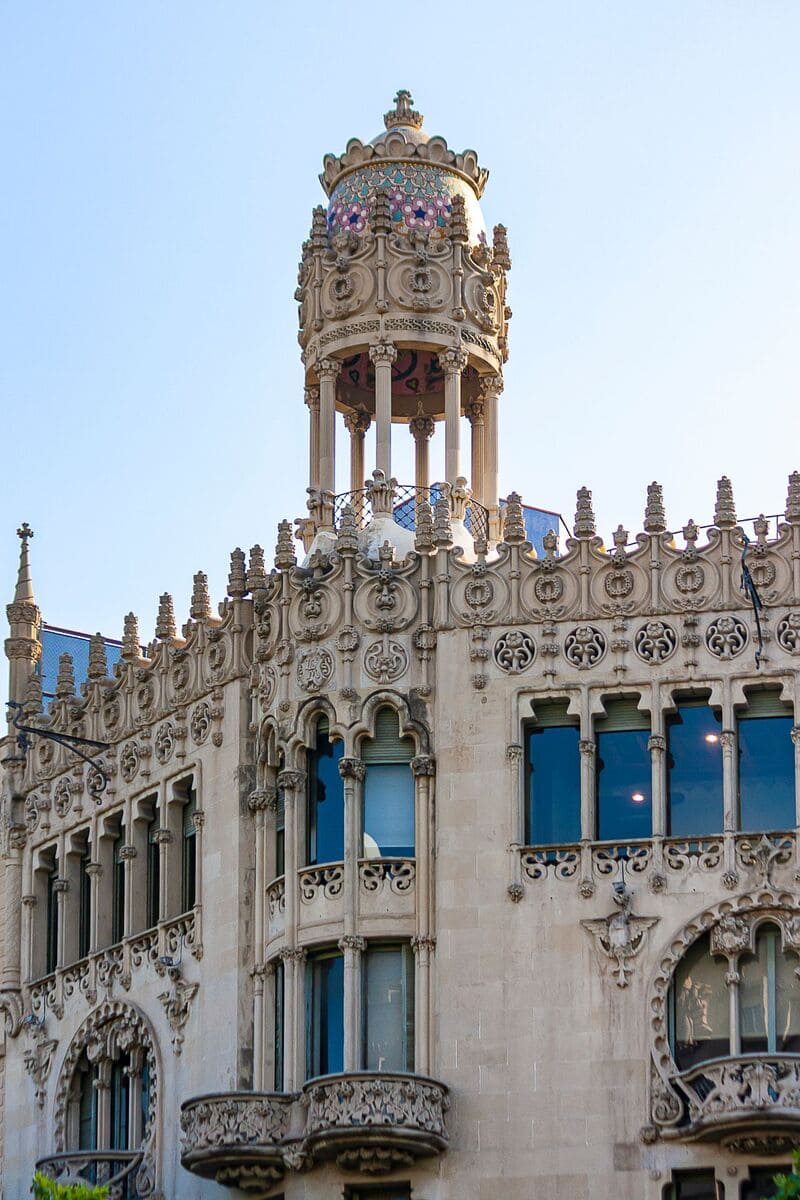
The third building in that same block, designed by Lluís Domènech i Montaner, arguably the most decorated of the three, with allegorical sculptures, floral ceramic work, and a domed corner tower.
It’s the only one of the three that actually won Barcelona’s annual prize for best building the year it was completed. Walk the length of this one block and you’ve seen a genuine architectural argument play out in stone.
4. Palau de la Música Catalana
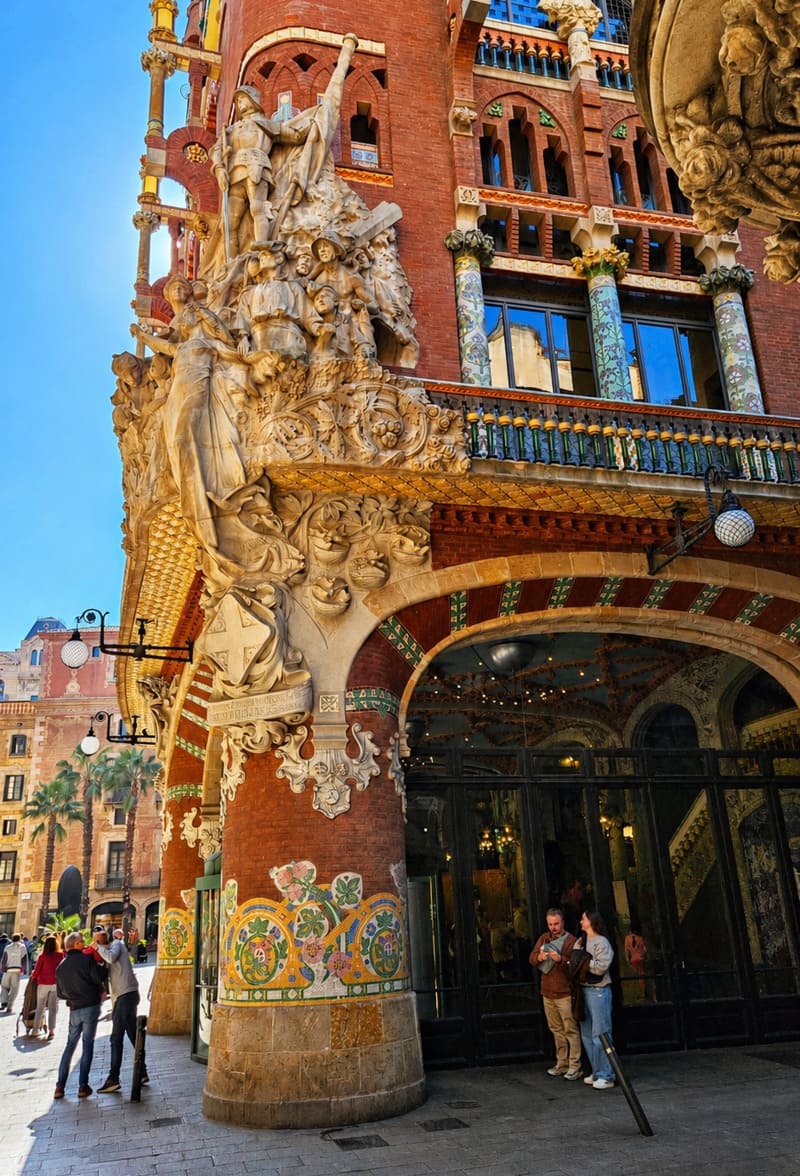
Also Domènech i Montaner, and a UNESCO World Heritage Site in its own right, alongside Gaudí’s works.
The outside is striking.
The inside, a concert hall lit by an enormous stained-glass ceiling that seems to float above the audience, is something else entirely.
5. Hospital de Sant Pau
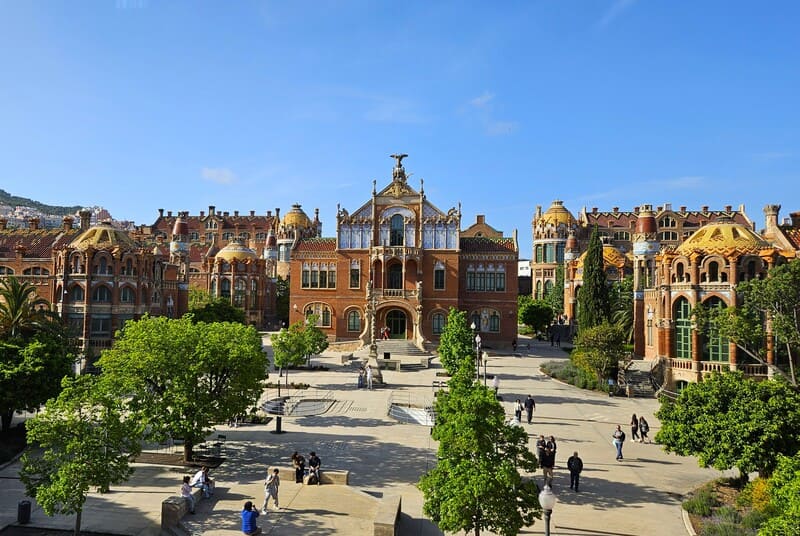
Domènech i Montaner’s other UNESCO-listed masterpiece, a working hospital until 2009, built as a sprawling complex of individually decorated pavilions rather than one large building, on the theory that patients healed faster surrounded by beauty and green space.
It sits a short walk from Sagrada Família and gets skipped constantly in favor of it.
6. La Pedrera (Casa Milà)
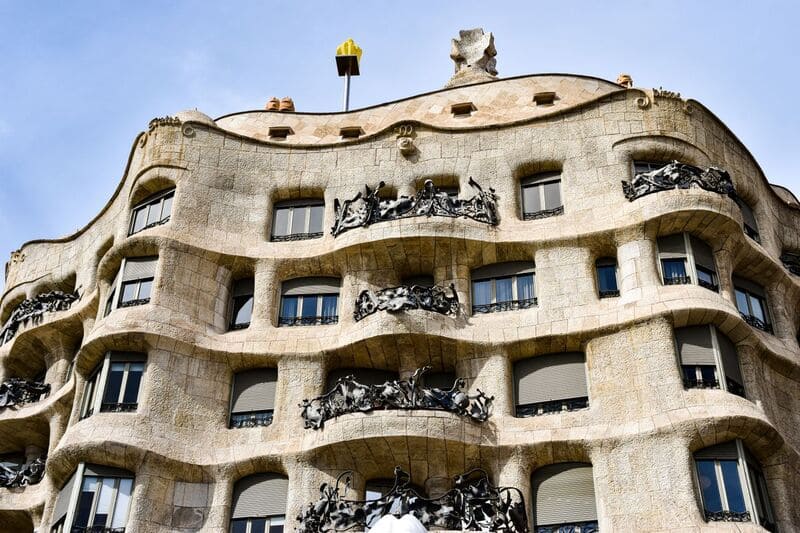
Back to Gaudí, and one of his boldest works, a rippling stone facade with no straight lines anywhere on it, and a rooftop of helmet-shaped chimneys that feels almost otherworldly.
It was mocked when it opened, nicknamed “the quarry” as an insult for looking unfinished. It’s since become one of the most photographed buildings in the city.
7. Casa de les Punxes
Puig i Cadafalch again, and his most castle-like work: six conical towers, exposed brick, and a design inspired by medieval European fortresses like France’s Château de Pierrefonds.
Commissioned to house three sisters from the same family, each with her own section of the building, it’s the only fully detached Modernista building in the Eixample.
8. Palau Güell
An early Gaudí commission, just off La Rambla, built for his most important patron, Eusebi Güell.
Twenty uniquely shaped chimneys cover the rooftop in broken tile mosaic, a technique Gaudí would return to years later at Park Güell. It’s easy to walk past without realizing how significant it was in his development as an architect.
9. CaixaForum (Casaramona)
Puig i Cadafalch’s largest work, originally a textile factory, built with Catalan vaulted ceilings and exposed brick in an industrial take on Modernisme.
It closed within a few years of opening and sat mostly unused for decades before being restored into the art museum it is today, at the base of Montjuïc.
What to read next
If this changed how you’ll look at Passeig de Gràcia next time, here’s where to go next:
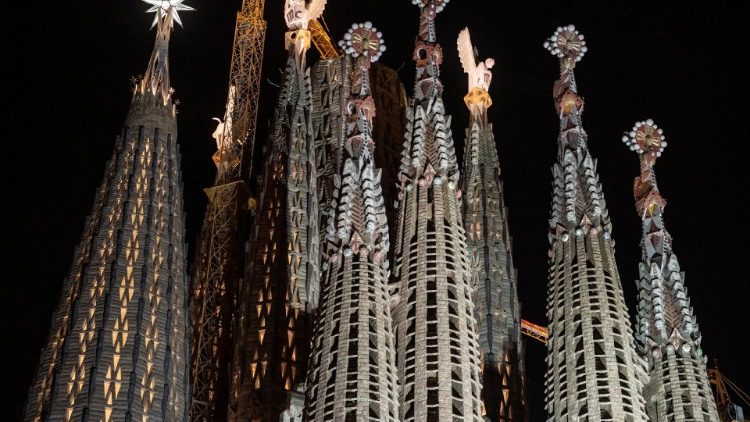
Is the Sagrada Família you saw in Barcelona really what Gaudí imagined?
A closer look at how much of Gaudí’s most famous work was actually built by others after his death. Read it on the blog.
7 things you probably believe about Barcelona that aren’t true
More myths worth rethinking, including the idea that Gaudí only ever built one thing. Read it on the blog.