14 Hidden Corners of Barcelona Worth Seeking Out
By Dorian · Updated September 2, 2026
Barcelona’s five biggest names get all the attention, and rightly so. But scattered around the city are quieter, stranger, older corners that most visitors never stumble onto. Here’s where to find them.
1. Bellesguard Tower
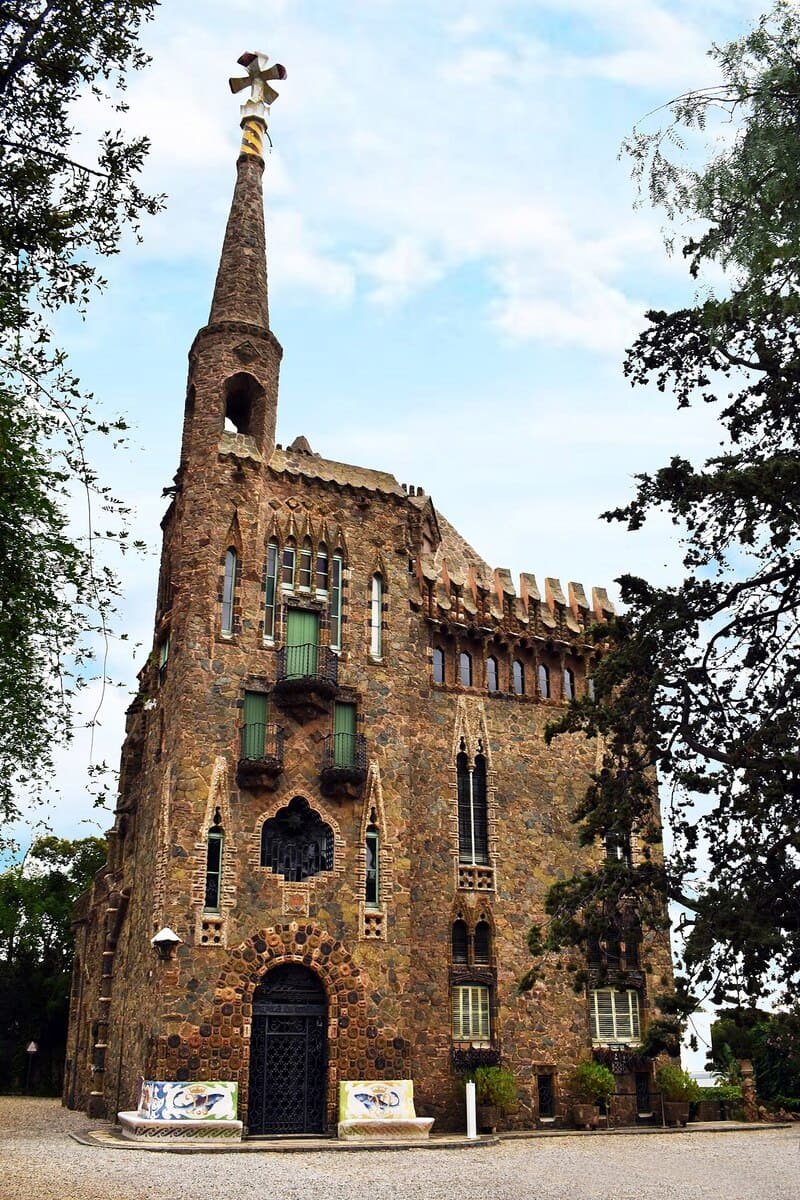
This is Gaudí’s least-visited work, and one of his most personal. Built on the site of a medieval castle once home to King Martin I, the last king of the House of Barcelona, it blends Gothic straight lines with Gaudí’s signature mosaics and ironwork, a very different feel from his more famous buildings.
It sits in a quiet residential pocket near Collserola, far from the usual Gaudí circuit, which means small groups and real peace, plus rooftop views over the whole city.
2. Pedralbes Monastery
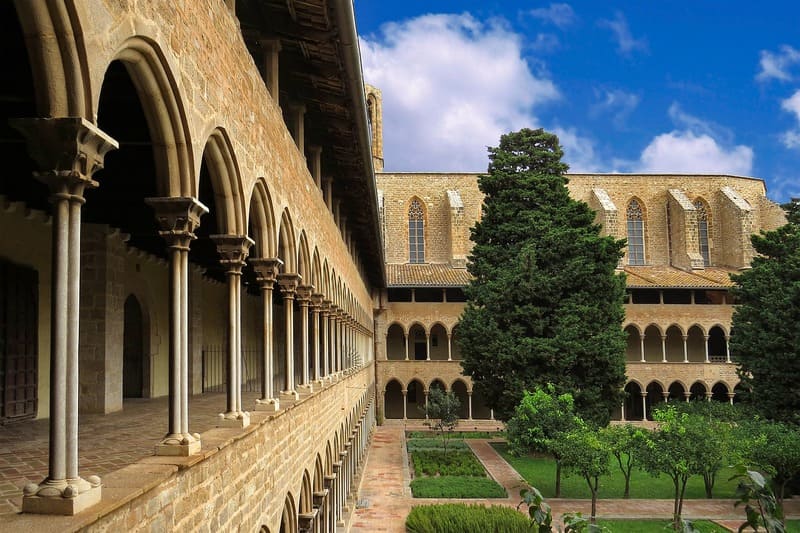
A working Gothic monastery in the upper part of the city, built in the early 14th century. Its three-story cloister is genuinely one of the most beautiful quiet spaces in Barcelona, and almost nobody outside the neighborhood knows it’s there.
It’s a proper change of pace from the busier parts of the city, worth an hour of slow, unhurried wandering.
3. CaixaForum
A former textile factory, Casaramona, designed by Josep Puig i Cadafalch, one of the three great architects of Catalan Modernisme alongside Gaudí and Domènech i Montaner. It won the city’s award for best industrial building the year it opened.
The factory closed after only a few years, sat unused for decades, and was eventually restored into an art museum. The exposed brick, Catalan vaulted ceilings, and striking towers make it worth visiting for the building alone, even before you look at what’s inside.
4. The Roman necropolis at Plaça de la Vila de Madrid
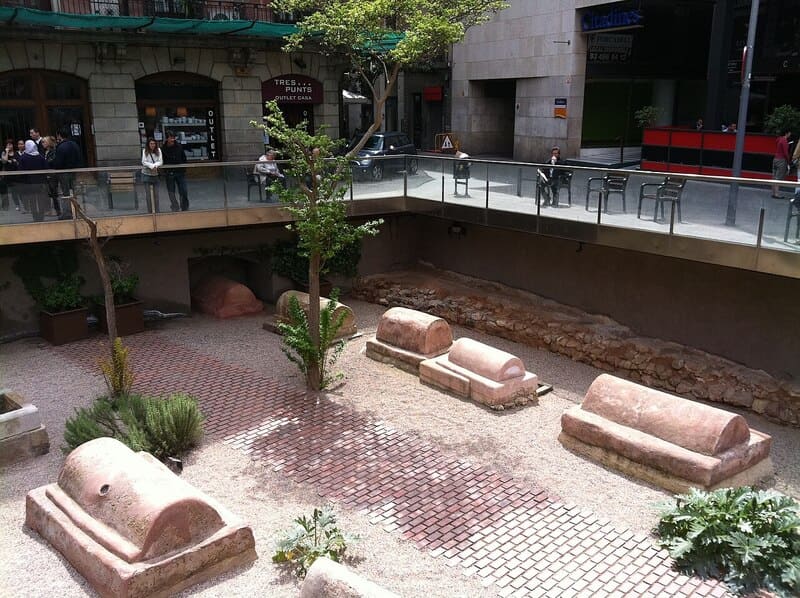
An ordinary-looking square in the old city hides something extraordinary just below street level: dozens of actual Roman tombs, dating from the 1st to 3rd centuries, when this stretch of road sat just outside the walls of Barcino, the Roman city Barcelona grew from.
It’s free, it’s quiet, and most people walk straight past it without realizing what’s there. A raised walkway lets you look down over the tombs from above.
5. Museu Frederic Marès
Tucked into a hidden courtyard just behind the Cathedral, this museum houses the private collection of a 20th-century sculptor who spent his life gathering everything from medieval religious carvings to old bicycles and postcards.
The building itself, a former royal palace, is worth the visit on its own, and the peaceful courtyard café is one of the best-kept secrets in the entire Gothic Quarter.
6. Mercat de Santa Caterina
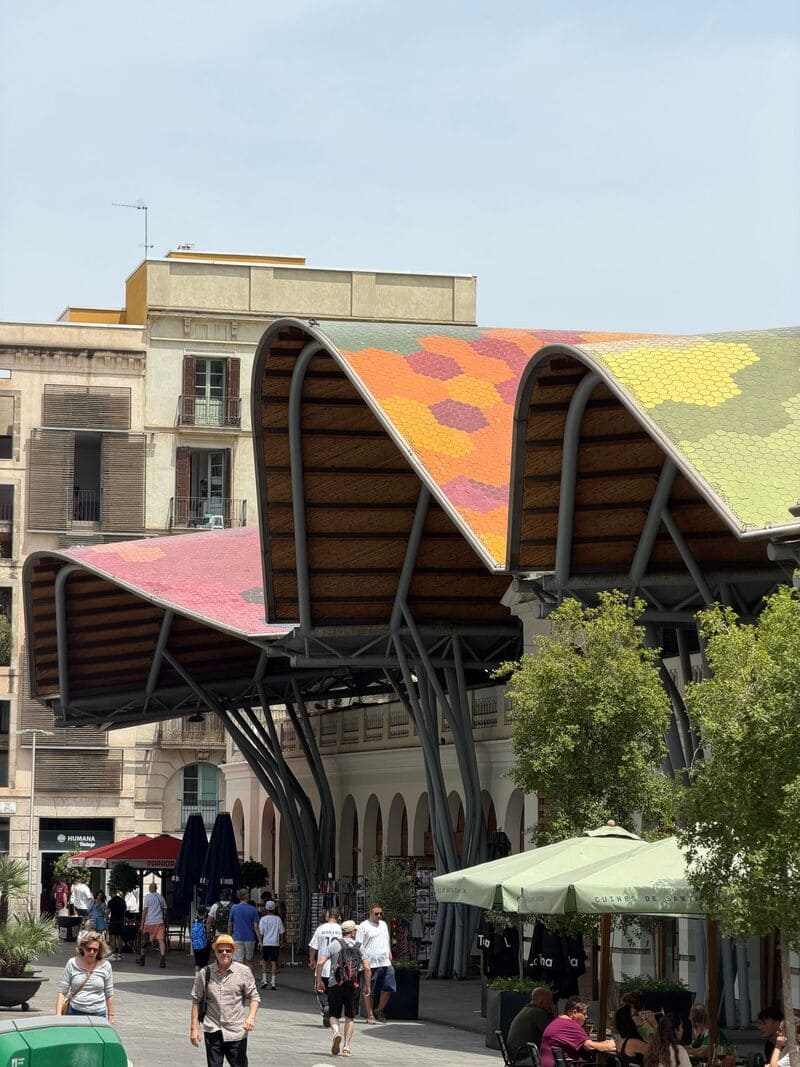
A working neighborhood market crowned with an enormous, wildly colorful wave-shaped roof, made of thousands of ceramic tiles in dozens of colors. It’s every bit as photogenic as Boqueria, with a fraction of the crowds.
Go for the produce stalls, stay for a proper lunch at one of the counter bars tucked inside.
7. Carrer de Petritxol
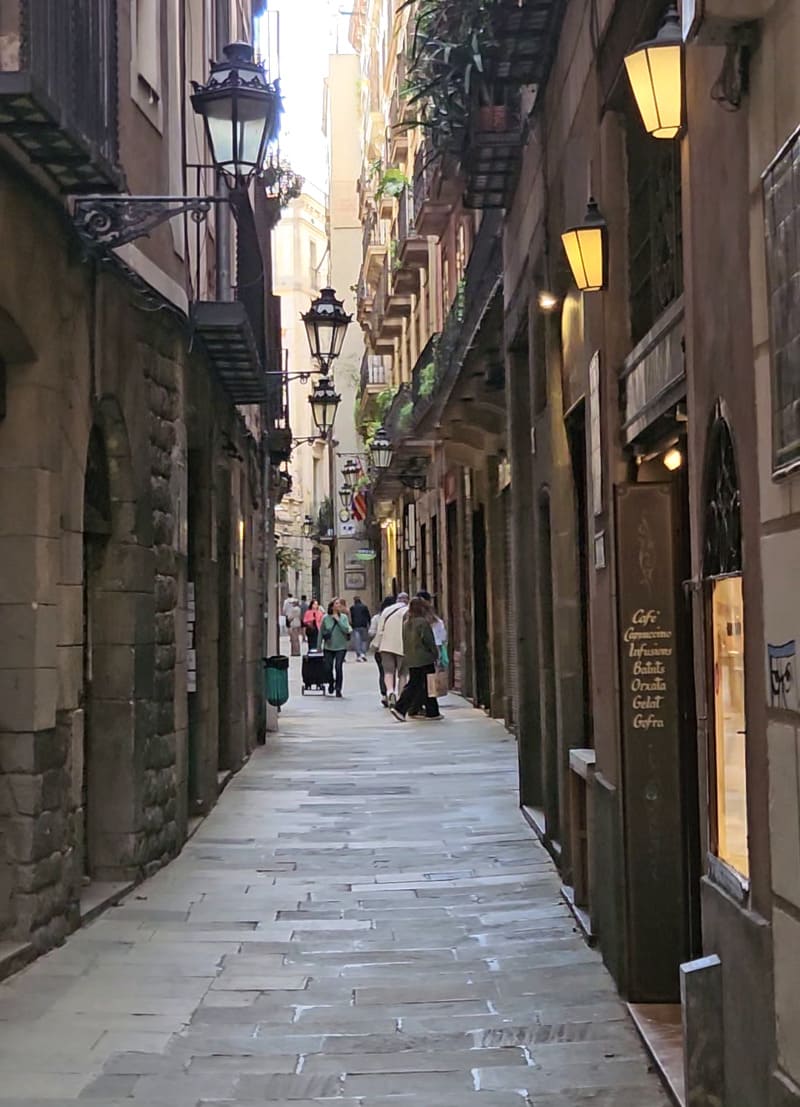
A narrow street in the Gothic Quarter that’s been associated with chocolate and churros for well over a century. Small chocolaterias line both sides, most of them family-run for generations.
It’s an easy, charming stop between other sights, and a good excuse to sit down with a cup of thick Spanish hot chocolate for dipping.
8. Els Quatre Gats
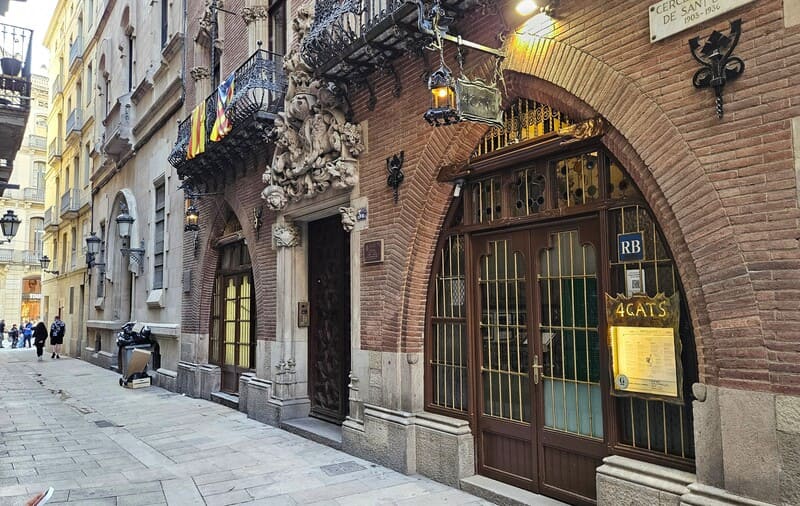
A historic café in the Gothic Quarter that became a gathering place for young Catalan artists at the turn of the 20th century, including a then-unknown Picasso, who held his very first exhibition here.
The Modernista interior is largely unchanged, and it’s still a working restaurant today, so you can actually sit where that history happened rather than just look at it through glass.
9. Fundació Joan Miró
A major museum dedicated to one of Catalonia’s most important modern artists, sitting right on Montjuïc, and routinely skipped in favor of Sagrada Família and Park Güell.
The building itself, bright, white, full of natural light, is worth the visit even if Miró’s work isn’t already familiar to you, and it’s an easy add-on if you’re already heading up Montjuïc for the views.
10. The gardens on Montjuïc
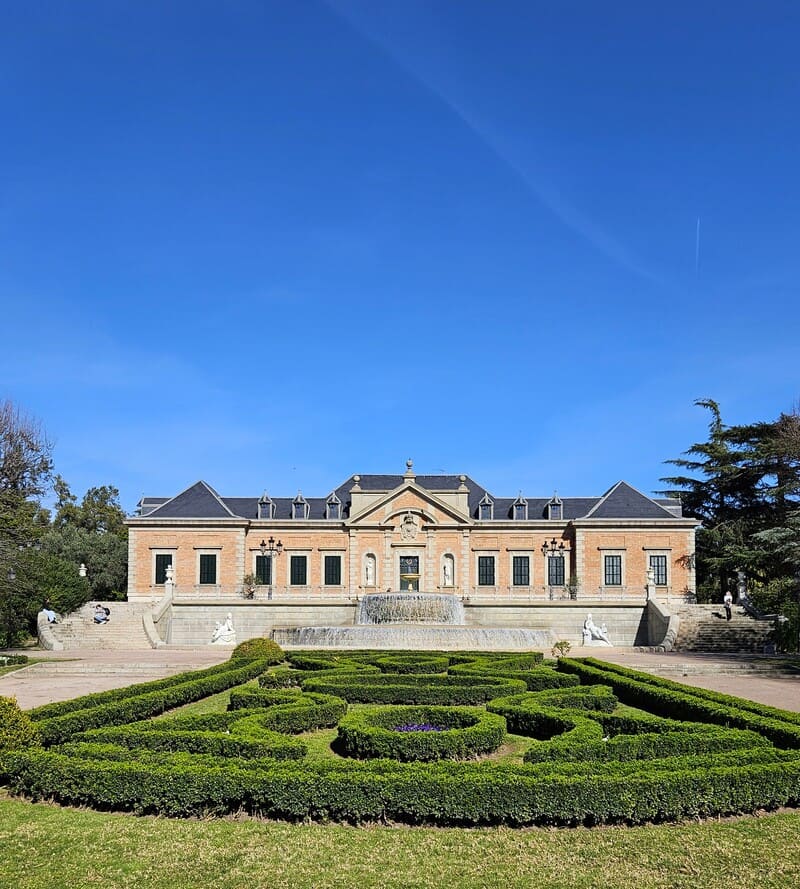
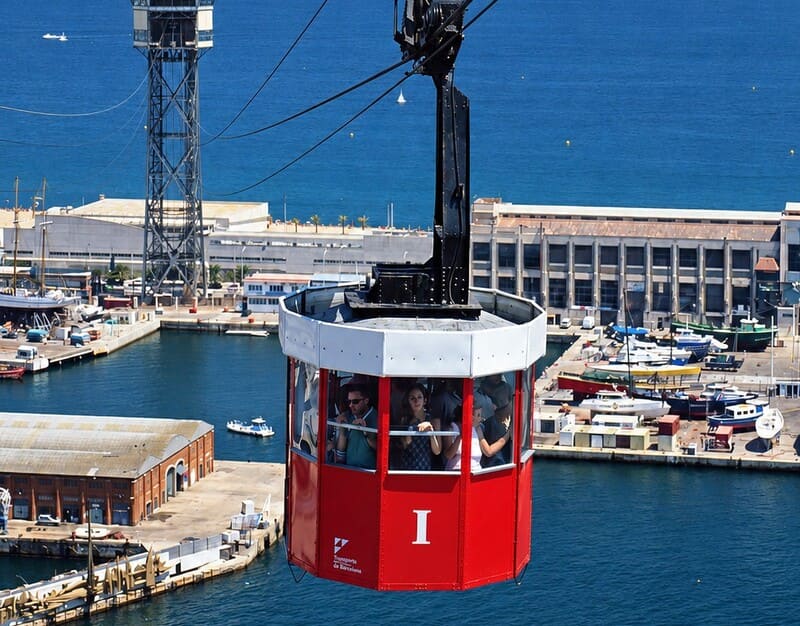
Beyond the castle and the cable car, Montjuïc is layered with quiet, terraced gardens most visitors never make it to. Jardins de Mossèn Cinto Verdaguer in particular is worth timing for spring, when the seasonal flower beds are in full bloom.
It’s one of the few genuinely peaceful green spaces in the city that isn’t also a major tourist stop.
11. Poble Espanyol
An open-air “village” built for the 1929 International Exhibition, recreating streets and buildings from different regions of Spain in a single walkable space, from Andalusian courtyards to Basque town squares.
It’s touristy in its own way, but it’s also a genuinely interesting shortcut through Spanish regional architecture, with craft workshops and small museums built into the surrounding buildings.
12. Tibidabo
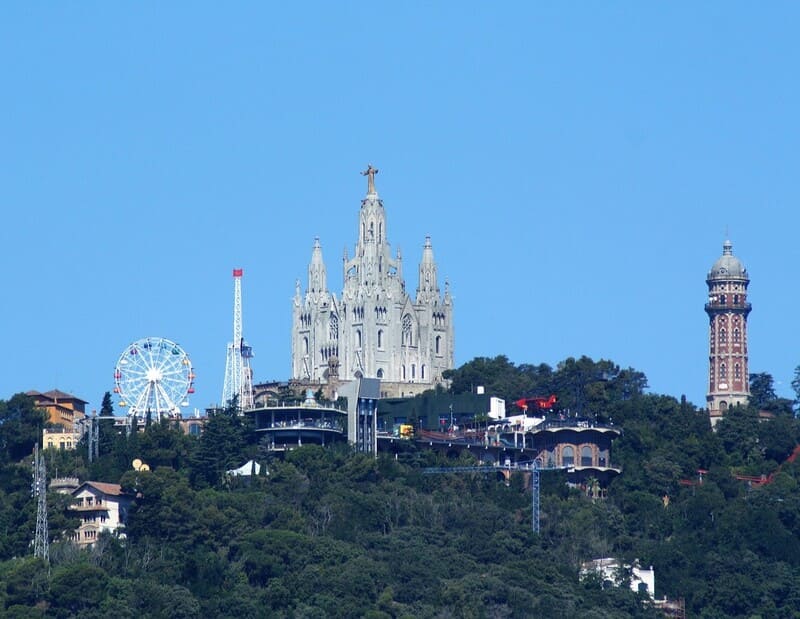
The highest point in the city, reached by a funicular ride that’s part of the fun. At the top sits both a historic amusement park, in operation since 1899, and the Sagrat Cor church, with panoramic views stretching over the entire city and coastline.
It’s further out than most of this list, but it makes for a genuinely memorable half-day, especially on a clear afternoon.
13. Colònia Güell crypt
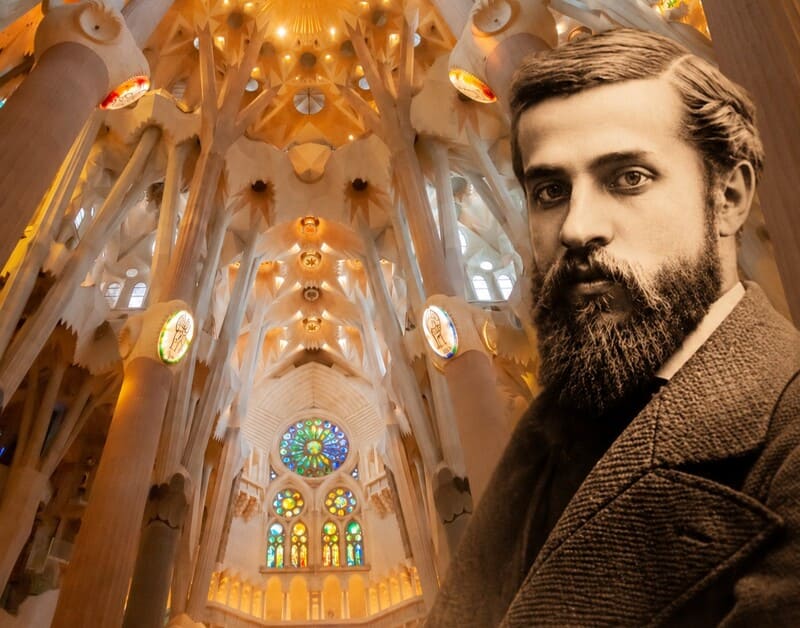
Gaudí’s other UNESCO World Heritage site, and far less visited than anything within the city itself. A short train ride away, this unfinished crypt was Gaudí’s testing ground for the structural techniques he’d later use at Sagrada Família, tilted columns, catenary arches, and all.
Because so few visitors make the trip, it’s one of the quietest, most personal Gaudí experiences available anywhere near Barcelona.
14. Els Encants Vells
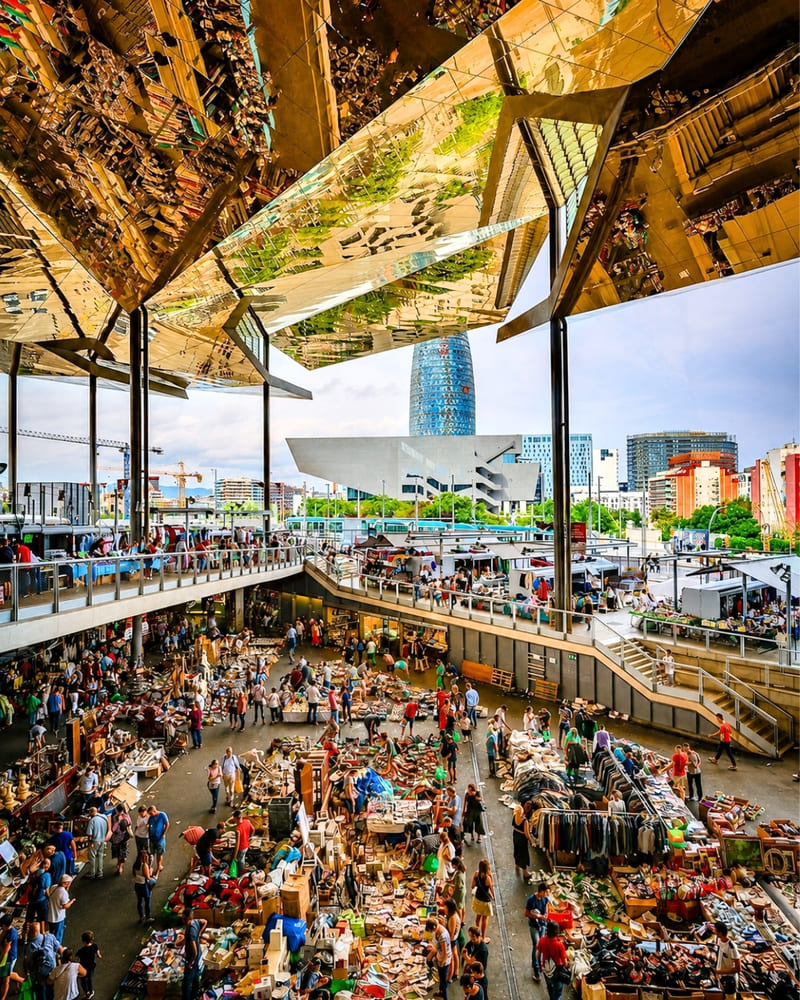
One of the oldest flea markets in Europe, now housed under a striking mirrored canopy roof that reflects the entire market below it. Furniture, antiques, clothes, and genuine junk, all mixed together across several levels.
It rewards slow browsing rather than a quick pass-through, and the building itself is worth photographing even if you don’t buy anything.
What to read next
This list works best alongside the essentials, not instead of them. If you haven’t sorted through the classics yet, I put together the full rundown of what actually earns its reputation: 18 things you should actually do in Barcelona.
And since a few of these, Pedralbes, Bellesguard, Tibidabo, sit well outside the usual tourist center, where you base yourself matters more than it would otherwise. I wrote up the neighborhoods that put you closest to this side of the city: the best Barcelona neighborhoods for first-time visitors.