Is the Sagrada Família You Saw in Barcelona Really What Gaudí Imagined?
By Dorian · Updated August 27, 2026
Every year, millions of people walk into Sagrada Família assuming they’re looking at a building Gaudí designed down to the last detail. Most of it, they’re not. Here’s what’s actually his, what isn’t, and why the answer has just gotten a lot more interesting.
What Gaudí actually finished before he died
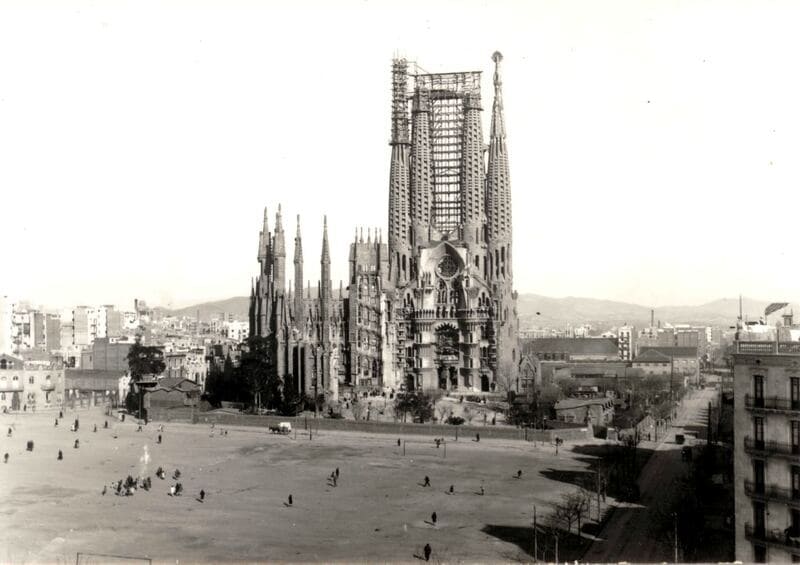
Gaudí worked on Sagrada Família for over 40 years, the last 15 of them almost exclusively, living on site in his final years. But when he died in 1926, struck by a tram just steps from the building he’d given his life to, only about a quarter of it existed.
One bell tower. The apse. The crypt. The Nativity façade, his own design, was still being finished from his models when he died, and wasn’t fully complete until the early 1930s.
Everything else you see today, which is most of the building, was built after he was gone.
The fire that erased his own blueprint
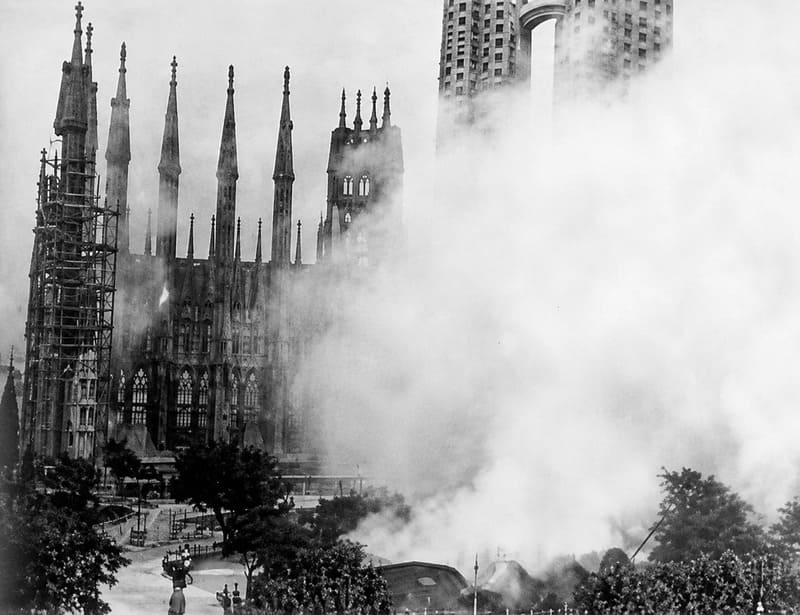
In 1936, during the Spanish Civil War, Gaudí’s workshop was set on fire and his original plans and plaster models, the detailed three-dimensional blueprints he used instead of drawings, were destroyed. Decades of work, gone in one night.
What followed was a slow, painstaking reconstruction. Architects pieced together Gaudí’s intentions from surviving fragments of the smashed models, old photographs, and the testimony of people who had worked with him. Some of what stands today isn’t built from Gaudí’s plans at all, it’s built from educated reconstruction of what his plans probably said.
The façade that looks like a different building entirely
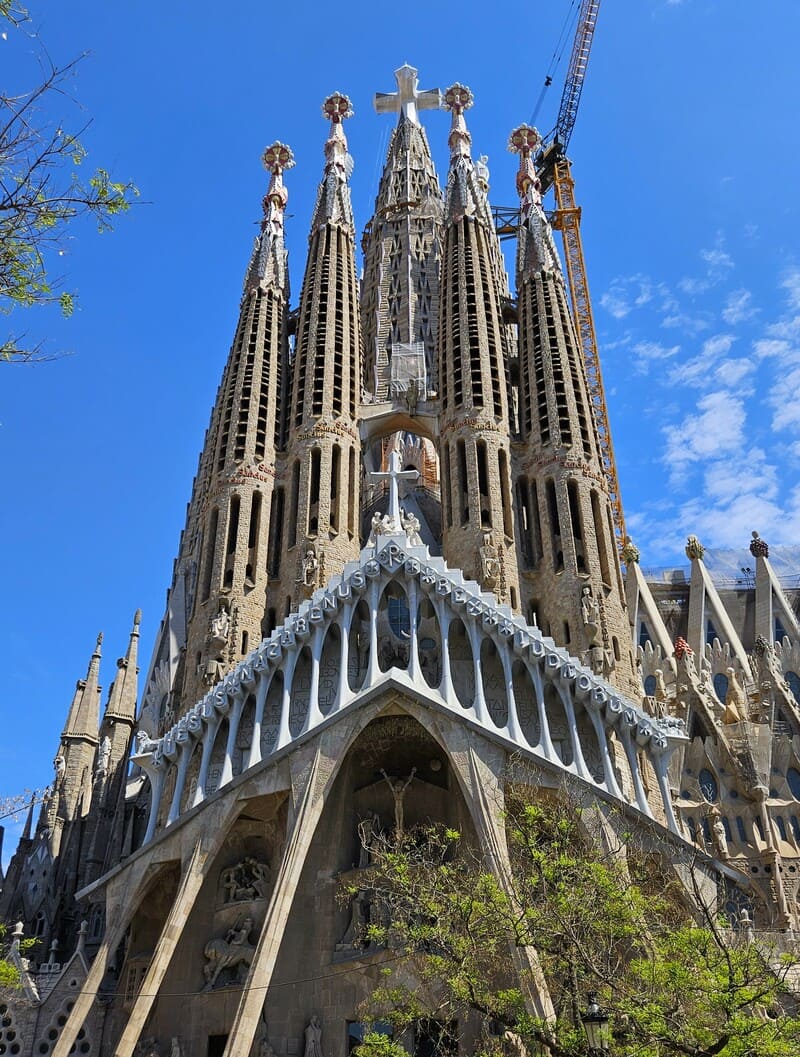
Walk from the east side of Sagrada Família to the west side and the shift is jarring. The Nativity façade, the one Gaudí actually built, is dense with carved plants, animals, and angels, warm and alive. The Passion façade is the opposite: bare, angular, almost skeletal.
Gaudí did sketch the concept for the Passion façade himself, he wanted it to “inspire fear,” a deliberate contrast to the joy of the Nativity side. But he never lived to see it built. Decades later, sculptor Josep Maria Subirachs took Gaudí’s sketches and executed them in his own sharp, expressionist style between 1987 and 2005, and it split opinion immediately. Some called it a betrayal of Gaudí’s organic language. Others argued that copying Gaudí exactly would have been a forgery, not a tribute.
Either way, this is the clearest place in the entire building where you can see two different artists’ hands, generations apart, on the same structure.
The architects who tried to stop the building from being finished
This isn’t a fringe opinion, it’s one of the most well known controversies in modern architecture. In the 1960s, Le Corbusier and Alvar Aalto, two of the most influential architects of the 20th century, signed an open letter opposing continued construction of Sagrada Família, worried that finishing it without Gaudí would cheapen his vision.
One of the architects who helped organize that letter, Òscar Tusquets, toured the building decades later in 2011 and publicly reversed his position, saying the building wouldn’t exist at all if people had listened to critics like him fifty years earlier.
What just happened this year
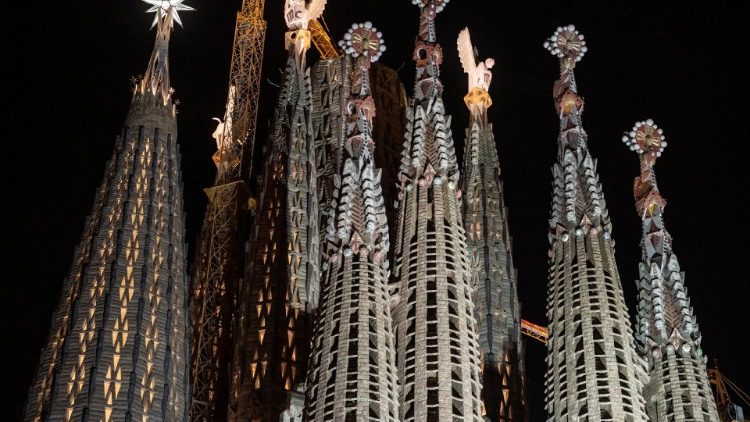
This is the part that makes the question timely rather than just historical. On 10 June 2026, the 100th anniversary of Gaudí’s death, Pope Leo XIV blessed the newly completed Tower of Jesus Christ, the central spire rising 566 feet (172.5 meters) above the city.
That tower makes Sagrada Família the tallest church in the world, surpassing Germany’s Ulm Minster, a title it only recently claimed after more than 140 years of construction. Structurally, the basilica is now essentially complete. Decoration and finishing work will continue into the 2030s.
What still isn’t built
Gaudí’s original vision included a monumental entrance staircase leading up to the building’s main façade, crossing over what is today an ordinary city street. It’s still not built, and it isn’t a small addition, making room for it would mean demolishing residential buildings that have stood there since the 1970s.
That’s the sticking point that keeps pushing the date back. City officials, the basilica’s foundation, and the people who live in those buildings haven’t agreed on a way forward, and the dispute has run for years with no resolution in sight. The rest of the façade’s decoration is estimated for around 2034, but the staircase itself has no firm date, and some architects now think parts of it could stretch into the 2040s, if it happens at all.
So, is it what Gaudí imagined?
The honest answer is somewhere in between. The underlying logic of the building, the geometry, the structural principles Gaudí worked out through models and hanging chains rather than blueprints, has been followed with real rigor by the architects who came after him, aided in recent decades by computer modeling that helped decode his methods more precisely than anyone could by hand.
But specific decisions, materials, and in the case of the Passion façade, an entire artistic style, came from people who never met him, working from fragments rather than his complete plans. What you’re looking at is Gaudí’s vision, carried forward by other hands doing their best to stay faithful to it. Not a forgery. Not untouched, either.
What to read next
If this changed how you’ll look at the building next time you’re standing in front of it, here’s where I’d point you next. Reading about the gap between Gaudí’s plans and what got built is one thing, seeing it is another, so I put together the basilica’s construction laid out in photos, decade by decade, from Gaudí’s own lifetime through to the tower that just went up this year.
And once you’ve made the trip out to see it in person, you might as well put the rest of the day to good use. I put together 18 things worth actually doing in Barcelona, the ones that hold up beyond a single visit, not just the five everyone already has circled.