18 Things to Do and See in El Raval, the Most Surprising Corner of Old Barcelona
By Dorian · Updated September 30, 2026
Most people only see El Raval from the edge of La Rambla.
Then they turn back toward the Gothic Quarter.
That’s a mistake.
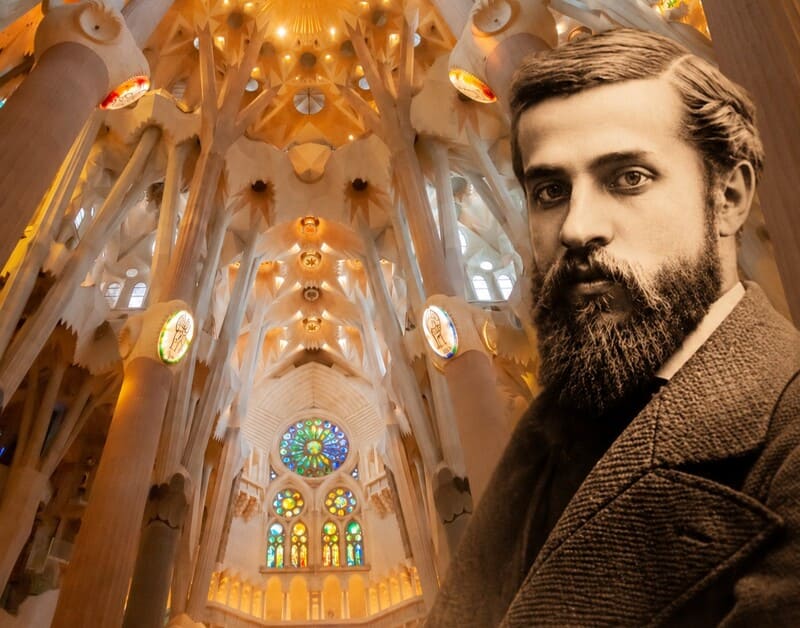
This is where Gaudí built his first great house, where he died, and where Barcelona’s oldest church still stands behind a row of palm trees.
Before starting, let’s put everything on a map:
1) Palau Güell
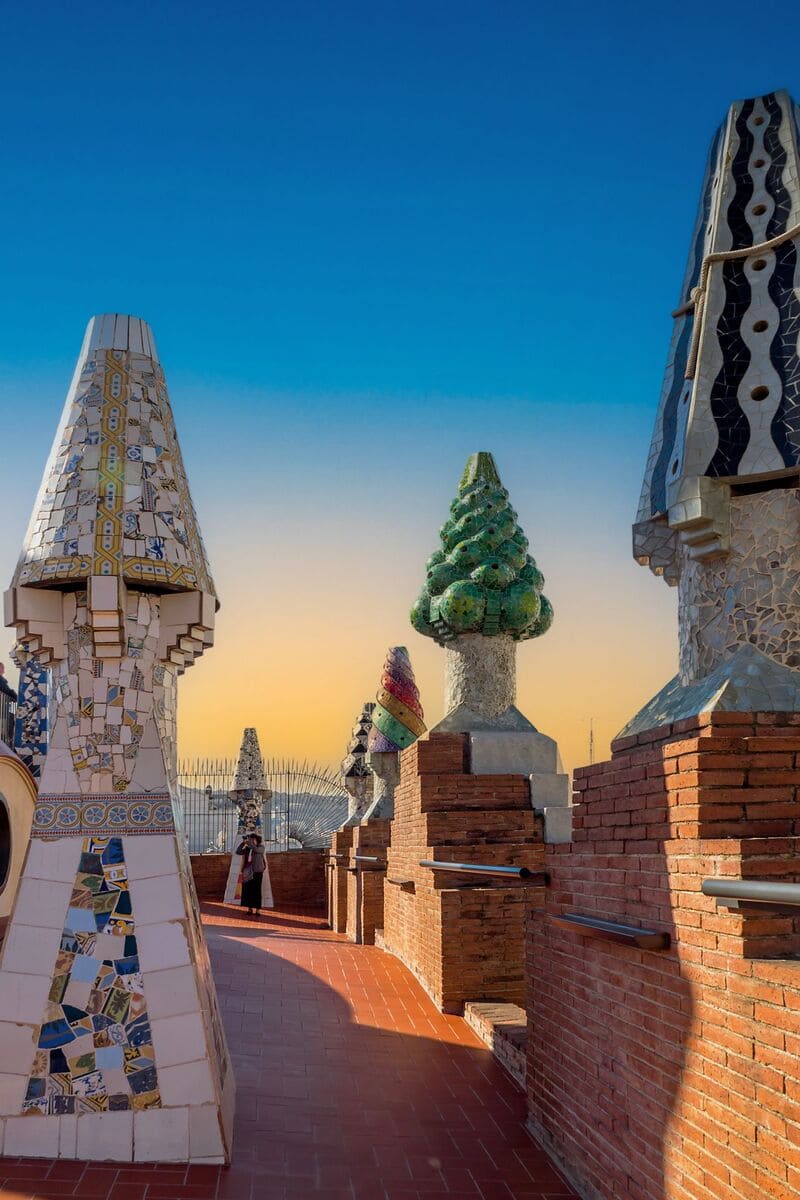
Gaudí built Palau Güell between 1886 and 1890 for Eusebi Güell, the industrialist who would become his lifelong patron.
It was his first major work.
From the street, it looks almost severe: grey stone, heavy ironwork, two huge parabolic arches.
Those arches let horse-drawn carriages drive straight into the building and down to the stables in the basement.
Look up when you get down there. The ceiling is shaped like a canopy of stone palm fronds.
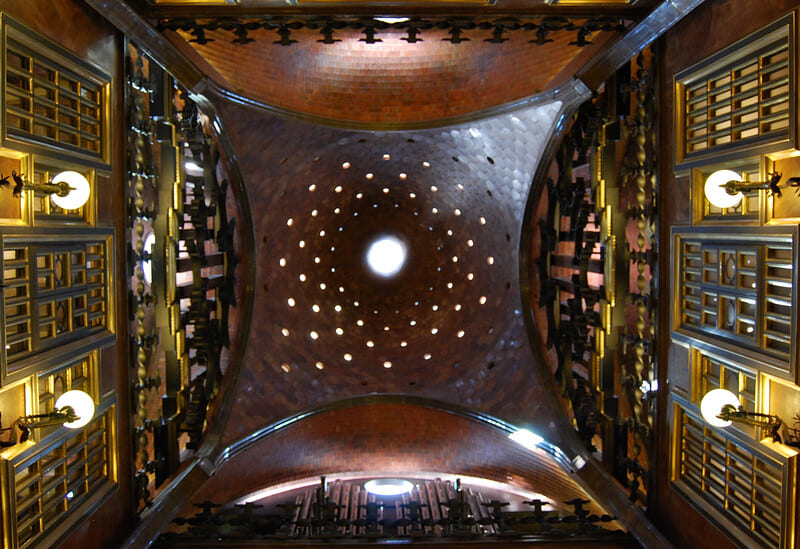
Inside, the central hall rises through several floors to a dome pierced with small openings that make it look like a starry sky.
Then you reach the roof.
20 chimneys, each one a different shape, covered in colorful broken-tile mosaic.
They’re a preview of everything Gaudí would do later at Park Güell.
The palace has been a UNESCO World Heritage Site since 1984, and it’s far less crowded than Casa Batlló or Sagrada Família.
Check the official site for current ticket options and opening days before you go.
2) The garden of the Antic Hospital de la Santa Creu
The first stones of this hospital were laid in 1401, in front of King Martin the Humane.
The idea was to merge the city’s six existing hospitals into one.
It went on to serve Barcelona for five centuries.
When it closed in 1926, one of its very last patients was Antoni Gaudí.
He had been hit by a tram, and he died here three days later.
In this centenary year of his death, it’s worth a quiet moment.
Today the Gothic buildings house the Biblioteca de Catalunya, the national library.
Enter from Carrer de l’Hospital and you’ll find yourself in a peaceful courtyard garden, free to walk through.
The hospital’s 15th-century chapel, La Capella, now hosts temporary art exhibitions.
3) La Boqueria, through the back door
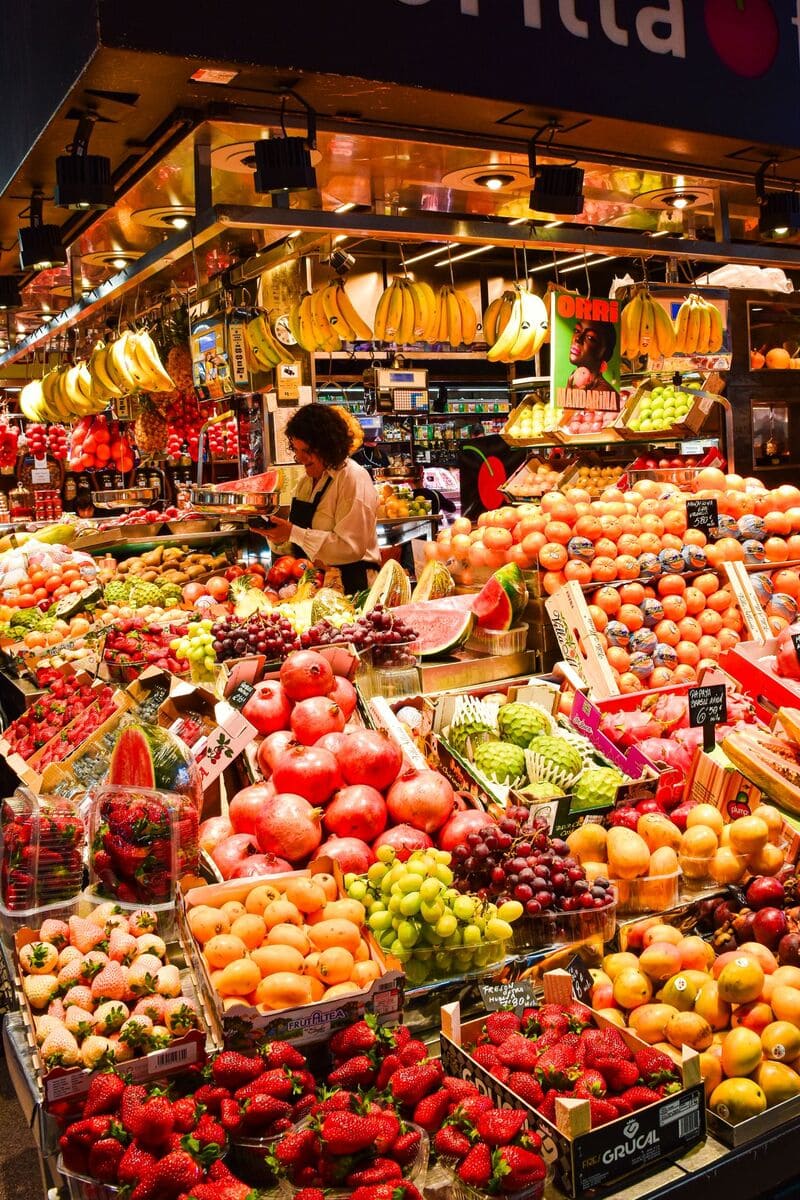
Everyone enters La Boqueria from La Rambla.
Try the back instead.
The facade on Plaça de la Gardunya is the entrance the people of El Raval actually use.
The market is changing, too.
A first phase of renovation work began at the end of summer 2026, and the bigger transformation, including a new roof, is now set to run until 2029.
The city is also bringing in a rule requiring each stall to offer at least 50% traditional products, to push the market back toward fresh food and away from takeaway snacks.
Go early in the morning, when the stallholders are still setting up and the aisles belong to locals.
4) Sant Pau del Camp
This is the oldest church in Barcelona.
Its name means “Saint Paul of the fields,” because when it was founded, it stood in open farmland outside the city walls.
Inside, you’ll find a tombstone dated 911.
It belongs to Wilfred II, Count of Barcelona, son of Wilfred the Hairy, the count considered the founding father of Catalonia.
The real treasure is the small 13th-century cloister.
Its arches are multifoil, with three or five lobes each, showing a clear Muslim influence.
That makes it a Romanesque cloister unlike any other in Europe.
It’s small, quiet, and one of the most peaceful spots in the old city.
5) Gran Teatre del Liceu
Barcelona’s opera house opened on La Rambla in 1847.
It has burned twice.
The first fire came in 1861.
The second, in 1994, destroyed the auditorium and the stage.
The city rebuilt it, and on 7 October 1999, the Liceu reopened with Puccini’s Turandot.
The guided tour takes you through the grand foyer and the Hall of Mirrors, both of which survived the 1994 fire.
Then you step into the horseshoe-shaped auditorium, with seats for around 2,300 people, one of the largest opera houses in Europe.
Check the Liceu’s official site for tour times and ticket options.
6) Pastisseria La Estrella
La Estrella opened in 1825.
That makes it the oldest pastry shop in Barcelona.
Its marble and wood interior hasn’t changed since 1950, and it still bakes in its original vaulted oven.
In 2024, the last owner retired with no one to take over, and the shop closed.
Then two friends, both 25, who had worked there as teenagers, took it on and reopened it that November.
Just in time for its 200th birthday.
Order the carquinyolis, crunchy Catalan almond biscuits made for dunking in coffee.
One more detail: in 1936, the business was bought from the Roig brothers, who also owned La Colmena, the famous pastry shop across La Rambla.
7) MACBA and Plaça dels Àngels
The Museu d’Art Contemporani de Barcelona opened in 1995, in a bright white building by the architect Richard Meier.
Its contemporary collection starts in the mid-20th century.
But half the show is outside.
The square in front has been one of the most famous skateboarding spots in the world for decades.
Right across from it stands the Gothic Convent dels Àngels, and the contrast between the two buildings is the whole point.
The museum is currently expanding into that convent, with works scheduled to finish in early 2027, so expect construction fences on part of the square for now.
8) Carrer dels Tallers
The name comes from the butchers who cut meat here back in the 13th century.
These days, Tallers is known for something else entirely.
It has long been home to most of the city’s music shops.
Vinyl collectors still come here to dig through the crates, and the shops have been getting busier again since records came back into fashion.
Add vintage clothing racks spilling onto the sidewalk, alternative fashion, tattoo parlors and the occasional street musician.
It’s El Raval’s bohemian side in a single street.
9) The Maritime Museum at the Drassanes Reials
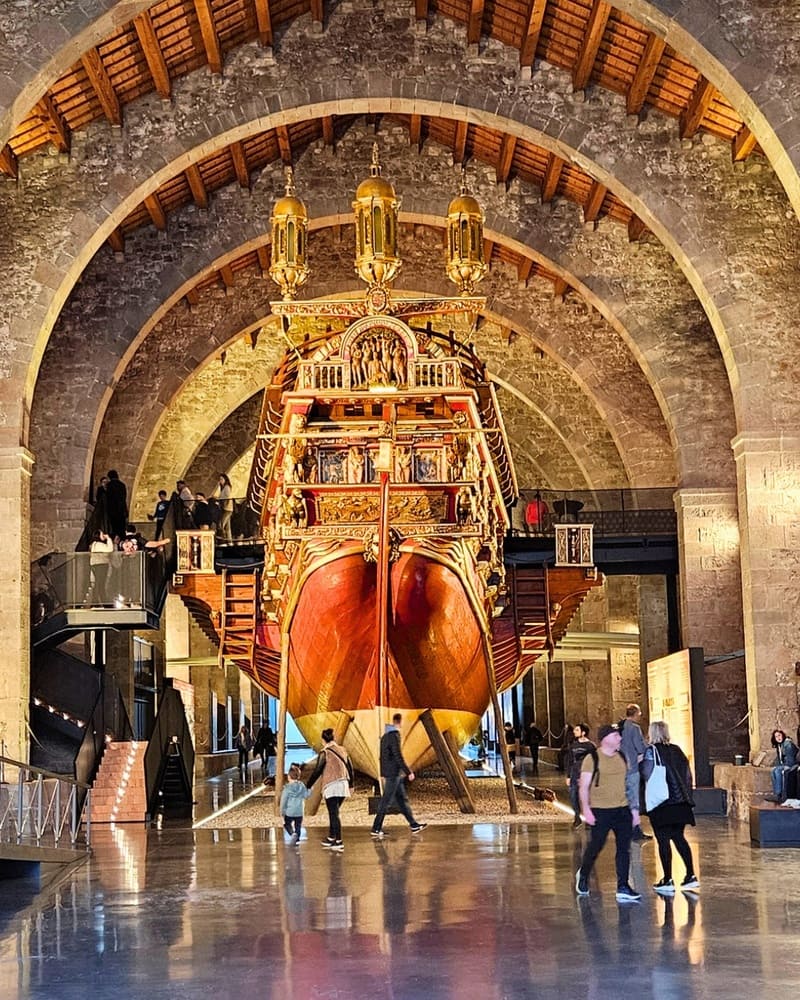
These royal shipyards were built between 1255 and 1378.
They were so big that 30 galleys could be built here at the same time.
That’s how the Crown of Aragon became one of the great naval powers of the Mediterranean.
The sea once came right up to the door. It has since receded.
For a long time, these were thought to be the largest and most complete medieval shipyards preserved anywhere.
Then excavations in 2012 showed that the building you see today was actually rebuilt on top of the medieval one at the end of the 16th century.
It’s still spectacular.
The centerpiece is a full-size replica of the galley Don Juan of Austria commanded at the Battle of Lepanto in 1571.
Your ticket also covers the Santa Eulàlia, a 1917 schooner moored nearby in the port.
10) Lunch at Norai Raval
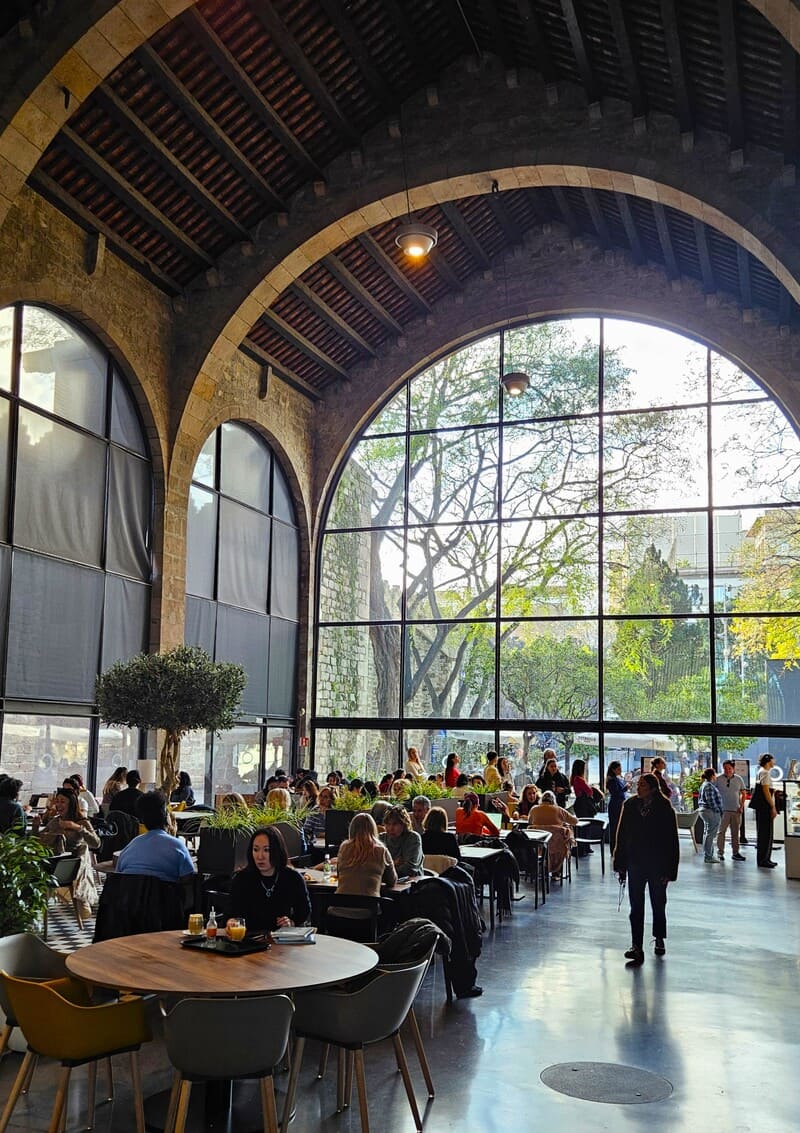
You don’t need to leave the shipyards to eat well.
Norai, the museum’s café-restaurant, focuses on seafood and local, sustainable cooking.
The name is the Catalan word for the metal post on a quay where boats are tied up.
But there’s more to it than the menu.
Since 2010, Norai has been a social project, training and employing people from El Raval who struggle to find work.
Order the lunchtime set menu, which always includes local fish, and take a seat on the open-air terrace under the orange tree.
11) Botero’s cat on the Rambla del Raval
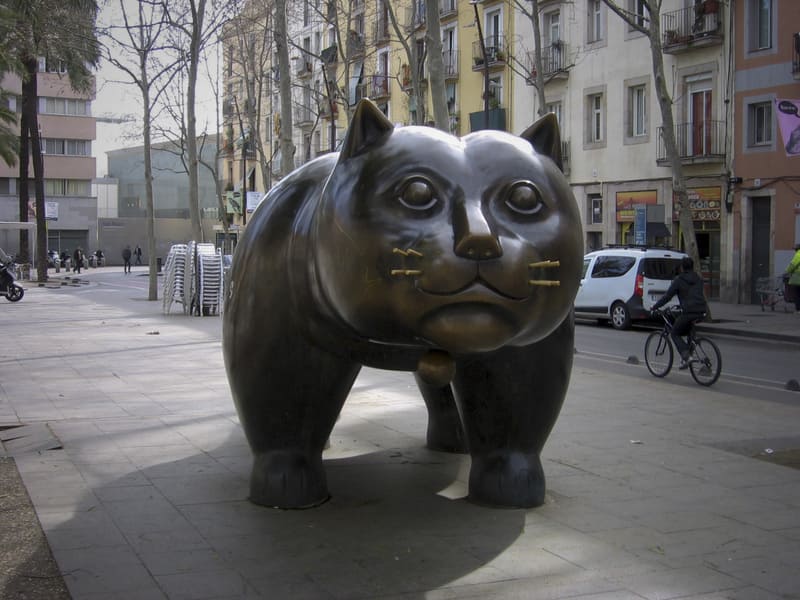
Barcelona bought this giant bronze cat by the Colombian artist Fernando Botero in 1987.
Then it spent years looking for a home.
First it sat in Parc de la Ciutadella, near the zoo.
Then by the Olympic Stadium.
Then in a small square behind the old shipyards.
In 2003, it finally settled on the Rambla del Raval, and it has since been moved again to the middle of the promenade.
Locals simply call it the Gat del Raval.
Expect to see children climbing on its back.
12) Portal de Santa Madrona
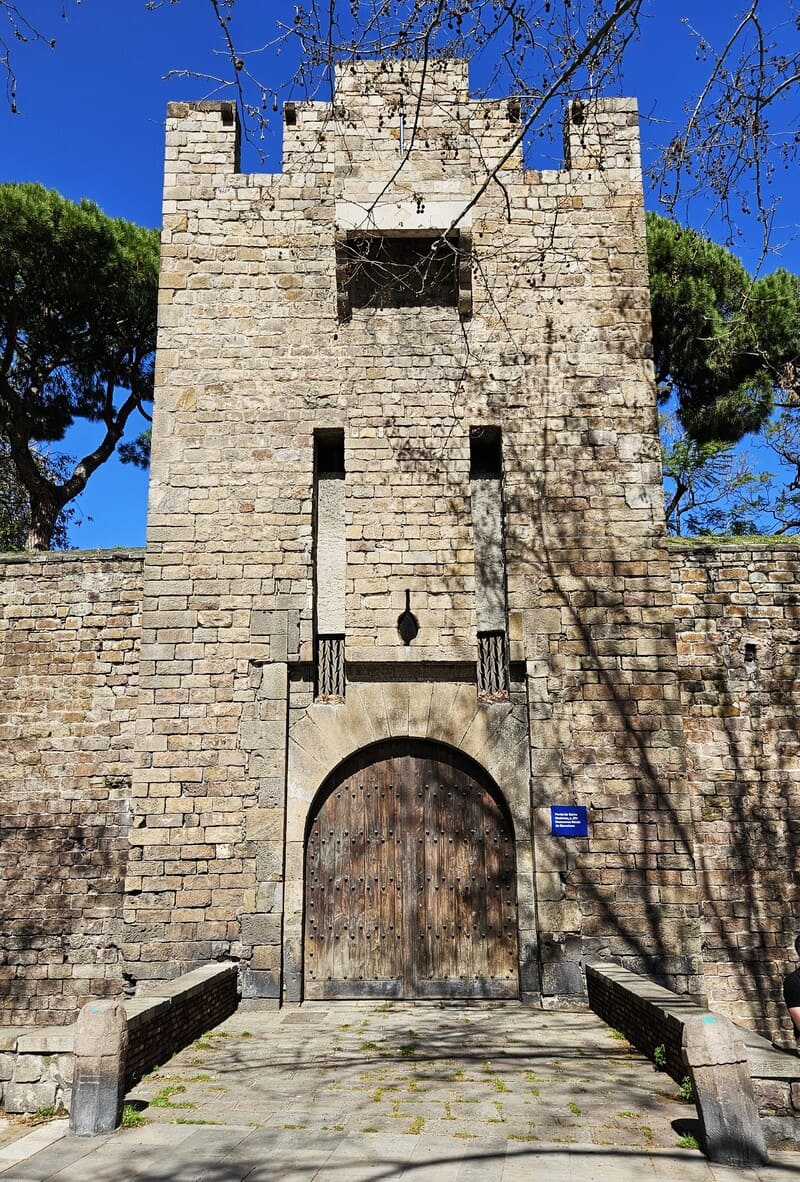
Behind the shipyards stands something most people never notice.
The Portal de Santa Madrona is the only surviving medieval gate in Barcelona.
Gates like this one were shut every night to protect the people inside the walls.
A stretch of those old walls still runs beside it.
On top of the bastion, there’s a small garden that opens only on the first and third Sundays of the month.
It’s not accessible for visitors with reduced mobility.
13) Església de Betlem
This church on the corner of La Rambla and Carrer del Carme was built for the Jesuits in the late 17th and early 18th centuries.
Its baroque facade is the showpiece, a rare sight in a city where most churches are Gothic.
Look for the carving of Saint Ignatius of Loyola in conversation with Saint Francis Borgia.
The original interior was lost in a fire in 1936.
At Christmas, the inside turns into a temporary display of nativity scenes, a much-loved Catalan tradition.
14) Fonda Espanya
This hotel on Carrer de Sant Pau first opened as the Fonda España in 1859.
At the start of the 20th century, Lluís Domènech i Montaner, the architect of the Palau de la Música, redecorated it.
He brought in two stars of the day.
The sculptor Eusebi Arnau made the huge alabaster fireplace.
The painter Ramon Casas decorated the dining room with a sea-themed mural of fish and mermaids.
Look closely at the mermaids. They have legs.
The decoration won the city’s prize for commercial buildings in 1904.
The hotel was renovated again in 2026 and now runs as Hotel España Ocean Drive.
Breakfast is served beneath Casas’s murals, and the restaurant, still called Fonda España, is overseen by the Basque chef Martín Berasategui.
15) Boadas
Miguel Boadas learned to make cocktails at the Floridita, the famous bar in Havana.
In 1933, he opened his own on the corner of Carrer dels Tallers and La Rambla.
It’s the oldest cocktail bar in Barcelona.
After his death in 1967, his daughter María Dolores ran it for decades.
The room is tiny and triangular, and the walls are covered in memorabilia.
Watch the bartenders pour cocktails from one shaker tin held high into another far below.
Since 2022, the team behind Sips, one of the most celebrated cocktail bars in the world, has co-owned it.
It opens early enough for an aperitif, so you don’t have to wait for nightfall.
16) Casa Almirall
Casa Almirall has been pouring drinks on Carrer de Joaquín Costa since 1860.
The Modernista interior has barely been touched.
The door, the counter, the display cabinet and the lights are practically original.
At one end of the white marble bar stands a cast-iron woman holding a lamp.
She’s the muse of Barcelona’s 1888 Universal Exhibition.
Order the house vermouth, served with olives, the classic Barcelona way to start an evening.
17) London Bar
London Bar opened on Carrer Nou de la Rambla on 23 June 1910.
It sits right next door to La Estrella.
Circus, theater and entertainment agents had their offices on this street back then, so circus performers became regulars.
The bar was also open 24 hours a day, which meant every bohemian in the city ended up here sooner or later.
Look up near the entrance.
A trapeze still hangs from the ceiling.
18) Bar Marsella
Bar Marsella opened in 1820.
It’s reputed to be the oldest bar in Barcelona.
Almost nothing has changed.
The paint peels, the mirrors are cloudy, and bottles sit gathering dust in glass cabinets.
The drink to order is absinthe, served the traditional way with a sugar cube and cold water.
You’ll hear that Picasso and Hemingway drank here. Those stories are told often, but they’ve never been confirmed.
This one is for night owls. It gets going late in the evening.
Where to go next
Cross La Rambla from the Liceu and you’re in the Gothic Quarter within a minute. It’s the perfect follow-up to this list: you’ll find the lampposts Gaudí designed as a young unknown in Plaça Reial, and La Colmena, the pastry shop whose owners once ran La Estrella. Here’s my guide: the best things to do in the Gothic Quarter.
And if old bars, historic shops and streets with a story are what you enjoyed most here, keep walking past Via Laietana into El Born. It has the same mix of medieval lanes and places that have been open for generations, just with a different feel: everything worth seeing in El Born.