The 7 Gaudí Buildings in Barcelona on UNESCO’s World Heritage List
By Dorian · Updated September 13, 2026
Antoni Gaudí designed dozens of buildings across Barcelona.
UNESCO only ever recognized seven of them as a single World Heritage listing.
One of the seven isn’t even inside the city.
Here’s what actually earned Gaudí that recognition, in two separate decisions, twenty-one years apart.
At a glance:
| Building | Gaudí started | UNESCO listing | Inside Barcelona? |
|---|---|---|---|
| Casa Vicens | 1883 | 2005 | Yes |
| Palau Güell | 1886 | 1984 | Yes |
| Park Güell | 1900 | 1984 | Yes |
| Casa Batlló | 1904 | 2005 | Yes |
| Casa Milà (La Pedrera) | 1906 | 1984 | Yes |
| Crypt of Colònia Güell | 1908 | 2005 | No |
| Sagrada Família (Nativity façade + crypt) | 1883 | 2005 | Yes |
1) Casa Vicens, the house that started everything
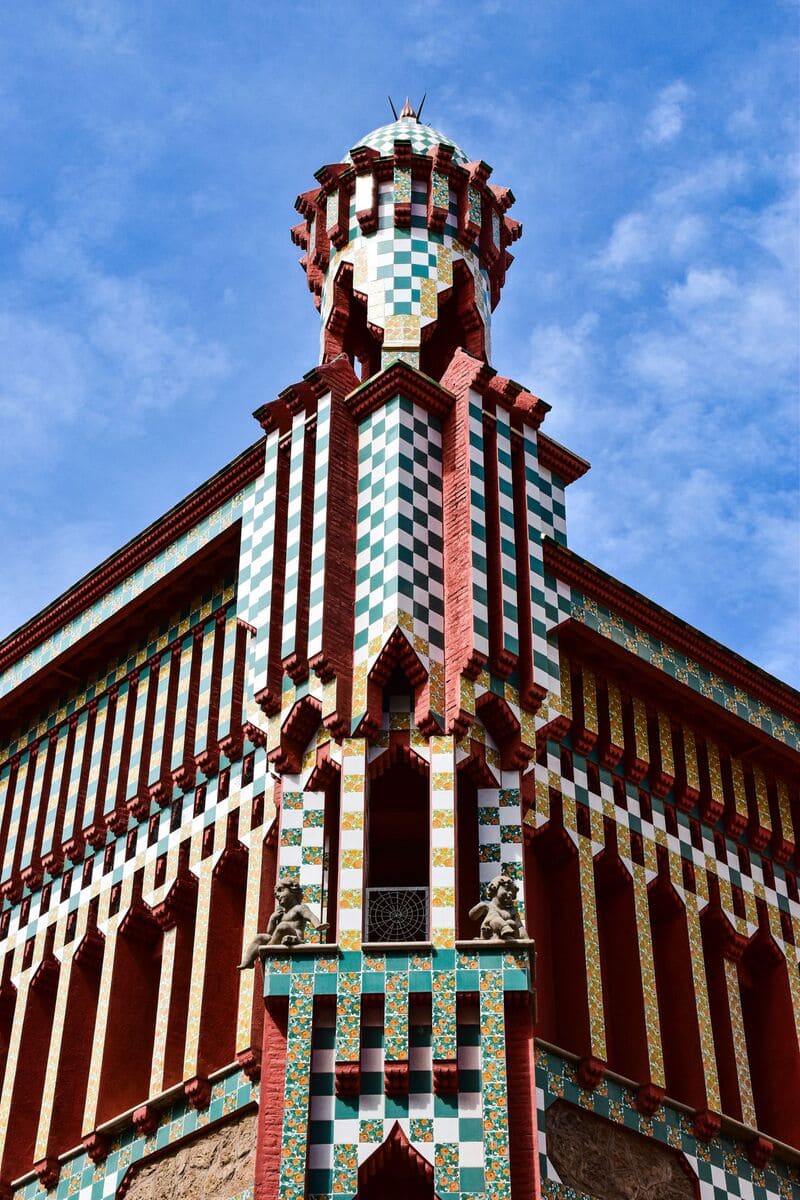
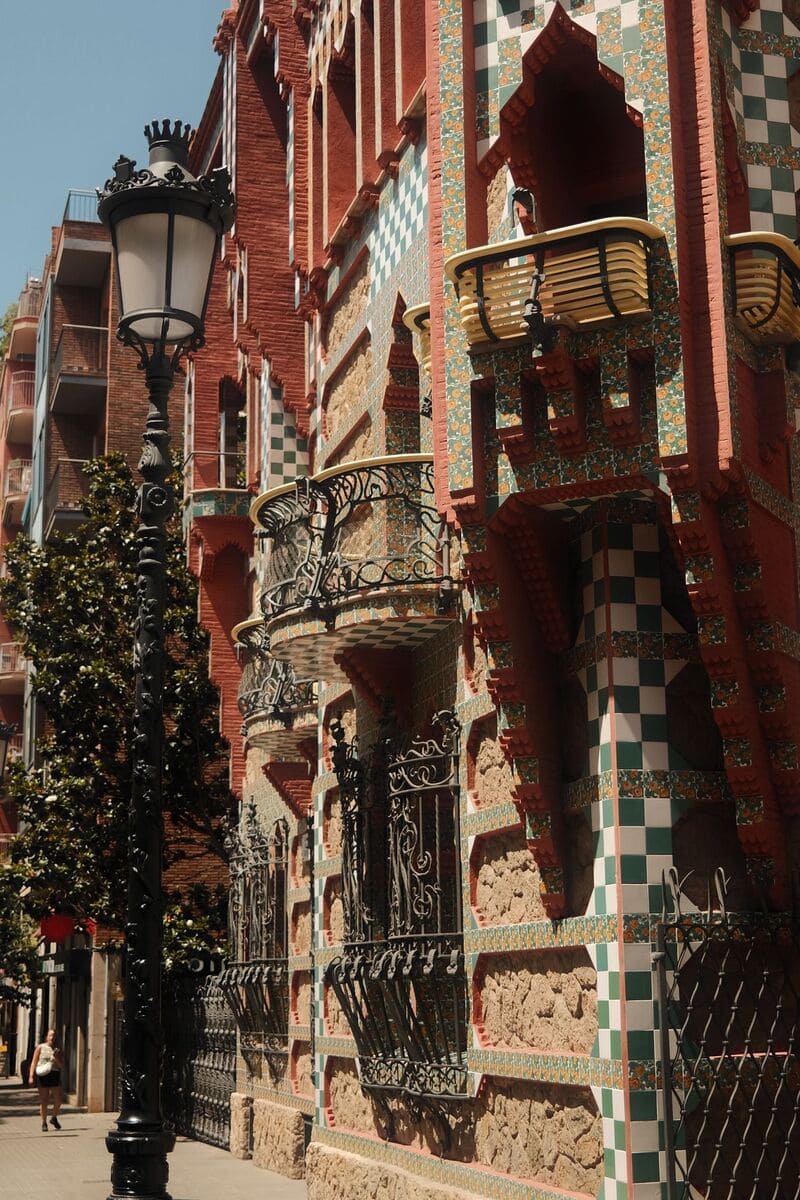
Gaudí began Casa Vicens in 1883.
He was 31 years old, and it was his first major commission.
The client was Manuel Vicens i Montaner, a stockbroker who wanted a summer home in Gràcia.
At the time, Gràcia wasn’t part of Barcelona at all.
It was a separate town, only folded into the city years later.
So technically, Gaudí’s first building wasn’t built in Barcelona either.
The façade is covered in ceramic tile and Moorish-inspired ironwork, a style historians call his “orientalist period.”
Gaudí later called it his manifesto house: the first place he used the structural and decorative ideas that would define everything he built afterward.
It sat as a private home, then a divided apartment building, for over a century.
It only opened to the public as a museum in 2017.
FUN FACTS
The yellow flower pattern on every tile isn’t decoration Gaudí invented. When he first visited the empty plot, it was covered in wild marigolds. He designed the entire facade tile around that one flower.
The iron entrance gate is shaped like palm fronds for the same reason: there was a single palm tree growing on the site before construction started.
2) Palau Güell, the twenty chimneys just off La Rambla
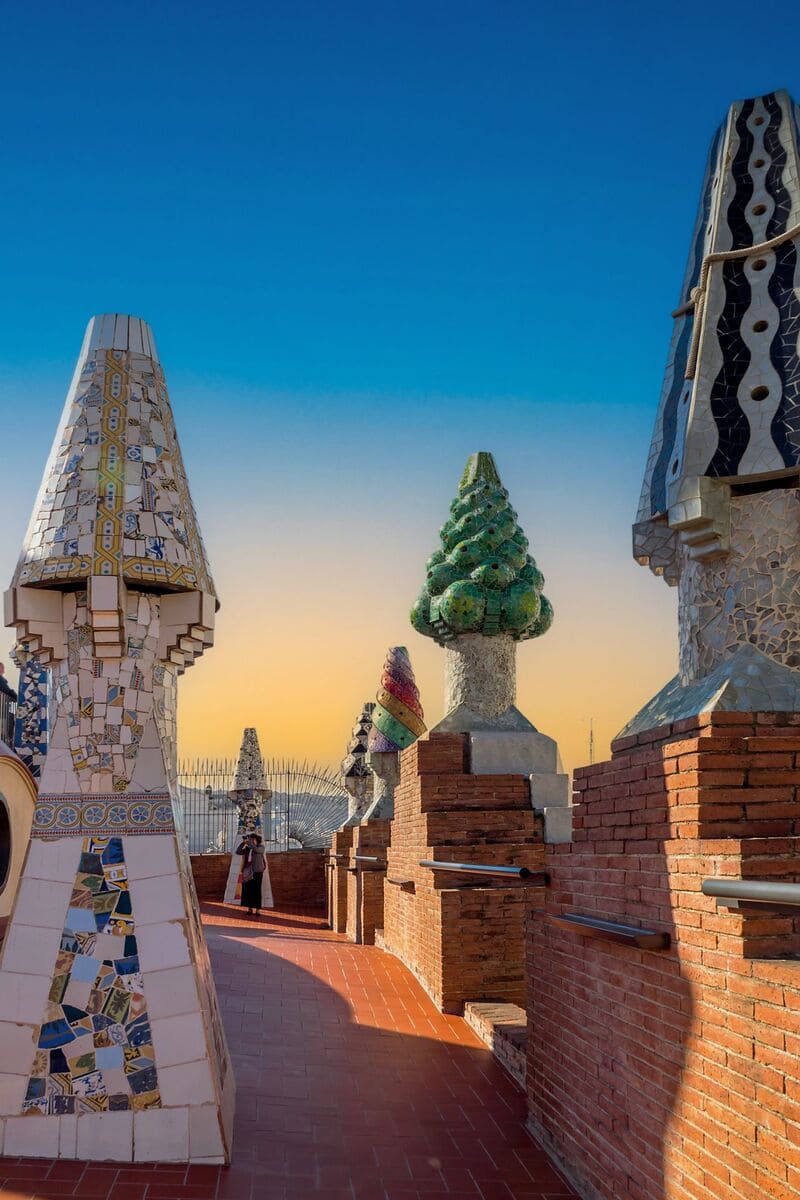
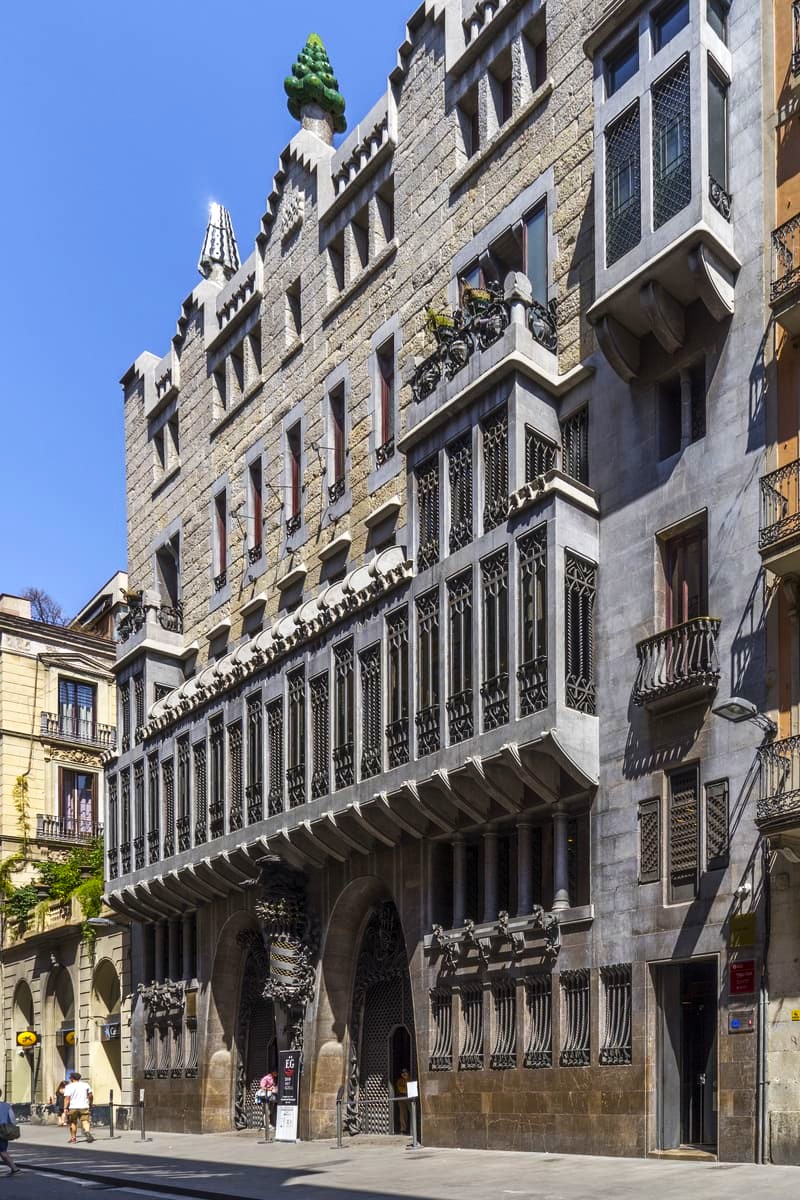
This one came a few years later, built between 1886 and 1888.
It was commissioned by Eusebi Güell, the industrialist who’d become Gaudí’s most important patron for the rest of his career.
From the street, Palau Güell looks almost restrained for Gaudí.
Go up to the roof and that changes fast.
Twenty chimneys, each a different shape, each covered in broken tile mosaic.
That technique is called trencadís, and Gaudí would reuse it years later at Park Güell.
Inside, the central hall rises through multiple floors under a dome pierced with small round openings, designed to feel like a starlit sky at night.
FUN FACTS
Gaudí wasn’t satisfied easily. He sketched roughly 25 different versions of the facade before settling on the plain, understated one that actually got built.
3) Park Güell, the housing project that never sold
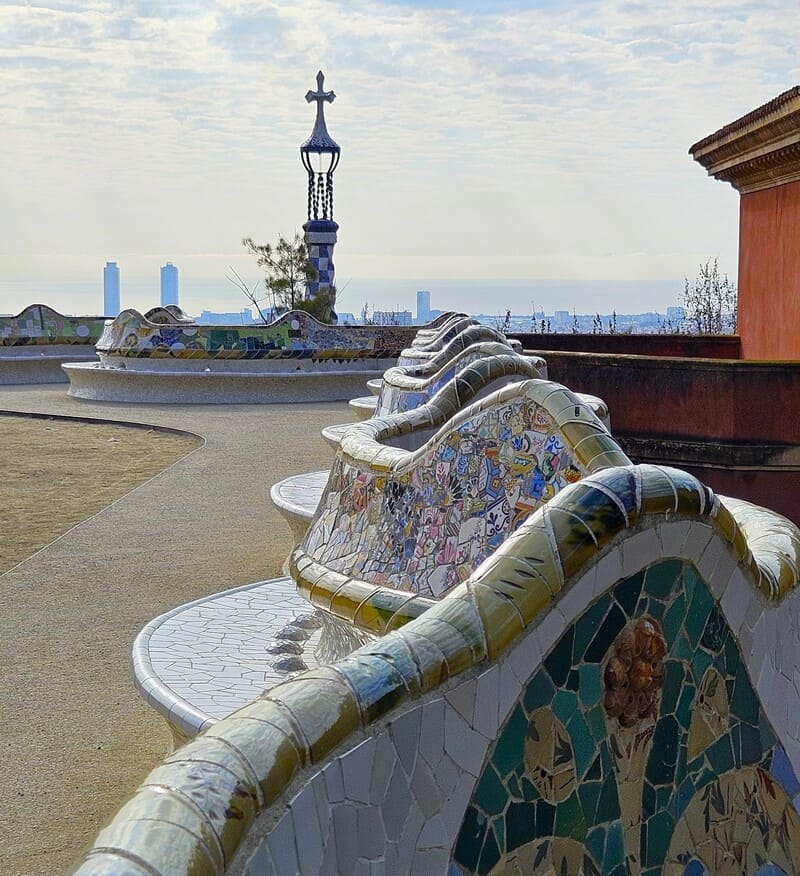
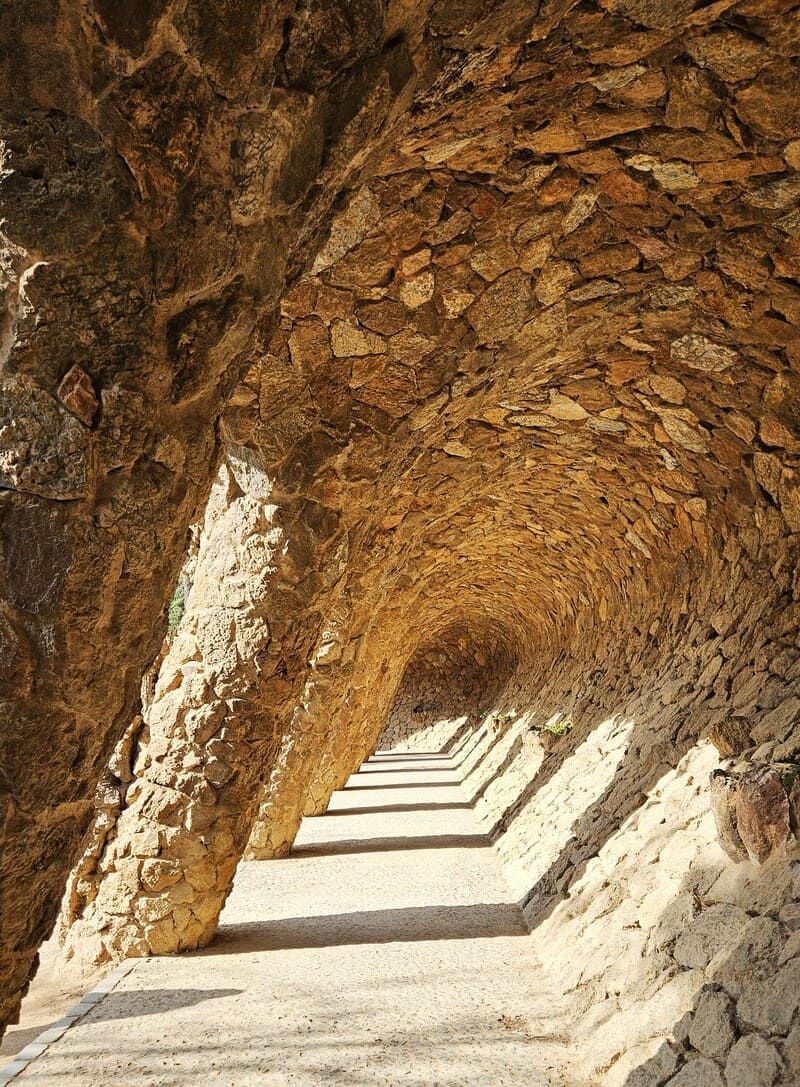
Park Güell wasn’t designed as a park.
It was supposed to be a gated housing estate: 60 plots for Barcelona’s wealthiest families, modeled on the English garden city.
Construction started in 1900.
By 1914, only two of the sixty plots had actually sold.
One buyer built a villa.
The other house was bought by Gaudí himself, in 1906, and he lived there with his father.
Güell died in 1918.
His family handed the unfinished estate over to Barcelona’s city council in 1922.
It opened to the public as a municipal park in 1926, the same year Gaudí died.
A failed real estate project became one of the most visited parks on earth by accident.
FUN FACTS
The famous curved bench that wraps around the main square, 110 meters of it, was shaped in an unusual way. Gaudí had a worker sit down in wet plaster so the seat would mold to the exact curve of a resting human body.
4) Casa Batlló, a remodel of someone else’s building
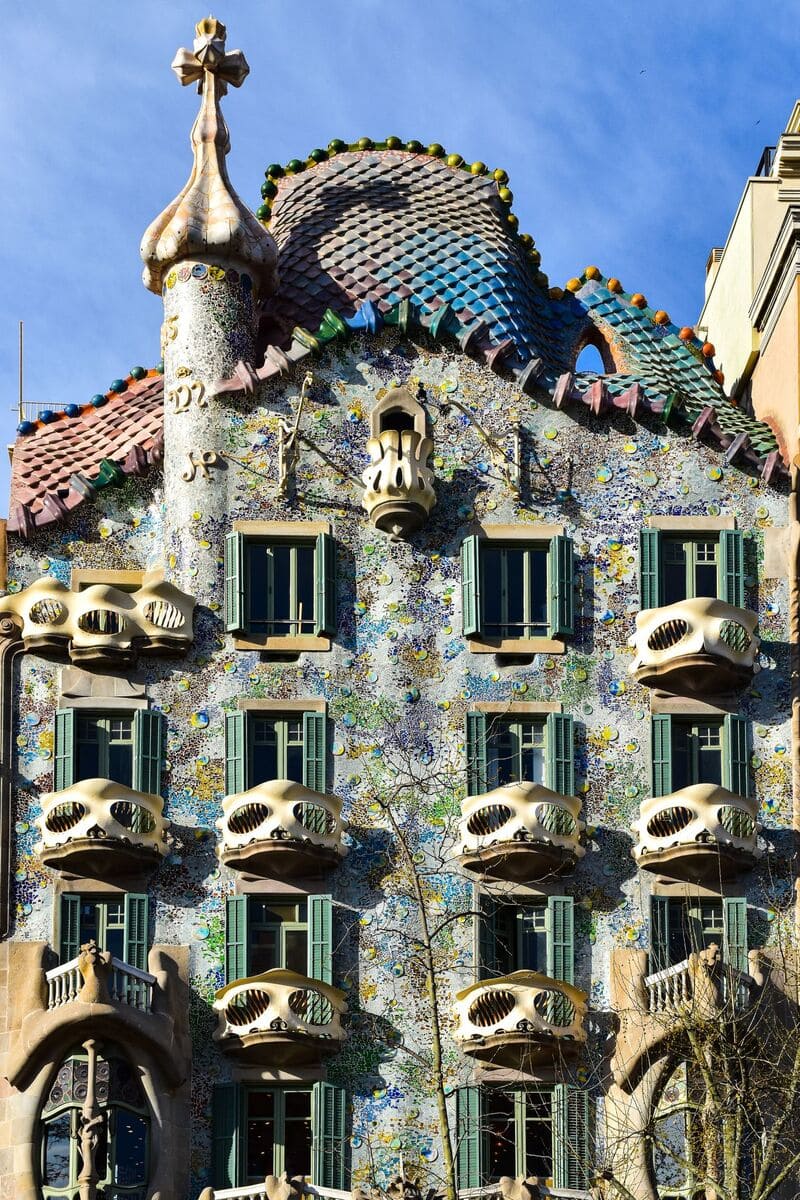
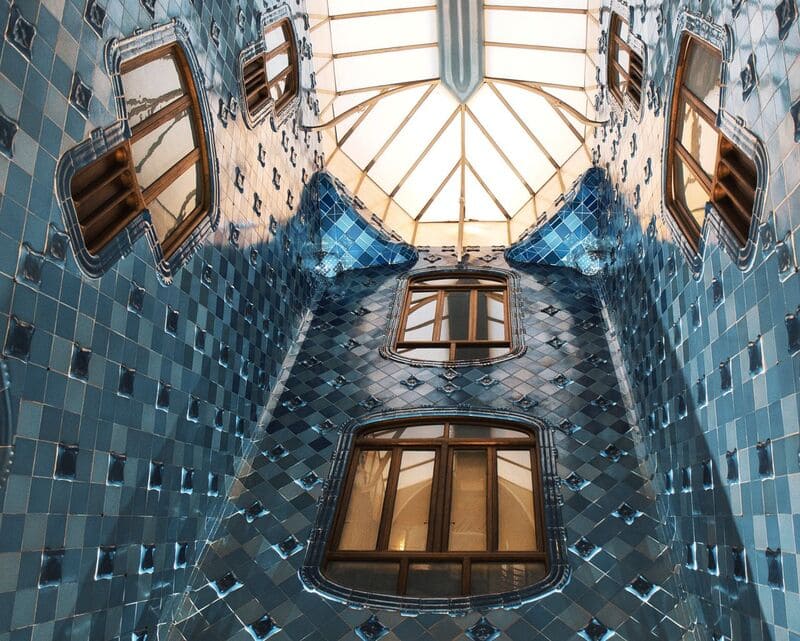
Unlike most of the others, Casa Batlló wasn’t built from scratch.
It already existed as an ordinary apartment building from 1877.
Gaudí was hired in 1904 to remodel it completely, and finished two years later.
What he handed back barely resembled the original structure.
A rippling, scale-covered roof most people read as a dragon’s back.
Bone-shaped balconies.
A façade of shifting blue and green tile that changes with the light.
Locals nicknamed it Casa dels ossos, the House of Bones, long before it became one of the most photographed buildings on Passeig de Gràcia.
FUN FACTS
The most popular theory is that the whole facade retells the legend of Sant Jordi, Catalonia’s patron saint, slaying a dragon: the roof is the dragon’s back, the cross-topped tower is his sword, the balconies are the skulls of its victims. Gaudí never confirmed this himself, so it stays a theory, not a fact, but it’s the one tour guides tell most often.
5) Casa Milà, the building with no straight walls
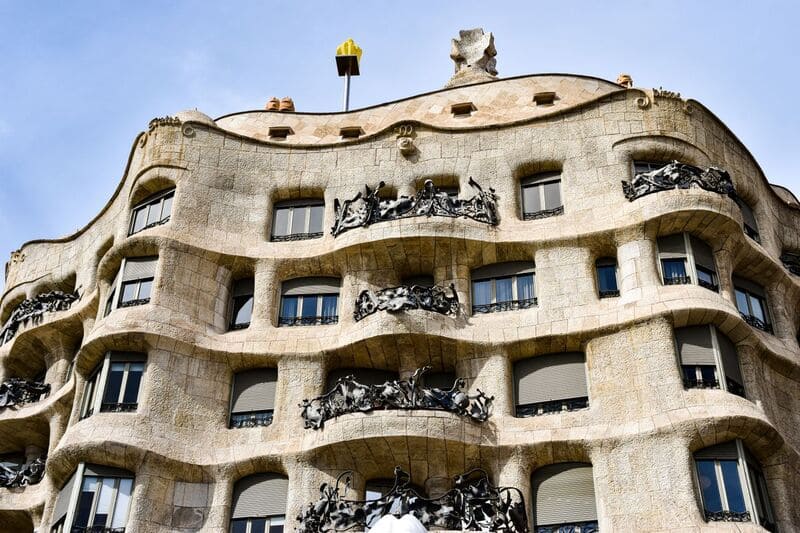
Also known as La Pedrera, built between 1906 and 1912.
Every floor plan inside curves.
There isn’t a single straight load-bearing wall in the entire structure, which was almost unheard of for an apartment building at the time.
Barcelona wasn’t impressed when it went up.
Critics mocked the rippling stone façade and gave it the nickname that stuck: La Pedrera, “the quarry,” meant as an insult.
A century later, it’s one of the most recognizable buildings in the city.
FUN FACTS
Casa Milà had one of the first underground garages built into a residential building anywhere, at a time when cars were still a novelty for the rich. One future tenant owned a Rolls-Royce that couldn’t fit down the ramp, so Gaudí agreed to remove a support pillar to make room for it.
6) The crypt of Colònia Güell, the one that isn’t in Barcelona
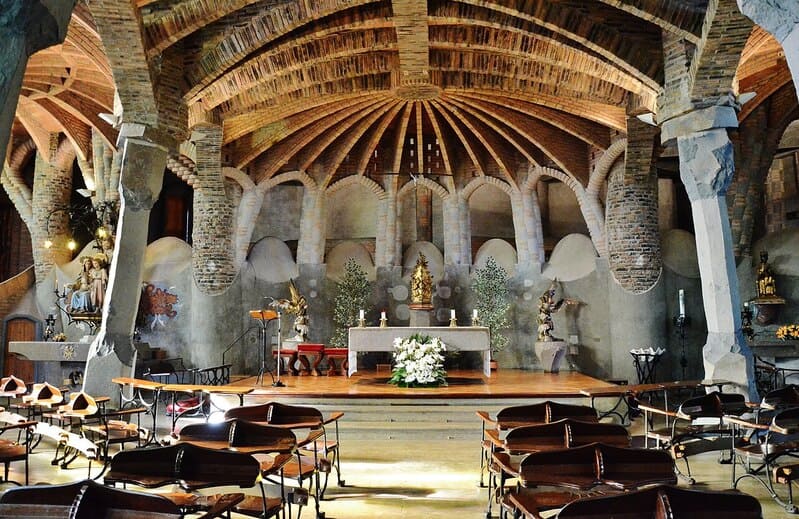
This is the outlier of the seven.
Eusebi Güell commissioned it in 1898 as a church for the workers at his textile factory village.
Construction only began in 1908, ten years later.
Gaudí used the project as a testing ground, working out the structural techniques he’d later apply at full scale in the Sagrada Família.
Then, in 1914, the Güell family pulled funding.
Only the lower nave and entrance porch were ever finished.
That’s why it’s known simply as “the crypt”: the rest of the planned church above it was never built.
This is the only one of the 7 not actually in Barcelona.
It sits in Santa Coloma de Cervelló, about 14 miles (23 km) outside the city, roughly 20 minutes away by train.
UNESCO’s own listing describes the seven buildings as being “in or near Barcelona,” and this is the one doing the “near” part of that sentence.
FUN FACTS
This is where Gaudí figured out the shape of his arches. He hung weighted chains and strings upside down from the ceiling of a workshop, let gravity pull them into curves, then photographed the result and flipped the photo right side up. That upside-down chain method, worked out here first, is the same one he later used to design the structure of the Sagrada Família.
7) The Sagrada Família’s Nativity façade and crypt, the only part that counts
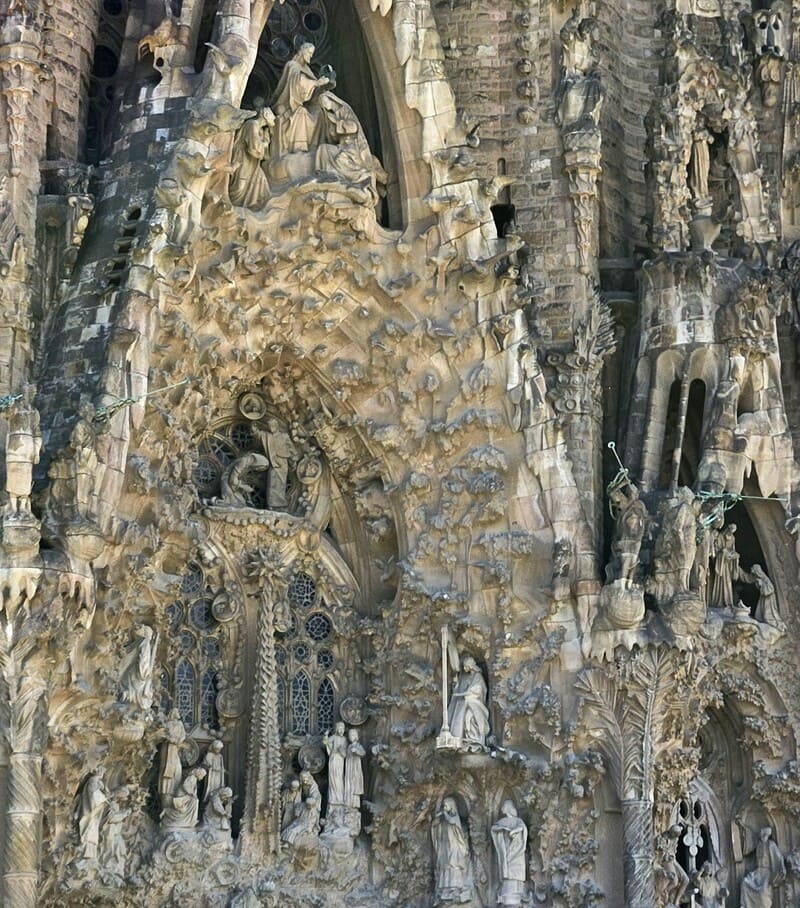
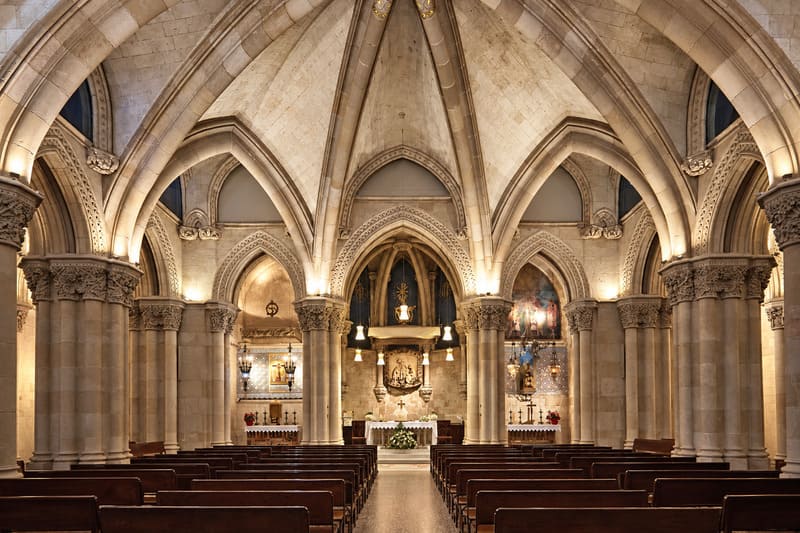
Here’s something most visitors don’t realize: the Sagrada Família as a whole isn’t actually the UNESCO-listed structure.
Only two specific parts of it are.
Gaudí took over the project in 1883, keeping the crypt that was already underway and redesigning everything above it.
The first mass was held in that crypt in 1885, years before most of the building existed.
Gaudí spent his final years working almost exclusively on the Nativity façade, the side facing what’s now Carrer de la Marina.
He died in 1926 having seen only one tower of it completed.
Everything built after his death, including the towers, the nave, and the Tower of Jesus Christ blessed by Pope Leo XIV in 2026, falls outside the original UNESCO inscription.
It’s only the crypt and the Nativity façade, the parts Gaudí personally oversaw, that earned the basilica its place on this list.
FUN FACTS
Gaudí is buried inside the building he spent his life on. His tomb sits in a small chapel within that same crypt, directly beneath the basilica he never saw finished.
Where to go next
If you want to see exactly how that Nativity façade grew, stone by stone, over more than a century, I put together a full photo timeline of the process: 140+ years of the Sagrada Família in photos. It starts right where this list left off, with Gaudí taking over a half-built crypt in 1883.
And if reading about seven Gaudí buildings has you thinking he built all of Barcelona’s Modernisme architecture by himself, he didn’t. Two other architects were racing him for the same commissions at the same time, and some of what they built rivals Gaudí’s own work: Barcelona’s best Modernisme buildings (and why they’re not all Gaudí).