12 Underrated Museums in Barcelona You Probably Missed!
By Dorian · Updated September 28, 2026
Ever walked right past a Gaudí palace?
Most people on La Rambla do.
Barcelona is full of museums like that.
Famous neighbors, empty rooms, and stories better than the headliners.
1) Palau Güell, the Gaudí palace everyone walks past
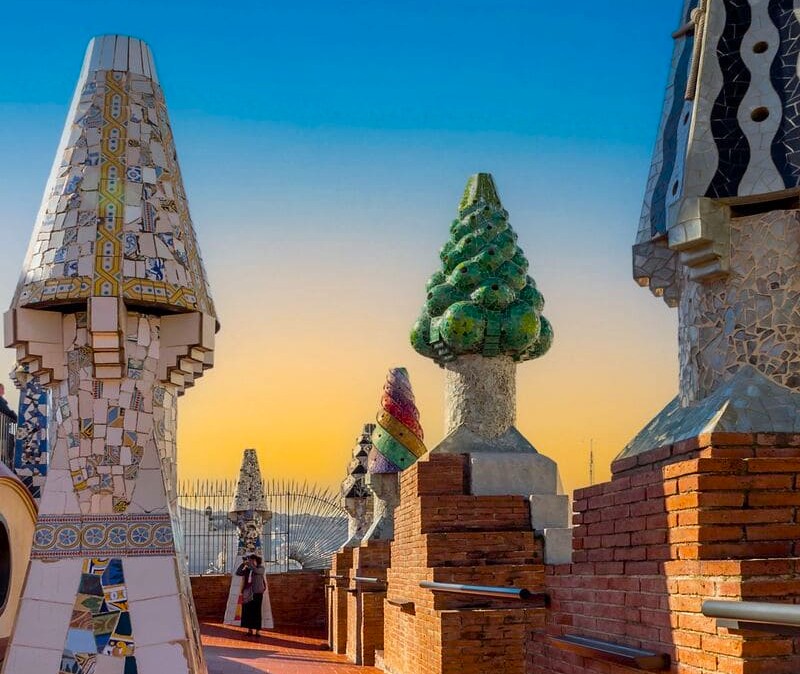
Gaudí built this palace between 1886 and 1890 for Eusebi Güell, his most important patron.
It stands a few steps off La Rambla.
Thousands of people pass its iron gates every day without going in.
Start at the bottom. The basement held the horse stables, and carriages drove straight in through the arched doors on the facade.
Then look up in the central hall. The dome is pierced with small openings that make it glow like a starry sky.
Finish on the roof, with its 20 chimneys, most of them covered in broken-tile mosaic.
That rooftop is a first draft of what Gaudí later did at Park Güell and Casa Batlló, years before either existed.
2) MUHBA Plaça del Rei, a Roman town under your feet
In 1931, the city was cutting a new avenue, Via Laietana, through the old town.
A Gothic mansion called Casa Padellàs stood in the way.
So they took it apart stone by stone and rebuilt it in Plaça del Rei.
While they dug the new foundations, they hit Roman Barcelona.
Today, a walkway takes you through about 43,000 square feet (4,000 m²) of excavated streets under the square.
You pass a laundry, a dye workshop, a fish-salting factory, and wine vats.
You also see the remains of the city’s first Christian community, including its baptistery.
Back above ground, the same ticket usually covers the Saló del Tinell, a vast royal hall from 1370, when there’s no temporary exhibition in it.
3) Museu Frederic Marès, one man’s obsession with everything
This museum sits right next door to Plaça del Rei, inside part of the old royal palace.
Frederic Marès was a sculptor who lived from 1893 to 1991. He was also a collector who couldn’t stop.
He gave his collections to the city in 1946, and the museum opened in 1948.
The ground floors hold serious sculpture, mostly religious carvings covering centuries of Spanish art.
But the upper floors are why people fall for this place.
Marès called them his “Sentimental Museum.”
Room after room of thousands of everyday objects: fans, pipes, keys, pocket watches, jewelry, toys, old photographs.
It reads like a portrait of daily life in 19th-century Barcelona, told through the things people carried.
4) MNAC, and the Romanesque rooms most visitors skip
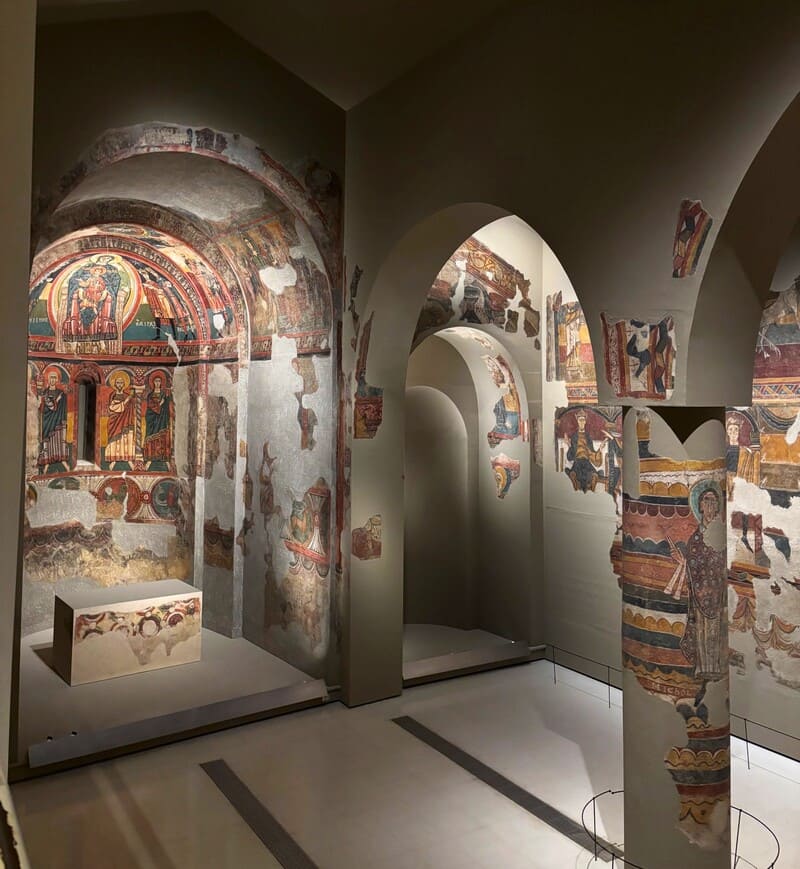
Everyone photographs the Palau Nacional from the steps of Montjuïc.
Far fewer go inside for its best collection.
The museum holds Romanesque church murals from the Catalan Pyrenees, painted roughly 900 years ago.
How they got to Barcelona is the story.
Around 1919, the murals of Santa Maria de Mur had been stripped off the church walls and sold. They ended up in the Museum of Fine Arts in Boston.
Worried the rest would vanish too, Catalan museum officials moved fast.
Between 1919 and 1923, they bought the remaining paintings and peeled them off the walls using a technique called strappo.
Cloth and glue lift only the paint layer, leaving the plaster behind on the original wall.
The paintings were then mounted inside the museum in the shape of the church apses they came from.
The apse from Sant Climent de Taüll is the one to stand in front of.
5) Monestir de Pedralbes, where a queen has two faces
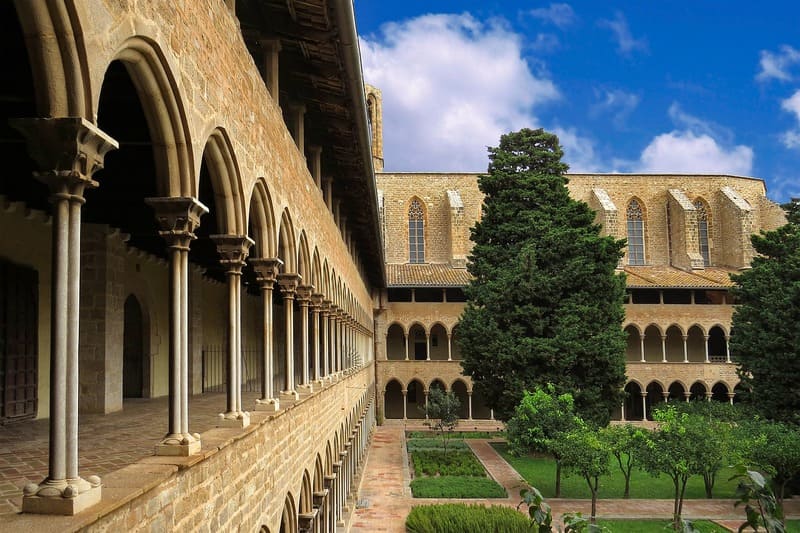
Queen Elisenda de Montcada founded this monastery in 1327, with the support of her husband, King James II.
It went up in about a year, which is why it looks so unified. It’s pure Catalan Gothic, with no later styles mixed in.
Poor Clare nuns lived here almost without interruption until 1983.
The three-story cloister is one of the most peaceful spaces in the city.
Don’t miss the queen’s tomb.
It’s carved on both sides. Facing the church, Elisenda is shown as a queen. Facing the cloister, where the nuns walked, she’s shown as a widow and penitent.
Then step into the small Chapel of Sant Miquel. Its murals were painted by Ferrer Bassa starting in 1343, with a clear influence from Giotto and the Italian painters of his time.
6) Casa Amatller, next door to Casa Batlló, without the line
This is the building people photograph by accident while framing Casa Batlló.
It’s literally attached to Gaudí’s house.
Josep Puig i Cadafalch remodeled it between 1898 and 1900 for Antoni Amatller, one of the city’s big chocolate makers.
Look at the stepped gable on top. Its shape is borrowed from Dutch townhouses.
Inside, the main floor where Amatller lived with his daughter Teresa is now a museum, with its original furniture and decor.
There are two main ways in. The audio-guide visit lets you go at your own pace. The guided tour adds a live guide and a taste of Amatller chocolate. Check the official site for current options.
7) El Born CCM, a neighborhood frozen in 1714
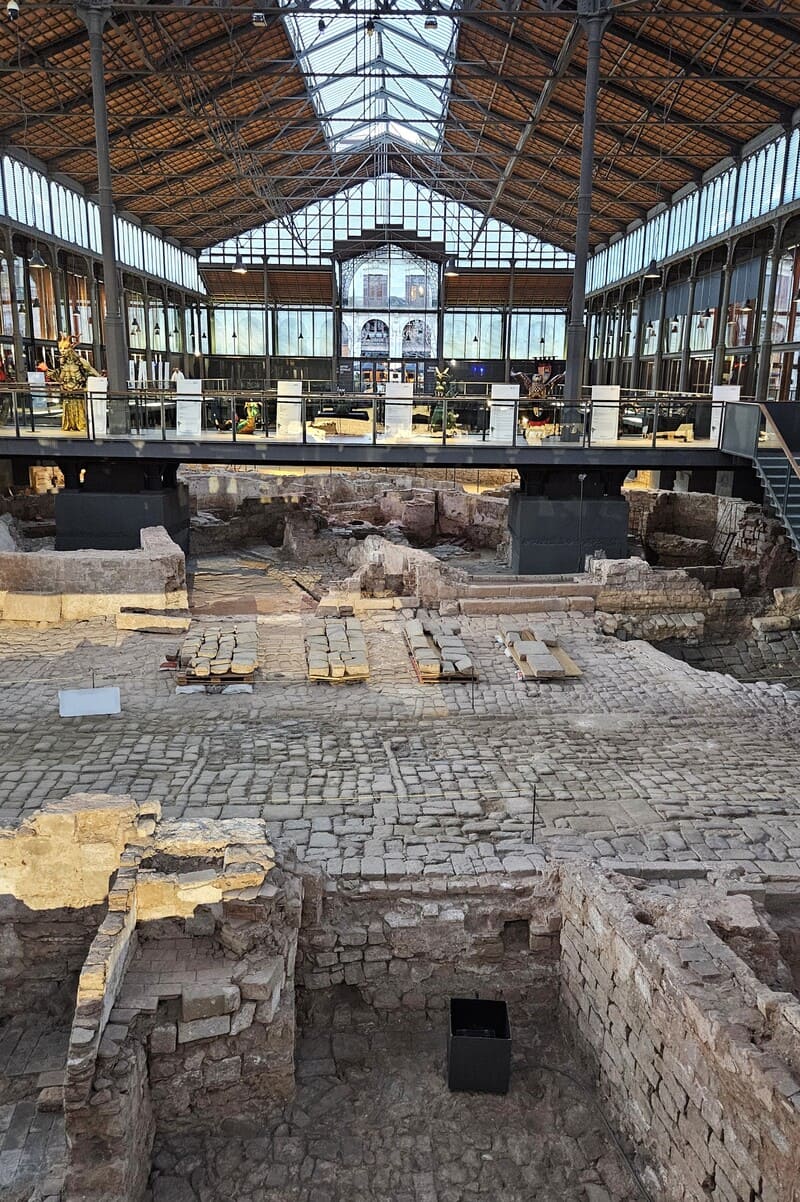
This vast iron market hall was designed by Josep Fontserè and opened in 1876.
The plan, much later, was to turn it into a library.
Then the builders dug down and found entire streets.
They are the remains of a neighborhood demolished after the siege of 1714, on the orders of King Philip V, to make room for a military citadel.
Because the houses were torn down all at once, the ruins are a snapshot of one exact moment in Barcelona’s history.
You can walk into the building and look down over the ruins for free.
Guided visits that take you into the archaeological site itself cost extra and are worth booking ahead.
8) Casa Vicens, the first house Gaudí ever designed
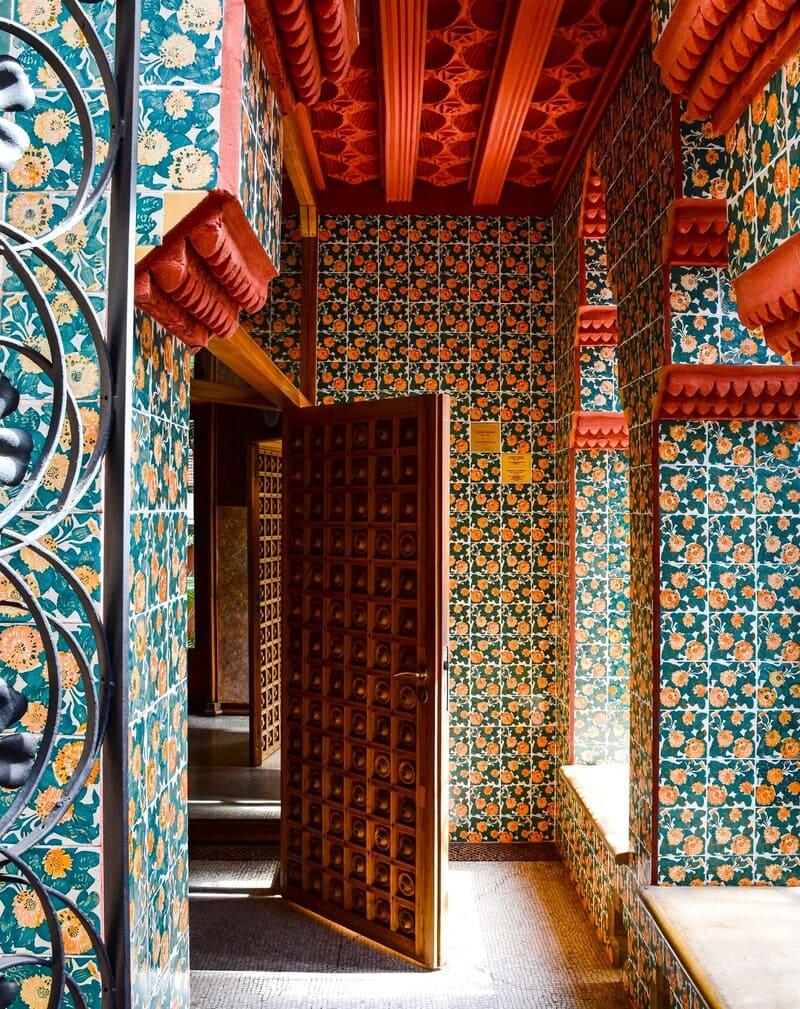
Gaudí built it between 1883 and 1885 as a summer home for Manel Vicens.
Back then, Gràcia was a separate town, not a Barcelona neighborhood.
That’s why the house stands on its own, surrounded by garden, on a street where everything else is packed tightly together.
It stayed a private home for well over a century.
It only opened as a museum in November 2017.
The green-and-white tiles, the brick, the Moorish-style details: you can see Gaudí’s style being born here, long before the curves took over.
9) MEAM, the museum next to Picasso that almost nobody enters
The Museu Europeu d’Art Modern sits in Palau Gomis, an 18th-century palace right beside the Picasso Museum.
The two lines couldn’t look more different.
MEAM shows only figurative art from the 20th and 21st centuries: portraits, bodies, faces, sculpture you can actually recognize.
That’s rare. Most modern art museums lean heavily toward abstraction.
Some of the work is hyperrealist enough that you’ll lean in to check it’s really paint.
Every so often, the courtyard hosts live blues, jazz, or Spanish guitar.
10) Banksy Museum, the one with an honest asterisk
Let’s be clear about this one first.
None of the works here were made by Banksy.
The museum isn’t authorized by him either. Other street artists recreated his pieces using his stencils and methods.
So why is it on this list?
Because Banksy’s originals were painted on walls across England, the United States, France, and the Middle East. Many have been painted over, removed, or destroyed.
Here you get about 130 life-size reproductions in one place, across three floors on Carrer de Trafalgar.
That includes Girl with Balloon, Flower Thrower, and a replica of the Walled Off Hotel, the guesthouse Banksy opened in Bethlehem.
Go for the ideas, not for authenticity, and you’ll enjoy it.
11) CosmoCaixa, a rainforest under a Modernista building
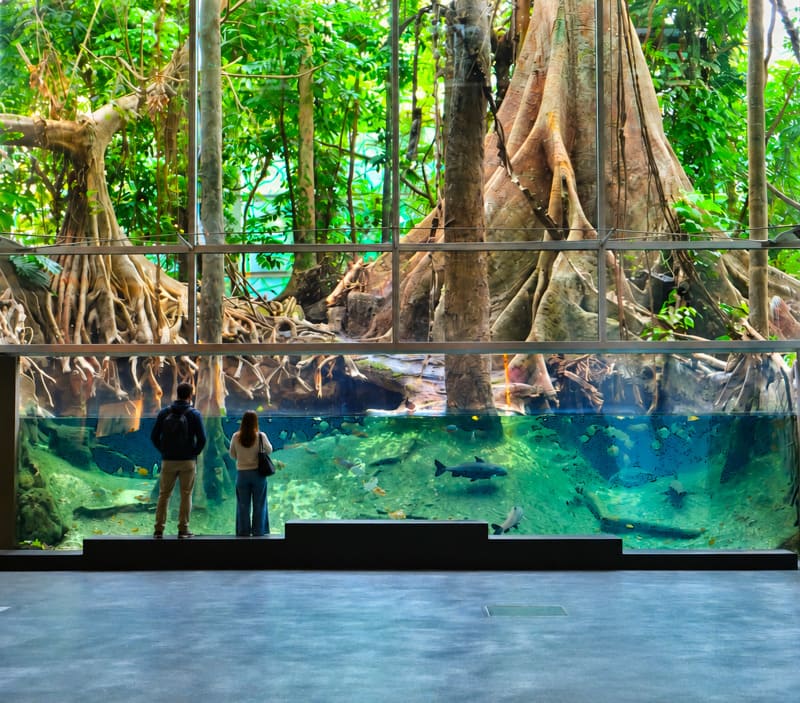
The entrance building was designed by Josep Domènech i Estapà and built between 1904 and 1909.
It was an asylum for the blind until 1979.
Two years later, it opened as one of Spain’s first popular science museums.
After a major expansion in 2004, most of the museum now sits underground, reached by a long spiral ramp wrapped around an Amazonian tree.
The highlight is the Flooded Forest: about 10,800 square feet (1,000 m²) of recreated Amazon, with piranhas, over 100 species, and tropical rain.
Its giant trees were cast from molds made in the Brazilian state of Pará.
Nearby, the Geological Wall displays seven real sections of rock weighing close to 110 tons (100 tonnes).
It sits at the foot of Tibidabo, well outside the center. Plan it as a half-day on its own.
12) Carrosses Fúnebres, Barcelona’s most unusual museum
Yes, it’s a hearse museum.
And yes, it’s genuinely beautiful.
It stands at the entrance to Montjuïc cemetery, which dates from 1883.
Inside are more than 20 vehicles: horse-drawn funeral carriages, mourners’ coaches, and early motorized hearses, including a Buick.
The funeral company that runs it claims it’s the largest museum of its kind in the world.
The craftsmanship is the surprise. Carved wood, glass panels, plumes, and silver fittings, built for the most elaborate funerals the city ever held.
If you have time afterward, the cemetery itself is worth a slow walk. Joan Miró and Ildefons Cerdà, the engineer who designed the Eixample, are both buried here.
Where to go next
Two stops on this list, Palau Güell and Casa Amatller, belong to a much bigger story.
Gaudí wasn’t working alone. He was competing with rival architects for the same clients, sometimes on the same block.
I laid out that rivalry, building by building, in Barcelona’s best Modernisme buildings (and why they’re not all Gaudí).
And if you liked stepping off the usual route, you’ll like this one even more. It moves out of the museums and into the streets, with the spots most people walk right past: Barcelona’s hidden corners.