Barcelona Will Disappoint You If You Travel Like This
By Dorian · Updated September 16, 2026
Barcelona photographs beautifully.
That’s part of the problem.
Most first-time visitors arrive with a mental image built from other people’s feeds, then try to force the real city into that image.
It doesn’t fit.
Here’s where that gap actually shows up, and what to expect instead.
1) You treat Barcelona like a theme park
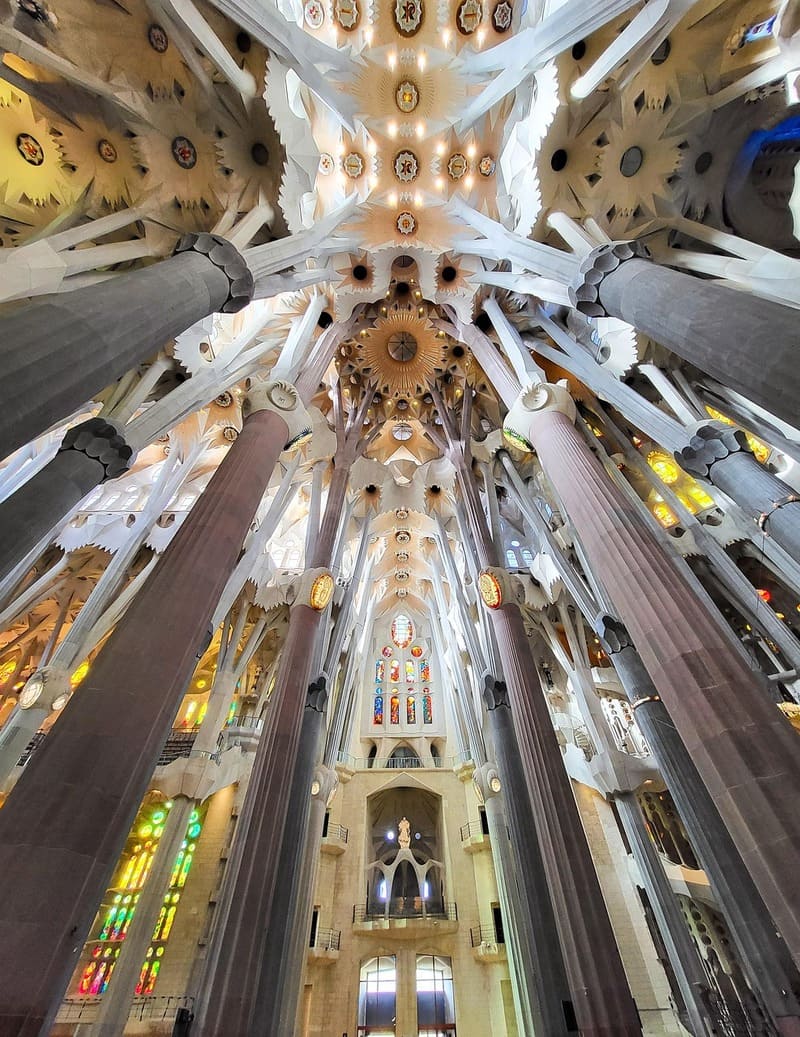
Sagrada Família doesn’t sell walk-up tickets anymore.
There’s no ticket office at the door.
Everything goes through a timed slot, booked online, in advance.
In 2026, Gaudí’s centenary year, popular slots are selling out 10 to 14 days ahead in peak season.
Tower access sells out even faster.
Park Güell works the same way.
Only the ticketed Monumental Zone, home to the mosaic bench and the dragon staircase, has a cap on visitors.
It regularly sells out on the day.
Show up expecting to buy your way in like you would at an amusement park, and you’ll be looking at the gate from outside.
2) You try to fit Barcelona into a single rushed day
On a map, Park Güell, the Gothic Quarter, and the beach look close together.
They’re not a five-minute walk apart.
Park Güell sits up in a hillside neighborhood.
Barceloneta is down at sea level, on the opposite side of the city.
Cramming both into one day, plus Sagrada Família, plus a proper lunch, means spending most of your day in transit.
You’ll see everything.
You’ll remember almost none of it.
Barcelona rewards picking two, maybe three things per day, and actually being there for them.
3) You imagine La Rambla as a charming, authentic promenade
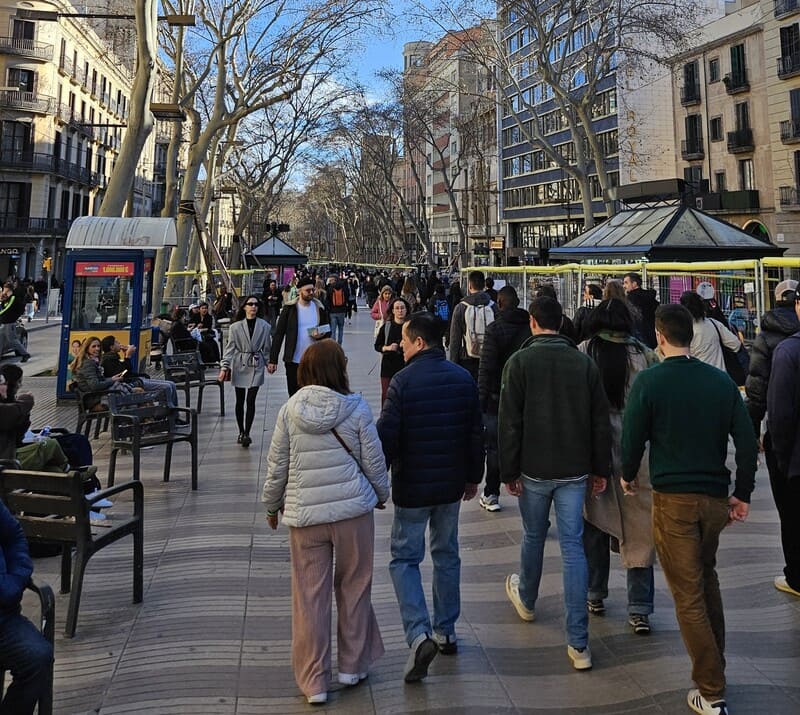
La Rambla photographs like a tree-lined boulevard out of an old postcard.
In person, it’s a dense, slow-moving river of people, flower stalls, and street performers, most of them working the same stretch of pavement every day for tourists passing through once.
It’s worth walking, once, for the scenery.
It’s not where Barcelona actually lives.
The real street life, the kind with neighbors who know each other, sits a few blocks away in El Raval and El Born, or further out in Gràcia.
4) You eat on La Rambla
The restaurants lining La Rambla know they’ll probably never see you again.
That shapes the menu.
Paella served here is frequently pre-made, reheated, and priced for someone who won’t be back to complain.
A restaurant with a laminated menu in eight languages and someone standing outside trying to wave you in is telling you exactly who it’s built for.
Walk one block off the main strip and the prices drop while the food gets noticeably better.
5) You expect tapas bars near tourist sites to serve fresh, local food
This isn’t only a La Rambla problem.
Any restaurant sitting directly outside a major attraction, Sagrada Família, Park Güell, the cathedral, is optimized for one thing: capturing people who are hungry, tired, and not planning to come back.
Menus at these spots tend to be broad rather than good, covering paella, pizza, and burgers under one roof so nobody walks away disappointed by the concept, even if the execution is mediocre.
The best tapas in Barcelona are almost never the ones with a queue outside a landmark.
They’re a short walk into the surrounding neighborhood, at a bar with a short, handwritten menu that changes with what’s fresh that day.
6) You expect Barceloneta to be a tropical beach
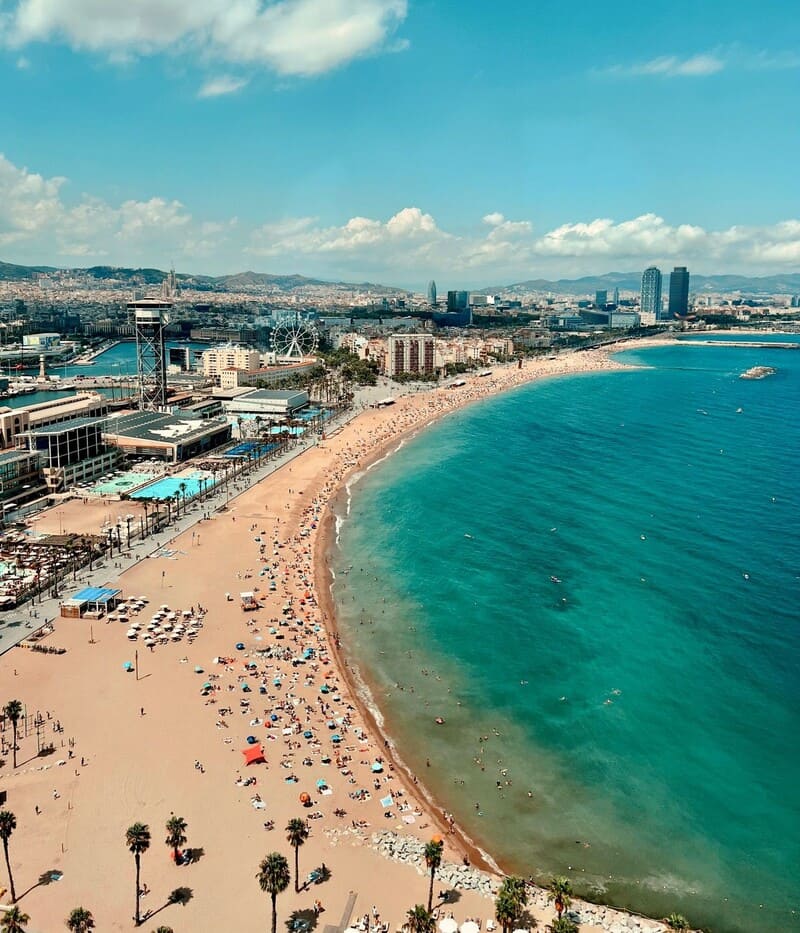
Barceloneta’s golden sand looks like it’s always been there.
It hasn’t.
Before 1992, that stretch of coastline was industrial: warehouses, rail tracks, and a shantytown called Somorrostro, with no real access to the sea.
Ahead of that year’s Olympic Games, the city cleared the site and imported sand to build the beach from scratch.
What you get today is a genuinely good urban beach, city noise included, packed shoulder to shoulder in summer, with the skyline and cranes of a working port visible down the coast.
It’s not a quiet Caribbean cove, and it was never meant to be one.
Judged as what it actually is, a beach the city built for itself, it’s a success. Judged against a postcard fantasy, it’ll always come up short.
7) You stay only in the Gothic Quarter or El Born
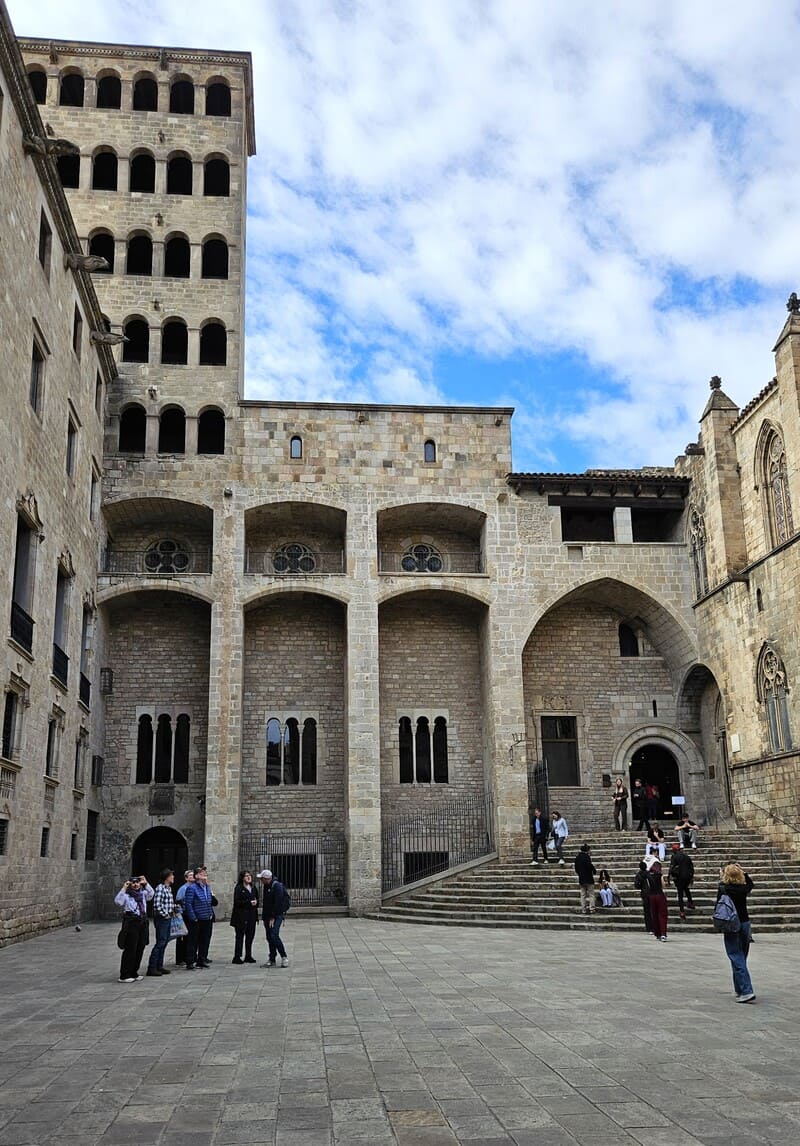
These two neighborhoods hold most of the postcard Barcelona: medieval alleys, Roman ruins, boutique shops.
They’re also the neighborhoods with the highest concentration of visitors, which changes what actually happens in them day to day.
Basing an entire trip here, and never leaving, means mostly interacting with a version of the city built around tourism rather than the city itself.
Gràcia, with its small squares and independent shops, or Sant Antoni, built around its restored market hall, show a different rhythm entirely.
Fewer landmarks, more actual neighborhood.
8) You travel in peak season without a plan
Summer in Barcelona means longer lines, higher prices, and sold-out time slots at every major site.
2026 raises the stakes further: the Gaudí centenary has pushed visitor numbers at Sagrada Família toward record highs, and popular months are selling out even earlier than usual.
There’s a second, quieter trap in peak season too.
Plenty of small, family-run restaurants close for two or three weeks around mid-August, while their owners take their own holiday.
The major sights stay open.
That specific neighborhood spot you saved from someone’s feed might not be.
A rough plan, booked a few weeks ahead, avoids almost all of this.
9) You mistake the slow pace for bad service
Nobody rushes your table in Barcelona.
The bill doesn’t arrive unless you ask for it.
A two-hour lunch isn’t the staff falling behind, it’s the meal working exactly as intended.
Visitors used to a faster rhythm sometimes read this as being ignored.
It’s the opposite.
You’ve been handed the table for as long as you want it, with nobody hovering to turn it over for the next group.
10) You ignore Catalan culture and language
Catalan isn’t a dialect of Spanish.
It’s its own language, with its own grammar and history, and it’s the language you’ll actually hear spoken on the street, on signage, and on menus across the city.
A basic “bon dia” (good morning) or “gràcies” (thank you) goes further here than the equivalent in Spanish.
One counterintuitive detail trips up a lot of visitors looking for “local culture”: flamenco.
It’s genuinely worth seeing in Barcelona, but it isn’t Catalan.
Flamenco’s roots are in Andalusia, in the south of Spain.
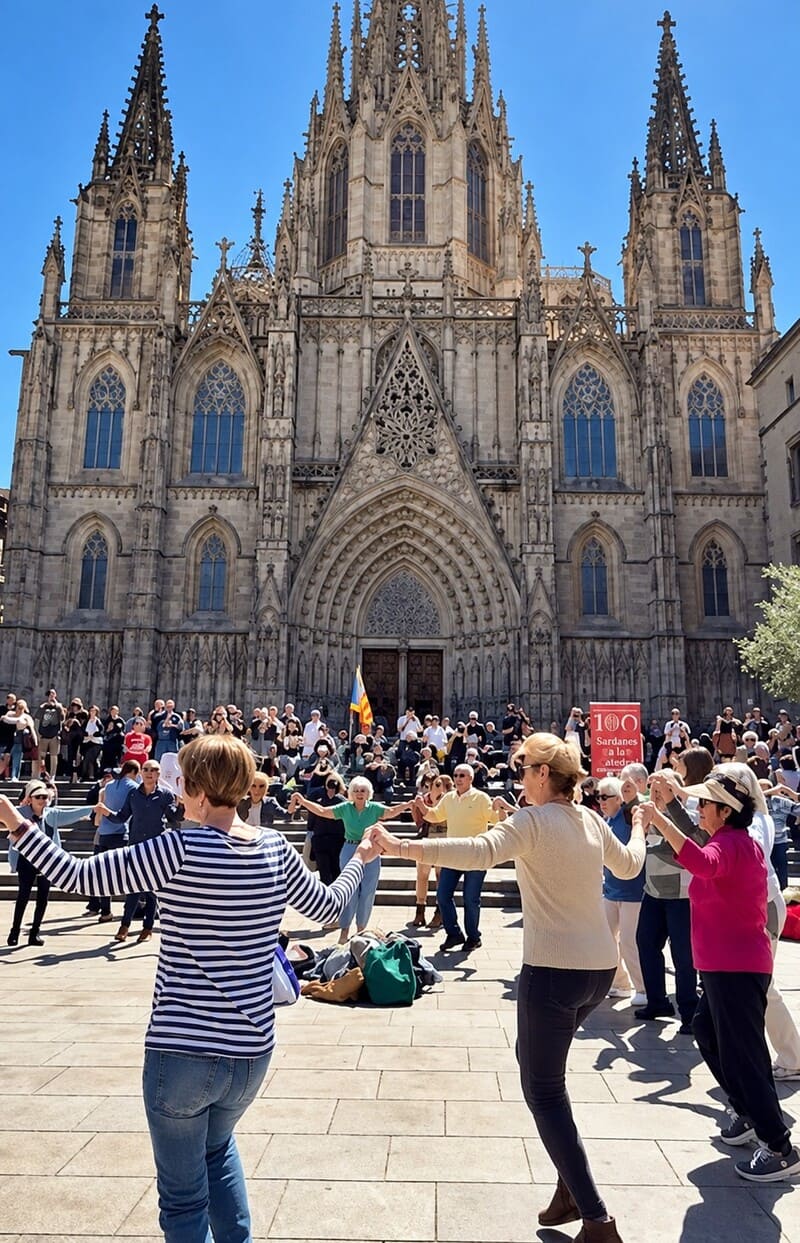
Catalonia’s own traditional dance is the sardana, a circle dance danced by locals, hand in hand, most Sunday mornings outside the cathedral.
It’s free, it’s unpolished by design, and almost nobody visiting for the first time knows to look for it.
11) You treat locals like background characters
Narrow medieval streets weren’t built for a tripod and a ten-minute photo shoot.
Blocking a doorway for a picture, talking loudly past midnight in a residential street, or treating a neighborhood market like a photo backdrop rather than someone’s actual grocery run all register the same way to the people who live there.
None of it requires much effort to avoid.
A little awareness of who else is using the same street changes how a neighborhood responds to you, and how much of it you actually get to see.
12) You assume Spain means cheap
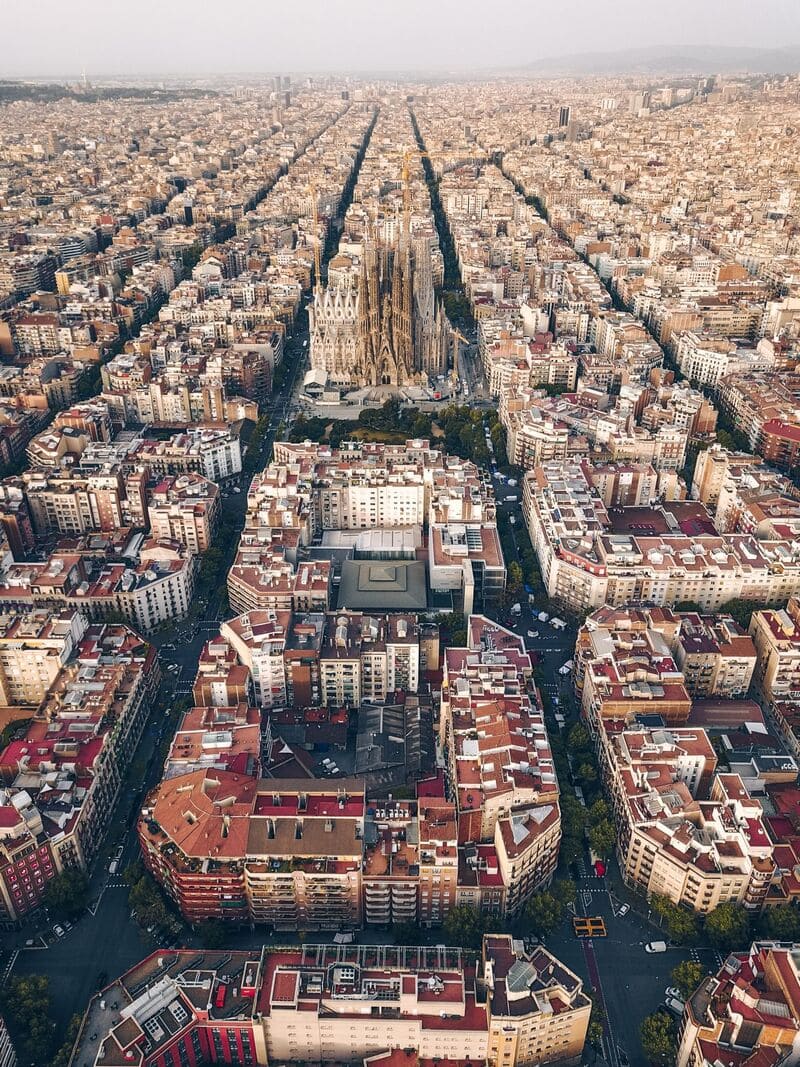
Barcelona isn’t Paris or London prices.
It’s also not the bargain some visitors expect from “Spain” as a general idea.
The city sits solidly in the middle of the European pricing scale: noticeably cheaper than Paris, London, or Amsterdam, but noticeably pricier than Madrid, Lisbon, or Spain’s smaller cities.
Tourist-zone restaurants, in particular, price toward European capital levels, not small-town Spanish ones.
Budgeting like it’s still 2010, or like every corner of Spain costs the same, is a fast way to run short by day three.
Where to go next
A lot of the disappointment on this list traces back to the same habit: rushing past the actual building to check a box.
Nowhere is that more true than at Sagrada Família itself, where most people miss what’s actually going on inside the design. I put together a full breakdown of the things almost everyone gets wrong about Sagrada Família, including why the time slot you book matters more than most visitors realize.
And if the theme-park habit is the real issue, the fix isn’t seeing more landmarks faster. It’s slowing down enough to notice what’s already around you. I wrote about that too, in a list of the Barcelona spots most visitors walk straight past without ever knowing what they missed.