Top 25 Things to Do in the Gothic Quarter (+ A Few Hidden Extras!)
By Dorian · Updated September 13, 2026
The Gothic Quarter gets treated like a checklist.
Cathedral, photo, La Rambla, done.
But this neighborhood has been continuously inhabited since Roman times, and most of what makes it interesting is standing a few feet off the route everyone takes.
Here’s what’s actually worth stopping for.
1) Barcelona Cathedral
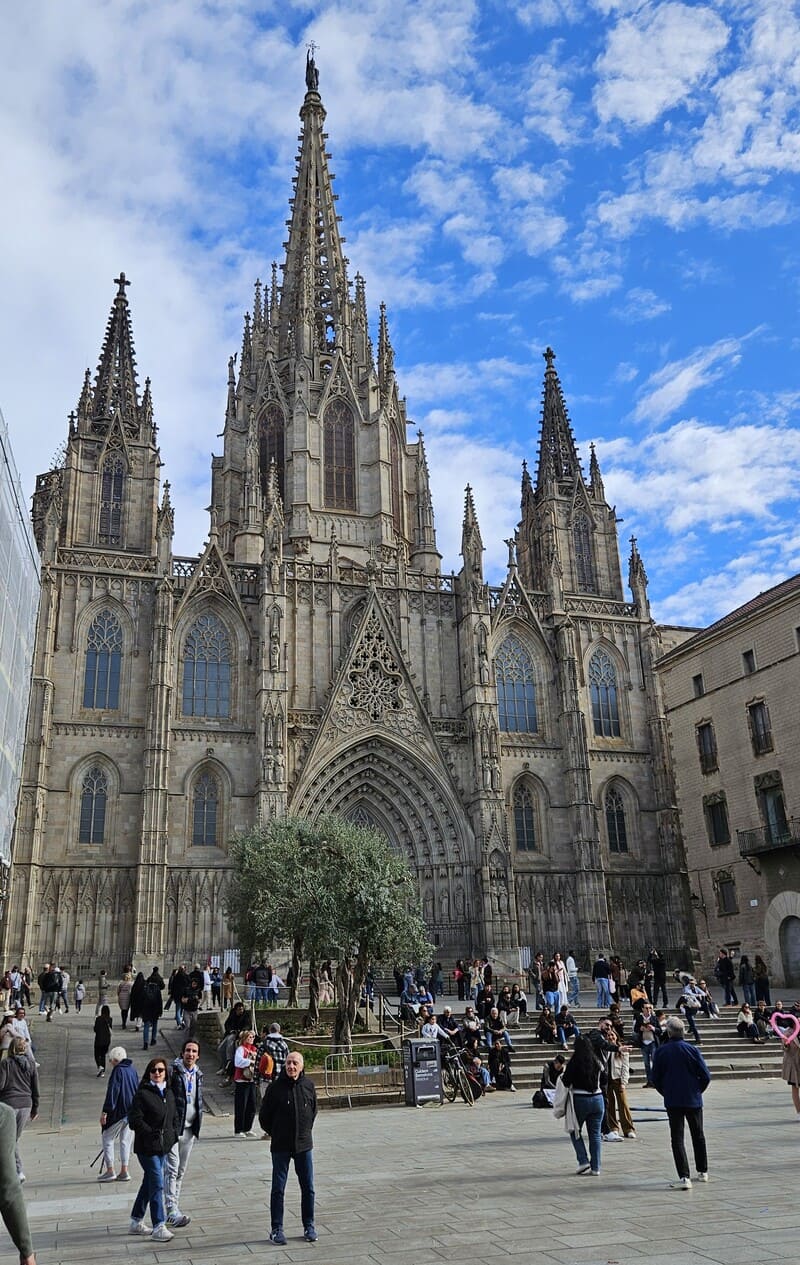
Construction on Barcelona Cathedral began in 1298.
The core of the building, the nave, the choir, the cloister, took about 150 years to finish.
But the facade everyone photographs, the one with the spires and the elaborate stonework, wasn’t built until the late 19th and early 20th centuries.
It’s neo-Gothic, not Gothic.
A wealthy Barcelona banker paid for it in 1887, based on a design sketch from 1408 that had simply never been built.
The central spire wasn’t finished until 1913.
So the “medieval” front of Barcelona’s cathedral is, in architectural terms, barely older than the Eiffel Tower.
Inside, the crypt beneath the high altar holds the alabaster sarcophagus of Santa Eulàlia, one of the city’s patron saints, martyred by the Romans as a teenager.
2) Plaça de Sant Felip Neri
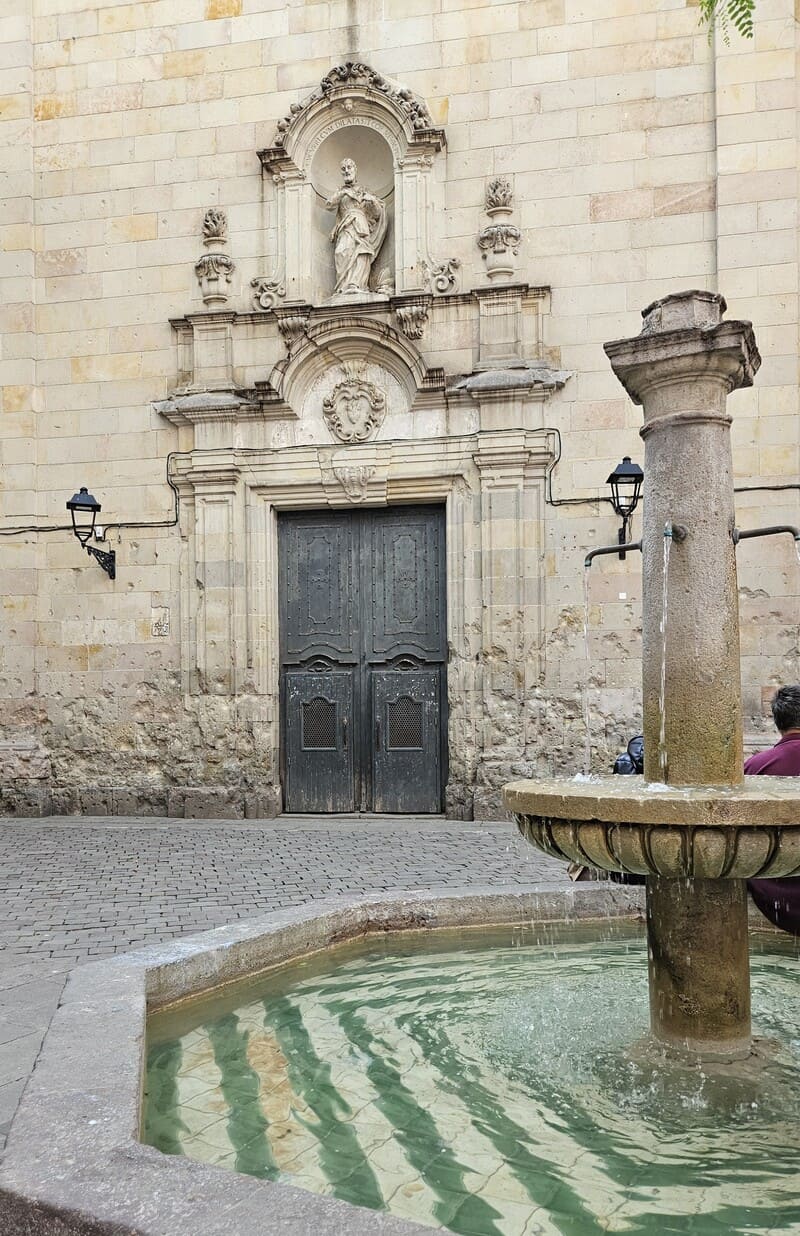
This small square looks like the quietest spot in the Gothic Quarter.
A fountain, a school, a peaceful facade.
Look closer at the church wall and you’ll see it’s pitted with dozens of marks that look like they could be bullet holes.
They’re not.
On 30 January 1938, during the Spanish Civil War, an aerial bombing hit the square while it was sheltering local children.
Dozens of people died, many of them young.
The city has never repaired the facade.
It stays exactly as the bombing left it, standing as a record rather than a monument.
3) Temple of Augustus
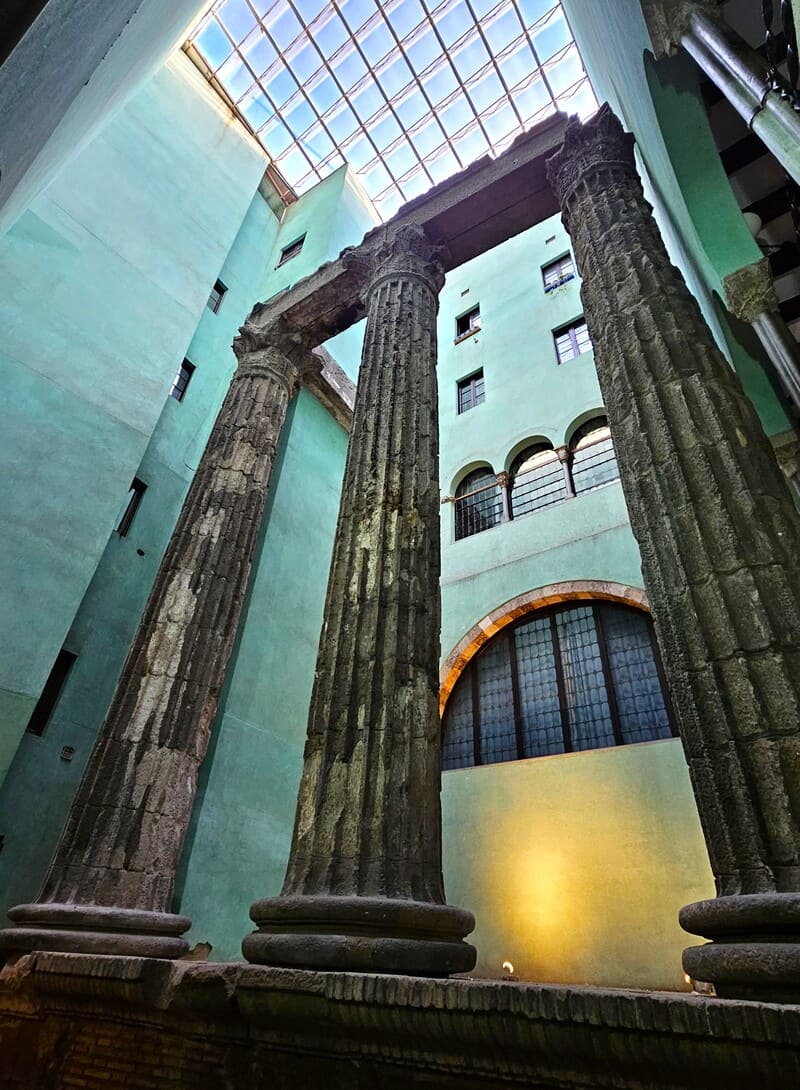
Tucked inside a courtyard on Carrer del Paradís, a few steps from the Cathedral, stand four Roman columns over 29 feet (9 meters) tall.
They’re the remains of a temple built in the 1st century BC and dedicated to Emperor Augustus.
It once stood at the highest point of Roman Barcino, on a hill that no longer looks anything like a hill.
Entry is free.
The columns sit inside a building that looks like every other door on the street.
Most people walk straight past without realizing they just passed something 2,000 years old.
4) Plaça Reial
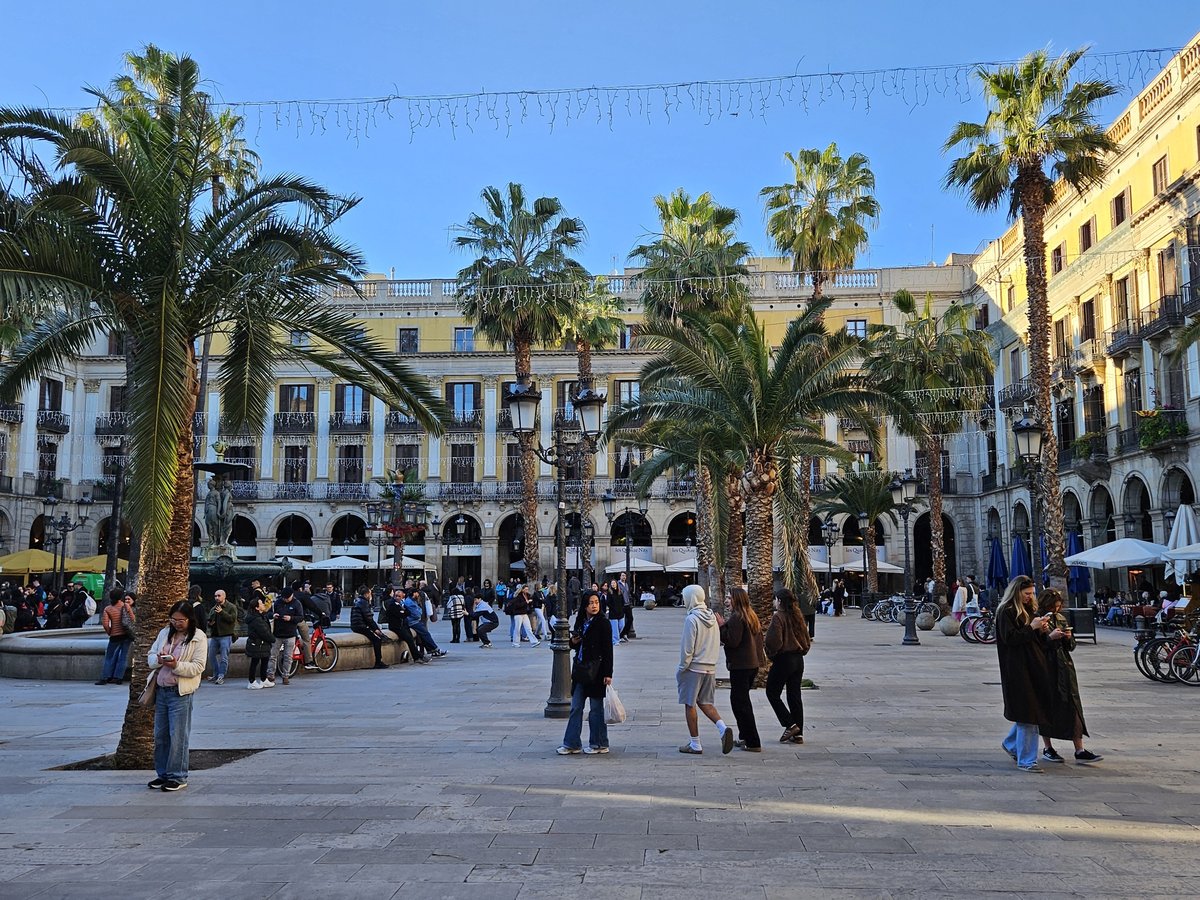
Plaça Reial looks like classic 19th-century Barcelona, arcaded buildings, palm trees, restaurants spilling out under the balconies.
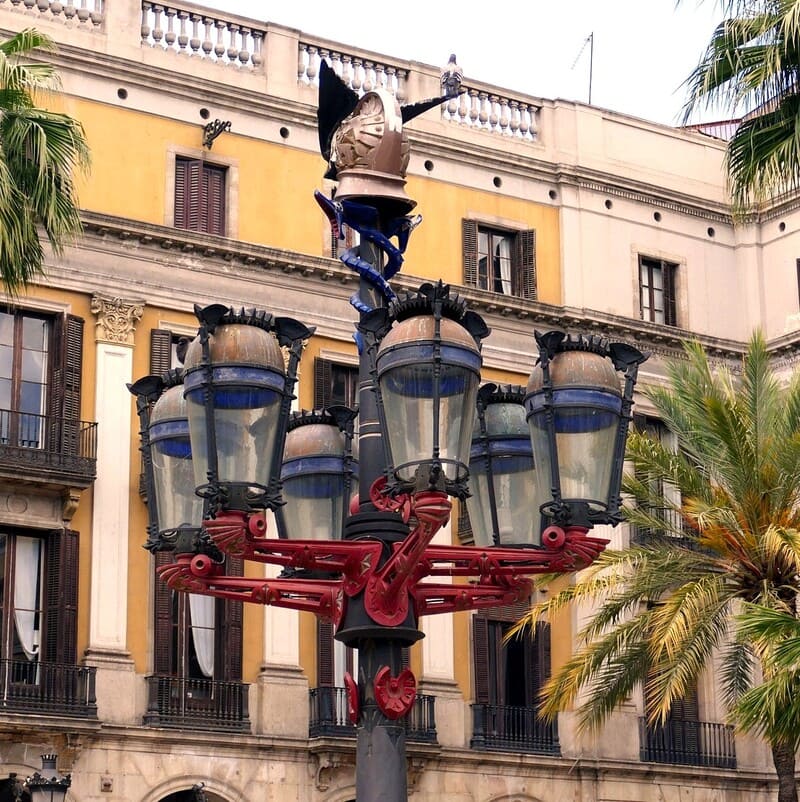
But look up at the two ornate lampposts near the fountain.
Antoni Gaudí designed them in 1878, while he was still a young, largely unknown architect.
It was his first commission for the city, more than two decades before Park Güell or Casa Batlló existed.
By day the square is calm.
By night it turns into one of the busiest nightlife spots in the old city.
5) Cereria Subirà
Founded in 1761, Cereria Subirà is the oldest shop in Barcelona, and it still sells nothing but candles.
It began on Carrer dels Corders, then moved to its current address on Baixada de la Llibreteria in 1847, after the original building was demolished to open Via Laietana.
The Subirà family has run it since 1939.
Step inside and the interior hasn’t caught up to the century.
An imperial staircase splits the shop in two, flanked by iron female figures, with original 19th-century woodwork on every wall.
It’s one of only three historic candle makers left in the old town, and it still supplies candles to Sagrada Família.
6) Pont del Bisbe
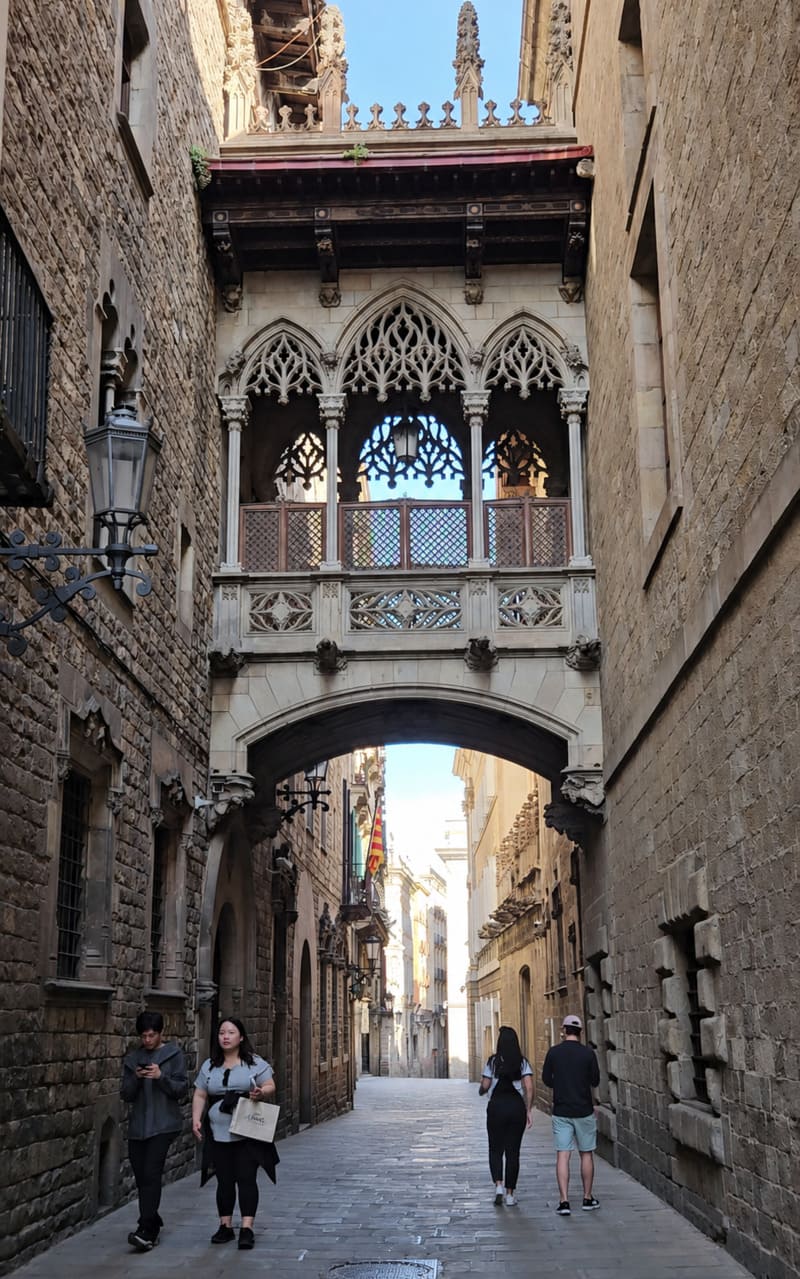
The neo-Gothic bridge crossing Carrer del Bisbe, connecting the Generalitat palace to the Casa dels Canonges, looks straight out of the 14th century.
It was actually built in 1928.
Underneath it, look for the small carving of a skull pierced by a dagger.
Local legend says anyone who spots it will fall under a curse, though nobody seems too worried about testing that.
It’s one of the most photographed spots in the neighborhood, and one of its youngest structures.
7) Can Culleretes
Can Culleretes opened in 1786, ten years after the Declaration of Independence, and it’s still serving traditional Catalan food in the same spot.
It’s officially the oldest restaurant in Barcelona and the second oldest in Spain, behind only Madrid’s Casa Botín.
It began as a small stall selling homemade cheese and almond milk before becoming a restaurant in its own right.
In 1890, the Regàs family took over and commissioned the murals and ceramic work that still line the walls.
Order the cannelloni.
It’s been on the menu for generations.
8) El Call
El Call was Barcelona’s medieval Jewish quarter, a tangle of narrow lanes packed into just a few streets near the Cathedral.
At its center sits the remains of what’s considered one of the oldest synagogues in Europe.
The community here was one of the most important in medieval Catalonia, producing scholars whose work still shapes Jewish thought today.
Most of what you’ll see now is quiet, residential, and easy to miss if you’re not looking for it.
That’s exactly why it’s worth slowing down for.
9) Salterio
Salterio doesn’t announce itself.
You’ll find it tucked into a tiny stone-walled space on Carrer de Sant Domènec del Call, with no obvious sign pulling you in.
Inside, the Moroccan-inspired tea house serves dozens of teas alongside sardos, a kind of stuffed flatbread, in a dim, cushion-covered room that feels more like a hidden den than a restaurant.
It’s been a local favorite for years, and it’s exactly the kind of place that rewards getting a little lost on purpose.
10) Els Quatre Gats
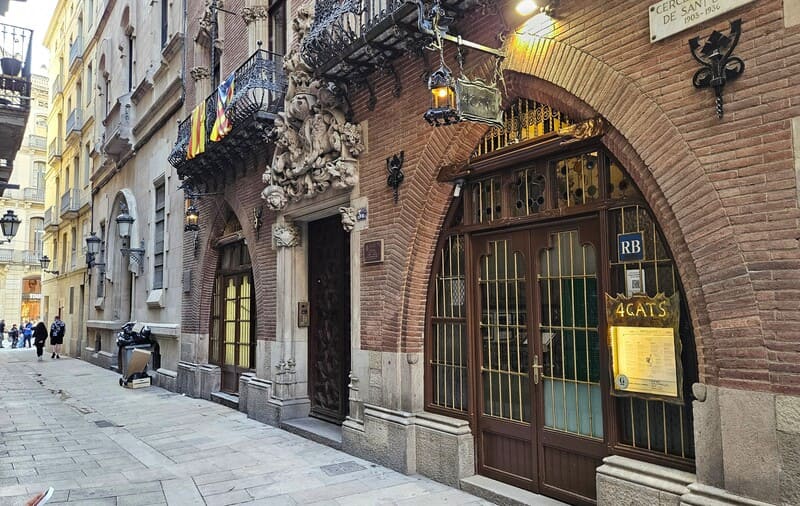
This tavern on Carrer Montsió opened in 1897, modeled after the Parisian cabaret Le Chat Noir.
It quickly became the meeting point for Barcelona’s Modernista artists, including a young Antoni Gaudí and painter Ramon Casas.
A teenage Pablo Picasso, newly arrived in the city, held his first public exhibition of drawings here, before he was known anywhere outside Catalonia.
The restaurant is still open, and the menu still uses the poster Picasso designed for it.
11) Santa Maria del Pi
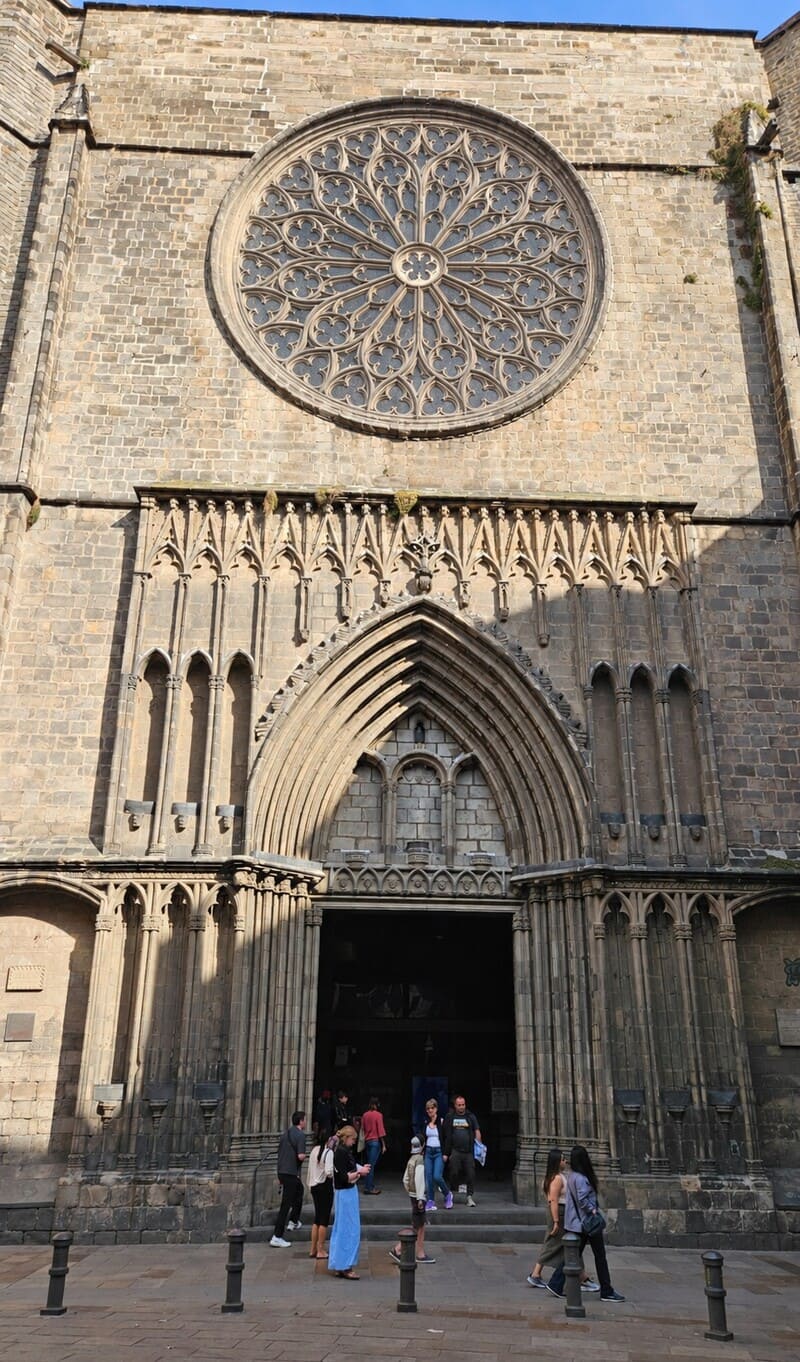
Built between 1319 and 1391, this Catalan Gothic basilica has one of the biggest rose windows in Europe, sitting above the entrance on Plaça del Pi.
The window you see today isn’t medieval.
The original was destroyed by fire in 1936, and the current one is a faithful 1940s reconstruction, made by Josep Maria Jujol, Gaudí’s closest collaborator.
Inside, a 14th-century wooden figure of the Virgin still watches over the single, soaring nave.
12) Carrer Petritxol
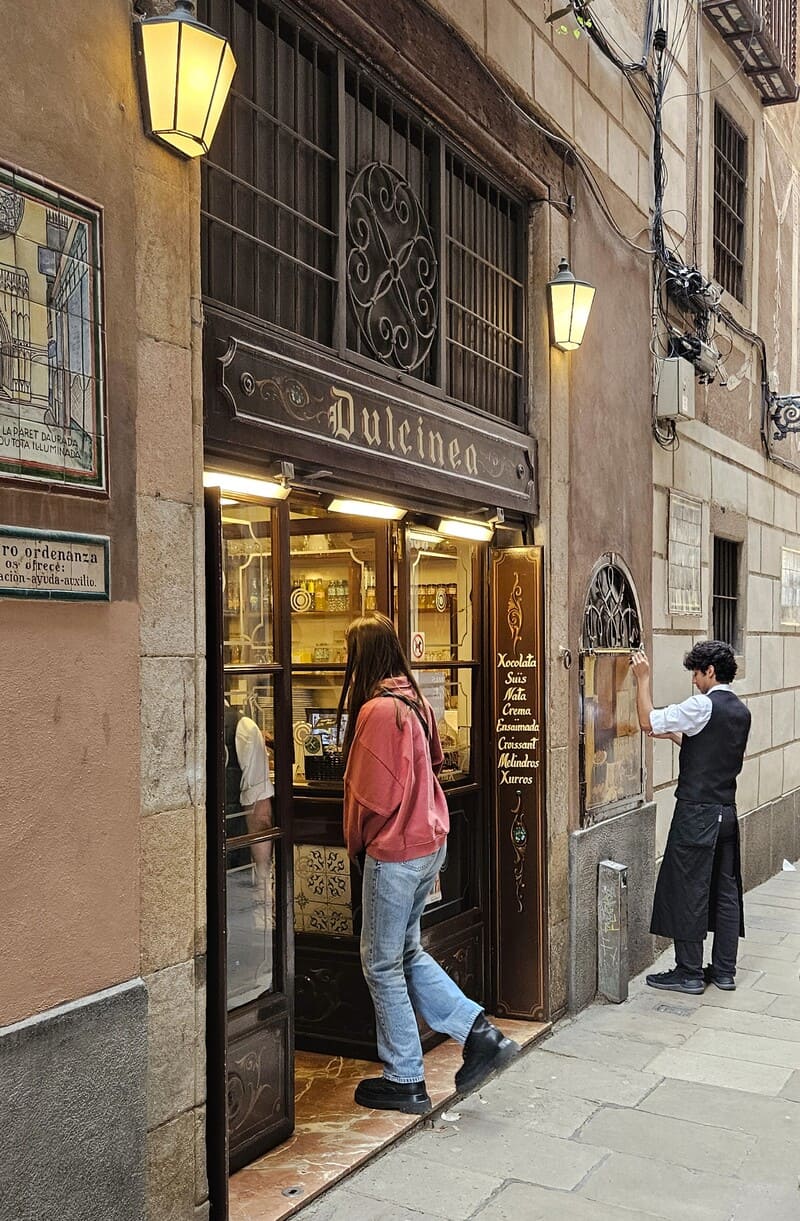
This narrow pedestrian lane, just 10 feet (3 meters) wide and about 420 feet (129 meters) long, has been pulling people in for hot chocolate since the 1600s.
Granja Dulcinea opened here in 1941 and is the street’s oldest surviving granja, a name that once meant dairy shop.
Salvador Dalí was reportedly a regular.
Granja La Pallaresa followed in 1947 and is known for its suizo, thick hot chocolate topped with unsweetened whipped cream.
In 1959, this became the first fully pedestrianized street in Barcelona.
13) Torrons Vicens
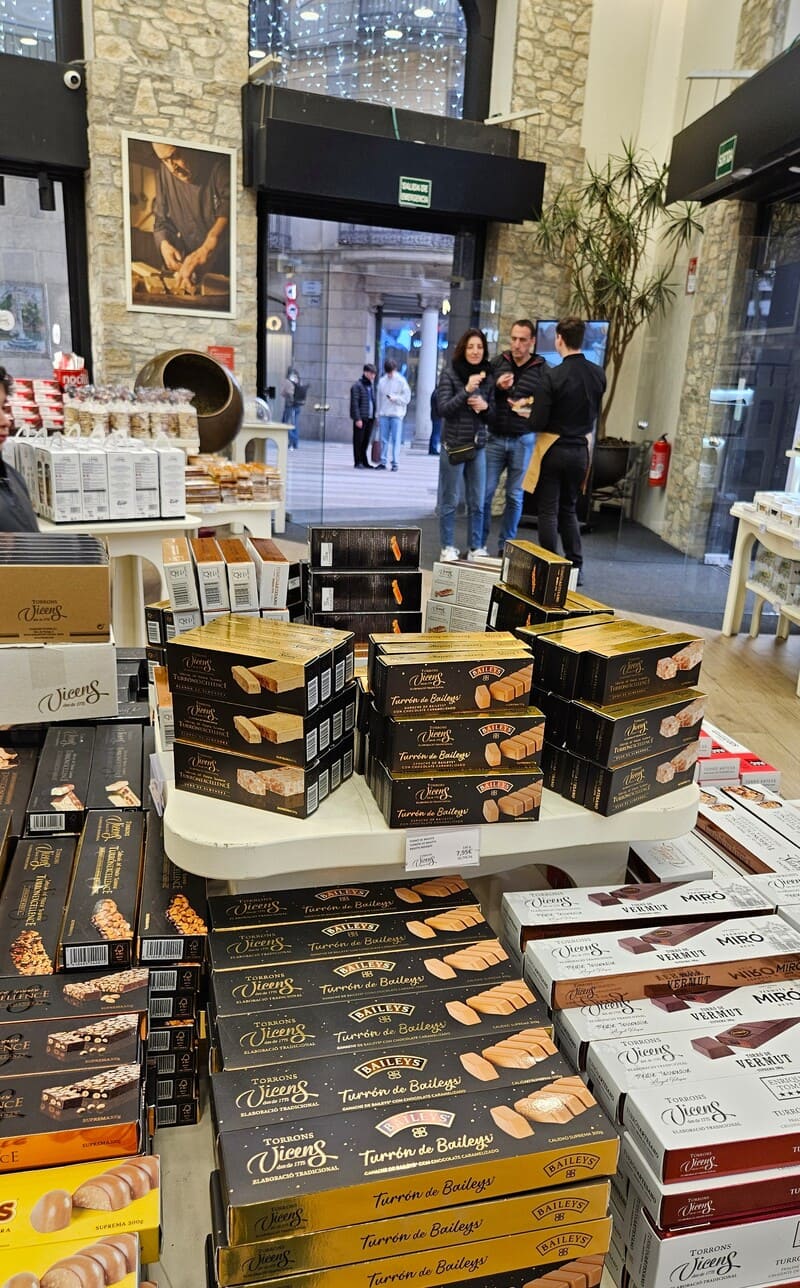
Halfway down Carrer Petritxol sits a shop from Torrons Vicens, a family business that’s been making Agramunt-style nougat since 1775.
Agramunt, a small town in inland Catalonia, has been Spain’s center of traditional turrón production for centuries, and its nougat now carries protected status.
The shop sells dozens of variations, from the classic almond and honey bar to versions developed with well-known chefs.
It’s easy to walk past assuming it’s just another chocolate shop, but the tradition behind it predates the granjas next door.
14) Font de Santa Anna
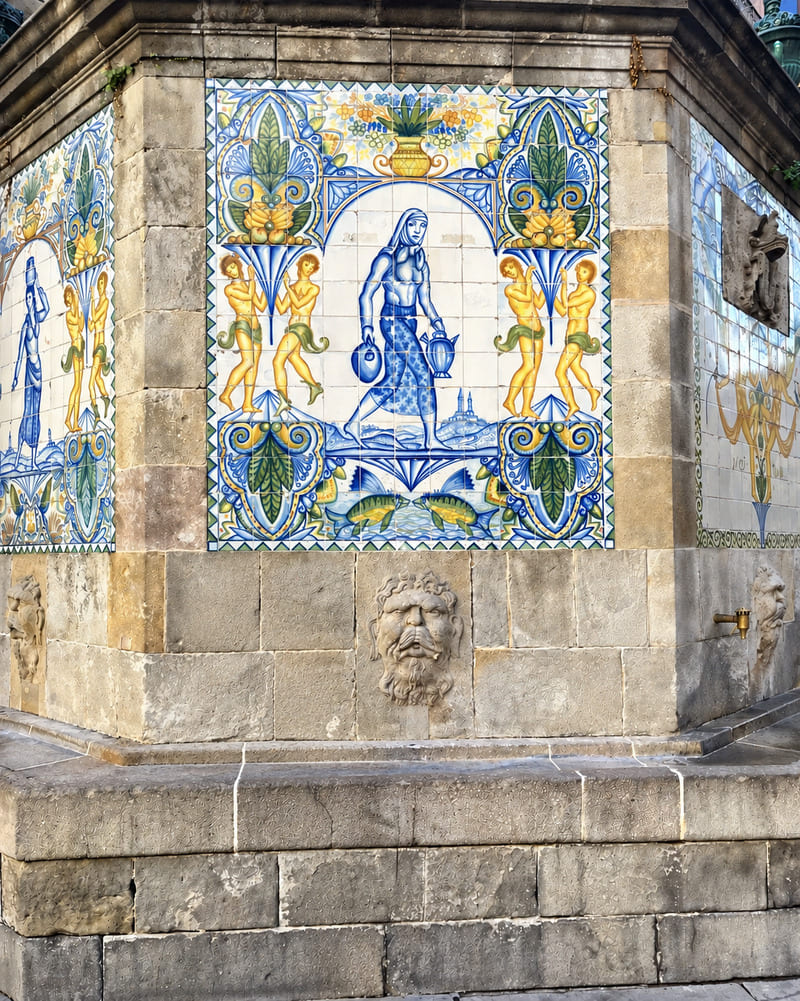
Records place this fountain on the corner of Carrer dels Arcs since 1356, making it the oldest fountain in Barcelona.
It started as a simple stone trough for watering horses and mules entering the city, with drinking water for people added in 1375.
The hexagonal stone structure you see today dates to 1819.
The colorful ceramic tiles and vases on top were added in 1918 by artist Josep Aragay.
It sits just steps from Plaça de Catalunya, easy to miss and easy to love once you notice it.
15) Plaça del Rei
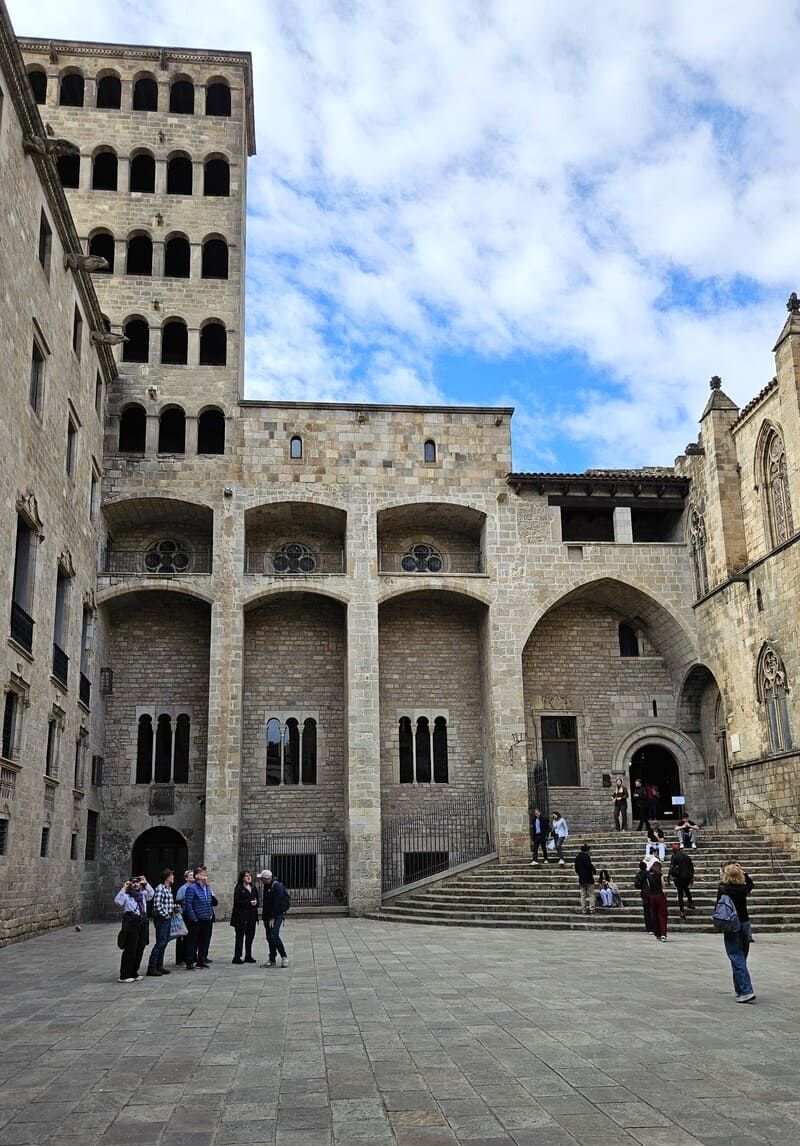
This medieval square was built as part of the royal complex of the Counts of Barcelona and later the Kings of Aragon.
Its main hall, the Saló del Tinell, was completed in the 1360s and still stands with its six massive stone arches spanning without a single interior column.
Local tradition holds that it was on the steps of this square that King Ferdinand and Queen Isabella received Christopher Columbus after his first voyage to the Americas in 1493, though some historians dispute whether the monarchs were actually in the city at the time.
True or not, it’s one of the most atmospheric corners of the old city.
16) MUHBA
Beneath the Barcelona History Museum at Plaça del Rei sits an entire stretch of the Roman city of Barcino, preserved underground and open to walk through.
You’ll pass the remains of laundries, wine and fish-sauce production areas, and residential streets, all at the level Roman Barcelona actually stood at, about 6.5 feet (2 meters) below today’s street.
It’s one of the largest underground archaeological sites in Europe, and one of the least crowded major attractions in the neighborhood.
Check the museum’s official site for current hours and ticket tiers before you go.
17) Via Sepulcral Romana
At Plaça de la Vila de Madrid, just off Portal de l’Àngel, a sunken garden holds around 70 Roman tombs from the 1st to 3rd centuries AD.
Roman law banned burials inside city walls, so this necropolis sat just outside Barcino, along a secondary road leading toward what’s now Sarrià.
Most of the graves belonged to ordinary residents, freed slaves, and working-class families, not the elite.
You can see the whole site from street level, for free, without setting foot inside a museum.
18) The Roman walls at Plaça Nova
At Plaça Nova, right beside the Cathedral, two cylindrical Roman towers still flank what was once the main gate into the walled city of Barcino.
Next to them runs a reconstructed stretch of the ancient aqueduct that once carried the city’s water supply.
A second, larger chunk of wall survives nearby at Plaça de Ramon Berenguer, where a medieval chapel was later built directly on top of the ancient stonework.
Most people cross this square heading somewhere else entirely, phone out, without registering that the round towers on either side are roughly 2,000 years old.
19) Carrer dels Banys Nous
The name means “new baths,” a reference to public bathhouses that stood here centuries ago and have long since vanished.
Today the street is known for something else entirely: small, independent workshops.
Artisan leatherworkers, jewelry studios, and handmade espadrille makers line the lane, many of them family businesses that have worked the same craft for generations.
It’s one of the easiest streets in the quarter to actually buy something made by the person standing behind the counter.
20) Caelum
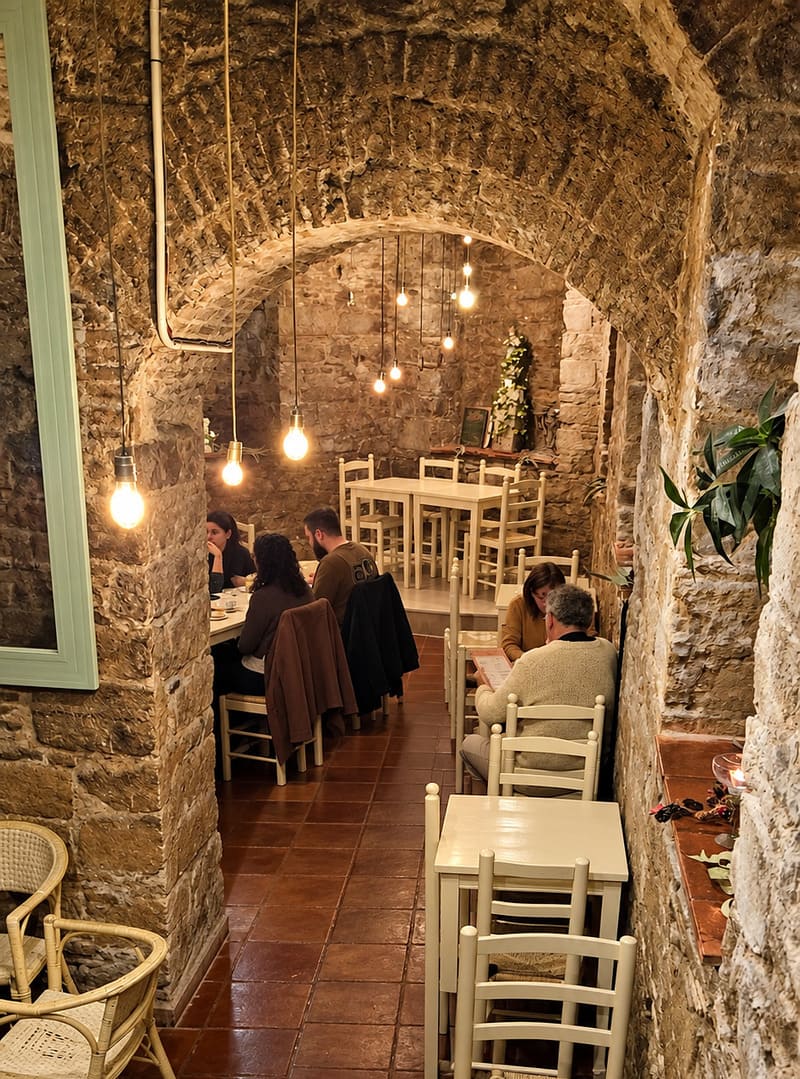
At the corner of Carrer de la Palla and Carrer dels Banys Nous sits Caelum, a shop and tea room selling sweets made entirely by monks and nuns from monasteries and convents across Spain.
Marzipan from Ávila, egg-yolk sweets linked to Santa Teresa, chocolate truffles from Valladolid known locally as “Judas’s sins.”
The real surprise is downstairs.
The basement preserves the remains of a 14th-century Jewish public bathhouse, visible through the floor beneath the stone arches.
Few dessert shops anywhere double as an archaeological site.
21) La Colmena
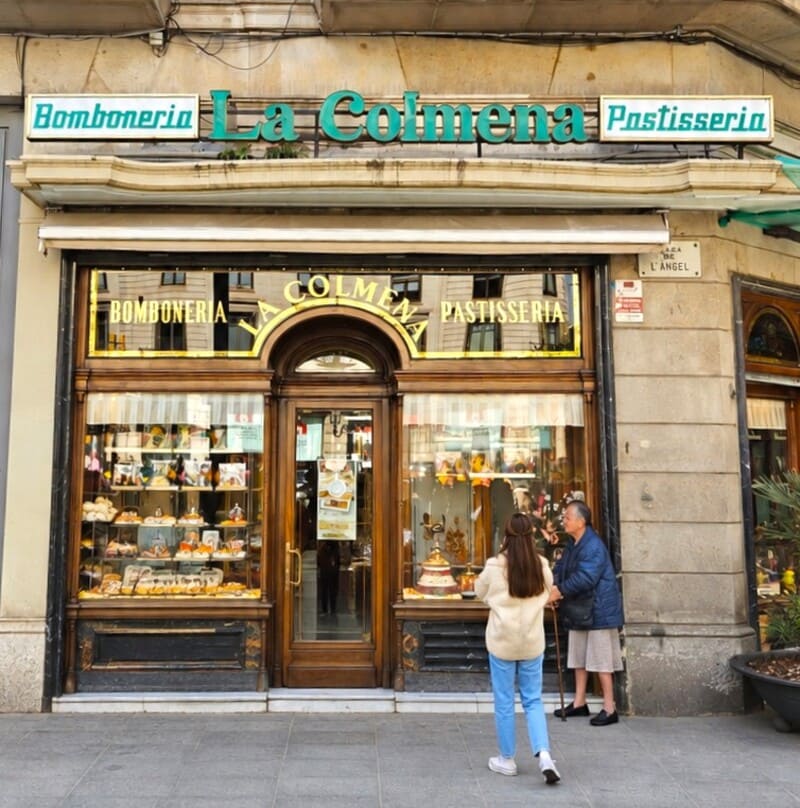
This pastry shop first appears in records from 1849, under the name Ca l’Abella, before moving to its current spot on Plaça de l’Àngel and taking the name La Colmena in 1868.
Spain’s first railway line opened that same decade.
Behind its golden facade, the shop still makes carquinyolis, meringues, and traditional Catalan sweets using techniques passed down through generations of owners.
The current family has run it since 1927.
22) Los Caracoles
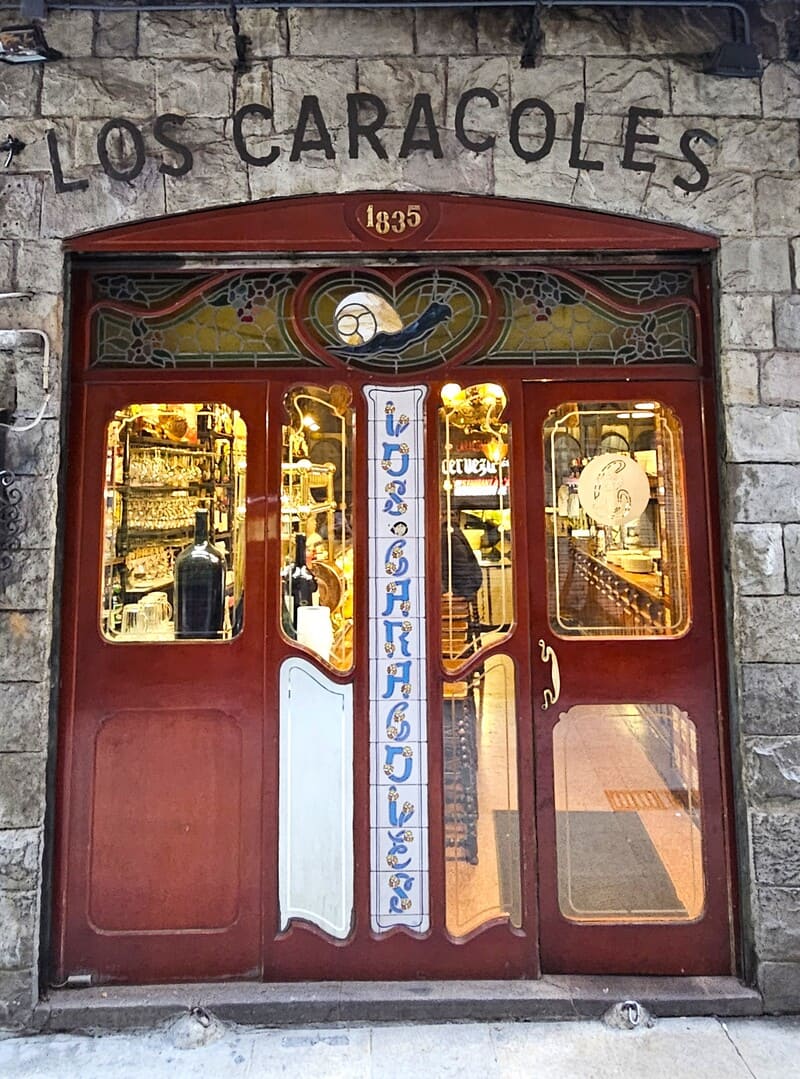
In 1835, the Bofarull family opened what was then called Casa Bofarull, a convenience store and wine shop near La Rambla.
It slowly evolved into a tavern, then a full restaurant, eventually taking its current name from its most popular dish: caracoles, or snails.
Opera singers from the nearby Liceu reportedly used to stop in after performances, ordering snails on their way out.
Five generations of the same family still run it today, roasting chicken over the same century-old rotisserie.
23) Mesón del Café 1909
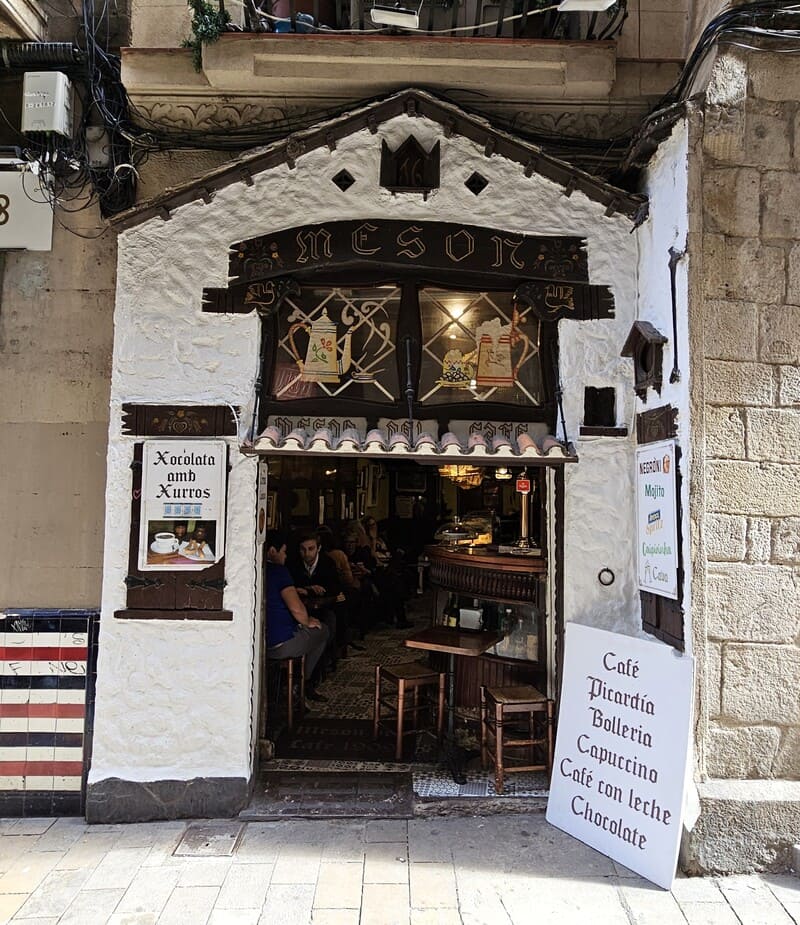
Mesón del Café opened in 1909 on Carrer de la Llibreteria, originally as a cider shop before becoming a café two decades later.
Its original six-arm coffee machine from 1929 is still on display inside, alongside a facade styled like an alpine tavern that hasn’t changed in over a century.
It’s a tiny space, standing room mostly, and one of the last places in the quarter that still feels completely untouched by the last hundred years of tourism.
24) El Petó
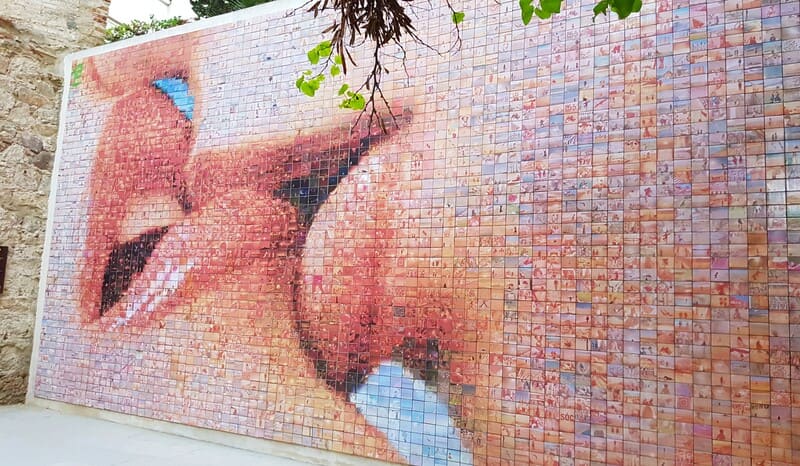
At Plaça d’Isidre Nonell, near the Cathedral, a large mosaic mural shows two figures locked in a kiss.
Get closer and the image dissolves into thousands of individual photographs, 4,000 of them, submitted by ordinary readers of a Barcelona newspaper depicting their own personal moments of freedom.
Catalan artist Joan Fontcuberta unveiled it in 2014, on the anniversary of the 1714 fall of Barcelona at the end of the War of the Spanish Succession, a date still marked each year as Catalonia’s national day.
From a distance it’s romantic.
Up close it’s something closer to a crowd portrait.
25) Plaça de Catalunya
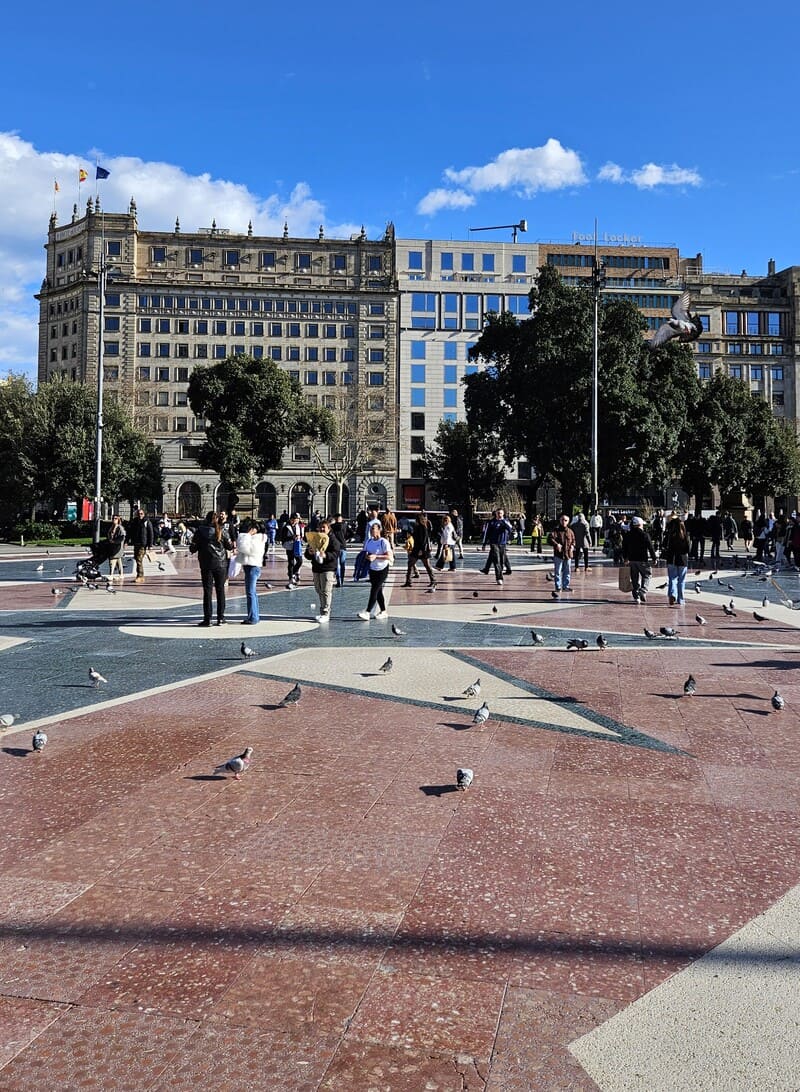
Technically, Plaça de Catalunya sits just outside the Gothic Quarter’s boundary, at the point where the old medieval streets give way to the wide 19th-century Eixample grid.
But almost everyone’s walk through the Gothic Quarter starts here, at the square where La Rambla begins its slope down toward the sea.
Look for the Font de Canaletes at its southern edge, the fountain local tradition says guarantees you’ll return to Barcelona if you drink from it.
It’s as good a place as any to start, or end, a day spent getting pleasantly lost in the old city.
Where to go next
If narrow medieval streets and stories nobody tells you at the ticket counter are your thing, El Born picks up almost exactly where the Gothic Quarter leaves off, just across Via Laietana. I put together the same kind of walk through that neighborhood here: everything worth seeing in El Born.
And if a few of these spots made you want more of the city’s overlooked corners, I’ve got a whole separate list of the buildings and streets most visitors walk straight past without knowing what they’re looking at: 17 underrated Barcelona spots you’ve probably walked past.