140+ Years of the Sagrada Família in Photos
By Dorian · Updated August 17, 2026
Sagrada Família has been under construction longer than most buildings have existed at all. These photos trace that process decade by decade, from a half-built crypt to the basilica that stands today.
1883
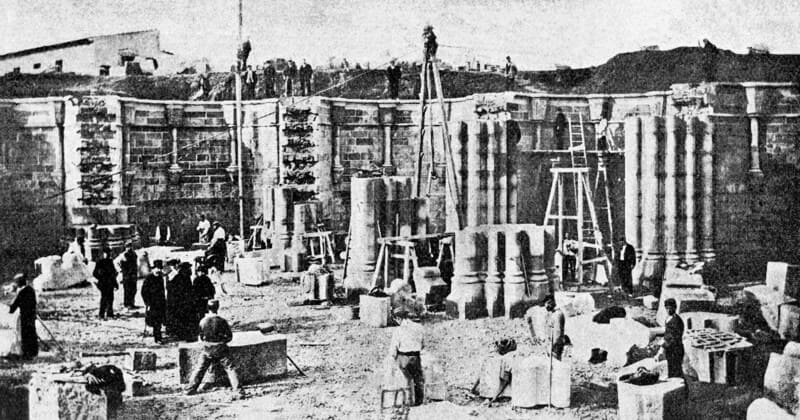
This is the year Antoni Gaudí took over the project, at just 31 years old, after the original architect resigned. He kept the crypt already underway but immediately began redesigning everything above it.
This photo captures that very early transition, scaffolding, foundations, and the first hints of Gaudí’s radically different vision replacing a conventional Gothic Revival plan.
1885
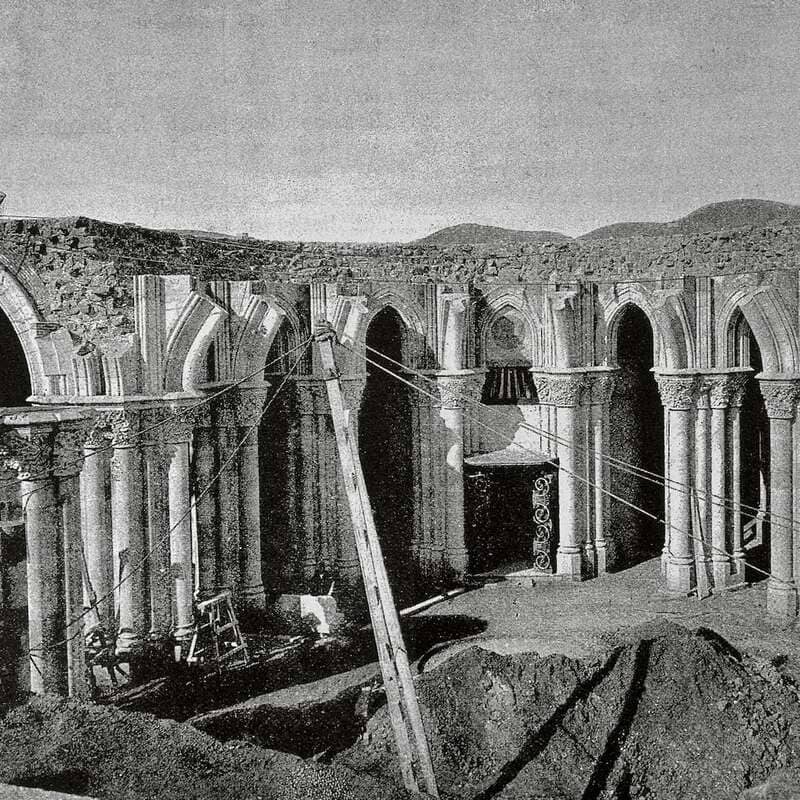
The Chapel of Saint Joseph, inside the crypt, was inaugurated this year, and the first masses were held there while construction continued above.
The vaulted stone interior visible here shows how quickly the crypt itself had taken shape, even as the rest of the building existed only as a plan in Gaudí’s head.
1899
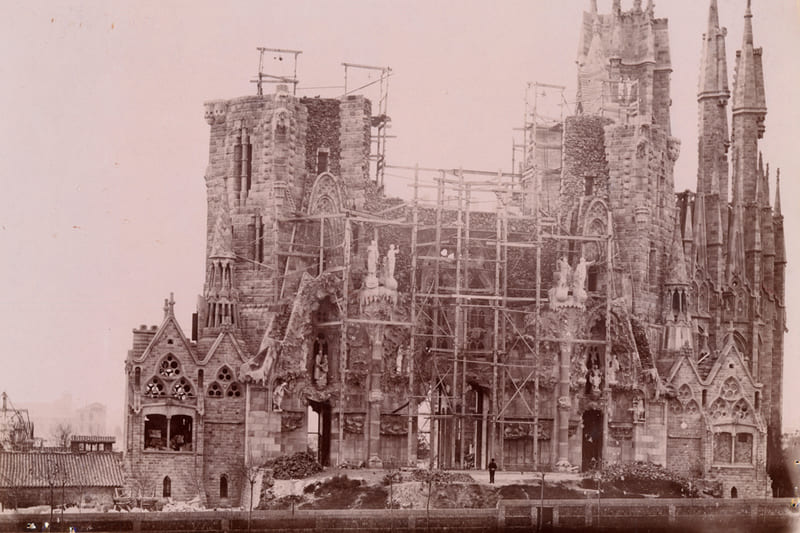
By this point, work had shifted to the foundations of the Nativity façade, begun a few years earlier.
The apse walls were already complete. This photo shows the façade beginning to rise from the ground, still low, still surrounded by scaffolding, decades away from the ornate structure it would eventually become.
1905
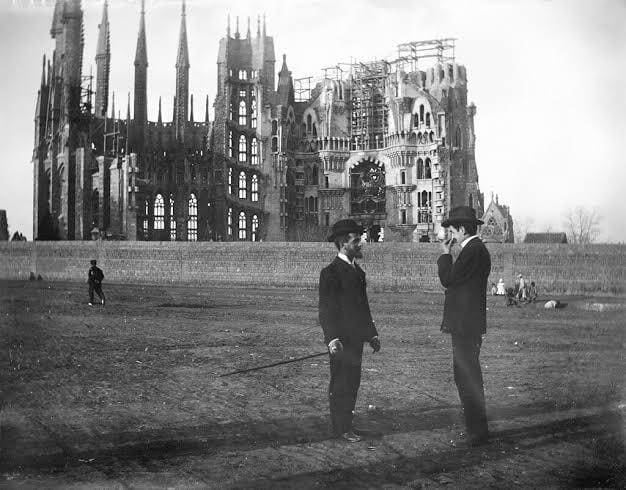
The Nativity façade continued climbing, though it still lacked the spires that would later define its silhouette.
Two figures stand for scale in this image, a useful reminder of just how much taller the structure would eventually grow, and how modest it still looked at this stage.
1906
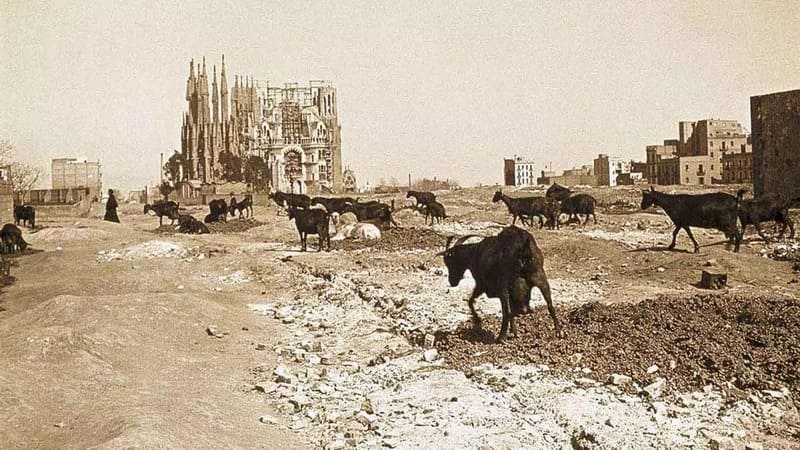
This photo is a reminder of just how undeveloped the surrounding area still was.
Barcelona’s Eixample district was still filling in around the construction site, and open land, visible here, sat where dense city blocks stand today.
1908
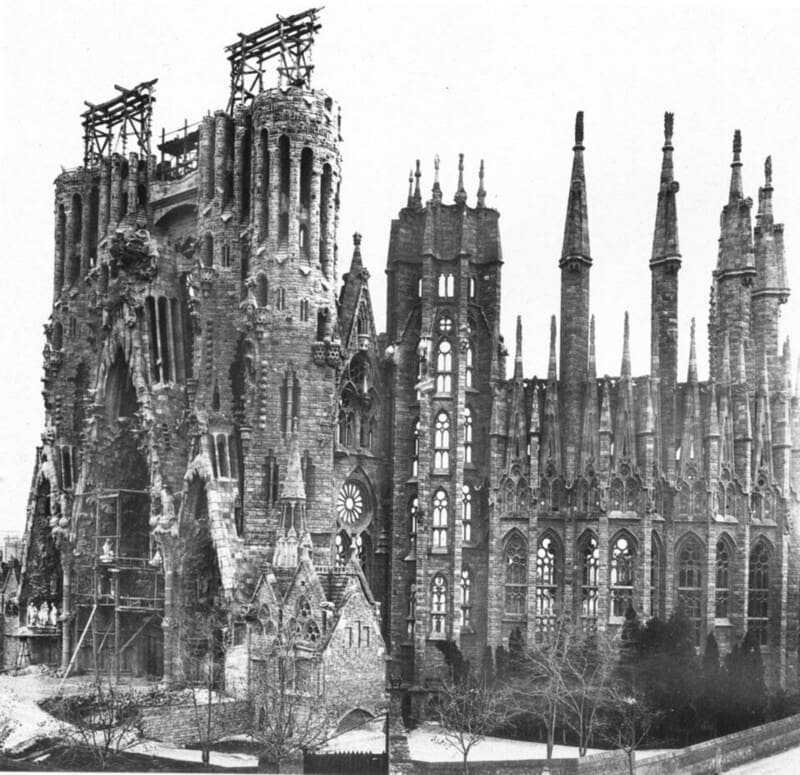
The Nativity façade had grown significantly by now, with early spire forms beginning to emerge from the mass of stone and scaffolding.
Gaudí was still working on other commissions at this point, dividing his attention, though the temple was steadily becoming more central to his focus.
1915
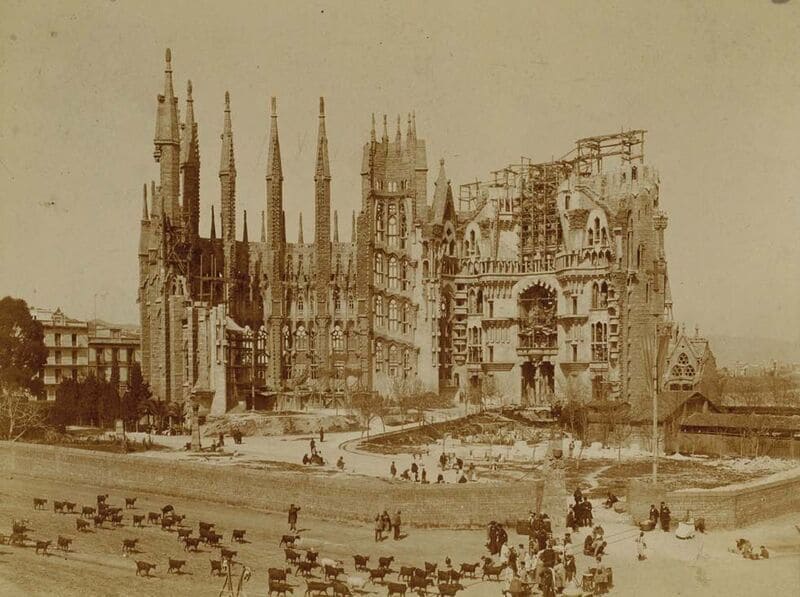
By 1915, Gaudí had already begun devoting himself increasingly to the temple alone.
The Nativity façade was nearing its final form, and this photo shows a structure that, for the first time, starts to resemble the building most people recognize today.
1925
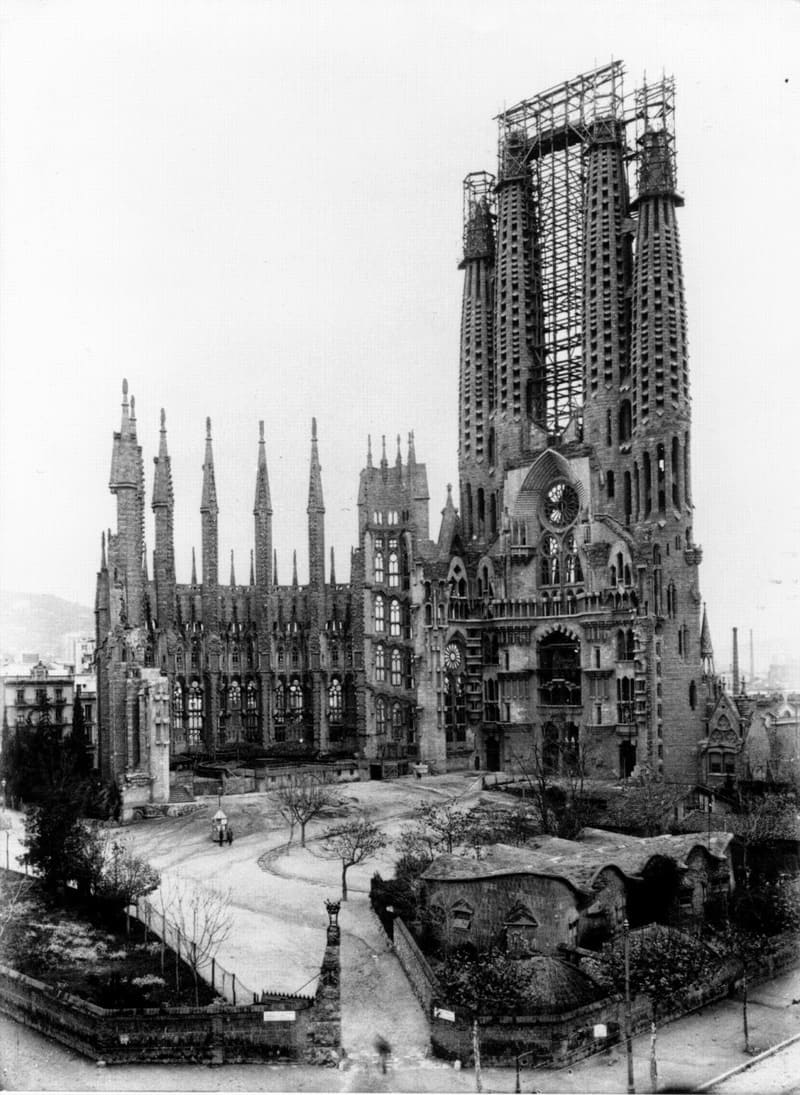
A major milestone: the Saint Barnabas bell tower on the Nativity façade was completed this year, reaching around 320 feet.
It was the only tower Gaudí would ever see finished. He died the following year, having spent over four decades on a building he knew he wouldn’t live to complete.
1940
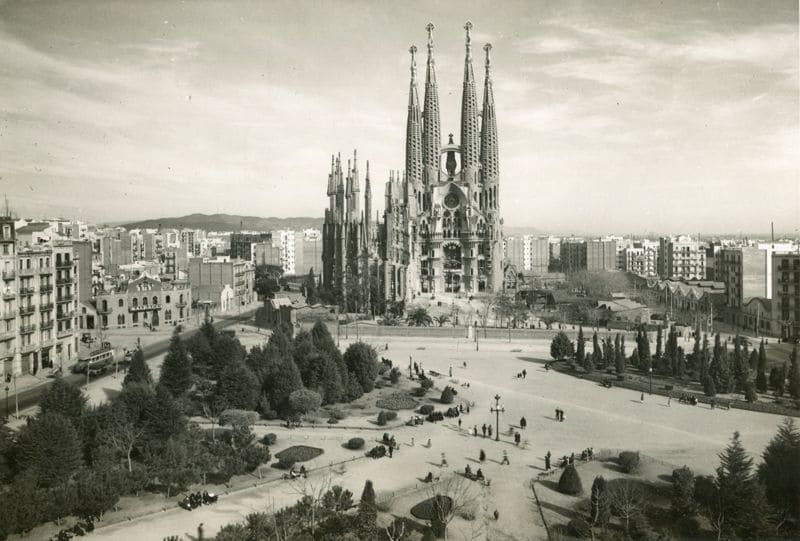
Construction had resumed by this point, slowly, after work was interrupted in 1936, when the temple’s workshop was destroyed and many of Gaudí’s original plans and models were lost.
Architects who had known him worked from surviving fragments and photographs to continue as faithfully as they could. This photo shows the temple rising again against a more developed city skyline.
1953
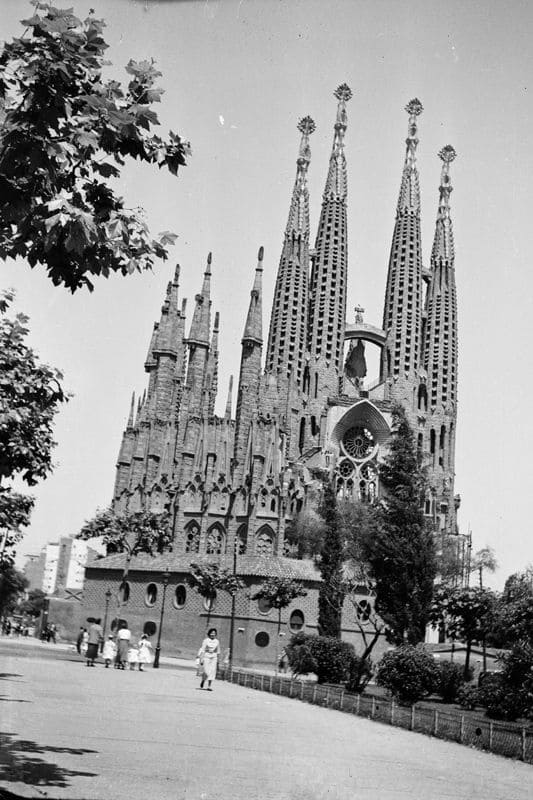
By the early 1950s, all four towers of the Nativity façade were complete, and the façade itself stood largely finished.
People walking past it in this photo would have seen something close to what visitors see on that side of the building today.
1965
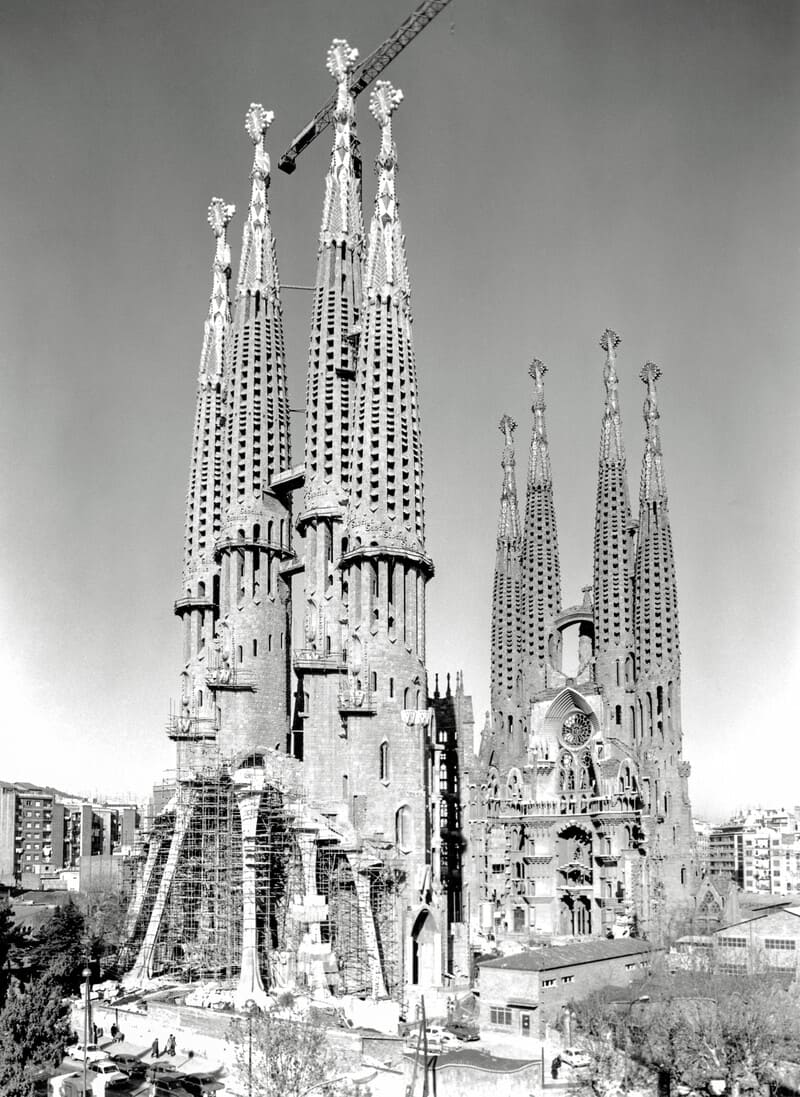
Work continued steadily through the following decades under a succession of architects who inherited the project from Gaudí’s original collaborators.
This photo reflects that long, patient middle period, construction never stopped, but progress was measured in years, not months.
1989
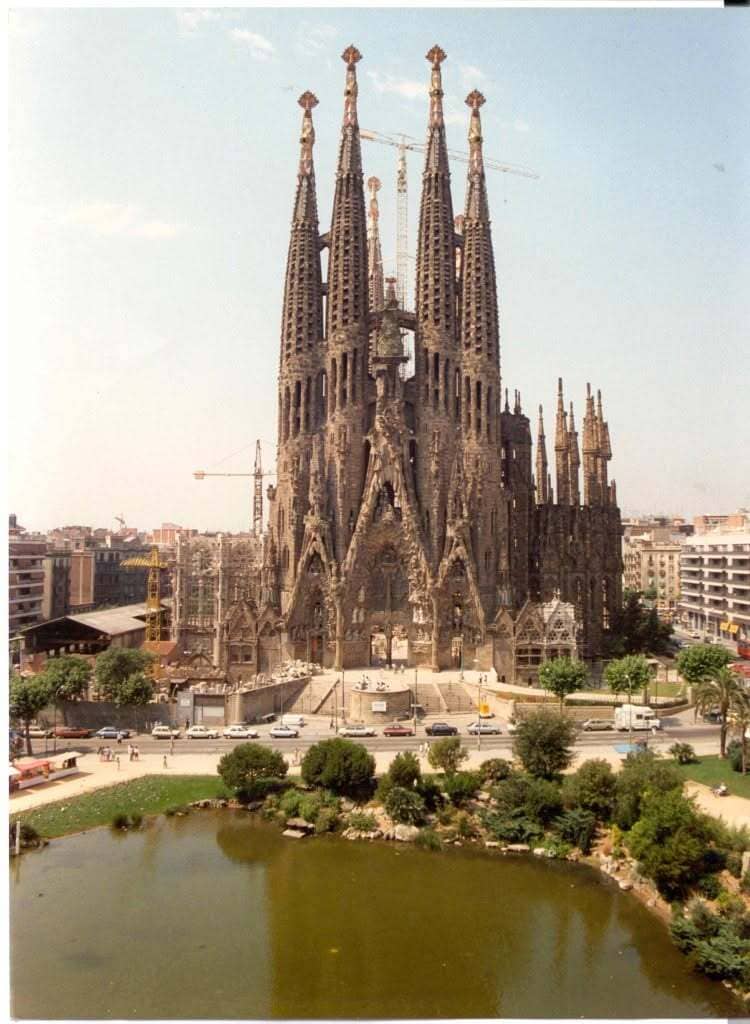
By this point, the Passion façade was taking shape on the opposite side of the building, sculpted in a starkly different, angular style by Josep Maria Subirachs, a deliberate contrast to the Nativity façade’s organic detail.
The nave itself was also under active construction, aided increasingly by computer modeling that helped architects interpret Gaudí’s geometric methods more precisely.
2019
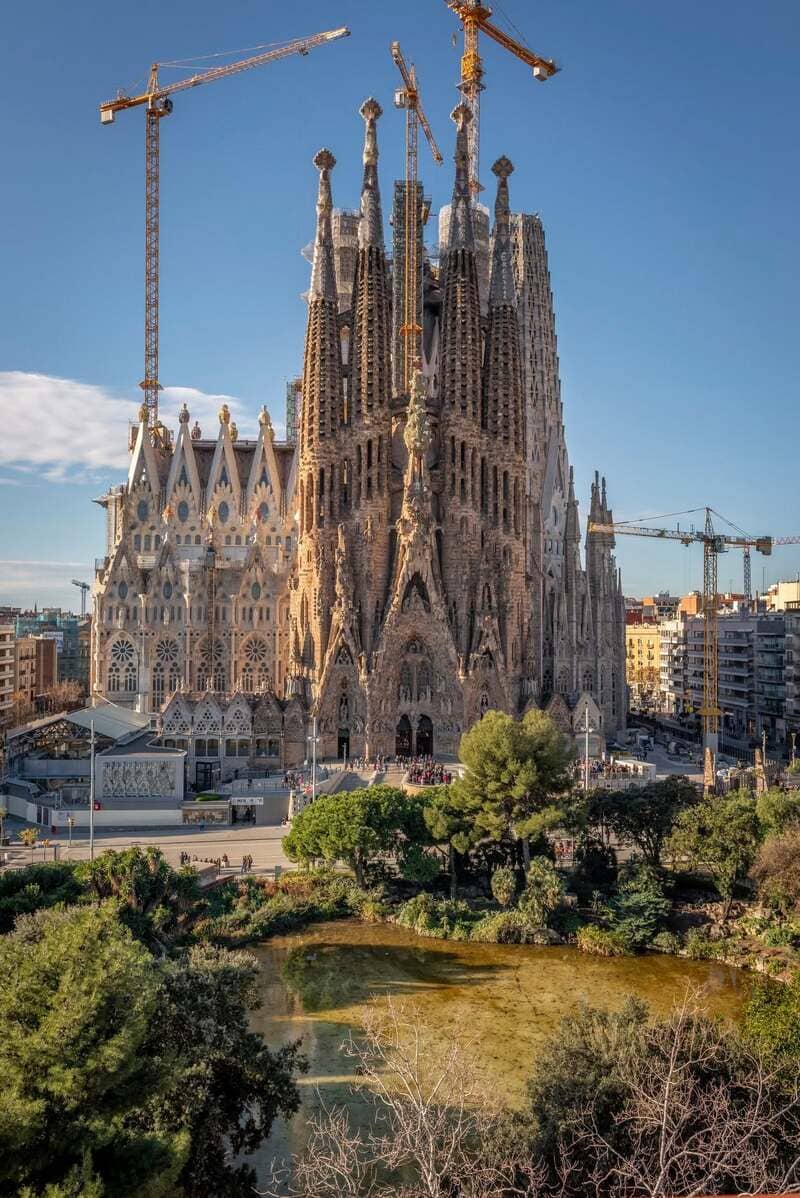
Cranes remained a permanent feature of the skyline this year, as the central towers, including the future Tower of Jesus Christ, continued rising above the completed nave.
By now, the basilica had been a consecrated church for nearly a decade, actively used for worship even as construction continued around it.
2026
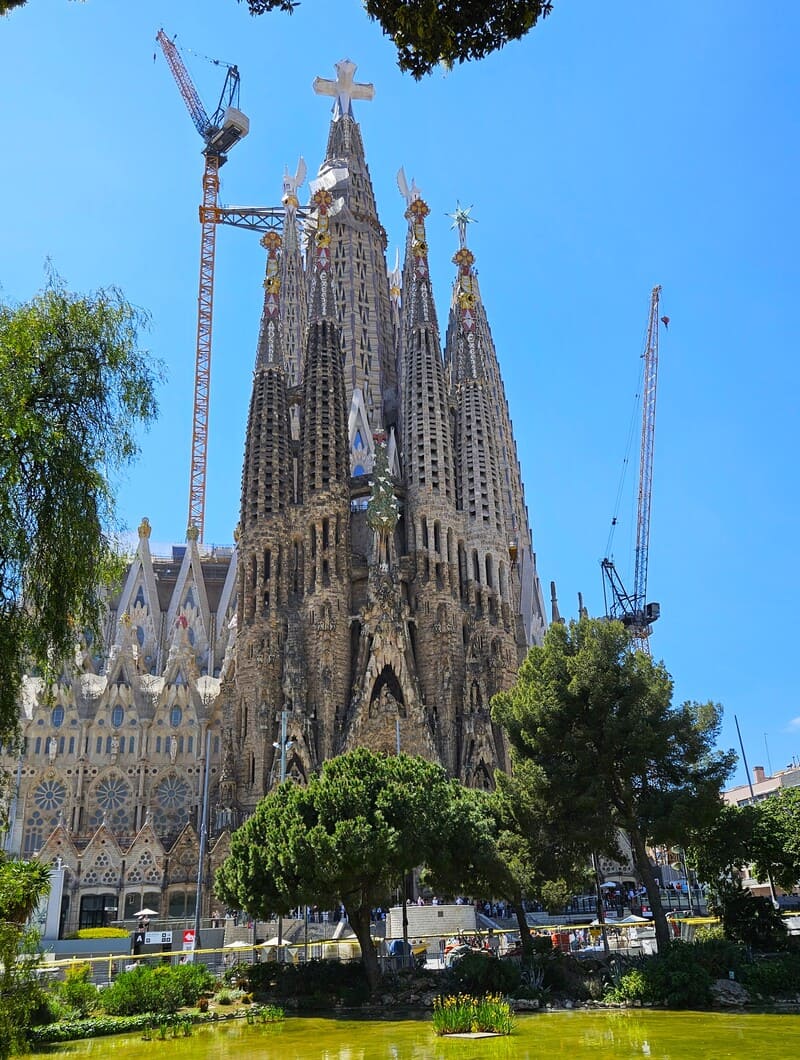
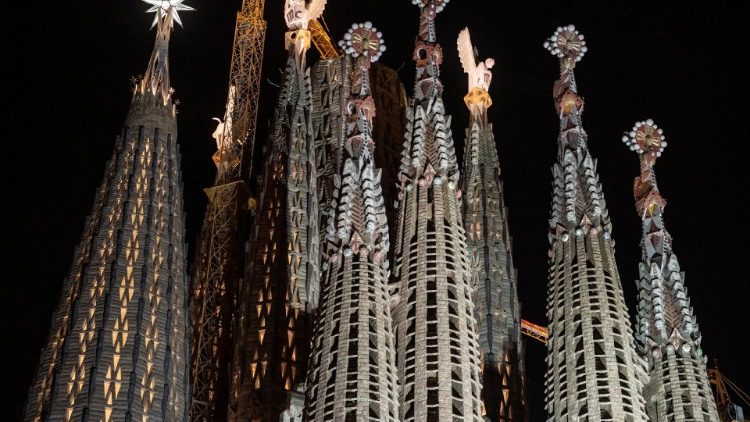
This year marked a genuine milestone: on 10 June, the 100th anniversary of Gaudí’s death, the newly completed Tower of Jesus Christ was blessed by Pope Leo XIV, making Sagrada Família the tallest church in the world.
Structurally, the basilica is now essentially complete, 144 years after the first stone was laid, though decorative work continues.
What to read next
If this timeline changed how you see the building, here’s where to go next:
Is the Sagrada Família you saw in Barcelona really what Gaudí imagined?
A deeper look at how much of the basilica is actually his, and how much was built by others after his death. Read it on the blog.
Barcelona’s best Modernisme buildings (and why they’re not all Gaudí)
Where to see the work of the architects who were building alongside him the entire time. Read it on the blog.